The book was published in 1835.
[{"id":"para_1","index":0,"start":0,"offset":717,"words":5,"paraNum":"","lastModified":1666123292000,"semanticType":"title-book-title","voicework":"audio_file","blockId":"egotism_short_story_ffa_en-blhk","language":"en","wordsRange":{"start":100000000,"end":107000000},"paragraphVersion":67,"direction":"ltr","paragraph":"<h1 class=\"ilm-title ilm-large\" id=\"para_1\" semantictype=\"title-book-title\" data-ilmid=\"egotism_short_story_ffa_en-blhk\" data-audio=\"1\" data-chapter=\"para_1\" data-words-count=\"5\" data-before=\"0\" data-ww=\"\"><span class=\"block-pb\"> <span class=\"block-pb is-animated\"></span> </span><span class=\"itm-wrap\"><span class=\"intricate-word\"><span class=\"-nowrap-content\">Egotism;<a data-fnid=\"1\" epub:type=\"noteref\" href=\"#n0\"></a> </span></span>or, The Bosom Serpent </span></h1><aside id=\"n0\" data-audio=\"0\" data-fnid=\"1\" class=\"bh-fn\" epub:type=\"footnote\" data-ww=\"\"><span>The physical fact, to which it is here attempted to give a moral signification, has been known to occur in more than one instance. <br></span></aside>","hasContent":true,"isFirst":true,"isLast":false},{"id":"para_2","index":1,"start":717,"offset":363,"words":2,"paraNum":"","lastModified":1664991329000,"semanticType":"title-author","voicework":"audio_file","blockId":"egotism_short_story_ffa_en-blqm","language":"en","wordsRange":{"start":176333333,"end":245666667},"paragraphVersion":62,"direction":"ltr","paragraph":"<h1 class=\"ilm-title ilm-author ilm-x-large ilm-nopad\" id=\"para_2\" semantictype=\"title-author\" data-ilmid=\"egotism_short_story_ffa_en-blqm\" data-audio=\"1\" data-chapter=\"para_2\" data-words-count=\"2\" data-before=\"5\" data-ww=\"\"><span class=\"block-pb\"> <span class=\"block-pb is-animated\"></span> </span><span class=\"itm-wrap\">by<br>Nathaniel Hawthorne<br></span></h1>","hasContent":true,"isFirst":false,"isLast":false},{"id":"para_3","index":2,"start":1080,"offset":154,"words":0,"paraNum":"","lastModified":1664990514000,"semanticType":"line","blockId":"egotism_short_story_ffa_en-blqn","language":"en","wordsRange":{"start":268777778,"end":291888889},"paragraphVersion":34,"direction":"ltr","paragraph":"<hr class=\"ilm-hr ilm-small\" id=\"para_3\" semantictype=\"line\" data-ilmid=\"egotism_short_story_ffa_en-blqn\" data-words-count=\"0\" data-before=\"7\" data-ww=\"\">","hasContent":true,"isFirst":false,"isLast":false},{"id":"para_4","index":3,"start":1234,"offset":1659,"words":0,"paraNum":"","lastModified":1666085449000,"semanticType":"illustration","blockId":"egotism_short_story_ffa_en-blqo","language":"en","wordsRange":{"start":299592593,"end":307296296},"paragraphVersion":38,"direction":"ltr","paragraph":"<div class=\"ilm-illustration\" id=\"para_4\" semantictype=\"illustration\" data-ilmid=\"egotism_short_story_ffa_en-blqo\" data-words-count=\"0\" data-before=\"7\" data-ww=\"\"><img width=\"600\" height=\"468\" data-src=\"ch0p0\" src=\"data:image/webp;base64,UklGRv4DAABXRUJQVlA4IPIDAADQEQCdASo8AC8APm0okEWkIiGZXJWYQAbEsQBOmVVGE97em28vPk6ZnvSE+O5i/g0eG4X63xmwyW7WW7pbmfCz9jTXdE9M3K0VIWqscJElHWUXra6RQZ5IO0NNj02ye/3CpwT+360fk+X7HJRG80bntBwlkYh7JloRF2yx5z5/Jrj5JJC9ZoppwMbth458LdHKE4ndtpQAAP5QTGRpSa4YB2DF6k34wsG8nNudv6FHlA/nzWKv+zUIbsClCoHDm2xIBd1qJAhXCuzYYcDv72Cj9s3iES0gEEYrVgDsHv5HXa5tmTAnbELdyWZ6xcfp2bInZDqe+eC10R07ISCI3wpVjAK7QfYC6kjr9Af/uzxNfN5MtvPHc051UpF886etmJ/yHpQxNd3xvjdL5P+0vMQMskSrZ6XWZvLX0NxxH4AbIJ2MC68X6fwzvmYB0+u81FyW7t54SxHSlnHoXTxh/Xd3ml25fm0jHbedvl2UMJiqLQM36CQpEIL/+LDaJJiEHcimvg4RDgIvqa0/RJlnttx7hUP883SD3JH1VUmwQbnMwvPYcRGKvR/cSXnuEqTCJLXA+dc36JH0qA7KqrD65inx/V6lWj1YOTv7PEEHVxaKIRTbJ0UYf79czy7ZpmJ/vIPMH6Xi0+dWhS3ji7b99iV+35RQgB9/zw3M4VQWq/0hVKhrYviYWucixb/Dut8o8gh4WtOQAfU6976mlf+ePRY0GqKxlqWplv2J55gycYsb67EkR9Q9pGhJSJNjbAHI6i4IxWedEWeJ64Vc0LfSFUUEKg+tN6bl9h7LKz2iqzWzasGPJ/ghrsSjWE0fH75WQDghHD4VcMU3WIZDTJmmQiMyvrMrCSU/SWPvv18uOfgd9OlU/7X3NiBjC6VHQFK+GppISQQSOXP6hs0o1licVv1hXshm5jAG2yukMZ8EvbKpxgtxyMDAv3peQZqoOepRe51n59g3oij+9sO0o6XK11qrRkmY4AeewDyer6UdUdL6z7q+pkchrhCaSikXYufosDXJiEVqrREjiDwJpxO9wBhAyVUDQYf9YD9IOhBnCVo+nViC6dj47YMuNurEu99ognUPnABwWzkSEVUYv5H2xoID0YMh7rGVDeycnLhMB0BOVCNSiXdTrH1ZBylYbZW1MR9ak41EnJzau2Fyx+W8gOj470qWdkWQ9VVz1OKrQ2DZOgeTm9CQvOe3XfmhxMgf2HV74oVDb0ZKXAKBLhVHflo64WOskgMXsQDF5EgrLVyVCYrWO2PTaVL9IhsmwSbP08f+gtME7p34U/GTFRqPmufUh5jCN5tyuElB+bFA99X9WXeHjBYxPI2JcSqgFKdTy4AAAA==\" alt=\"Egotism; or, the Bosom Serpent\"></div>","hasContent":true,"isFirst":false,"isLast":false},{"id":"para_5","index":4,"start":2893,"offset":401,"words":19,"paraNum":"1","lastModified":1664991606000,"semanticType":"par","voicework":"audio_file","blockId":"egotism_short_story_ffa_en-blhl","language":"en","wordsRange":{"start":315000000,"end":335000000},"paragraphVersion":72,"direction":"ltr","paragraph":"<p id=\"para_5\" semantictype=\"par\" data-ilmid=\"egotism_short_story_ffa_en-blhl\" data-audio=\"1\" data-words-count=\"19\" data-before=\"7\" data-ww=\"\"><span class=\"block-num\" data-id=\"1\"></span><span class=\"block-pb\"> <span class=\"block-pb is-animated\"></span> </span><span class=\"itm-wrap\">“Here he comes!” shouted the boys along the street. “Here comes the man with a snake in his bosom!”</span></p>","hasContent":true,"isFirst":false,"isLast":false},{"id":"para_6","index":5,"start":3294,"offset":689,"words":73,"paraNum":"2","lastModified":1664991850000,"semanticType":"par","voicework":"audio_file","blockId":"egotism_short_story_ffa_en-blhm","language":"en","wordsRange":{"start":435000000,"end":509000000},"paragraphVersion":71,"direction":"ltr","paragraph":"<p id=\"para_6\" semantictype=\"par\" data-ilmid=\"egotism_short_story_ffa_en-blhm\" data-audio=\"1\" data-words-count=\"73\" data-before=\"26\" data-ww=\"\"><span class=\"block-num\" data-id=\"2\"></span><span class=\"block-pb\"> <span class=\"block-pb is-animated\"></span> </span><span class=\"itm-wrap\">This outcry, saluting Herkimer’s ears as he was about to enter the iron gate of the Elliston mansion, made him pause. It was not without a shudder that he found himself on the point of meeting his former acquaintance, whom he had known in the glory of youth, and whom now after an interval of five years, he was to find the victim either of a diseased fancy or a horrible physical misfortune.</span></p>","hasContent":true,"isFirst":false,"isLast":false},{"id":"para_7","index":6,"start":3983,"offset":580,"words":51,"paraNum":"3","lastModified":1664992162000,"semanticType":"par","voicework":"audio_file","blockId":"egotism_short_story_ffa_en-blhn","language":"en","wordsRange":{"start":609000000,"end":661000000},"paragraphVersion":65,"direction":"ltr","paragraph":"<p id=\"para_7\" semantictype=\"par\" data-ilmid=\"egotism_short_story_ffa_en-blhn\" data-audio=\"1\" data-words-count=\"51\" data-before=\"99\" data-ww=\"\"><span class=\"block-num\" data-id=\"3\"></span><span class=\"block-pb\"> <span class=\"block-pb is-animated\"></span> </span><span class=\"itm-wrap\">“A snake in his bosom!” repeated the young sculptor to himself. “It must be he. No second man on earth has such a bosom friend. And now, my poor Rosina, Heaven grant me wisdom to discharge my errand aright! Woman’s faith must be strong indeed since thine has not yet failed.”</span></p>","hasContent":true,"isFirst":false,"isLast":false},{"id":"para_8","index":7,"start":4563,"offset":1199,"words":161,"paraNum":"4","lastModified":1666127098000,"semanticType":"par","voicework":"audio_file","blockId":"egotism_short_story_ffa_en-blho","language":"en","wordsRange":{"start":761000000,"end":923000000},"paragraphVersion":71,"direction":"ltr","paragraph":"<p id=\"para_8\" semantictype=\"par\" data-ilmid=\"egotism_short_story_ffa_en-blho\" data-audio=\"1\" data-words-count=\"161\" data-before=\"150\" data-ww=\"\"><span class=\"block-num\" data-id=\"4\"></span><span class=\"block-pb\"> <span class=\"block-pb is-animated\"></span> </span><span class=\"itm-wrap\">Thus musing, he took his stand at the entrance of the gate and waited until the personage so singularly announced should make his appearance. After an instant or two he beheld the figure of a lean man, of unwholesome look, with glittering eyes and long black hair, who seemed to imitate the motion of a snake; for, instead of walking straight forward with open front, he undulated along the pavement in a curved line. It may be too fanciful to say that something, either in his moral or material aspect, suggested the idea that a miracle had been wrought by transforming a serpent into a man, but so imperfectly that the snaky nature was yet hidden, and scarcely hidden, under the mere outward guise of humanity. Herkimer remarked that his complexion had a greenish tinge over its sickly white, reminding him of a species of marble out of which he had once wrought a head of Envy, with her snaky locks.</span></p>","hasContent":true,"isFirst":false,"isLast":false},{"id":"para_9","index":8,"start":5762,"offset":476,"words":29,"paraNum":"5","lastModified":1664993229000,"semanticType":"par","voicework":"audio_file","blockId":"egotism_short_story_ffa_en-blhp","language":"en","wordsRange":{"start":1023000000,"end":1053000000},"paragraphVersion":63,"direction":"ltr","paragraph":"<p id=\"para_9\" semantictype=\"par\" data-ilmid=\"egotism_short_story_ffa_en-blhp\" data-audio=\"1\" data-words-count=\"29\" data-before=\"311\" data-ww=\"\"><span class=\"block-num\" data-id=\"5\"></span><span class=\"block-pb\"> <span class=\"block-pb is-animated\"></span> </span><span class=\"itm-wrap\">The wretched being approached the gate, but, instead of entering, stopped short and fixed the glitter of his eye full upon the compassionate yet steady countenance of the sculptor.</span></p>","hasContent":true,"isFirst":false,"isLast":false},{"id":"para_10","index":9,"start":6238,"offset":341,"words":8,"paraNum":"6","lastModified":1664993317000,"semanticType":"par","voicework":"audio_file","blockId":"egotism_short_story_ffa_en-blhq","language":"en","wordsRange":{"start":1153000000,"end":1162000000},"paragraphVersion":62,"direction":"ltr","paragraph":"<p id=\"para_10\" semantictype=\"par\" data-ilmid=\"egotism_short_story_ffa_en-blhq\" data-audio=\"1\" data-words-count=\"8\" data-before=\"340\" data-ww=\"\"><span class=\"block-num\" data-id=\"6\"></span><span class=\"block-pb\"> <span class=\"block-pb is-animated\"></span> </span><span class=\"itm-wrap\">“It gnaws me! It gnaws me!” he exclaimed.</span></p>","hasContent":true,"isFirst":false,"isLast":false},{"id":"para_11","index":10,"start":6579,"offset":519,"words":41,"paraNum":"7","lastModified":1664993961000,"semanticType":"par","voicework":"audio_file","blockId":"egotism_short_story_ffa_en-blhr","language":"en","wordsRange":{"start":1262000000,"end":1304000000},"paragraphVersion":64,"direction":"ltr","paragraph":"<p id=\"para_11\" semantictype=\"par\" data-ilmid=\"egotism_short_story_ffa_en-blhr\" data-audio=\"1\" data-words-count=\"41\" data-before=\"348\" data-ww=\"\"><span class=\"block-num\" data-id=\"7\"></span><span class=\"block-pb\"> <span class=\"block-pb is-animated\"></span> </span><span class=\"itm-wrap\">And then there was an audible hiss, but whether it came from the apparent lunatic’s own lips, or was the real hiss of a serpent, might admit of a discussion. At all events, it made Herkimer shudder to his heart’s core.</span></p>","hasContent":true,"isFirst":false,"isLast":false},{"id":"para_12","index":11,"start":7098,"offset":361,"words":9,"paraNum":"8","lastModified":1664994022000,"semanticType":"par","voicework":"audio_file","blockId":"egotism_short_story_ffa_en-blhs","language":"en","wordsRange":{"start":1404000000,"end":1414000000},"paragraphVersion":60,"direction":"ltr","paragraph":"<p id=\"para_12\" semantictype=\"par\" data-ilmid=\"egotism_short_story_ffa_en-blhs\" data-audio=\"1\" data-words-count=\"9\" data-before=\"389\" data-ww=\"\"><span class=\"block-num\" data-id=\"8\"></span><span class=\"block-pb\"> <span class=\"block-pb is-animated\"></span> </span><span class=\"itm-wrap\">“Do you know me, George Herkimer?” asked the snake-possessed.</span></p>","hasContent":true,"isFirst":false,"isLast":false},{"id":"para_13","index":12,"start":7459,"offset":1131,"words":140,"paraNum":"9","lastModified":1664994862000,"semanticType":"par","voicework":"audio_file","blockId":"egotism_short_story_ffa_en-blht","language":"en","wordsRange":{"start":1514000000,"end":1655000000},"paragraphVersion":62,"direction":"ltr","paragraph":"<p id=\"para_13\" semantictype=\"par\" data-ilmid=\"egotism_short_story_ffa_en-blht\" data-audio=\"1\" data-words-count=\"140\" data-before=\"398\" data-ww=\"\"><span class=\"block-num\" data-id=\"9\"></span><span class=\"block-pb\"> <span class=\"block-pb is-animated\"></span> </span><span class=\"itm-wrap\">Herkimer did know him; but it demanded all the intimate and practical acquaintance with the human face, acquired by modelling actual likenesses in clay, to recognize the features of Roderick Elliston in the visage that now met the sculptor’s gaze. Yet it was he. It added nothing to the wonder to reflect that the once brilliant young man had undergone this odious and fearful change during the no more than five brief years of Herkimer’s abode at Florence. The possibility of such a transformation being granted, it was as easy to conceive it effected in a moment as in an age. Inexpressibly shocked and startled, it was still the keenest pang when Herkimer remembered that the fate of his cousin Rosina, the ideal of gentle womanhood, was indissolubly interwoven with that of a being whom Providence seemed to have unhumanized.</span></p>","hasContent":true,"isFirst":false,"isLast":false},{"id":"para_14","index":13,"start":8590,"offset":454,"words":28,"paraNum":"10","lastModified":1664994476000,"semanticType":"par","voicework":"audio_file","blockId":"egotism_short_story_ffa_en-blhu","language":"en","wordsRange":{"start":1755000000,"end":1784000000},"paragraphVersion":58,"direction":"ltr","paragraph":"<p id=\"para_14\" semantictype=\"par\" data-ilmid=\"egotism_short_story_ffa_en-blhu\" data-audio=\"1\" data-words-count=\"28\" data-before=\"538\" data-ww=\"\"><span class=\"block-num\" data-id=\"10\"></span><span class=\"block-pb\"> <span class=\"block-pb is-animated\"></span> </span><span class=\"itm-wrap\">“Elliston! Roderick!” cried he, “I had heard of this; but my conception came far short of the truth. What has befallen you? Why do I find you thus?”</span></p>","hasContent":true,"isFirst":false,"isLast":false},{"id":"para_15","index":14,"start":9044,"offset":780,"words":85,"paraNum":"11","lastModified":1666127111000,"semanticType":"par","voicework":"audio_file","blockId":"egotism_short_story_ffa_en-blhv","language":"en","wordsRange":{"start":1884000000,"end":1970000000},"paragraphVersion":67,"direction":"ltr","paragraph":"<p id=\"para_15\" semantictype=\"par\" data-ilmid=\"egotism_short_story_ffa_en-blhv\" data-audio=\"1\" data-words-count=\"85\" data-before=\"566\" data-ww=\"\"><span class=\"block-num\" data-id=\"11\"></span><span class=\"block-pb\"> <span class=\"block-pb is-animated\"></span> </span><span class=\"itm-wrap\">“Oh, ’tis a mere nothing! A snake! A snake! The commonest thing in the world. A snake in the bosom — that’s all,” answered Roderick Elliston. “But how is your own breast?” continued he, looking the sculptor in the eye with the most acute and penetrating glance that it had ever been his fortune to encounter. “All pure and wholesome? No reptile there? By my faith and conscience, and by the devil within me, here is a wonder! A man without a serpent in his bosom!”</span></p>","hasContent":true,"isFirst":false,"isLast":false},{"id":"para_16","index":15,"start":9824,"offset":528,"words":37,"paraNum":"12","lastModified":1665059518000,"semanticType":"par","voicework":"audio_file","blockId":"egotism_short_story_ffa_en-blhw","language":"en","wordsRange":{"start":2070000000,"end":2108000000},"paragraphVersion":56,"direction":"ltr","paragraph":"<p id=\"para_16\" semantictype=\"par\" data-ilmid=\"egotism_short_story_ffa_en-blhw\" data-audio=\"1\" data-words-count=\"37\" data-before=\"651\" data-ww=\"\"><span class=\"block-num\" data-id=\"12\"></span><span class=\"block-pb\"> <span class=\"block-pb is-animated\"></span> </span><span class=\"itm-wrap\">“Be calm, Elliston,” whispered George Herkimer, laying his hand upon the shoulder of the snake-possessed. “I have crossed the ocean to meet you. Listen! Let us be private. I bring a message from Rosina — from your wife!”</span></p>","hasContent":true,"isFirst":false,"isLast":false},{"id":"para_17","index":16,"start":10352,"offset":347,"words":8,"paraNum":"13","lastModified":1665059713000,"semanticType":"par","voicework":"audio_file","blockId":"egotism_short_story_ffa_en-blhx","language":"en","wordsRange":{"start":2208000000,"end":2217000000},"paragraphVersion":55,"direction":"ltr","paragraph":"<p id=\"para_17\" semantictype=\"par\" data-ilmid=\"egotism_short_story_ffa_en-blhx\" data-audio=\"1\" data-words-count=\"8\" data-before=\"688\" data-ww=\"\"><span class=\"block-num\" data-id=\"13\"></span><span class=\"block-pb\"> <span class=\"block-pb is-animated\"></span> </span><span class=\"itm-wrap\">“It gnaws me! It gnaws me!” muttered Roderick.</span></p>","hasContent":true,"isFirst":false,"isLast":false},{"id":"para_18","index":17,"start":10699,"offset":1070,"words":127,"paraNum":"14","lastModified":1665060212000,"semanticType":"par","voicework":"audio_file","blockId":"egotism_short_story_ffa_en-blhy","language":"en","wordsRange":{"start":2317000000,"end":2445000000},"paragraphVersion":54,"direction":"ltr","paragraph":"<p id=\"para_18\" semantictype=\"par\" data-ilmid=\"egotism_short_story_ffa_en-blhy\" data-audio=\"1\" data-words-count=\"127\" data-before=\"696\" data-ww=\"\"><span class=\"block-num\" data-id=\"14\"></span><span class=\"block-pb\"> <span class=\"block-pb is-animated\"></span> </span><span class=\"itm-wrap\">With this exclamation, the most frequent in his mouth, the unfortunate man clutched both hands upon his breast as if an intolerable sting or torture impelled him to rend it open and let out the living mischief, even should it be intertwined with his own life. He then freed himself from Herkimer’s grasp by a subtle motion, and, gliding through the gate, took refuge in his antiquated family residence. The sculptor did not pursue him. He saw that no available intercourse could be expected at such a moment, and was desirous, before another meeting, to inquire closely into the nature of Roderick’s disease and the circumstances that had reduced him to so lamentable a condition. He succeeded in obtaining the necessary information from an eminent medical gentleman.</span></p>","hasContent":true,"isFirst":false,"isLast":false},{"id":"para_19","index":18,"start":11769,"offset":2071,"words":291,"paraNum":"15","lastModified":1665071418000,"semanticType":"par","voicework":"audio_file","blockId":"egotism_short_story_ffa_en-blhz","language":"en","wordsRange":{"start":2545000000,"end":2903666667},"paragraphVersion":69,"direction":"ltr","paragraph":"<p id=\"para_19\" semantictype=\"par\" data-ilmid=\"egotism_short_story_ffa_en-blhz\" data-audio=\"1\" data-words-count=\"291\" data-before=\"823\" data-ww=\"\"><span class=\"block-num\" data-id=\"15\"></span><span class=\"block-pb\"> <span class=\"block-pb is-animated\"></span> </span><span class=\"itm-wrap\">Shortly after Elliston’s separation from his wife — now nearly four years ago — his associates had observed a singular gloom spreading over his daily life, like those chill, gray mists that sometimes steal away the sunshine from a summer’s morning. The symptoms caused them endless perplexity. They knew not whether ill health were robbing his spirits of elasticity, or whether a canker of the mind was gradually eating, as such cankers do, from his moral system into the physical frame, which is but the shadow of the former. They looked for the root of this trouble in his shattered schemes of domestic bliss, — wilfully shattered by himself, — but could not be satisfied of its existence there. Some thought that their once brilliant friend was in an incipient stage of insanity, of which his passionate impulses had perhaps been the forerunners; others prognosticated a general blight and gradual decline. From Roderick’s own lips they could learn nothing. More than once, it is true, he had been heard to say, clutching his hands convulsively upon his breast, — “It gnaws me! It gnaws me!” — but, by different auditors, a great diversity of explanation was assigned to this ominous expression. What could it be that gnawed the breast of Roderick Elliston? Was it sorrow? Was it merely the tooth of physical disease? Or, in his reckless course, often verging upon profligacy, if not plunging into its depths, had he been guilty of some deed which made his bosom a prey to the deadlier fangs of remorse? There was plausible ground for each of these conjectures; but it must not be concealed that more than one elderly gentleman, the victim of good cheer and slothful habits, magisterially pronounced the secret of the whole matter to be Dyspepsia!</span></p>","hasContent":true,"isFirst":false,"isLast":false},{"id":"para_20","index":19,"start":13840,"offset":1155,"words":142,"paraNum":"16","lastModified":1665072413000,"semanticType":"par","voicework":"audio_file","blockId":"egotism_short_story_ffa_en-bli0","language":"en","wordsRange":{"start":2937000000,"end":3080000000},"paragraphVersion":60,"direction":"ltr","paragraph":"<p id=\"para_20\" semantictype=\"par\" data-ilmid=\"egotism_short_story_ffa_en-bli0\" data-audio=\"1\" data-words-count=\"142\" data-before=\"1114\" data-ww=\"\"><span class=\"block-num\" data-id=\"16\"></span><span class=\"block-pb\"> <span class=\"block-pb is-animated\"></span> </span><span class=\"itm-wrap\">Meanwhile, Roderick seemed aware how generally he had become the subject of curiosity and conjecture, and, with a morbid repugnance to such notice, or to any notice whatsoever, estranged himself from all companionship. Not merely the eye of man was a horror to him; not merely the light of a friend’s countenance; but even the blessed sunshine, likewise, which in its universal beneficence typifies the radiance of the Creator’s face, expressing his love for all the creatures of his hand. The dusky twilight was now too transparent for Roderick Elliston; the blackest midnight was his chosen hour to steal abroad; and if ever he were seen, it was when the watchman’s lantern gleamed upon his figure, gliding along the street, with his hands clutched upon his bosom, still muttering, “It gnaws me! It gnaws me!” What could it be that gnawed him?</span></p>","hasContent":true,"isFirst":false,"isLast":false},{"id":"para_21","index":20,"start":14995,"offset":1503,"words":211,"paraNum":"17","lastModified":1665074195000,"semanticType":"par","voicework":"audio_file","blockId":"egotism_short_story_ffa_en-bli1","language":"en","wordsRange":{"start":3180000000,"end":3392000000},"paragraphVersion":74,"direction":"ltr","paragraph":"<p id=\"para_21\" semantictype=\"par\" data-ilmid=\"egotism_short_story_ffa_en-bli1\" data-audio=\"1\" data-words-count=\"211\" data-before=\"1256\" data-ww=\"\"><span class=\"block-num\" data-id=\"17\"></span><span class=\"block-pb\"> <span class=\"block-pb is-animated\"></span> </span><span class=\"itm-wrap\">After a time, it became known that Elliston was in the habit of resorting to all the noted quacks that infested the city, or whom money would tempt to journey thither from a distance. By one of these persons, in the exultation of a supposed cure, it was proclaimed far and wide, by dint of handbills and little pamphlets on dingy paper, that a distinguished gentleman, Roderick Elliston, Esq., had been relieved of a <i>snake</i> in his stomach! So here was the monstrous secret, ejected from its lurking place into public view, in all its horrible deformity. The mystery was out; but not so the bosom serpent. He, if it were anything but a delusion, still lay coiled in his living den. The empiric’s cure had been a sham, the effect, it was supposed, of some stupefying drug which more nearly caused the death of the patient than of the odious reptile that possessed him. When Roderick Elliston regained entire sensibility, it was to find his misfortune the town talk — the more than nine days’ wonder and horror — while, at his bosom, he felt the sickening motion of a thing alive, and the gnawing of that restless fang which seemed to gratify at once a physical appetite and a fiendish spite.</span></p>","hasContent":true,"isFirst":false,"isLast":false},{"id":"para_22","index":21,"start":16498,"offset":439,"words":26,"paraNum":"18","lastModified":1665072465000,"semanticType":"par","voicework":"audio_file","blockId":"egotism_short_story_ffa_en-bli2","language":"en","wordsRange":{"start":3492000000,"end":3519000000},"paragraphVersion":58,"direction":"ltr","paragraph":"<p id=\"para_22\" semantictype=\"par\" data-ilmid=\"egotism_short_story_ffa_en-bli2\" data-audio=\"1\" data-words-count=\"26\" data-before=\"1467\" data-ww=\"\"><span class=\"block-num\" data-id=\"18\"></span><span class=\"block-pb\"> <span class=\"block-pb is-animated\"></span> </span><span class=\"itm-wrap\">He summoned the old black servant, who had been bred up in his father’s house, and was a middle-aged man while Roderick lay in his cradle.</span></p>","hasContent":true,"isFirst":false,"isLast":false},{"id":"para_23","index":22,"start":16937,"offset":416,"words":20,"paraNum":"19","lastModified":1665074413000,"semanticType":"par","voicework":"audio_file","blockId":"egotism_short_story_ffa_en-bli3","language":"en","wordsRange":{"start":3619000000,"end":3640000000},"paragraphVersion":58,"direction":"ltr","paragraph":"<p id=\"para_23\" semantictype=\"par\" data-ilmid=\"egotism_short_story_ffa_en-bli3\" data-audio=\"1\" data-words-count=\"20\" data-before=\"1493\" data-ww=\"\"><span class=\"block-num\" data-id=\"19\"></span><span class=\"block-pb\"> <span class=\"block-pb is-animated\"></span> </span><span class=\"itm-wrap\">“Scipio!” he began; and then paused, with his arms folded over his heart. “What do people say of me, Scipio.”</span></p>","hasContent":true,"isFirst":false,"isLast":false},{"id":"para_24","index":23,"start":17353,"offset":401,"words":17,"paraNum":"20","lastModified":1665074767000,"semanticType":"par","voicework":"audio_file","blockId":"egotism_short_story_ffa_en-bli4","language":"en","wordsRange":{"start":3740000000,"end":3758000000},"paragraphVersion":61,"direction":"ltr","paragraph":"<p id=\"para_24\" semantictype=\"par\" data-ilmid=\"egotism_short_story_ffa_en-bli4\" data-audio=\"1\" data-words-count=\"17\" data-before=\"1513\" data-ww=\"\"><span class=\"block-num\" data-id=\"20\"></span><span class=\"block-pb\"> <span class=\"block-pb is-animated\"></span> </span><span class=\"itm-wrap\">“Sir! my poor master! that you had a serpent in your bosom,” answered the servant with hesitation.</span></p>","hasContent":true,"isFirst":false,"isLast":false},{"id":"para_25","index":24,"start":17754,"offset":367,"words":12,"paraNum":"21","lastModified":1665074815000,"semanticType":"par","voicework":"audio_file","blockId":"egotism_short_story_ffa_en-bli5","language":"en","wordsRange":{"start":3858000000,"end":3871000000},"paragraphVersion":58,"direction":"ltr","paragraph":"<p id=\"para_25\" semantictype=\"par\" data-ilmid=\"egotism_short_story_ffa_en-bli5\" data-audio=\"1\" data-words-count=\"12\" data-before=\"1530\" data-ww=\"\"><span class=\"block-num\" data-id=\"21\"></span><span class=\"block-pb\"> <span class=\"block-pb is-animated\"></span> </span><span class=\"itm-wrap\">“And what else?” asked Roderick, with a ghastly look at the man.</span></p>","hasContent":true,"isFirst":false,"isLast":false},{"id":"para_26","index":25,"start":18121,"offset":439,"words":23,"paraNum":"22","lastModified":1665074866000,"semanticType":"par","voicework":"audio_file","blockId":"egotism_short_story_ffa_en-bli6","language":"en","wordsRange":{"start":3971000000,"end":3995000000},"paragraphVersion":58,"direction":"ltr","paragraph":"<p id=\"para_26\" semantictype=\"par\" data-ilmid=\"egotism_short_story_ffa_en-bli6\" data-audio=\"1\" data-words-count=\"23\" data-before=\"1542\" data-ww=\"\"><span class=\"block-num\" data-id=\"22\"></span><span class=\"block-pb\"> <span class=\"block-pb is-animated\"></span> </span><span class=\"itm-wrap\">“Nothing else, dear master,” replied Scipio, “only that the doctor gave you a powder, and that the snake leaped out upon the floor.”</span></p>","hasContent":true,"isFirst":false,"isLast":false},{"id":"para_27","index":26,"start":18560,"offset":482,"words":33,"paraNum":"23","lastModified":1665074993000,"semanticType":"par","voicework":"audio_file","blockId":"egotism_short_story_ffa_en-bli7","language":"en","wordsRange":{"start":4095000000,"end":4129000000},"paragraphVersion":61,"direction":"ltr","paragraph":"<p id=\"para_27\" semantictype=\"par\" data-ilmid=\"egotism_short_story_ffa_en-bli7\" data-audio=\"1\" data-words-count=\"33\" data-before=\"1565\" data-ww=\"\"><span class=\"block-num\" data-id=\"23\"></span><span class=\"block-pb\"> <span class=\"block-pb is-animated\"></span> </span><span class=\"itm-wrap\">“No, no!” muttered Roderick to himself, as he shook his head, and pressed his hands with a more convulsive force upon his breast, “I feel him still. It gnaws me! It gnaws me!”</span></p>","hasContent":true,"isFirst":false,"isLast":false},{"id":"para_28","index":27,"start":19042,"offset":1988,"words":289,"paraNum":"24","lastModified":1665078124000,"semanticType":"par","voicework":"audio_file","blockId":"egotism_short_story_ffa_en-bli8","language":"en","wordsRange":{"start":4229000000,"end":4519000000},"paragraphVersion":61,"direction":"ltr","paragraph":"<p id=\"para_28\" semantictype=\"par\" data-ilmid=\"egotism_short_story_ffa_en-bli8\" data-audio=\"1\" data-words-count=\"289\" data-before=\"1598\" data-ww=\"\"><span class=\"block-num\" data-id=\"24\"></span><span class=\"block-pb\"> <span class=\"block-pb is-animated\"></span> </span><span class=\"itm-wrap\">From this time the miserable sufferer ceased to shun the world, but rather solicited and forced himself upon the notice of acquaintances and strangers. It was partly the result of desperation on finding that the cavern of his own bosom had not proved deep and dark enough to hide the secret, even while it was so secure a fortress for the loathsome fiend that had crept into it. But still more, this craving for notoriety was a symptom of the intense morbidness which now pervaded his nature. All persons chronically diseased are egotists, whether the disease be of the mind or body; whether it be sin, sorrow, or merely the more tolerable calamity of some endless pain, or mischief among the cords of mortal life. Such individuals are made acutely conscious of a self, by the torture in which it dwells. Self, therefore, grows to be so prominent an object with them that they cannot but present it to the face of every casual passer-by. There is a pleasure — perhaps the greatest of which the sufferer is susceptible — in displaying the wasted or ulcerated limb, or the cancer in the breast; and the fouler the crime, with so much the more difficulty does the perpetrator prevent it from thrusting up its snake-like head to frighten the world; for it is that cancer, or that crime, which constitutes their respective individuality. Roderick Elliston, who, a little while before, had held himself so scornfully above the common lot of men, now paid full allegiance to this humiliating law. The snake in his bosom seemed the symbol of a monstrous egotism to which everything was referred, and which he pampered, night and day, with a continual and exclusive sacrifice of devil worship.</span></p>","hasContent":true,"isFirst":false,"isLast":false},{"id":"para_29","index":28,"start":21030,"offset":1587,"words":220,"paraNum":"25","lastModified":1665079113000,"semanticType":"par","voicework":"audio_file","blockId":"egotism_short_story_ffa_en-bli9","language":"en","wordsRange":{"start":4619000000,"end":4840000000},"paragraphVersion":58,"direction":"ltr","paragraph":"<p id=\"para_29\" semantictype=\"par\" data-ilmid=\"egotism_short_story_ffa_en-bli9\" data-audio=\"1\" data-words-count=\"220\" data-before=\"1887\" data-ww=\"\"><span class=\"block-num\" data-id=\"25\"></span><span class=\"block-pb\"> <span class=\"block-pb is-animated\"></span> </span><span class=\"itm-wrap\">He soon exhibited what most people considered indubitable tokens of insanity. In some of his moods, strange to say, he prided and gloried himself on being marked out from the ordinary experience of mankind, by the possession of a double nature, and a life within a life. He appeared to imagine that the snake was a divinity, — not celestial, it is true, but darkly infernal, — and that he thence derived an eminence and a sanctity, horrid, indeed, yet more desirable than whatever ambition aims at. Thus he drew his misery around him like a regal mantle, and looked down triumphantly upon those whose vitals nourished no deadly monster. Oftener, however, his human nature asserted its empire over him in the shape of a yearning for fellowship. It grew to be his custom to spend the whole day in wandering about the streets, aimlessly, unless it might be called an aim to establish a species of brotherhood between himself and the world. With cankered ingenuity, he sought out his own disease in every breast. Whether insane or not, he showed so keen a perception of frailty, error, and vice, that many persons gave him credit for being possessed not merely with a serpent, but with an actual fiend, who imparted this evil faculty of recognizing whatever was ugliest in man’s heart.</span></p>","hasContent":true,"isFirst":false,"isLast":false},{"id":"para_30","index":29,"start":22617,"offset":608,"words":52,"paraNum":"26","lastModified":1665079372000,"semanticType":"par","voicework":"audio_file","blockId":"egotism_short_story_ffa_en-blia","language":"en","wordsRange":{"start":4940000000,"end":4993000000},"paragraphVersion":58,"direction":"ltr","paragraph":"<p id=\"para_30\" semantictype=\"par\" data-ilmid=\"egotism_short_story_ffa_en-blia\" data-audio=\"1\" data-words-count=\"52\" data-before=\"2107\" data-ww=\"\"><span class=\"block-num\" data-id=\"26\"></span><span class=\"block-pb\"> <span class=\"block-pb is-animated\"></span> </span><span class=\"itm-wrap\">For instance, he met an individual, who, for thirty years, had cherished a hatred against his own brother. Roderick, amidst the throng of the street, laid his hand on this man’s chest, and looking full into his forbidding face, “How is the snake to-day?” he inquired, with a mock expression of sympathy.</span></p>","hasContent":true,"isFirst":false,"isLast":false},{"id":"para_31","index":30,"start":23225,"offset":371,"words":10,"paraNum":"27","lastModified":1665079519000,"semanticType":"par","voicework":"audio_file","blockId":"egotism_short_story_ffa_en-blib","language":"en","wordsRange":{"start":5093000000,"end":5104000000},"paragraphVersion":58,"direction":"ltr","paragraph":"<p id=\"para_31\" semantictype=\"par\" data-ilmid=\"egotism_short_story_ffa_en-blib\" data-audio=\"1\" data-words-count=\"10\" data-before=\"2159\" data-ww=\"\"><span class=\"block-num\" data-id=\"27\"></span><span class=\"block-pb\"> <span class=\"block-pb is-animated\"></span> </span><span class=\"itm-wrap\">“The snake!” exclaimed the brother hater — “what do you mean?”</span></p>","hasContent":true,"isFirst":false,"isLast":false},{"id":"para_32","index":31,"start":23596,"offset":857,"words":96,"paraNum":"28","lastModified":1666127164000,"semanticType":"par","voicework":"audio_file","blockId":"egotism_short_story_ffa_en-blic","language":"en","wordsRange":{"start":5204000000,"end":5301000000},"paragraphVersion":65,"direction":"ltr","paragraph":"<p id=\"para_32\" semantictype=\"par\" data-ilmid=\"egotism_short_story_ffa_en-blic\" data-audio=\"1\" data-words-count=\"96\" data-before=\"2169\" data-ww=\"\"><span class=\"block-num\" data-id=\"28\"></span><span class=\"block-pb\"> <span class=\"block-pb is-animated\"></span> </span><span class=\"itm-wrap\">“The snake! The snake! Does it gnaw you?” persisted Roderick. “Did you take counsel with him this morning when you should have been saying your prayers? Did he sting, when you thought of your brother’s health, wealth, and good repute? Did he caper for joy, when you remembered the profligacy of his only son? And whether he stung, or whether he frolicked, did you feel his poison throughout your body and soul, converting everything to sourness and bitterness? That is the way of such serpents. I have learned the whole nature of them from my own!”</span></p>","hasContent":true,"isFirst":false,"isLast":false},{"id":"para_33","index":32,"start":24453,"offset":483,"words":30,"paraNum":"29","lastModified":1665079903000,"semanticType":"par","voicework":"audio_file","blockId":"egotism_short_story_ffa_en-blid","language":"en","wordsRange":{"start":5401000000,"end":5432000000},"paragraphVersion":61,"direction":"ltr","paragraph":"<p id=\"para_33\" semantictype=\"par\" data-ilmid=\"egotism_short_story_ffa_en-blid\" data-audio=\"1\" data-words-count=\"30\" data-before=\"2265\" data-ww=\"\"><span class=\"block-num\" data-id=\"29\"></span><span class=\"block-pb\"> <span class=\"block-pb is-animated\"></span> </span><span class=\"itm-wrap\">“Where is the police?” roared the object of Roderick’s persecution, at the same time giving an instinctive clutch to his breast. “Why is this lunatic allowed to go at large?”</span></p>","hasContent":true,"isFirst":false,"isLast":false},{"id":"para_34","index":33,"start":24936,"offset":411,"words":17,"paraNum":"30","lastModified":1666127173000,"semanticType":"par","voicework":"audio_file","blockId":"egotism_short_story_ffa_en-blie","language":"en","wordsRange":{"start":5532000000,"end":5550000000},"paragraphVersion":73,"direction":"ltr","paragraph":"<p id=\"para_34\" semantictype=\"par\" data-ilmid=\"egotism_short_story_ffa_en-blie\" data-audio=\"1\" data-words-count=\"17\" data-before=\"2295\" data-ww=\"\"><span class=\"block-num\" data-id=\"30\"></span><span class=\"block-pb\"> <span class=\"block-pb is-animated\"></span> </span><span class=\"itm-wrap\">“Ha, ha!” chuckled Roderick, releasing his grasp of the man. — “His bosom serpent has stung him then!”</span></p>","hasContent":true,"isFirst":false,"isLast":false},{"id":"para_35","index":34,"start":25347,"offset":1568,"words":207,"paraNum":"31","lastModified":1666207763000,"semanticType":"par","voicework":"audio_file","blockId":"egotism_short_story_ffa_en-blif","language":"en","wordsRange":{"start":5650000000,"end":5858000000},"paragraphVersion":76,"direction":"ltr","paragraph":"<p id=\"para_35\" semantictype=\"par\" data-ilmid=\"egotism_short_story_ffa_en-blif\" data-audio=\"1\" data-words-count=\"207\" data-before=\"2312\" data-ww=\"\"><span class=\"block-num\" data-id=\"31\"></span><span class=\"block-pb\"> <span class=\"block-pb is-animated\"></span> </span><span class=\"itm-wrap\">Often it pleased the unfortunate young man to vex people with a lighter satire, yet still characterized by somewhat of snake-like virulence. One day he encountered an ambitious statesman, and gravely inquired after the welfare of his boa constrictor; for of that species, Roderick affirmed, this gentleman’s serpent must needs be, since its appetite was enormous enough to devour the whole country and constitution. At another time, he stopped a close-fisted old fellow, of great wealth, but who skulked about the city in the guise of a scarecrow, with a patched blue surtout, brown hat, and mouldy boots, scraping pence together, and picking up rusty nails. Pretending to look earnestly at this respectable person’s stomach, Roderick assured him that his snake was a copper-head and had been generated by the immense quantities of that base metal with which he daily defiled his fingers. Again, he assaulted a man of rubicund visage, and told him that few bosom serpents had more of the devil in them than those that breed in the vats of a distillery. The next whom Roderick honored with his attention was a distinguished clergyman, who happened just then to be engaged in a theological controversy, where human wrath was more perceptible than divine inspiration.</span></p>","hasContent":true,"isFirst":false,"isLast":false},{"id":"para_36","index":35,"start":26915,"offset":371,"words":13,"paraNum":"32","lastModified":1665080704000,"semanticType":"par","voicework":"audio_file","blockId":"egotism_short_story_ffa_en-blig","language":"en","wordsRange":{"start":5958000000,"end":5972000000},"paragraphVersion":61,"direction":"ltr","paragraph":"<p id=\"para_36\" semantictype=\"par\" data-ilmid=\"egotism_short_story_ffa_en-blig\" data-audio=\"1\" data-words-count=\"13\" data-before=\"2519\" data-ww=\"\"><span class=\"block-num\" data-id=\"32\"></span><span class=\"block-pb\"> <span class=\"block-pb is-animated\"></span> </span><span class=\"itm-wrap\">“You have swallowed a snake in a cup of sacramental wine,” quoth he.</span></p>","hasContent":true,"isFirst":false,"isLast":false},{"id":"para_37","index":36,"start":27286,"offset":391,"words":13,"paraNum":"33","lastModified":1665080759000,"semanticType":"par","voicework":"audio_file","blockId":"egotism_short_story_ffa_en-blih","language":"en","wordsRange":{"start":6072000000,"end":6086000000},"paragraphVersion":61,"direction":"ltr","paragraph":"<p id=\"para_37\" semantictype=\"par\" data-ilmid=\"egotism_short_story_ffa_en-blih\" data-audio=\"1\" data-words-count=\"13\" data-before=\"2532\" data-ww=\"\"><span class=\"block-num\" data-id=\"33\"></span><span class=\"block-pb\"> <span class=\"block-pb is-animated\"></span> </span><span class=\"itm-wrap\">“Profane wretch!” exclaimed the divine; but, nevertheless, his hand stole to his breast.</span></p>","hasContent":true,"isFirst":false,"isLast":false},{"id":"para_38","index":37,"start":27677,"offset":1736,"words":250,"paraNum":"34","lastModified":1665081304000,"semanticType":"par","voicework":"audio_file","blockId":"egotism_short_story_ffa_en-blii","language":"en","wordsRange":{"start":6186000000,"end":6437000000},"paragraphVersion":64,"direction":"ltr","paragraph":"<p id=\"para_38\" semantictype=\"par\" data-ilmid=\"egotism_short_story_ffa_en-blii\" data-audio=\"1\" data-words-count=\"250\" data-before=\"2545\" data-ww=\"\"><span class=\"block-num\" data-id=\"34\"></span><span class=\"block-pb\"> <span class=\"block-pb is-animated\"></span> </span><span class=\"itm-wrap\">He met a person of sickly sensibility, who, on some early disappointment, had retired from the world, and thereafter held no intercourse with his fellow-men, but brooded sullenly or passionately over the irrevocable past. This man’s very heart, if Roderick might be believed, had been changed into a serpent, which would finally torment both him and itself to death. Observing a married couple, whose domestic troubles were matter of notoriety, he condoled with both on having mutually taken a house adder to their bosoms. To an envious author, who depreciated works which he could never equal, he said that his snake was the slimiest and filthiest of all the reptile tribe, but was fortunately without a sting. A man of impure life, and a brazen face, asking Roderick if there were any serpent in his breast, he told him that there was, and of the same species that once tortured Don Rodrigo, the Goth. He took a fair young girl by the hand, and gazing sadly into her eyes, warned her that she cherished a serpent of the deadliest kind within her gentle breast; and the world found the truth of those ominous words, when, a few months afterwards, the poor girl died of love and shame. Two ladies, rivals in fashionable life who tormented one another with a thousand little stings of womanish spite, were given to understand that each of their hearts was a nest of diminutive snakes, which did quite as much mischief as one great one.</span></p>","hasContent":true,"isFirst":false,"isLast":false},{"id":"para_39","index":38,"start":29413,"offset":526,"words":40,"paraNum":"35","lastModified":1665081785000,"semanticType":"par","voicework":"audio_file","blockId":"egotism_short_story_ffa_en-blij","language":"en","wordsRange":{"start":6537000000,"end":6578000000},"paragraphVersion":61,"direction":"ltr","paragraph":"<p id=\"para_39\" semantictype=\"par\" data-ilmid=\"egotism_short_story_ffa_en-blij\" data-audio=\"1\" data-words-count=\"40\" data-before=\"2795\" data-ww=\"\"><span class=\"block-num\" data-id=\"35\"></span><span class=\"block-pb\"> <span class=\"block-pb is-animated\"></span> </span><span class=\"itm-wrap\">But nothing seemed to please Roderick better than to lay hold of a person infected with jealousy, which he represented as an enormous green reptile, with an ice-cold length of body, and the sharpest sting of any snake save one.</span></p>","hasContent":true,"isFirst":false,"isLast":false},{"id":"para_40","index":39,"start":29939,"offset":363,"words":10,"paraNum":"36","lastModified":1665082430000,"semanticType":"par","voicework":"audio_file","blockId":"egotism_short_story_ffa_en-blik","language":"en","wordsRange":{"start":6678000000,"end":6689000000},"paragraphVersion":65,"direction":"ltr","paragraph":"<p id=\"para_40\" semantictype=\"par\" data-ilmid=\"egotism_short_story_ffa_en-blik\" data-audio=\"1\" data-words-count=\"10\" data-before=\"2835\" data-ww=\"\"><span class=\"block-num\" data-id=\"36\"></span><span class=\"block-pb\"> <span class=\"block-pb is-animated\"></span> </span><span class=\"itm-wrap\">“And what one is that?” asked a by-stander, overhearing him.</span></p>","hasContent":true,"isFirst":false,"isLast":false},{"id":"para_41","index":40,"start":30302,"offset":856,"words":92,"paraNum":"37","lastModified":1665134617000,"semanticType":"par","voicework":"audio_file","blockId":"egotism_short_story_ffa_en-blil","language":"en","wordsRange":{"start":6789000000,"end":6882000000},"paragraphVersion":68,"direction":"ltr","paragraph":"<p id=\"para_41\" semantictype=\"par\" data-ilmid=\"egotism_short_story_ffa_en-blil\" data-audio=\"1\" data-words-count=\"92\" data-before=\"2845\" data-ww=\"\"><span class=\"block-num\" data-id=\"37\"></span><span class=\"block-pb\"> <span class=\"block-pb is-animated\"></span> </span><span class=\"itm-wrap\">It was a dark-browed man who put the question; he had an evasive eye, which in the course of a dozen years had looked no mortal directly in the face. There was an ambiguity about this person’s character, — a stain upon his reputation, — yet none could tell precisely of what nature, although the city gossips, male and female, whispered the most atrocious surmises. Until a recent period he had followed the sea, and was, in fact, the very shipmaster whom George Herkimer had encountered, under such singular circumstances, in the Grecian Archipelago.</span></p>","hasContent":true,"isFirst":false,"isLast":false},{"id":"para_42","index":41,"start":31158,"offset":462,"words":29,"paraNum":"38","lastModified":1665135182000,"semanticType":"par","voicework":"audio_file","blockId":"egotism_short_story_ffa_en-blim","language":"en","wordsRange":{"start":6982000000,"end":7012000000},"paragraphVersion":73,"direction":"ltr","paragraph":"<p id=\"para_42\" semantictype=\"par\" data-ilmid=\"egotism_short_story_ffa_en-blim\" data-audio=\"1\" data-words-count=\"29\" data-before=\"2937\" data-ww=\"\"><span class=\"block-num\" data-id=\"38\"></span><span class=\"block-pb\"> <span class=\"block-pb is-animated\"></span> </span><span class=\"itm-wrap\">“What bosom serpent has the sharpest sting?” repeated this man; but he put the question as if by a reluctant necessity, and grew pale while he was uttering it.</span></p>","hasContent":true,"isFirst":false,"isLast":false},{"id":"para_43","index":42,"start":31620,"offset":489,"words":30,"paraNum":"39","lastModified":1665135296000,"semanticType":"par","voicework":"audio_file","blockId":"egotism_short_story_ffa_en-blin","language":"en","wordsRange":{"start":7112000000,"end":7143000000},"paragraphVersion":65,"direction":"ltr","paragraph":"<p id=\"para_43\" semantictype=\"par\" data-ilmid=\"egotism_short_story_ffa_en-blin\" data-audio=\"1\" data-words-count=\"30\" data-before=\"2966\" data-ww=\"\"><span class=\"block-num\" data-id=\"39\"></span><span class=\"block-pb\"> <span class=\"block-pb is-animated\"></span> </span><span class=\"itm-wrap\">“Why need you ask?” replied Roderick, with a look of dark intelligence. “Look into your own breast. Hark! my serpent bestirs himself! He acknowledges the presence of a master fiend!”</span></p>","hasContent":true,"isFirst":false,"isLast":false},{"id":"para_44","index":43,"start":32109,"offset":729,"words":75,"paraNum":"40","lastModified":1665135649000,"semanticType":"par","voicework":"audio_file","blockId":"egotism_short_story_ffa_en-blio","language":"en","wordsRange":{"start":7243000000,"end":7319000000},"paragraphVersion":61,"direction":"ltr","paragraph":"<p id=\"para_44\" semantictype=\"par\" data-ilmid=\"egotism_short_story_ffa_en-blio\" data-audio=\"1\" data-words-count=\"75\" data-before=\"2996\" data-ww=\"\"><span class=\"block-num\" data-id=\"40\"></span><span class=\"block-pb\"> <span class=\"block-pb is-animated\"></span> </span><span class=\"itm-wrap\">And then, as the by-standers afterwards affirmed, a hissing sound was heard, apparently in Roderick Elliston’s breast. It was said, too, that an answering hiss came from the vitals of the shipmaster, as if a snake were actually lurking there and had been aroused by the call of its brother reptile. If there were in fact any such sound, it might have been caused by a malicious exercise of ventriloquism on the part of Roderick.</span></p>","hasContent":true,"isFirst":false,"isLast":false},{"id":"para_45","index":44,"start":32838,"offset":1748,"words":245,"paraNum":"41","lastModified":1665147524000,"semanticType":"par","voicework":"audio_file","blockId":"egotism_short_story_ffa_en-blip","language":"en","wordsRange":{"start":7419000000,"end":7665000000},"paragraphVersion":68,"direction":"ltr","paragraph":"<p id=\"para_45\" semantictype=\"par\" data-ilmid=\"egotism_short_story_ffa_en-blip\" data-audio=\"1\" data-words-count=\"245\" data-before=\"3071\" data-ww=\"\"><span class=\"block-num\" data-id=\"41\"></span><span class=\"block-pb\"> <span class=\"block-pb is-animated\"></span> </span><span class=\"itm-wrap\">Thus making his own actual serpent — if a serpent there actually was in his bosom — the type of each man’s fatal error, or hoarded sin, or unquiet conscience, and striking his sting so unremorsefully into the sorest spot, we may well imagine that Roderick became the pest of the city. Nobody could elude him — none could withstand him. He grappled with the ugliest truth that he could lay his hand on, and compelled his adversary to do the same. Strange spectacle in human life where it is the instinctive effort of one and all to hide those sad realities, and leave them undisturbed beneath a heap of superficial topics which constitute the materials of intercourse between man and man! It was not to be tolerated that Roderick Elliston should break through the tacit compact by which the world has done its best to secure repose without relinquishing evil. The victims of his malicious remarks, it is true, had brothers enough to keep them in countenance; for, by Roderick’s theory, every mortal bosom harbored either a brood of small serpents or one overgrown monster that had devoured all the rest. Still the city could not bear this new apostle. It was demanded by nearly all, and particularly by the most respectable inhabitants, that Roderick should no longer be permitted to violate the received rules of decorum by obtruding his own bosom serpent to the public gaze, and dragging those of decent people from their lurking places.</span></p>","hasContent":true,"isFirst":false,"isLast":false},{"id":"para_46","index":45,"start":34586,"offset":556,"words":41,"paraNum":"42","lastModified":1665148309000,"semanticType":"par","voicework":"audio_file","blockId":"egotism_short_story_ffa_en-bliq","language":"en","wordsRange":{"start":7765000000,"end":7807000000},"paragraphVersion":61,"direction":"ltr","paragraph":"<p id=\"para_46\" semantictype=\"par\" data-ilmid=\"egotism_short_story_ffa_en-bliq\" data-audio=\"1\" data-words-count=\"41\" data-before=\"3316\" data-ww=\"\"><span class=\"block-num\" data-id=\"42\"></span><span class=\"block-pb\"> <span class=\"block-pb is-animated\"></span> </span><span class=\"itm-wrap\">Accordingly, his relatives interfered and placed him in a private asylum for the insane. When the news was noised abroad, it was observed that many persons walked the streets with freer countenances and covered their breasts less carefully with their hands.</span></p>","hasContent":true,"isFirst":false,"isLast":false},{"id":"para_47","index":46,"start":35142,"offset":1412,"words":183,"paraNum":"43","lastModified":1666207778000,"semanticType":"par","voicework":"audio_file","blockId":"egotism_short_story_ffa_en-blir","language":"en","wordsRange":{"start":7907000000,"end":8091000000},"paragraphVersion":77,"direction":"ltr","paragraph":"<p id=\"para_47\" semantictype=\"par\" data-ilmid=\"egotism_short_story_ffa_en-blir\" data-audio=\"1\" data-words-count=\"183\" data-before=\"3357\" data-ww=\"\"><span class=\"block-num\" data-id=\"43\"></span><span class=\"block-pb\"> <span class=\"block-pb is-animated\"></span> </span><span class=\"itm-wrap\">His confinement, however, although it contributed not a little to the peace of the town, operated unfavorably upon Roderick himself. In solitude his melancholy grew more black and sullen. He spent whole days — indeed, it was his sole occupation — in communing with the serpent. A conversation was sustained, in which, as it seemed, the hidden monster bore a part, though unintelligibly to the listeners, and inaudible except in a hiss. Singular as it may appear, the sufferer had now contracted a sort of affection for his tormentor, mingled, however, with the intensest loathing and horror. Nor were such discordant emotions incompatible. Each, on the contrary, imparted strength and poignancy to its opposite. Horrible love — horrible antipathy — embracing one another in his bosom, and both concentrating themselves upon a being that had crept into his vitals or been engendered there, and which was nourished with his food, and lived upon his life, and was as intimate with him as his own heart, and yet was the foulest of all created things! But not the less was it the true type of a morbid nature.</span></p>","hasContent":true,"isFirst":false,"isLast":false},{"id":"para_48","index":47,"start":36554,"offset":2213,"words":325,"paraNum":"44","lastModified":1666207795000,"semanticType":"par","voicework":"audio_file","blockId":"egotism_short_story_ffa_en-blis","language":"en","wordsRange":{"start":8191000000,"end":8517000000},"paragraphVersion":85,"direction":"ltr","paragraph":"<p id=\"para_48\" semantictype=\"par\" data-ilmid=\"egotism_short_story_ffa_en-blis\" data-audio=\"1\" data-words-count=\"325\" data-before=\"3540\" data-ww=\"\"><span class=\"block-num\" data-id=\"44\"></span><span class=\"block-pb\"> <span class=\"block-pb is-animated\"></span> </span><span class=\"itm-wrap\">Sometimes, in his moments of rage and bitter hatred against the snake and himself, Roderick determined to be the death of him, even at the expense of his own life. Once he attempted it by starvation; but, while the wretched man was on the point of famishing, the monster seemed to feed upon his heart, and to thrive and wax gamesome, as if it were his sweetest and most congenial diet. Then he privily took a dose of active poison, imagining that it would not fail to kill either himself or the devil that possessed him, or both together. Another mistake; for if Roderick had not yet been destroyed by his own poisoned heart nor the snake by gnawing it, they had little to fear from arsenic or corrosive sublimate. Indeed, the venomous pest appeared to operate as an antidote against all other poisons. The physicians tried to suffocate the fiend with tobacco smoke. He breathed it as freely as if it were his native atmosphere. Again, they drugged their patient with opium and drenched him with intoxicating liquors, hoping that the snake might thus be reduced to stupor and perhaps be ejected from the stomach. They succeeded in rendering Roderick insensible; but, placing their hands upon his breast, they were inexpressibly horror stricken to feel the monster wriggling, twining, and darting to and fro within his narrow limits, evidently enlivened by the opium or alcohol, and incited to unusual feats of activity. Thenceforth they gave up all attempts at cure or palliation. The doomed sufferer submitted to his fate, resumed his former loathsome affection for the bosom fiend, and spent whole miserable days before a looking-glass, with his mouth wide open, watching, in hope and horror, to catch a glimpse of the snake’s head far down within his throat. It is supposed that he succeeded; for the attendants once heard a frenzied shout, and, rushing into the room, found Roderick lifeless upon the floor.</span></p>","hasContent":true,"isFirst":false,"isLast":false},{"id":"para_49","index":48,"start":38767,"offset":979,"words":110,"paraNum":"45","lastModified":1665153269000,"semanticType":"par","voicework":"audio_file","blockId":"egotism_short_story_ffa_en-blit","language":"en","wordsRange":{"start":8617000000,"end":8728000000},"paragraphVersion":64,"direction":"ltr","paragraph":"<p id=\"para_49\" semantictype=\"par\" data-ilmid=\"egotism_short_story_ffa_en-blit\" data-audio=\"1\" data-words-count=\"110\" data-before=\"3865\" data-ww=\"\"><span class=\"block-num\" data-id=\"45\"></span><span class=\"block-pb\"> <span class=\"block-pb is-animated\"></span> </span><span class=\"itm-wrap\">He was kept but little longer under restraint. After minute investigation, the medical directors of the asylum decided that his mental disease did not amount to insanity, nor would warrant his confinement, especially as its influence upon his spirits was unfavorable, and might produce the evil which it was meant to remedy. His eccentricities were doubtless great; he had habitually violated many of the customs and prejudices of society; but the world was not, without surer ground, entitled to treat him as a madman. On this decision of such competent authority Roderick was released, and had returned to his native city the very day before his encounter with George Herkimer.</span></p>","hasContent":true,"isFirst":false,"isLast":false},{"id":"para_50","index":49,"start":39746,"offset":1264,"words":168,"paraNum":"46","lastModified":1666207816000,"semanticType":"par","voicework":"audio_file","blockId":"egotism_short_story_ffa_en-bliu","language":"en","wordsRange":{"start":8828000000,"end":8997000000},"paragraphVersion":73,"direction":"ltr","paragraph":"<p id=\"para_50\" semantictype=\"par\" data-ilmid=\"egotism_short_story_ffa_en-bliu\" data-audio=\"1\" data-words-count=\"168\" data-before=\"3975\" data-ww=\"\"><span class=\"block-num\" data-id=\"46\"></span><span class=\"block-pb\"> <span class=\"block-pb is-animated\"></span> </span><span class=\"itm-wrap\">As soon as possible after learning these particulars the sculptor, together with a sad and tremulous companion, sought Elliston at his own house. It was a large, sombre edifice of wood, with pilasters and a balcony, and was divided from one of the principal streets by a terrace of three elevations, which was ascended by successive flights of stone steps. Some immense old elms almost concealed the front of the mansion. This spacious and once magnificent family residence was built by a grandee of the race early in the past century, at which epoch, land being of small comparative value, the garden and other grounds had formed quite an extensive domain. Although a portion of the ancestral heritage had been alienated, there was still a shadowy enclosure in the rear of the mansion where a student, or a dreamer, or a man of stricken heart might lie all day upon the grass, amid the solitude of murmuring boughs, and forget that a city had grown up around him.</span></p>","hasContent":true,"isFirst":false,"isLast":false},{"id":"para_51","index":50,"start":41010,"offset":523,"words":38,"paraNum":"47","lastModified":1665151998000,"semanticType":"par","voicework":"audio_file","blockId":"egotism_short_story_ffa_en-bliv","language":"en","wordsRange":{"start":9097000000,"end":9136000000},"paragraphVersion":64,"direction":"ltr","paragraph":"<p id=\"para_51\" semantictype=\"par\" data-ilmid=\"egotism_short_story_ffa_en-bliv\" data-audio=\"1\" data-words-count=\"38\" data-before=\"4143\" data-ww=\"\"><span class=\"block-num\" data-id=\"47\"></span><span class=\"block-pb\"> <span class=\"block-pb is-animated\"></span> </span><span class=\"itm-wrap\">Into this retirement the sculptor and his companion were ushered by Scipio, the old black servant, whose wrinkled visage grew almost sunny with intelligence and joy as he paid his humble greetings to one of the two visitors.</span></p>","hasContent":true,"isFirst":false,"isLast":false},{"id":"para_52","index":51,"start":41533,"offset":452,"words":25,"paraNum":"48","lastModified":1665152101000,"semanticType":"par","voicework":"audio_file","blockId":"egotism_short_story_ffa_en-bliw","language":"en","wordsRange":{"start":9236000000,"end":9262000000},"paragraphVersion":61,"direction":"ltr","paragraph":"<p id=\"para_52\" semantictype=\"par\" data-ilmid=\"egotism_short_story_ffa_en-bliw\" data-audio=\"1\" data-words-count=\"25\" data-before=\"4181\" data-ww=\"\"><span class=\"block-num\" data-id=\"48\"></span><span class=\"block-pb\"> <span class=\"block-pb is-animated\"></span> </span><span class=\"itm-wrap\">“Remain in the arbor,” whispered the sculptor to the figure that leaned upon his arm. “You will know whether, and when, to make your appearance.”</span></p>","hasContent":true,"isFirst":false,"isLast":false},{"id":"para_53","index":52,"start":41985,"offset":367,"words":12,"paraNum":"49","lastModified":1665152695000,"semanticType":"par","voicework":"audio_file","blockId":"egotism_short_story_ffa_en-blix","language":"en","wordsRange":{"start":9362000000,"end":9375000000},"paragraphVersion":61,"direction":"ltr","paragraph":"<p id=\"para_53\" semantictype=\"par\" data-ilmid=\"egotism_short_story_ffa_en-blix\" data-audio=\"1\" data-words-count=\"12\" data-before=\"4206\" data-ww=\"\"><span class=\"block-num\" data-id=\"49\"></span><span class=\"block-pb\"> <span class=\"block-pb is-animated\"></span> </span><span class=\"itm-wrap\">“God will teach me,” was the reply. “May He support me too!”</span></p>","hasContent":true,"isFirst":false,"isLast":false},{"id":"para_54","index":53,"start":42352,"offset":682,"words":68,"paraNum":"50","lastModified":1665152988000,"semanticType":"par","voicework":"audio_file","blockId":"egotism_short_story_ffa_en-bliy","language":"en","wordsRange":{"start":9475000000,"end":9544000000},"paragraphVersion":61,"direction":"ltr","paragraph":"<p id=\"para_54\" semantictype=\"par\" data-ilmid=\"egotism_short_story_ffa_en-bliy\" data-audio=\"1\" data-words-count=\"68\" data-before=\"4218\" data-ww=\"\"><span class=\"block-num\" data-id=\"50\"></span><span class=\"block-pb\"> <span class=\"block-pb is-animated\"></span> </span><span class=\"itm-wrap\">Roderick was reclining on the margin of a fountain which gushed into the fleckered sunshine with the same clear sparkle and the same voice of airy quietude as when trees of primeval growth flung their shadows cross its bosom. How strange is the life of a fountain! — born at every moment, yet of an age coeval with the rocks, and far surpassing the venerable antiquity of a forest.</span></p>","hasContent":true,"isFirst":false,"isLast":false},{"id":"para_55","index":54,"start":43034,"offset":405,"words":17,"paraNum":"51","lastModified":1666179974000,"semanticType":"par","voicework":"audio_file","blockId":"egotism_short_story_ffa_en-bliz","language":"en","wordsRange":{"start":9644000000,"end":9662000000},"paragraphVersion":73,"direction":"ltr","paragraph":"<p id=\"para_55\" semantictype=\"par\" data-ilmid=\"egotism_short_story_ffa_en-bliz\" data-audio=\"1\" data-words-count=\"17\" data-before=\"4286\" data-ww=\"\"><span class=\"block-num\" data-id=\"51\"></span><span class=\"block-pb\"> <span class=\"block-pb is-animated\"></span> </span><span class=\"itm-wrap\">“You are come! I have expected you,” said Elliston, when he became aware of the sculptor’s presence.</span></p>","hasContent":true,"isFirst":false,"isLast":false},{"id":"para_56","index":55,"start":43439,"offset":899,"words":99,"paraNum":"52","lastModified":1665160933000,"semanticType":"par","voicework":"audio_file","blockId":"egotism_short_story_ffa_en-blj0","language":"en","wordsRange":{"start":9762000000,"end":9862000000},"paragraphVersion":62,"direction":"ltr","paragraph":"<p id=\"para_56\" semantictype=\"par\" data-ilmid=\"egotism_short_story_ffa_en-blj0\" data-audio=\"1\" data-words-count=\"99\" data-before=\"4303\" data-ww=\"\"><span class=\"block-num\" data-id=\"52\"></span><span class=\"block-pb\"> <span class=\"block-pb is-animated\"></span> </span><span class=\"itm-wrap\">His manner was very different from that of the preceding day — quiet, courteous, and, as Herkimer thought, watchful both over his guest and himself. This unnatural restraint was almost the only trait that betokened anything amiss. He had just thrown a book upon the grass, where it lay half opened, thus disclosing itself to be a natural history of the serpent tribe, illustrated by lifelike plates. Near it lay that bulky volume, the Ductor Dubitantium of Jeremy Taylor, full of cases of conscience, and in which most men, possessed of a conscience, may find something applicable to their purpose.</span></p>","hasContent":true,"isFirst":false,"isLast":false},{"id":"para_57","index":56,"start":44338,"offset":622,"words":57,"paraNum":"53","lastModified":1665161348000,"semanticType":"par","voicework":"audio_file","blockId":"egotism_short_story_ffa_en-blj1","language":"en","wordsRange":{"start":9962000000,"end":10020000000},"paragraphVersion":59,"direction":"ltr","paragraph":"<p id=\"para_57\" semantictype=\"par\" data-ilmid=\"egotism_short_story_ffa_en-blj1\" data-audio=\"1\" data-words-count=\"57\" data-before=\"4402\" data-ww=\"\"><span class=\"block-num\" data-id=\"53\"></span><span class=\"block-pb\"> <span class=\"block-pb is-animated\"></span> </span><span class=\"itm-wrap\">“You see,” observed Elliston, pointing to the book of serpents, while a smile gleamed upon his lips, “I am making an effort to become better acquainted with my bosom friend; but I find nothing satisfactory in this volume. If I mistake not, he will prove to be sui generis, and akin to no other reptile in creation.”</span></p>","hasContent":true,"isFirst":false,"isLast":false},{"id":"para_58","index":57,"start":44960,"offset":361,"words":8,"paraNum":"54","lastModified":1665162218000,"semanticType":"par","voicework":"audio_file","blockId":"egotism_short_story_ffa_en-blj2","language":"en","wordsRange":{"start":10120000000,"end":10129000000},"paragraphVersion":59,"direction":"ltr","paragraph":"<p id=\"para_58\" semantictype=\"par\" data-ilmid=\"egotism_short_story_ffa_en-blj2\" data-audio=\"1\" data-words-count=\"8\" data-before=\"4459\" data-ww=\"\"><span class=\"block-num\" data-id=\"54\"></span><span class=\"block-pb\"> <span class=\"block-pb is-animated\"></span> </span><span class=\"itm-wrap\">“Whence came this strange calamity?” inquired the sculptor.</span></p>","hasContent":true,"isFirst":false,"isLast":false},{"id":"para_59","index":58,"start":45321,"offset":824,"words":92,"paraNum":"55","lastModified":1665162912000,"semanticType":"par","voicework":"audio_file","blockId":"egotism_short_story_ffa_en-blj3","language":"en","wordsRange":{"start":10229000000,"end":10322000000},"paragraphVersion":59,"direction":"ltr","paragraph":"<p id=\"para_59\" semantictype=\"par\" data-ilmid=\"egotism_short_story_ffa_en-blj3\" data-audio=\"1\" data-words-count=\"92\" data-before=\"4467\" data-ww=\"\"><span class=\"block-num\" data-id=\"55\"></span><span class=\"block-pb\"> <span class=\"block-pb is-animated\"></span> </span><span class=\"itm-wrap\">“My sable friend Scipio has a story,” replied Roderick, “of a snake that had lurked in this fountain — pure and innocent as it looks — ever since it was known to the first settlers. This insinuating personage once crept into the vitals of my great grandfather and dwelt there many years, tormenting the old gentleman beyond mortal endurance. In short it is a family peculiarity. But, to tell you the truth, I have no faith in this idea of the snake’s being an heirloom. He is my own snake, and no man’s else.”</span></p>","hasContent":true,"isFirst":false,"isLast":false},{"id":"para_60","index":59,"start":46145,"offset":347,"words":7,"paraNum":"56","lastModified":1665163309000,"semanticType":"par","voicework":"audio_file","blockId":"egotism_short_story_ffa_en-blj4","language":"en","wordsRange":{"start":10422000000,"end":10430000000},"paragraphVersion":66,"direction":"ltr","paragraph":"<p id=\"para_60\" semantictype=\"par\" data-ilmid=\"egotism_short_story_ffa_en-blj4\" data-audio=\"1\" data-words-count=\"7\" data-before=\"4559\" data-ww=\"\"><span class=\"block-num\" data-id=\"56\"></span><span class=\"block-pb\"> <span class=\"block-pb is-animated\"></span> </span><span class=\"itm-wrap\">“But what was his origin?” demanded Herkimer.</span></p>","hasContent":true,"isFirst":false,"isLast":false}]
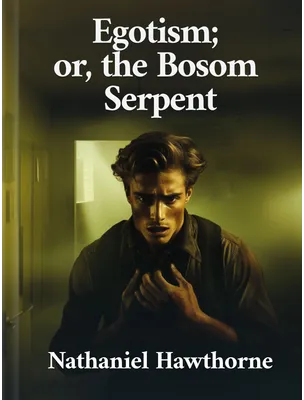
by
Nathaniel Hawthorne

“Here he comes!” shouted the boys along the street. “Here comes the man with a snake in his bosom!”
This outcry, saluting Herkimer’s ears as he was about to enter the iron gate of the Elliston mansion, made him pause. It was not without a shudder that he found himself on the point of meeting his former acquaintance, whom he had known in the glory of youth, and whom now after an interval of five years, he was to find the victim either of a diseased fancy or a horrible physical misfortune.
“A snake in his bosom!” repeated the young sculptor to himself. “It must be he. No second man on earth has such a bosom friend. And now, my poor Rosina, Heaven grant me wisdom to discharge my errand aright! Woman’s faith must be strong indeed since thine has not yet failed.”
Thus musing, he took his stand at the entrance of the gate and waited until the personage so singularly announced should make his appearance. After an instant or two he beheld the figure of a lean man, of unwholesome look, with glittering eyes and long black hair, who seemed to imitate the motion of a snake; for, instead of walking straight forward with open front, he undulated along the pavement in a curved line. It may be too fanciful to say that something, either in his moral or material aspect, suggested the idea that a miracle had been wrought by transforming a serpent into a man, but so imperfectly that the snaky nature was yet hidden, and scarcely hidden, under the mere outward guise of humanity. Herkimer remarked that his complexion had a greenish tinge over its sickly white, reminding him of a species of marble out of which he had once wrought a head of Envy, with her snaky locks.
The wretched being approached the gate, but, instead of entering, stopped short and fixed the glitter of his eye full upon the compassionate yet steady countenance of the sculptor.
“It gnaws me! It gnaws me!” he exclaimed.
And then there was an audible hiss, but whether it came from the apparent lunatic’s own lips, or was the real hiss of a serpent, might admit of a discussion. At all events, it made Herkimer shudder to his heart’s core.
“Do you know me, George Herkimer?” asked the snake-possessed.
Herkimer did know him; but it demanded all the intimate and practical acquaintance with the human face, acquired by modelling actual likenesses in clay, to recognize the features of Roderick Elliston in the visage that now met the sculptor’s gaze. Yet it was he. It added nothing to the wonder to reflect that the once brilliant young man had undergone this odious and fearful change during the no more than five brief years of Herkimer’s abode at Florence. The possibility of such a transformation being granted, it was as easy to conceive it effected in a moment as in an age. Inexpressibly shocked and startled, it was still the keenest pang when Herkimer remembered that the fate of his cousin Rosina, the ideal of gentle womanhood, was indissolubly interwoven with that of a being whom Providence seemed to have unhumanized.
“Elliston! Roderick!” cried he, “I had heard of this; but my conception came far short of the truth. What has befallen you? Why do I find you thus?”
“Oh, ’tis a mere nothing! A snake! A snake! The commonest thing in the world. A snake in the bosom — that’s all,” answered Roderick Elliston. “But how is your own breast?” continued he, looking the sculptor in the eye with the most acute and penetrating glance that it had ever been his fortune to encounter. “All pure and wholesome? No reptile there? By my faith and conscience, and by the devil within me, here is a wonder! A man without a serpent in his bosom!”
“Be calm, Elliston,” whispered George Herkimer, laying his hand upon the shoulder of the snake-possessed. “I have crossed the ocean to meet you. Listen! Let us be private. I bring a message from Rosina — from your wife!”
“It gnaws me! It gnaws me!” muttered Roderick.
With this exclamation, the most frequent in his mouth, the unfortunate man clutched both hands upon his breast as if an intolerable sting or torture impelled him to rend it open and let out the living mischief, even should it be intertwined with his own life. He then freed himself from Herkimer’s grasp by a subtle motion, and, gliding through the gate, took refuge in his antiquated family residence. The sculptor did not pursue him. He saw that no available intercourse could be expected at such a moment, and was desirous, before another meeting, to inquire closely into the nature of Roderick’s disease and the circumstances that had reduced him to so lamentable a condition. He succeeded in obtaining the necessary information from an eminent medical gentleman.
Shortly after Elliston’s separation from his wife — now nearly four years ago — his associates had observed a singular gloom spreading over his daily life, like those chill, gray mists that sometimes steal away the sunshine from a summer’s morning. The symptoms caused them endless perplexity. They knew not whether ill health were robbing his spirits of elasticity, or whether a canker of the mind was gradually eating, as such cankers do, from his moral system into the physical frame, which is but the shadow of the former. They looked for the root of this trouble in his shattered schemes of domestic bliss, — wilfully shattered by himself, — but could not be satisfied of its existence there. Some thought that their once brilliant friend was in an incipient stage of insanity, of which his passionate impulses had perhaps been the forerunners; others prognosticated a general blight and gradual decline. From Roderick’s own lips they could learn nothing. More than once, it is true, he had been heard to say, clutching his hands convulsively upon his breast, — “It gnaws me! It gnaws me!” — but, by different auditors, a great diversity of explanation was assigned to this ominous expression. What could it be that gnawed the breast of Roderick Elliston? Was it sorrow? Was it merely the tooth of physical disease? Or, in his reckless course, often verging upon profligacy, if not plunging into its depths, had he been guilty of some deed which made his bosom a prey to the deadlier fangs of remorse? There was plausible ground for each of these conjectures; but it must not be concealed that more than one elderly gentleman, the victim of good cheer and slothful habits, magisterially pronounced the secret of the whole matter to be Dyspepsia!
Meanwhile, Roderick seemed aware how generally he had become the subject of curiosity and conjecture, and, with a morbid repugnance to such notice, or to any notice whatsoever, estranged himself from all companionship. Not merely the eye of man was a horror to him; not merely the light of a friend’s countenance; but even the blessed sunshine, likewise, which in its universal beneficence typifies the radiance of the Creator’s face, expressing his love for all the creatures of his hand. The dusky twilight was now too transparent for Roderick Elliston; the blackest midnight was his chosen hour to steal abroad; and if ever he were seen, it was when the watchman’s lantern gleamed upon his figure, gliding along the street, with his hands clutched upon his bosom, still muttering, “It gnaws me! It gnaws me!” What could it be that gnawed him?
After a time, it became known that Elliston was in the habit of resorting to all the noted quacks that infested the city, or whom money would tempt to journey thither from a distance. By one of these persons, in the exultation of a supposed cure, it was proclaimed far and wide, by dint of handbills and little pamphlets on dingy paper, that a distinguished gentleman, Roderick Elliston, Esq., had been relieved of a snake in his stomach! So here was the monstrous secret, ejected from its lurking place into public view, in all its horrible deformity. The mystery was out; but not so the bosom serpent. He, if it were anything but a delusion, still lay coiled in his living den. The empiric’s cure had been a sham, the effect, it was supposed, of some stupefying drug which more nearly caused the death of the patient than of the odious reptile that possessed him. When Roderick Elliston regained entire sensibility, it was to find his misfortune the town talk — the more than nine days’ wonder and horror — while, at his bosom, he felt the sickening motion of a thing alive, and the gnawing of that restless fang which seemed to gratify at once a physical appetite and a fiendish spite.
He summoned the old black servant, who had been bred up in his father’s house, and was a middle-aged man while Roderick lay in his cradle.
“Scipio!” he began; and then paused, with his arms folded over his heart. “What do people say of me, Scipio.”
“Sir! my poor master! that you had a serpent in your bosom,” answered the servant with hesitation.
“And what else?” asked Roderick, with a ghastly look at the man.
“Nothing else, dear master,” replied Scipio, “only that the doctor gave you a powder, and that the snake leaped out upon the floor.”
“No, no!” muttered Roderick to himself, as he shook his head, and pressed his hands with a more convulsive force upon his breast, “I feel him still. It gnaws me! It gnaws me!”
From this time the miserable sufferer ceased to shun the world, but rather solicited and forced himself upon the notice of acquaintances and strangers. It was partly the result of desperation on finding that the cavern of his own bosom had not proved deep and dark enough to hide the secret, even while it was so secure a fortress for the loathsome fiend that had crept into it. But still more, this craving for notoriety was a symptom of the intense morbidness which now pervaded his nature. All persons chronically diseased are egotists, whether the disease be of the mind or body; whether it be sin, sorrow, or merely the more tolerable calamity of some endless pain, or mischief among the cords of mortal life. Such individuals are made acutely conscious of a self, by the torture in which it dwells. Self, therefore, grows to be so prominent an object with them that they cannot but present it to the face of every casual passer-by. There is a pleasure — perhaps the greatest of which the sufferer is susceptible — in displaying the wasted or ulcerated limb, or the cancer in the breast; and the fouler the crime, with so much the more difficulty does the perpetrator prevent it from thrusting up its snake-like head to frighten the world; for it is that cancer, or that crime, which constitutes their respective individuality. Roderick Elliston, who, a little while before, had held himself so scornfully above the common lot of men, now paid full allegiance to this humiliating law. The snake in his bosom seemed the symbol of a monstrous egotism to which everything was referred, and which he pampered, night and day, with a continual and exclusive sacrifice of devil worship.
He soon exhibited what most people considered indubitable tokens of insanity. In some of his moods, strange to say, he prided and gloried himself on being marked out from the ordinary experience of mankind, by the possession of a double nature, and a life within a life. He appeared to imagine that the snake was a divinity, — not celestial, it is true, but darkly infernal, — and that he thence derived an eminence and a sanctity, horrid, indeed, yet more desirable than whatever ambition aims at. Thus he drew his misery around him like a regal mantle, and looked down triumphantly upon those whose vitals nourished no deadly monster. Oftener, however, his human nature asserted its empire over him in the shape of a yearning for fellowship. It grew to be his custom to spend the whole day in wandering about the streets, aimlessly, unless it might be called an aim to establish a species of brotherhood between himself and the world. With cankered ingenuity, he sought out his own disease in every breast. Whether insane or not, he showed so keen a perception of frailty, error, and vice, that many persons gave him credit for being possessed not merely with a serpent, but with an actual fiend, who imparted this evil faculty of recognizing whatever was ugliest in man’s heart.
For instance, he met an individual, who, for thirty years, had cherished a hatred against his own brother. Roderick, amidst the throng of the street, laid his hand on this man’s chest, and looking full into his forbidding face, “How is the snake to-day?” he inquired, with a mock expression of sympathy.
“The snake!” exclaimed the brother hater — “what do you mean?”
“The snake! The snake! Does it gnaw you?” persisted Roderick. “Did you take counsel with him this morning when you should have been saying your prayers? Did he sting, when you thought of your brother’s health, wealth, and good repute? Did he caper for joy, when you remembered the profligacy of his only son? And whether he stung, or whether he frolicked, did you feel his poison throughout your body and soul, converting everything to sourness and bitterness? That is the way of such serpents. I have learned the whole nature of them from my own!”
“Where is the police?” roared the object of Roderick’s persecution, at the same time giving an instinctive clutch to his breast. “Why is this lunatic allowed to go at large?”
“Ha, ha!” chuckled Roderick, releasing his grasp of the man. — “His bosom serpent has stung him then!”
Often it pleased the unfortunate young man to vex people with a lighter satire, yet still characterized by somewhat of snake-like virulence. One day he encountered an ambitious statesman, and gravely inquired after the welfare of his boa constrictor; for of that species, Roderick affirmed, this gentleman’s serpent must needs be, since its appetite was enormous enough to devour the whole country and constitution. At another time, he stopped a close-fisted old fellow, of great wealth, but who skulked about the city in the guise of a scarecrow, with a patched blue surtout, brown hat, and mouldy boots, scraping pence together, and picking up rusty nails. Pretending to look earnestly at this respectable person’s stomach, Roderick assured him that his snake was a copper-head and had been generated by the immense quantities of that base metal with which he daily defiled his fingers. Again, he assaulted a man of rubicund visage, and told him that few bosom serpents had more of the devil in them than those that breed in the vats of a distillery. The next whom Roderick honored with his attention was a distinguished clergyman, who happened just then to be engaged in a theological controversy, where human wrath was more perceptible than divine inspiration.
“You have swallowed a snake in a cup of sacramental wine,” quoth he.
“Profane wretch!” exclaimed the divine; but, nevertheless, his hand stole to his breast.
He met a person of sickly sensibility, who, on some early disappointment, had retired from the world, and thereafter held no intercourse with his fellow-men, but brooded sullenly or passionately over the irrevocable past. This man’s very heart, if Roderick might be believed, had been changed into a serpent, which would finally torment both him and itself to death. Observing a married couple, whose domestic troubles were matter of notoriety, he condoled with both on having mutually taken a house adder to their bosoms. To an envious author, who depreciated works which he could never equal, he said that his snake was the slimiest and filthiest of all the reptile tribe, but was fortunately without a sting. A man of impure life, and a brazen face, asking Roderick if there were any serpent in his breast, he told him that there was, and of the same species that once tortured Don Rodrigo, the Goth. He took a fair young girl by the hand, and gazing sadly into her eyes, warned her that she cherished a serpent of the deadliest kind within her gentle breast; and the world found the truth of those ominous words, when, a few months afterwards, the poor girl died of love and shame. Two ladies, rivals in fashionable life who tormented one another with a thousand little stings of womanish spite, were given to understand that each of their hearts was a nest of diminutive snakes, which did quite as much mischief as one great one.
But nothing seemed to please Roderick better than to lay hold of a person infected with jealousy, which he represented as an enormous green reptile, with an ice-cold length of body, and the sharpest sting of any snake save one.
“And what one is that?” asked a by-stander, overhearing him.
It was a dark-browed man who put the question; he had an evasive eye, which in the course of a dozen years had looked no mortal directly in the face. There was an ambiguity about this person’s character, — a stain upon his reputation, — yet none could tell precisely of what nature, although the city gossips, male and female, whispered the most atrocious surmises. Until a recent period he had followed the sea, and was, in fact, the very shipmaster whom George Herkimer had encountered, under such singular circumstances, in the Grecian Archipelago.
“What bosom serpent has the sharpest sting?” repeated this man; but he put the question as if by a reluctant necessity, and grew pale while he was uttering it.
“Why need you ask?” replied Roderick, with a look of dark intelligence. “Look into your own breast. Hark! my serpent bestirs himself! He acknowledges the presence of a master fiend!”
And then, as the by-standers afterwards affirmed, a hissing sound was heard, apparently in Roderick Elliston’s breast. It was said, too, that an answering hiss came from the vitals of the shipmaster, as if a snake were actually lurking there and had been aroused by the call of its brother reptile. If there were in fact any such sound, it might have been caused by a malicious exercise of ventriloquism on the part of Roderick.
Thus making his own actual serpent — if a serpent there actually was in his bosom — the type of each man’s fatal error, or hoarded sin, or unquiet conscience, and striking his sting so unremorsefully into the sorest spot, we may well imagine that Roderick became the pest of the city. Nobody could elude him — none could withstand him. He grappled with the ugliest truth that he could lay his hand on, and compelled his adversary to do the same. Strange spectacle in human life where it is the instinctive effort of one and all to hide those sad realities, and leave them undisturbed beneath a heap of superficial topics which constitute the materials of intercourse between man and man! It was not to be tolerated that Roderick Elliston should break through the tacit compact by which the world has done its best to secure repose without relinquishing evil. The victims of his malicious remarks, it is true, had brothers enough to keep them in countenance; for, by Roderick’s theory, every mortal bosom harbored either a brood of small serpents or one overgrown monster that had devoured all the rest. Still the city could not bear this new apostle. It was demanded by nearly all, and particularly by the most respectable inhabitants, that Roderick should no longer be permitted to violate the received rules of decorum by obtruding his own bosom serpent to the public gaze, and dragging those of decent people from their lurking places.
Accordingly, his relatives interfered and placed him in a private asylum for the insane. When the news was noised abroad, it was observed that many persons walked the streets with freer countenances and covered their breasts less carefully with their hands.
His confinement, however, although it contributed not a little to the peace of the town, operated unfavorably upon Roderick himself. In solitude his melancholy grew more black and sullen. He spent whole days — indeed, it was his sole occupation — in communing with the serpent. A conversation was sustained, in which, as it seemed, the hidden monster bore a part, though unintelligibly to the listeners, and inaudible except in a hiss. Singular as it may appear, the sufferer had now contracted a sort of affection for his tormentor, mingled, however, with the intensest loathing and horror. Nor were such discordant emotions incompatible. Each, on the contrary, imparted strength and poignancy to its opposite. Horrible love — horrible antipathy — embracing one another in his bosom, and both concentrating themselves upon a being that had crept into his vitals or been engendered there, and which was nourished with his food, and lived upon his life, and was as intimate with him as his own heart, and yet was the foulest of all created things! But not the less was it the true type of a morbid nature.
Sometimes, in his moments of rage and bitter hatred against the snake and himself, Roderick determined to be the death of him, even at the expense of his own life. Once he attempted it by starvation; but, while the wretched man was on the point of famishing, the monster seemed to feed upon his heart, and to thrive and wax gamesome, as if it were his sweetest and most congenial diet. Then he privily took a dose of active poison, imagining that it would not fail to kill either himself or the devil that possessed him, or both together. Another mistake; for if Roderick had not yet been destroyed by his own poisoned heart nor the snake by gnawing it, they had little to fear from arsenic or corrosive sublimate. Indeed, the venomous pest appeared to operate as an antidote against all other poisons. The physicians tried to suffocate the fiend with tobacco smoke. He breathed it as freely as if it were his native atmosphere. Again, they drugged their patient with opium and drenched him with intoxicating liquors, hoping that the snake might thus be reduced to stupor and perhaps be ejected from the stomach. They succeeded in rendering Roderick insensible; but, placing their hands upon his breast, they were inexpressibly horror stricken to feel the monster wriggling, twining, and darting to and fro within his narrow limits, evidently enlivened by the opium or alcohol, and incited to unusual feats of activity. Thenceforth they gave up all attempts at cure or palliation. The doomed sufferer submitted to his fate, resumed his former loathsome affection for the bosom fiend, and spent whole miserable days before a looking-glass, with his mouth wide open, watching, in hope and horror, to catch a glimpse of the snake’s head far down within his throat. It is supposed that he succeeded; for the attendants once heard a frenzied shout, and, rushing into the room, found Roderick lifeless upon the floor.
He was kept but little longer under restraint. After minute investigation, the medical directors of the asylum decided that his mental disease did not amount to insanity, nor would warrant his confinement, especially as its influence upon his spirits was unfavorable, and might produce the evil which it was meant to remedy. His eccentricities were doubtless great; he had habitually violated many of the customs and prejudices of society; but the world was not, without surer ground, entitled to treat him as a madman. On this decision of such competent authority Roderick was released, and had returned to his native city the very day before his encounter with George Herkimer.
As soon as possible after learning these particulars the sculptor, together with a sad and tremulous companion, sought Elliston at his own house. It was a large, sombre edifice of wood, with pilasters and a balcony, and was divided from one of the principal streets by a terrace of three elevations, which was ascended by successive flights of stone steps. Some immense old elms almost concealed the front of the mansion. This spacious and once magnificent family residence was built by a grandee of the race early in the past century, at which epoch, land being of small comparative value, the garden and other grounds had formed quite an extensive domain. Although a portion of the ancestral heritage had been alienated, there was still a shadowy enclosure in the rear of the mansion where a student, or a dreamer, or a man of stricken heart might lie all day upon the grass, amid the solitude of murmuring boughs, and forget that a city had grown up around him.
Into this retirement the sculptor and his companion were ushered by Scipio, the old black servant, whose wrinkled visage grew almost sunny with intelligence and joy as he paid his humble greetings to one of the two visitors.
“Remain in the arbor,” whispered the sculptor to the figure that leaned upon his arm. “You will know whether, and when, to make your appearance.”
“God will teach me,” was the reply. “May He support me too!”
Roderick was reclining on the margin of a fountain which gushed into the fleckered sunshine with the same clear sparkle and the same voice of airy quietude as when trees of primeval growth flung their shadows cross its bosom. How strange is the life of a fountain! — born at every moment, yet of an age coeval with the rocks, and far surpassing the venerable antiquity of a forest.
“You are come! I have expected you,” said Elliston, when he became aware of the sculptor’s presence.
His manner was very different from that of the preceding day — quiet, courteous, and, as Herkimer thought, watchful both over his guest and himself. This unnatural restraint was almost the only trait that betokened anything amiss. He had just thrown a book upon the grass, where it lay half opened, thus disclosing itself to be a natural history of the serpent tribe, illustrated by lifelike plates. Near it lay that bulky volume, the Ductor Dubitantium of Jeremy Taylor, full of cases of conscience, and in which most men, possessed of a conscience, may find something applicable to their purpose.
“You see,” observed Elliston, pointing to the book of serpents, while a smile gleamed upon his lips, “I am making an effort to become better acquainted with my bosom friend; but I find nothing satisfactory in this volume. If I mistake not, he will prove to be sui generis, and akin to no other reptile in creation.”
“Whence came this strange calamity?” inquired the sculptor.
“My sable friend Scipio has a story,” replied Roderick, “of a snake that had lurked in this fountain — pure and innocent as it looks — ever since it was known to the first settlers. This insinuating personage once crept into the vitals of my great grandfather and dwelt there many years, tormenting the old gentleman beyond mortal endurance. In short it is a family peculiarity. But, to tell you the truth, I have no faith in this idea of the snake’s being an heirloom. He is my own snake, and no man’s else.”
“But what was his origin?” demanded Herkimer.