'Dusk' was published in 1918.
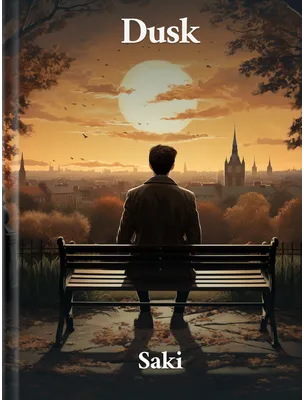
Norman Gortsby sits on a park bench one dark March evening, watching the people who walk by. To him, they all look sad and defeated, and he quickly judges them without knowing their stories. “Dusk” shows how easy it is to make wrong assumptions about others based only on what we see. It reminds us that everyone has a hidden story and that people are often more complicated than they appear.
In "Dusk," a captivating short story by Saki, the evening sky serves as a backdrop to a tale of wit and social commentary. The story introduces us to the main character, a young man who finds himself in a park, observing the world around him as the sun sets. He encounters a series of intriguing characters, each revealing the complexities of human nature and societal expectations. As the shadows lengthen, the young man's sharp observations and clever remarks challenge the norms of the society he inhabits.
The central theme revolves around the contrast between appearances and reality, inviting readers to ponder the masks people wear in their daily lives. With a blend of humor and irony, Saki crafts a narrative that captures the essence of twilight—a time when secrets are hidden and truths are revealed. As the story unfolds, the young man's interactions lead to unexpected revelations, making "Dusk" a delightful exploration of human behavior and the subtle dance of social dynamics.
Full Name: Hector Hugh Munro
Birthdate: December 18, 1870
Place of Birth: Akyab, Burma (now Sittwe, Myanmar)
Date and Place of Death: November 14, 1916, France
Occupation: Author, Journalist
Notable Works: "The Interlopers," "The Open Window," "Sredni Vashtar," "The Lumber Room"
Early Life: Saki was born to British parents in Burma. His father was a soldier, and his mother died when he was young. He was sent back to England to live with his two aunts in a strict household. This upbringing influenced his later writing, often filled with dark humor and critiques of society.
Literary Career: Saki began his writing career as a journalist. He published his first collection of short stories, "The Westminster Alice," in 1902. His witty and satirical stories often featured animals, children, and the upper class. Saki became known for his unique style and clever twists, earning a prominent place in English literature.
Personal Life: Saki was known for his sharp wit and playful personality. He never married and was often seen as a loner. His experiences in a strict household shaped his views on society, which he expressed in his stories. Saki's life ended tragically during World War I, where he served in the British Army and was killed in action.
The author of 'Dusk' is Saki, whose real name is Hector Hugh Munro. He was a British writer known for his witty and satirical stories.
'Dusk' is primarily a short story that falls under the genre of fiction, with elements of satire and dark humor.
The main character in 'Dusk' is a young man who interacts with an older gentleman, creating a dynamic filled with tension and wit.
'Dusk' tells the story of a chance meeting between a young man and an older man. The conversation reveals themes of deception and moral judgment.
Key themes in 'Dusk' include deception, the contrast between appearance and reality, and societal norms.
The setting and the characters in 'Dusk' symbolize the complexities of human nature and the masks people wear in society.
'Dusk' has been well-received, praised for its clever dialogue and commentary on social issues, though it may not be as widely known as Saki's other works.
As of now, there are no major film or theatrical adaptations of 'Dusk,' but it is often studied in literature courses.
'Dusk' reflects early 20th-century society and continues to influence discussions about human behavior and social norms in literature.