The book was published in 1901.
[{"id":"para_1","index":0,"start":0,"offset":342,"words":4,"paraNum":"","lastModified":1785739222000,"semanticType":"title-book-title","voicework":"audio_file","blockId":"duplicity_of_hargraves_en-bl2t","language":"en","wordsRange":{"start":202000000,"end":207000000},"paragraphVersion":32,"direction":"ltr","paragraph":"<h1 class=\"ilm-title ilm-x-large\" id=\"para_1\" semantictype=\"title-book-title\" data-ilmid=\"duplicity_of_hargraves_en-bl2t\" data-audio=\"1\" data-chapter=\"para_1\" data-words-count=\"4\" data-before=\"0\" data-ww=\"\"><span class=\"block-pb\"> <span class=\"block-pb is-animated\"></span> </span><span class=\"itm-wrap\">The Duplicity of Hargraves</span></h1>","hasContent":true,"isFirst":true,"isLast":false},{"id":"para_2","index":1,"start":342,"offset":345,"words":2,"paraNum":"","lastModified":1785739171000,"semanticType":"title-author","voicework":"audio_file","blockId":"duplicity_of_hargraves_en-bl5s","language":"en","wordsRange":{"start":218111111,"end":229222222},"paragraphVersion":30,"direction":"ltr","paragraph":"<h1 class=\"ilm-title ilm-author ilm-large ilm-nopad\" id=\"para_2\" semantictype=\"title-author\" data-ilmid=\"duplicity_of_hargraves_en-bl5s\" data-audio=\"1\" data-chapter=\"para_2\" data-words-count=\"2\" data-before=\"4\" data-ww=\"\"><span class=\"block-pb\"> <span class=\"block-pb is-animated\"></span> </span><span class=\"itm-wrap\">by<br>O. Henry</span></h1>","hasContent":true,"isFirst":false,"isLast":false},{"id":"para_3","index":2,"start":687,"offset":153,"words":0,"paraNum":"","lastModified":1785710761000,"semanticType":"line","blockId":"duplicity_of_hargraves_en-bl5r","language":"en","wordsRange":{"start":240333333,"end":273666667},"paragraphVersion":27,"direction":"ltr","paragraph":"<hr class=\"ilm-hr ilm-small\" id=\"para_3\" semantictype=\"line\" data-ilmid=\"duplicity_of_hargraves_en-bl5r\" data-words-count=\"0\" data-before=\"6\" data-ww=\"\">","hasContent":true,"isFirst":false,"isLast":false},{"id":"para_4","index":3,"start":840,"offset":1402,"words":0,"paraNum":"","lastModified":1786013619000,"semanticType":"illustration","blockId":"duplicity_of_hargraves_en-bl5u","language":"en","wordsRange":{"start":284777778,"end":295888889},"paragraphVersion":15,"direction":"ltr","paragraph":"<div class=\"ilm-illustration\" id=\"para_4\" semantictype=\"illustration\" data-ilmid=\"duplicity_of_hargraves_en-bl5u\" data-words-count=\"0\" data-before=\"6\" data-ww=\"\"><img width=\"600\" height=\"400\" data-src=\"ch0p0\" src=\"data:image/webp;base64,UklGRkIDAABXRUJQVlA4IDYDAABQDwCdASo8ACgAPm0sk0YkIqGhLVzKSIANiWMAsR+hhShpb7eivbu88UzT7JCBHaH9XgwOxrMOVqN7xWjbgOdWmT8i2wxs3cCJolcIfgtb7qvkBqlsyDSiO4061544lKKEybrMeygXSwbWwuItlnDnzCJvWz8l/lmH2RubU1hob0pAAAD+/PACJwMW52lwmyqWrIbDMLmDuJFdSEAcxd4164AdobpF2ki7bl3RVsmxG+e97pUaVkysfxFzorM4xv9QJxdQ3jOu1xWh+yOmgBEyX+6ZSyDuLFlA10ML6P+m4rLDU+3YD5cG3O9FY1lN2qMOlbFt5iuE3Bou1r4FW8j4LoWfkc/ChMyT5z6RNtC5UlRY2oqr0BqJMsZeNjbw7CUS4iMrCQdT/bfcZ6xNdALrbvyDaDkmZy1Zi5eXW59Km0x2Rs94HBHtaf1a9HaTaxX7egez+7U+k7m61auwex2q223fWany3jy6j/z11o4B6B4eGrXnY1LrBbGWf3H2Cfgj1Ojr7zB1HrlzGC6h6ZjmdB5CnH/tECbyOTcT/0Op6zwjq+z/7IhdjTGO2WUTkabUdLRFMl4LC8dkdnJeFpQFrifDRLq/6RYsA8io9ulmM7iTmO1PQ/7PXiai/dojj6DkYGa6FbcWiDwSGLr8oMqYqX/ewIyKrXTqg7i4cJhVt7G2m39aqPcocjS7kJ7bSBu9ccTYLo8yXkT4Agj0ATxumvu0lIiKSfjnc5Kz5PGWIh+qotxKZKN2UDCc0O+4vKqT06xaCU8gfZtdttmTzIrcPQZaQ+d+xnOM1QS/budyFQbiwy4pNaSk93ffpdYIovJNxWLdW9PiBg+bmvbqvwsKw1jpLVIbOws0qu3kSbW/a47q2eLsMlORj8jKjaCFIH/6oPf+k0pwo+8DdUy0r6GSz1lA161jFo7L7kqBXU2cdlTDMKiL2UDDIwKTD4Cc0nayho889Zoy5ccsK6CnReuSayBjT2Npmpn5h2xZHIpJlwWqyij9opXdLZILaVXJO7sr/6S1xw5lKQwNGmFjWYpLlMJadifzL0sSSk5YJlYWZ7pY0SYtxcBVHCJmvO5En5Car4D/MgA=\" alt=\"The Duplicity of Hargraves\"></div>","hasContent":true,"isFirst":false,"isLast":false},{"id":"para_5","index":4,"start":2242,"offset":863,"words":102,"paraNum":"1","lastModified":1786013619000,"semanticType":"par","voicework":"audio_file","blockId":"duplicity_of_hargraves_en-bl2u","language":"en","wordsRange":{"start":307000000,"end":410000000},"paragraphVersion":46,"direction":"ltr","paragraph":"<p id=\"para_5\" semantictype=\"par\" data-ilmid=\"duplicity_of_hargraves_en-bl2u\" data-audio=\"1\" data-words-count=\"102\" data-before=\"6\" data-ww=\"\"><span class=\"block-num\" data-id=\"1\"></span><span class=\"block-pb\"> <span class=\"block-pb is-animated\"></span> </span><span class=\"itm-wrap\">When Major Pendleton Talbot, of Mobile, sir, and his daughter, Miss Lydia Talbot, came to Washington to reside, they selected for a boarding place a house that stood fifty yards back from one of the quietest avenues. It was an old-fashioned brick building, with a portico upheld by tall white pillars. The yard was shaded by stately locusts and elms, and a catalpa tree in season rained its pink and white blossoms upon the grass. Rows of high box bushes lined the fence and walks. It was the Southern style and aspect of the place that pleased the eyes of the Talbots.</span></p>","hasContent":true,"isFirst":false,"isLast":false},{"id":"para_6","index":5,"start":3105,"offset":513,"words":34,"paraNum":"2","lastModified":1786013619000,"semanticType":"par","voicework":"audio_file","blockId":"duplicity_of_hargraves_en-bl2v","language":"en","wordsRange":{"start":510000000,"end":545000000},"paragraphVersion":38,"direction":"ltr","paragraph":"<p id=\"para_6\" semantictype=\"par\" data-ilmid=\"duplicity_of_hargraves_en-bl2v\" data-audio=\"1\" data-words-count=\"34\" data-before=\"108\" data-ww=\"\"><span class=\"block-num\" data-id=\"2\"></span><span class=\"block-pb\"> <span class=\"block-pb is-animated\"></span> </span><span class=\"itm-wrap\">In this pleasant, private boarding house they engaged rooms, including a study for Major Talbot, who was adding the finishing chapters to his book, “Anecdotes and Reminiscences of the Alabama Army, Bench, and Bar.”</span></p>","hasContent":true,"isFirst":false,"isLast":false},{"id":"para_7","index":6,"start":3618,"offset":812,"words":92,"paraNum":"3","lastModified":1786013619000,"semanticType":"par","voicework":"audio_file","blockId":"duplicity_of_hargraves_en-bl2w","language":"en","wordsRange":{"start":645000000,"end":738000000},"paragraphVersion":38,"direction":"ltr","paragraph":"<p id=\"para_7\" semantictype=\"par\" data-ilmid=\"duplicity_of_hargraves_en-bl2w\" data-audio=\"1\" data-words-count=\"92\" data-before=\"142\" data-ww=\"\"><span class=\"block-num\" data-id=\"3\"></span><span class=\"block-pb\"> <span class=\"block-pb is-animated\"></span> </span><span class=\"itm-wrap\">Major Talbot was of the old, old South. The present day had little interest or excellence in his eyes. His mind lived in that period before the Civil War, when the Talbots owned thousands of acres of fine cotton land and the slaves to till them; when the family mansion was the scene of princely hospitality, and drew its guests from the aristocracy of the South. Out of that period he had brought all its old pride and scruples of honour, an antiquated and punctilious politeness, and (you would think) its wardrobe.</span></p>","hasContent":true,"isFirst":false,"isLast":false},{"id":"para_8","index":7,"start":4430,"offset":753,"words":80,"paraNum":"4","lastModified":1786013619000,"semanticType":"par","voicework":"audio_file","blockId":"duplicity_of_hargraves_en-bl2x","language":"en","wordsRange":{"start":838000000,"end":919000000},"paragraphVersion":34,"direction":"ltr","paragraph":"<p id=\"para_8\" semantictype=\"par\" data-ilmid=\"duplicity_of_hargraves_en-bl2x\" data-audio=\"1\" data-words-count=\"80\" data-before=\"234\" data-ww=\"\"><span class=\"block-num\" data-id=\"4\"></span><span class=\"block-pb\"> <span class=\"block-pb is-animated\"></span> </span><span class=\"itm-wrap\">Such clothes were surely never made within fifty years. The major was tall, but whenever he made that wonderful, archaic genuflexion he called a bow, the corners of his frock coat swept the floor. That garment was a surprise even to Washington, which has long ago ceased to shy at the frocks and broadbrimmed hats of Southern congressmen. One of the boarders christened it a “Father Hubbard,” and it certainly was high in the waist and full in the skirt.</span></p>","hasContent":true,"isFirst":false,"isLast":false},{"id":"para_9","index":8,"start":5183,"offset":1011,"words":121,"paraNum":"5","lastModified":1786013619000,"semanticType":"par","voicework":"audio_file","blockId":"duplicity_of_hargraves_en-bl2y","language":"en","wordsRange":{"start":1019000000,"end":1141000000},"paragraphVersion":38,"direction":"ltr","paragraph":"<p id=\"para_9\" semantictype=\"par\" data-ilmid=\"duplicity_of_hargraves_en-bl2y\" data-audio=\"1\" data-words-count=\"121\" data-before=\"314\" data-ww=\"\"><span class=\"block-num\" data-id=\"5\"></span><span class=\"block-pb\"> <span class=\"block-pb is-animated\"></span> </span><span class=\"itm-wrap\">But the major, with all his queer clothes, his immense area of plaited, ravelling shirt bosom, and the little black string tie with the bow always slipping on one side, both was smiled at and liked in Mrs. Vardeman’s select boarding house. Some of the young department clerks would often “string him,” as they called it, getting him started upon the subject dearest to him—the traditions and history of his beloved Southland. During his talks he would quote freely from the “Anecdotes and Reminiscences.” But they were very careful not to let him see their designs, for in spite of his sixty-eight years, he could make the boldest of them uncomfortable under the steady regard of his piercing gray eyes.</span></p>","hasContent":true,"isFirst":false,"isLast":false},{"id":"para_10","index":9,"start":6194,"offset":1133,"words":151,"paraNum":"6","lastModified":1786013619000,"semanticType":"par","voicework":"audio_file","blockId":"duplicity_of_hargraves_en-bl2z","language":"en","wordsRange":{"start":1241000000,"end":1393000000},"paragraphVersion":34,"direction":"ltr","paragraph":"<p id=\"para_10\" semantictype=\"par\" data-ilmid=\"duplicity_of_hargraves_en-bl2z\" data-audio=\"1\" data-words-count=\"151\" data-before=\"435\" data-ww=\"\"><span class=\"block-num\" data-id=\"6\"></span><span class=\"block-pb\"> <span class=\"block-pb is-animated\"></span> </span><span class=\"itm-wrap\">Miss Lydia was a plump, little old maid of thirty-five, with smoothly drawn, tightly twisted hair that made her look still older. Old fashioned, too, she was; but ante-bellum glory did not radiate from her as it did from the major. She possessed a thrifty common sense; and it was she who handled the finances of the family, and met all comers when there were bills to pay. The major regarded board bills and wash bills as contemptible nuisances. They kept coming in so persistently and so often. Why, the major wanted to know, could they not be filed and paid in a lump sum at some convenient period—say when the “Anecdotes and Reminiscences” had been published and paid for? Miss Lydia would calmly go on with her sewing and say, “We’ll pay as we go as long as the money lasts, and then perhaps they’ll have to lump it.”</span></p>","hasContent":true,"isFirst":false,"isLast":false},{"id":"para_11","index":10,"start":7327,"offset":885,"words":104,"paraNum":"7","lastModified":1786013619000,"semanticType":"par","voicework":"audio_file","blockId":"duplicity_of_hargraves_en-bl30","language":"en","wordsRange":{"start":1493000000,"end":1598000000},"paragraphVersion":34,"direction":"ltr","paragraph":"<p id=\"para_11\" semantictype=\"par\" data-ilmid=\"duplicity_of_hargraves_en-bl30\" data-audio=\"1\" data-words-count=\"104\" data-before=\"586\" data-ww=\"\"><span class=\"block-num\" data-id=\"7\"></span><span class=\"block-pb\"> <span class=\"block-pb is-animated\"></span> </span><span class=\"itm-wrap\">Most of Mrs. Vardeman’s boarders were away during the day, being nearly all department clerks and business men; but there was one of them who was about the house a great deal from morning to night. This was a young man named Henry Hopkins Hargraves—every one in the house addressed him by his full name—who was engaged at one of the popular vaudeville theatres. Vaudeville has risen to such a respectable plane in the last few years, and Mr. Hargraves was such a modest and well-mannered person, that Mrs. Vardeman could find no objection to enrolling him upon her list of boarders.</span></p>","hasContent":true,"isFirst":false,"isLast":false},{"id":"para_12","index":11,"start":8212,"offset":545,"words":39,"paraNum":"8","lastModified":1786013619000,"semanticType":"par","voicework":"audio_file","blockId":"duplicity_of_hargraves_en-bl31","language":"en","wordsRange":{"start":1698000000,"end":1738000000},"paragraphVersion":34,"direction":"ltr","paragraph":"<p id=\"para_12\" semantictype=\"par\" data-ilmid=\"duplicity_of_hargraves_en-bl31\" data-audio=\"1\" data-words-count=\"39\" data-before=\"690\" data-ww=\"\"><span class=\"block-num\" data-id=\"8\"></span><span class=\"block-pb\"> <span class=\"block-pb is-animated\"></span> </span><span class=\"itm-wrap\">At the theatre Hargraves was known as an all-round dialect comedian, having a large repertoire of German, Irish, Swede, and black-face specialties. But Mr. Hargraves was ambitious, and often spoke of his great desire to succeed in legitimate comedy.</span></p>","hasContent":true,"isFirst":false,"isLast":false},{"id":"para_13","index":12,"start":8757,"offset":551,"words":40,"paraNum":"9","lastModified":1786013619000,"semanticType":"par","voicework":"audio_file","blockId":"duplicity_of_hargraves_en-bl32","language":"en","wordsRange":{"start":1838000000,"end":1879000000},"paragraphVersion":34,"direction":"ltr","paragraph":"<p id=\"para_13\" semantictype=\"par\" data-ilmid=\"duplicity_of_hargraves_en-bl32\" data-audio=\"1\" data-words-count=\"40\" data-before=\"729\" data-ww=\"\"><span class=\"block-num\" data-id=\"9\"></span><span class=\"block-pb\"> <span class=\"block-pb is-animated\"></span> </span><span class=\"itm-wrap\">This young man appeared to conceive a strong fancy for Major Talbot. Whenever that gentleman would begin his Southern reminiscences, or repeat some of the liveliest of the anecdotes, Hargraves could always be found, the most attentive among his listeners.</span></p>","hasContent":true,"isFirst":false,"isLast":false},{"id":"para_14","index":13,"start":9308,"offset":550,"words":40,"paraNum":"10","lastModified":1786013619000,"semanticType":"par","voicework":"audio_file","blockId":"duplicity_of_hargraves_en-bl33","language":"en","wordsRange":{"start":1979000000,"end":2020000000},"paragraphVersion":34,"direction":"ltr","paragraph":"<p id=\"para_14\" semantictype=\"par\" data-ilmid=\"duplicity_of_hargraves_en-bl33\" data-audio=\"1\" data-words-count=\"40\" data-before=\"769\" data-ww=\"\"><span class=\"block-num\" data-id=\"10\"></span><span class=\"block-pb\"> <span class=\"block-pb is-animated\"></span> </span><span class=\"itm-wrap\">For a time the major showed an inclination to discourage the advances of the “play actor,” as he privately termed him; but soon the young man’s agreeable manner and indubitable appreciation of the old gentleman’s stories completely won him over.</span></p>","hasContent":true,"isFirst":false,"isLast":false},{"id":"para_15","index":14,"start":9858,"offset":776,"words":86,"paraNum":"11","lastModified":1786013619000,"semanticType":"par","voicework":"audio_file","blockId":"duplicity_of_hargraves_en-bl34","language":"en","wordsRange":{"start":2120000000,"end":2207000000},"paragraphVersion":34,"direction":"ltr","paragraph":"<p id=\"para_15\" semantictype=\"par\" data-ilmid=\"duplicity_of_hargraves_en-bl34\" data-audio=\"1\" data-words-count=\"86\" data-before=\"809\" data-ww=\"\"><span class=\"block-num\" data-id=\"11\"></span><span class=\"block-pb\"> <span class=\"block-pb is-animated\"></span> </span><span class=\"itm-wrap\">It was not long before the two were like old chums. The major set apart each afternoon to read to him the manuscript of his book. During the anecdotes Hargraves never failed to laugh at exactly the right point. The major was moved to declare to Miss Lydia one day that young Hargraves possessed remarkable perception and a gratifying respect for the old regime. And when it came to talking of those old days—if Major Talbot liked to talk, Mr. Hargraves was entranced to listen.</span></p>","hasContent":true,"isFirst":false,"isLast":false},{"id":"para_16","index":15,"start":10634,"offset":844,"words":99,"paraNum":"12","lastModified":1786013619000,"semanticType":"par","voicework":"audio_file","blockId":"duplicity_of_hargraves_en-bl35","language":"en","wordsRange":{"start":2307000000,"end":2407000000},"paragraphVersion":34,"direction":"ltr","paragraph":"<p id=\"para_16\" semantictype=\"par\" data-ilmid=\"duplicity_of_hargraves_en-bl35\" data-audio=\"1\" data-words-count=\"99\" data-before=\"895\" data-ww=\"\"><span class=\"block-num\" data-id=\"12\"></span><span class=\"block-pb\"> <span class=\"block-pb is-animated\"></span> </span><span class=\"itm-wrap\">Like almost all old people who talk of the past, the major loved to linger over details. In describing the splendid, almost royal, days of the old planters, he would hesitate until he had recalled the name of the Negro who held his horse, or the exact date of certain minor happenings, or the number of bales of cotton raised in such a year; but Hargraves never grew impatient or lost interest. On the contrary, he would advance questions on a variety of subjects connected with the life of that time, and he never failed to extract ready replies.</span></p>","hasContent":true,"isFirst":false,"isLast":false},{"id":"para_17","index":16,"start":11478,"offset":869,"words":91,"paraNum":"13","lastModified":1786013619000,"semanticType":"par","voicework":"audio_file","blockId":"duplicity_of_hargraves_en-bl36","language":"en","wordsRange":{"start":2507000000,"end":2599000000},"paragraphVersion":44,"direction":"ltr","paragraph":"<p id=\"para_17\" semantictype=\"par\" data-ilmid=\"duplicity_of_hargraves_en-bl36\" data-audio=\"1\" data-words-count=\"91\" data-before=\"994\" data-ww=\"\"><span class=\"block-num\" data-id=\"13\"></span><span class=\"block-pb\"> <span class=\"block-pb is-animated\"></span> </span><span class=\"itm-wrap\">The fox hunts, the ’possum suppers, the hoe downs and jubilees in the Negro quarters, the banquets in the plantation-house hall, when invitations went for fifty miles around; the occasional feuds with the neighbouring gentry; the major’s duel with Rathbone Culbertson about Kitty Chalmers, who afterward married a Thwaite of South Carolina; and private yacht races for fabulous sums on Mobile Bay; the quaint beliefs, improvident habits, and loyal virtues of the old slaves—all these were subjects that held both the major and Hargraves absorbed for hours at a time.</span></p>","hasContent":true,"isFirst":false,"isLast":false},{"id":"para_18","index":17,"start":12347,"offset":611,"words":60,"paraNum":"14","lastModified":1786013619000,"semanticType":"par","voicework":"audio_file","blockId":"duplicity_of_hargraves_en-bl37","language":"en","wordsRange":{"start":2699000000,"end":2760000000},"paragraphVersion":38,"direction":"ltr","paragraph":"<p id=\"para_18\" semantictype=\"par\" data-ilmid=\"duplicity_of_hargraves_en-bl37\" data-audio=\"1\" data-words-count=\"60\" data-before=\"1085\" data-ww=\"\"><span class=\"block-num\" data-id=\"14\"></span><span class=\"block-pb\"> <span class=\"block-pb is-animated\"></span> </span><span class=\"itm-wrap\">Sometimes, at night, when the young man would be coming upstairs to his room after his turn at the theatre was over, the major would appear at the door of his study and beckon archly to him. Going in, Hargraves would find a little table set with a decanter, sugar bowl, fruit, and a big bunch of fresh green mint.</span></p>","hasContent":true,"isFirst":false,"isLast":false},{"id":"para_19","index":18,"start":12958,"offset":660,"words":58,"paraNum":"15","lastModified":1786013619000,"semanticType":"par","voicework":"audio_file","blockId":"duplicity_of_hargraves_en-bl38","language":"en","wordsRange":{"start":2860000000,"end":2919000000},"paragraphVersion":34,"direction":"ltr","paragraph":"<p id=\"para_19\" semantictype=\"par\" data-ilmid=\"duplicity_of_hargraves_en-bl38\" data-audio=\"1\" data-words-count=\"58\" data-before=\"1145\" data-ww=\"\"><span class=\"block-num\" data-id=\"15\"></span><span class=\"block-pb\"> <span class=\"block-pb is-animated\"></span> </span><span class=\"itm-wrap\">“It occurred to me,” the major would begin—he was always ceremonious—“that perhaps you might have found your duties at the—at your place of occupation—sufficiently arduous to enable you, Mr. Hargraves, to appreciate what the poet might well have had in his mind when he wrote, ‘tired Nature’s sweet restorer,’—one of our Southern juleps.”</span></p>","hasContent":true,"isFirst":false,"isLast":false},{"id":"para_20","index":19,"start":13618,"offset":770,"words":81,"paraNum":"16","lastModified":1786013619000,"semanticType":"par","voicework":"audio_file","blockId":"duplicity_of_hargraves_en-bl39","language":"en","wordsRange":{"start":3019000000,"end":3101000000},"paragraphVersion":38,"direction":"ltr","paragraph":"<p id=\"para_20\" semantictype=\"par\" data-ilmid=\"duplicity_of_hargraves_en-bl39\" data-audio=\"1\" data-words-count=\"81\" data-before=\"1203\" data-ww=\"\"><span class=\"block-num\" data-id=\"16\"></span><span class=\"block-pb\"> <span class=\"block-pb is-animated\"></span> </span><span class=\"itm-wrap\">It was a fascination to Hargraves to watch him make it. He took rank among artists when he began, and he never varied the process. With what delicacy he bruised the mint; with what exquisite nicety he estimated the ingredients; with what solicitous care he capped the compound with the scarlet fruit glowing against the dark green fringe! And then the hospitality and grace with which he offered it, after the selected oat straws had been plunged into its tinkling depths!</span></p>","hasContent":true,"isFirst":false,"isLast":false},{"id":"para_21","index":20,"start":14388,"offset":734,"words":74,"paraNum":"17","lastModified":1786013619000,"semanticType":"par","voicework":"audio_file","blockId":"duplicity_of_hargraves_en-bl3a","language":"en","wordsRange":{"start":3201000000,"end":3276000000},"paragraphVersion":38,"direction":"ltr","paragraph":"<p id=\"para_21\" semantictype=\"par\" data-ilmid=\"duplicity_of_hargraves_en-bl3a\" data-audio=\"1\" data-words-count=\"74\" data-before=\"1284\" data-ww=\"\"><span class=\"block-num\" data-id=\"17\"></span><span class=\"block-pb\"> <span class=\"block-pb is-animated\"></span> </span><span class=\"itm-wrap\">After about four months in Washington, Miss Lydia discovered one morning that they were almost without money. The “Anecdotes and Reminiscences” was completed, but publishers had not jumped at the collected gems of Alabama sense and wit. The rental of a small house which they still owned in Mobile was two months in arrears. Their board money for the month would be due in three days. Miss Lydia called her father to a consultation.</span></p>","hasContent":true,"isFirst":false,"isLast":false},{"id":"para_22","index":21,"start":15122,"offset":436,"words":24,"paraNum":"18","lastModified":1786013619000,"semanticType":"par","voicework":"audio_file","blockId":"duplicity_of_hargraves_en-bl3b","language":"en","wordsRange":{"start":3376000000,"end":3401000000},"paragraphVersion":34,"direction":"ltr","paragraph":"<p id=\"para_22\" semantictype=\"par\" data-ilmid=\"duplicity_of_hargraves_en-bl3b\" data-audio=\"1\" data-words-count=\"24\" data-before=\"1358\" data-ww=\"\"><span class=\"block-num\" data-id=\"18\"></span><span class=\"block-pb\"> <span class=\"block-pb is-animated\"></span> </span><span class=\"itm-wrap\">“No money?” said he with a surprised look. “It is quite annoying to be called on so frequently for these petty sums. Really, I—”</span></p>","hasContent":true,"isFirst":false,"isLast":false},{"id":"para_23","index":22,"start":15558,"offset":400,"words":18,"paraNum":"19","lastModified":1786013619000,"semanticType":"par","voicework":"audio_file","blockId":"duplicity_of_hargraves_en-bl3c","language":"en","wordsRange":{"start":3501000000,"end":3520000000},"paragraphVersion":34,"direction":"ltr","paragraph":"<p id=\"para_23\" semantictype=\"par\" data-ilmid=\"duplicity_of_hargraves_en-bl3c\" data-audio=\"1\" data-words-count=\"18\" data-before=\"1382\" data-ww=\"\"><span class=\"block-num\" data-id=\"19\"></span><span class=\"block-pb\"> <span class=\"block-pb is-animated\"></span> </span><span class=\"itm-wrap\">The major searched his pockets. He found only a two-dollar bill, which he returned to his vest pocket.</span></p>","hasContent":true,"isFirst":false,"isLast":false},{"id":"para_24","index":23,"start":15958,"offset":642,"words":64,"paraNum":"20","lastModified":1786013619000,"semanticType":"par","voicework":"audio_file","blockId":"duplicity_of_hargraves_en-bl3d","language":"en","wordsRange":{"start":3620000000,"end":3685000000},"paragraphVersion":34,"direction":"ltr","paragraph":"<p id=\"para_24\" semantictype=\"par\" data-ilmid=\"duplicity_of_hargraves_en-bl3d\" data-audio=\"1\" data-words-count=\"64\" data-before=\"1400\" data-ww=\"\"><span class=\"block-num\" data-id=\"20\"></span><span class=\"block-pb\"> <span class=\"block-pb is-animated\"></span> </span><span class=\"itm-wrap\">“I must attend to this at once, Lydia,” he said. “Kindly get me my umbrella and I will go down town immediately. The congressman from our district, General Fulghum, assured me some days ago that he would use his influence to get my book published at an early date. I will go to his hotel at once and see what arrangement has been made.”</span></p>","hasContent":true,"isFirst":false,"isLast":false},{"id":"para_25","index":24,"start":16600,"offset":446,"words":26,"paraNum":"21","lastModified":1786013619000,"semanticType":"par","voicework":"audio_file","blockId":"duplicity_of_hargraves_en-bl3e","language":"en","wordsRange":{"start":3785000000,"end":3812000000},"paragraphVersion":38,"direction":"ltr","paragraph":"<p id=\"para_25\" semantictype=\"par\" data-ilmid=\"duplicity_of_hargraves_en-bl3e\" data-audio=\"1\" data-words-count=\"26\" data-before=\"1464\" data-ww=\"\"><span class=\"block-num\" data-id=\"21\"></span><span class=\"block-pb\"> <span class=\"block-pb is-animated\"></span> </span><span class=\"itm-wrap\">With a sad little smile Miss Lydia watched him button his “Father Hubbard” and depart, pausing at the door, as he always did, to bow profoundly.</span></p>","hasContent":true,"isFirst":false,"isLast":false},{"id":"para_26","index":25,"start":17046,"offset":667,"words":62,"paraNum":"22","lastModified":1786013619000,"semanticType":"par","voicework":"audio_file","blockId":"duplicity_of_hargraves_en-bl3f","language":"en","wordsRange":{"start":3912000000,"end":3975000000},"paragraphVersion":34,"direction":"ltr","paragraph":"<p id=\"para_26\" semantictype=\"par\" data-ilmid=\"duplicity_of_hargraves_en-bl3f\" data-audio=\"1\" data-words-count=\"62\" data-before=\"1490\" data-ww=\"\"><span class=\"block-num\" data-id=\"22\"></span><span class=\"block-pb\"> <span class=\"block-pb is-animated\"></span> </span><span class=\"itm-wrap\">That evening, at dark, he returned. It seemed that Congressman Fulghum had seen the publisher who had the major’s manuscript for reading. That person had said that if the anecdotes, etc., were carefully pruned down about one half, in order to eliminate the sectional and class prejudice with which the book was dyed from end to end, he might consider its publication.</span></p>","hasContent":true,"isFirst":false,"isLast":false},{"id":"para_27","index":26,"start":17713,"offset":446,"words":28,"paraNum":"23","lastModified":1786013619000,"semanticType":"par","voicework":"audio_file","blockId":"duplicity_of_hargraves_en-bl3g","language":"en","wordsRange":{"start":4075000000,"end":4104000000},"paragraphVersion":44,"direction":"ltr","paragraph":"<p id=\"para_27\" semantictype=\"par\" data-ilmid=\"duplicity_of_hargraves_en-bl3g\" data-audio=\"1\" data-words-count=\"28\" data-before=\"1552\" data-ww=\"\"><span class=\"block-num\" data-id=\"23\"></span><span class=\"block-pb\"> <span class=\"block-pb is-animated\"></span> </span><span class=\"itm-wrap\">The major was in a white heat of anger, but regained his equanimity, according to his code of manners, as soon as he was in Miss Lydia’s presence.</span></p>","hasContent":true,"isFirst":false,"isLast":false},{"id":"para_28","index":27,"start":18159,"offset":464,"words":29,"paraNum":"24","lastModified":1786013619000,"semanticType":"par","voicework":"audio_file","blockId":"duplicity_of_hargraves_en-bl3h","language":"en","wordsRange":{"start":4204000000,"end":4234000000},"paragraphVersion":38,"direction":"ltr","paragraph":"<p id=\"para_28\" semantictype=\"par\" data-ilmid=\"duplicity_of_hargraves_en-bl3h\" data-audio=\"1\" data-words-count=\"29\" data-before=\"1580\" data-ww=\"\"><span class=\"block-num\" data-id=\"24\"></span><span class=\"block-pb\"> <span class=\"block-pb is-animated\"></span> </span><span class=\"itm-wrap\">“We must have money,” said Miss Lydia, with a little wrinkle above her nose. “Give me the two dollars, and I will telegraph to Uncle Ralph for some to-night.”</span></p>","hasContent":true,"isFirst":false,"isLast":false},{"id":"para_29","index":28,"start":18623,"offset":384,"words":17,"paraNum":"25","lastModified":1786013619000,"semanticType":"par","voicework":"audio_file","blockId":"duplicity_of_hargraves_en-bl3i","language":"en","wordsRange":{"start":4334000000,"end":4352000000},"paragraphVersion":34,"direction":"ltr","paragraph":"<p id=\"para_29\" semantictype=\"par\" data-ilmid=\"duplicity_of_hargraves_en-bl3i\" data-audio=\"1\" data-words-count=\"17\" data-before=\"1609\" data-ww=\"\"><span class=\"block-num\" data-id=\"25\"></span><span class=\"block-pb\"> <span class=\"block-pb is-animated\"></span> </span><span class=\"itm-wrap\">The major drew a small envelope from his upper vest pocket and tossed it on the table.</span></p>","hasContent":true,"isFirst":false,"isLast":false},{"id":"para_30","index":29,"start":19007,"offset":660,"words":65,"paraNum":"26","lastModified":1786013619000,"semanticType":"par","voicework":"audio_file","blockId":"duplicity_of_hargraves_en-bl3j","language":"en","wordsRange":{"start":4452000000,"end":4517000000},"paragraphVersion":45,"direction":"ltr","paragraph":"<p id=\"para_30\" semantictype=\"par\" data-ilmid=\"duplicity_of_hargraves_en-bl3j\" data-audio=\"1\" data-words-count=\"65\" data-before=\"1626\" data-ww=\"\"><span class=\"block-num\" data-id=\"26\"></span><span class=\"block-pb\"> <span class=\"block-pb is-animated\"></span> </span><span class=\"itm-wrap\">“Perhaps it was injudicious,” he said mildly, “but the sum was so merely nominal that I bought tickets to the theatre to-night. It’s a new war drama, Lydia. I thought you would be pleased to witness its first production in Washington. I am told that the South has very fair treatment in the play. I confess I should like to see the performance myself.”</span></p>","hasContent":true,"isFirst":false,"isLast":false},{"id":"para_31","index":30,"start":19667,"offset":345,"words":9,"paraNum":"27","lastModified":1786013619000,"semanticType":"par","voicework":"audio_file","blockId":"duplicity_of_hargraves_en-bl3k","language":"en","wordsRange":{"start":4617000000,"end":4627000000},"paragraphVersion":38,"direction":"ltr","paragraph":"<p id=\"para_31\" semantictype=\"par\" data-ilmid=\"duplicity_of_hargraves_en-bl3k\" data-audio=\"1\" data-words-count=\"9\" data-before=\"1691\" data-ww=\"\"><span class=\"block-num\" data-id=\"27\"></span><span class=\"block-pb\"> <span class=\"block-pb is-animated\"></span> </span><span class=\"itm-wrap\">Miss Lydia threw up her hands in silent despair.</span></p>","hasContent":true,"isFirst":false,"isLast":false},{"id":"para_32","index":31,"start":20012,"offset":850,"words":91,"paraNum":"28","lastModified":1786013619000,"semanticType":"par","voicework":"audio_file","blockId":"duplicity_of_hargraves_en-bl3l","language":"en","wordsRange":{"start":4727000000,"end":4819000000},"paragraphVersion":38,"direction":"ltr","paragraph":"<p id=\"para_32\" semantictype=\"par\" data-ilmid=\"duplicity_of_hargraves_en-bl3l\" data-audio=\"1\" data-words-count=\"91\" data-before=\"1700\" data-ww=\"\"><span class=\"block-num\" data-id=\"28\"></span><span class=\"block-pb\"> <span class=\"block-pb is-animated\"></span> </span><span class=\"itm-wrap\">Still, as the tickets were bought, they might as well be used. So that evening, as they sat in the theatre listening to the lively overture, even Miss Lydia was minded to relegate their troubles, for the hour, to second place. The major, in spotless linen, with his extraordinary coat showing only where it was closely buttoned, and his white hair smoothly roached, looked really fine and distinguished. The curtain went up on the first act of “A Magnolia Flower,” revealing a typical Southern plantation scene. Major Talbot betrayed some interest.</span></p>","hasContent":true,"isFirst":false,"isLast":false},{"id":"para_33","index":32,"start":20862,"offset":382,"words":13,"paraNum":"29","lastModified":1786013619000,"semanticType":"par","voicework":"audio_file","blockId":"duplicity_of_hargraves_en-bl3m","language":"en","wordsRange":{"start":4919000000,"end":4933000000},"paragraphVersion":34,"direction":"ltr","paragraph":"<p id=\"para_33\" semantictype=\"par\" data-ilmid=\"duplicity_of_hargraves_en-bl3m\" data-audio=\"1\" data-words-count=\"13\" data-before=\"1791\" data-ww=\"\"><span class=\"block-num\" data-id=\"29\"></span><span class=\"block-pb\"> <span class=\"block-pb is-animated\"></span> </span><span class=\"itm-wrap\">“Oh, see!” exclaimed Miss Lydia, nudging his arm, and pointing to her programme.</span></p>","hasContent":true,"isFirst":false,"isLast":false},{"id":"para_34","index":33,"start":21244,"offset":397,"words":19,"paraNum":"30","lastModified":1786013619000,"semanticType":"par","voicework":"audio_file","blockId":"duplicity_of_hargraves_en-bl3n","language":"en","wordsRange":{"start":5033000000,"end":5053000000},"paragraphVersion":44,"direction":"ltr","paragraph":"<p id=\"para_34\" semantictype=\"par\" data-ilmid=\"duplicity_of_hargraves_en-bl3n\" data-audio=\"1\" data-words-count=\"19\" data-before=\"1804\" data-ww=\"\"><span class=\"block-num\" data-id=\"30\"></span><span class=\"block-pb\"> <span class=\"block-pb is-animated\"></span> </span><span class=\"itm-wrap\">The major put on his glasses and read the line in the cast of characters that her finger indicated.</span></p>","hasContent":true,"isFirst":false,"isLast":false},{"id":"para_35","index":34,"start":21641,"offset":343,"words":6,"paraNum":"31","lastModified":1786013619000,"semanticType":"par","voicework":"audio_file","blockId":"duplicity_of_hargraves_en-bl3o","language":"en","wordsRange":{"start":5153000000,"end":5160000000},"paragraphVersion":41,"direction":"ltr","paragraph":"<p id=\"para_35\" semantictype=\"par\" data-ilmid=\"duplicity_of_hargraves_en-bl3o\" data-audio=\"1\" data-words-count=\"6\" data-before=\"1823\" data-ww=\"\"><span class=\"block-num\" data-id=\"31\"></span><span class=\"block-pb\"> <span class=\"block-pb is-animated\"></span> </span><span class=\"itm-wrap\">Col. Webster Calhoun.... H. Hopkins Hargraves.</span></p>","hasContent":true,"isFirst":false,"isLast":false},{"id":"para_36","index":35,"start":21984,"offset":446,"words":24,"paraNum":"32","lastModified":1786013619000,"semanticType":"par","voicework":"audio_file","blockId":"duplicity_of_hargraves_en-bl3p","language":"en","wordsRange":{"start":5260000000,"end":5285000000},"paragraphVersion":40,"direction":"ltr","paragraph":"<p id=\"para_36\" semantictype=\"par\" data-ilmid=\"duplicity_of_hargraves_en-bl3p\" data-audio=\"1\" data-words-count=\"24\" data-before=\"1829\" data-ww=\"\"><span class=\"block-num\" data-id=\"32\"></span><span class=\"block-pb\"> <span class=\"block-pb is-animated\"></span> </span><span class=\"itm-wrap\">“It’s our Mr. Hargraves,” said Miss Lydia. “It must be his first appearance in what he calls ‘the legitimate.’ I’m so glad for him.”</span></p>","hasContent":true,"isFirst":false,"isLast":false},{"id":"para_37","index":36,"start":22430,"offset":1330,"words":171,"paraNum":"33","lastModified":1786013619000,"semanticType":"par","voicework":"audio_file","blockId":"duplicity_of_hargraves_en-bl3q","language":"en","wordsRange":{"start":5385000000,"end":5557000000},"paragraphVersion":38,"direction":"ltr","paragraph":"<p id=\"para_37\" semantictype=\"par\" data-ilmid=\"duplicity_of_hargraves_en-bl3q\" data-audio=\"1\" data-words-count=\"171\" data-before=\"1853\" data-ww=\"\"><span class=\"block-num\" data-id=\"33\"></span><span class=\"block-pb\"> <span class=\"block-pb is-animated\"></span> </span><span class=\"itm-wrap\">Not until the second act did Col. Webster Calhoun appear upon the stage. When he made his entry Major Talbot gave an audible sniff, glared at him, and seemed to freeze solid. Miss Lydia uttered a little, ambiguous squeak and crumpled her programme in her hand. For Colonel Calhoun was made up as nearly resembling Major Talbot as one pea does another. The long, thin white hair, curly at the ends, the aristocratic beak of a nose, the crumpled, wide, ravelling shirt front, the string tie, with the bow nearly under one ear, were almost exactly duplicated. And then, to clinch the imitation, he wore the twin to the major’s supposed to be unparalleled coat. High-collared, baggy, empire-waisted, ample-skirted, hanging a foot lower in front than behind, the garment could have been designed from no other pattern. From then on, the major and Miss Lydia sat bewitched, and saw the counterfeit presentment of a haughty Talbot “dragged,” as the major afterward expressed it, “through the slanderous mire of a corrupt stage.”</span></p>","hasContent":true,"isFirst":false,"isLast":false},{"id":"para_38","index":37,"start":23760,"offset":682,"words":61,"paraNum":"34","lastModified":1786013619000,"semanticType":"par","voicework":"audio_file","blockId":"duplicity_of_hargraves_en-bl3r","language":"en","wordsRange":{"start":5657000000,"end":5719000000},"paragraphVersion":34,"direction":"ltr","paragraph":"<p id=\"para_38\" semantictype=\"par\" data-ilmid=\"duplicity_of_hargraves_en-bl3r\" data-audio=\"1\" data-words-count=\"61\" data-before=\"2024\" data-ww=\"\"><span class=\"block-num\" data-id=\"34\"></span><span class=\"block-pb\"> <span class=\"block-pb is-animated\"></span> </span><span class=\"itm-wrap\">Mr. Hargraves had used his opportunities well. He had caught the major’s little idiosyncrasies of speech, accent, and intonation and his pompous courtliness to perfection—exaggerating all to the purposes of the stage. When he performed that marvellous bow that the major fondly imagined to be the pink of all salutations, the audience sent forth a sudden round of hearty applause.</span></p>","hasContent":true,"isFirst":false,"isLast":false},{"id":"para_39","index":38,"start":24442,"offset":523,"words":40,"paraNum":"35","lastModified":1786013619000,"semanticType":"par","voicework":"audio_file","blockId":"duplicity_of_hargraves_en-bl3s","language":"en","wordsRange":{"start":5819000000,"end":5860000000},"paragraphVersion":38,"direction":"ltr","paragraph":"<p id=\"para_39\" semantictype=\"par\" data-ilmid=\"duplicity_of_hargraves_en-bl3s\" data-audio=\"1\" data-words-count=\"40\" data-before=\"2085\" data-ww=\"\"><span class=\"block-num\" data-id=\"35\"></span><span class=\"block-pb\"> <span class=\"block-pb is-animated\"></span> </span><span class=\"itm-wrap\">Miss Lydia sat immovable, not daring to glance toward her father. Sometimes her hand next to him would be laid against her cheek, as if to conceal the smile which, in spite of her disapproval, she could not entirely suppress.</span></p>","hasContent":true,"isFirst":false,"isLast":false},{"id":"para_40","index":39,"start":24965,"offset":478,"words":28,"paraNum":"36","lastModified":1786013619000,"semanticType":"par","voicework":"audio_file","blockId":"duplicity_of_hargraves_en-bl3t","language":"en","wordsRange":{"start":5960000000,"end":5989000000},"paragraphVersion":34,"direction":"ltr","paragraph":"<p id=\"para_40\" semantictype=\"par\" data-ilmid=\"duplicity_of_hargraves_en-bl3t\" data-audio=\"1\" data-words-count=\"28\" data-before=\"2125\" data-ww=\"\"><span class=\"block-num\" data-id=\"36\"></span><span class=\"block-pb\"> <span class=\"block-pb is-animated\"></span> </span><span class=\"itm-wrap\">The culmination of Hargraves’s audacious imitation took place in the third act. The scene is where Colonel Calhoun entertains a few of the neighbouring planters in his “den.”</span></p>","hasContent":true,"isFirst":false,"isLast":false},{"id":"para_41","index":40,"start":25443,"offset":538,"words":41,"paraNum":"37","lastModified":1786013619000,"semanticType":"par","voicework":"audio_file","blockId":"duplicity_of_hargraves_en-bl3u","language":"en","wordsRange":{"start":6089000000,"end":6131000000},"paragraphVersion":34,"direction":"ltr","paragraph":"<p id=\"para_41\" semantictype=\"par\" data-ilmid=\"duplicity_of_hargraves_en-bl3u\" data-audio=\"1\" data-words-count=\"41\" data-before=\"2153\" data-ww=\"\"><span class=\"block-num\" data-id=\"37\"></span><span class=\"block-pb\"> <span class=\"block-pb is-animated\"></span> </span><span class=\"itm-wrap\">Standing at a table in the centre of the stage, with his friends grouped about him, he delivers that inimitable, rambling, character monologue so famous in “A Magnolia Flower,” at the same time that he deftly makes juleps for the party.</span></p>","hasContent":true,"isFirst":false,"isLast":false},{"id":"para_42","index":41,"start":25981,"offset":706,"words":63,"paraNum":"38","lastModified":1786013619000,"semanticType":"par","voicework":"audio_file","blockId":"duplicity_of_hargraves_en-bl3v","language":"en","wordsRange":{"start":6231000000,"end":6295000000},"paragraphVersion":38,"direction":"ltr","paragraph":"<p id=\"para_42\" semantictype=\"par\" data-ilmid=\"duplicity_of_hargraves_en-bl3v\" data-audio=\"1\" data-words-count=\"63\" data-before=\"2194\" data-ww=\"\"><span class=\"block-num\" data-id=\"38\"></span><span class=\"block-pb\"> <span class=\"block-pb is-animated\"></span> </span><span class=\"itm-wrap\">Major Talbot, sitting quietly, but white with indignation, heard his best stories retold, his pet theories and hobbies advanced and expanded, and the dream of the “Anecdotes and Reminiscences” served, exaggerated and garbled. His favourite narrative—that of his duel with Rathbone Culbertson—was not omitted, and it was delivered with more fire, egotism, and gusto than the major himself put into it.</span></p>","hasContent":true,"isFirst":false,"isLast":false},{"id":"para_43","index":42,"start":26687,"offset":768,"words":73,"paraNum":"39","lastModified":1786013619000,"semanticType":"par","voicework":"audio_file","blockId":"duplicity_of_hargraves_en-bl3w","language":"en","wordsRange":{"start":6395000000,"end":6469000000},"paragraphVersion":38,"direction":"ltr","paragraph":"<p id=\"para_43\" semantictype=\"par\" data-ilmid=\"duplicity_of_hargraves_en-bl3w\" data-audio=\"1\" data-words-count=\"73\" data-before=\"2257\" data-ww=\"\"><span class=\"block-num\" data-id=\"39\"></span><span class=\"block-pb\"> <span class=\"block-pb is-animated\"></span> </span><span class=\"itm-wrap\">The monologue concluded with a quaint, delicious, witty little lecture on the art of concocting a julep, illustrated by the act. Here Major Talbot’s delicate but showy science was reproduced to a hair’s breadth—from his dainty handling of the fragrant weed—“the one-thousandth part of a grain too much pressure, gentlemen, and you extract the bitterness, instead of the aroma, of this heaven-bestowed plant”—to his solicitous selection of the oaten straws.</span></p>","hasContent":true,"isFirst":false,"isLast":false},{"id":"para_44","index":43,"start":27455,"offset":636,"words":57,"paraNum":"40","lastModified":1786013619000,"semanticType":"par","voicework":"audio_file","blockId":"duplicity_of_hargraves_en-bl3x","language":"en","wordsRange":{"start":6569000000,"end":6627000000},"paragraphVersion":34,"direction":"ltr","paragraph":"<p id=\"para_44\" semantictype=\"par\" data-ilmid=\"duplicity_of_hargraves_en-bl3x\" data-audio=\"1\" data-words-count=\"57\" data-before=\"2330\" data-ww=\"\"><span class=\"block-num\" data-id=\"40\"></span><span class=\"block-pb\"> <span class=\"block-pb is-animated\"></span> </span><span class=\"itm-wrap\">At the close of the scene the audience raised a tumultuous roar of appreciation. The portrayal of the type was so exact, so sure and thorough, that the leading characters in the play were forgotten. After repeated calls, Hargraves came before the curtain and bowed, his rather boyish face bright and flushed with the knowledge of success.</span></p>","hasContent":true,"isFirst":false,"isLast":false},{"id":"para_45","index":44,"start":28091,"offset":468,"words":34,"paraNum":"41","lastModified":1786013619000,"semanticType":"par","voicework":"audio_file","blockId":"duplicity_of_hargraves_en-bl3y","language":"en","wordsRange":{"start":6727000000,"end":6762000000},"paragraphVersion":38,"direction":"ltr","paragraph":"<p id=\"para_45\" semantictype=\"par\" data-ilmid=\"duplicity_of_hargraves_en-bl3y\" data-audio=\"1\" data-words-count=\"34\" data-before=\"2387\" data-ww=\"\"><span class=\"block-num\" data-id=\"41\"></span><span class=\"block-pb\"> <span class=\"block-pb is-animated\"></span> </span><span class=\"itm-wrap\">At last Miss Lydia turned and looked at the major. His thin nostrils were working like the gills of a fish. He laid both shaking hands upon the arms of his chair to rise.</span></p>","hasContent":true,"isFirst":false,"isLast":false},{"id":"para_46","index":45,"start":28559,"offset":384,"words":12,"paraNum":"42","lastModified":1786013619000,"semanticType":"par","voicework":"audio_file","blockId":"duplicity_of_hargraves_en-bl3z","language":"en","wordsRange":{"start":6862000000,"end":6875000000},"paragraphVersion":34,"direction":"ltr","paragraph":"<p id=\"para_46\" semantictype=\"par\" data-ilmid=\"duplicity_of_hargraves_en-bl3z\" data-audio=\"1\" data-words-count=\"12\" data-before=\"2421\" data-ww=\"\"><span class=\"block-num\" data-id=\"42\"></span><span class=\"block-pb\"> <span class=\"block-pb is-animated\"></span> </span><span class=\"itm-wrap\">“We will go, Lydia,” he said chokingly. “This is an abominable—desecration.”</span></p>","hasContent":true,"isFirst":false,"isLast":false},{"id":"para_47","index":46,"start":28943,"offset":497,"words":36,"paraNum":"43","lastModified":1786013619000,"semanticType":"par","voicework":"audio_file","blockId":"duplicity_of_hargraves_en-bl40","language":"en","wordsRange":{"start":6975000000,"end":7012000000},"paragraphVersion":38,"direction":"ltr","paragraph":"<p id=\"para_47\" semantictype=\"par\" data-ilmid=\"duplicity_of_hargraves_en-bl40\" data-audio=\"1\" data-words-count=\"36\" data-before=\"2433\" data-ww=\"\"><span class=\"block-num\" data-id=\"43\"></span><span class=\"block-pb\"> <span class=\"block-pb is-animated\"></span> </span><span class=\"itm-wrap\">Before he could rise, she pulled him back into his seat. “We will stay it out,” she declared. “Do you want to advertise the copy by exhibiting the original coat?” So they remained to the end.</span></p>","hasContent":true,"isFirst":false,"isLast":false},{"id":"para_48","index":47,"start":29440,"offset":426,"words":23,"paraNum":"44","lastModified":1786013619000,"semanticType":"par","voicework":"audio_file","blockId":"duplicity_of_hargraves_en-bl41","language":"en","wordsRange":{"start":7112000000,"end":7136000000},"paragraphVersion":38,"direction":"ltr","paragraph":"<p id=\"para_48\" semantictype=\"par\" data-ilmid=\"duplicity_of_hargraves_en-bl41\" data-audio=\"1\" data-words-count=\"23\" data-before=\"2469\" data-ww=\"\"><span class=\"block-num\" data-id=\"44\"></span><span class=\"block-pb\"> <span class=\"block-pb is-animated\"></span> </span><span class=\"itm-wrap\">Hargraves’s success must have kept him up late that night, for neither at the breakfast nor at the dinner table did he appear.</span></p>","hasContent":true,"isFirst":false,"isLast":false},{"id":"para_49","index":48,"start":29866,"offset":543,"words":43,"paraNum":"45","lastModified":1786013619000,"semanticType":"par","voicework":"audio_file","blockId":"duplicity_of_hargraves_en-bl42","language":"en","wordsRange":{"start":7236000000,"end":7280000000},"paragraphVersion":38,"direction":"ltr","paragraph":"<p id=\"para_49\" semantictype=\"par\" data-ilmid=\"duplicity_of_hargraves_en-bl42\" data-audio=\"1\" data-words-count=\"43\" data-before=\"2492\" data-ww=\"\"><span class=\"block-num\" data-id=\"45\"></span><span class=\"block-pb\"> <span class=\"block-pb is-animated\"></span> </span><span class=\"itm-wrap\">About three in the afternoon he tapped at the door of Major Talbot’s study. The major opened it, and Hargraves walked in with his hands full of the morning papers—too full of his triumph to notice anything unusual in the major’s demeanour.</span></p>","hasContent":true,"isFirst":false,"isLast":false},{"id":"para_50","index":49,"start":30409,"offset":445,"words":25,"paraNum":"46","lastModified":1786013619000,"semanticType":"par","voicework":"audio_file","blockId":"duplicity_of_hargraves_en-bl43","language":"en","wordsRange":{"start":7380000000,"end":7406000000},"paragraphVersion":34,"direction":"ltr","paragraph":"<p id=\"para_50\" semantictype=\"par\" data-ilmid=\"duplicity_of_hargraves_en-bl43\" data-audio=\"1\" data-words-count=\"25\" data-before=\"2535\" data-ww=\"\"><span class=\"block-num\" data-id=\"46\"></span><span class=\"block-pb\"> <span class=\"block-pb is-animated\"></span> </span><span class=\"itm-wrap\">“I put it all over ’em last night, major,” he began exultantly. “I had my inning, and, I think, scored. Here’s what the <i>Post</i> says:</span></p>","hasContent":true,"isFirst":false,"isLast":false},{"id":"para_51","index":50,"start":30854,"offset":744,"words":71,"paraNum":"47","lastModified":1786013619000,"semanticType":"par","voicework":"audio_file","blockId":"duplicity_of_hargraves_en-bl44","language":"en","wordsRange":{"start":7506000000,"end":7578000000},"paragraphVersion":38,"direction":"ltr","paragraph":"<p id=\"para_51\" semantictype=\"par\" data-ilmid=\"duplicity_of_hargraves_en-bl44\" data-audio=\"1\" data-words-count=\"71\" data-before=\"2560\" data-ww=\"\"><span class=\"block-num\" data-id=\"47\"></span><span class=\"block-pb\"> <span class=\"block-pb is-animated\"></span> </span><span class=\"itm-wrap\">His conception and portrayal of the old-time Southern colonel, with his absurd grandiloquence, his eccentric garb, his quaint idioms and phrases, his moth-eaten pride of family, and his really kind heart, fastidious sense of honour, and lovable simplicity, is the best delineation of a character role on the boards to-day. The coat worn by Colonel Calhoun is itself nothing less than an evolution of genius. Mr. Hargraves has captured his public.</span></p>","hasContent":true,"isFirst":false,"isLast":false},{"id":"para_52","index":51,"start":31598,"offset":351,"words":9,"paraNum":"48","lastModified":1786013619000,"semanticType":"par","voicework":"audio_file","blockId":"duplicity_of_hargraves_en-bl45","language":"en","wordsRange":{"start":7678000000,"end":7688000000},"paragraphVersion":38,"direction":"ltr","paragraph":"<p id=\"para_52\" semantictype=\"par\" data-ilmid=\"duplicity_of_hargraves_en-bl45\" data-audio=\"1\" data-words-count=\"9\" data-before=\"2631\" data-ww=\"\"><span class=\"block-num\" data-id=\"48\"></span><span class=\"block-pb\"> <span class=\"block-pb is-animated\"></span> </span><span class=\"itm-wrap\">“How does that sound, major, for a first nighter?”</span></p>","hasContent":true,"isFirst":false,"isLast":false},{"id":"para_53","index":52,"start":31949,"offset":440,"words":19,"paraNum":"49","lastModified":1786013619000,"semanticType":"par","voicework":"audio_file","blockId":"duplicity_of_hargraves_en-bl46","language":"en","wordsRange":{"start":7788000000,"end":7808000000},"paragraphVersion":44,"direction":"ltr","paragraph":"<p id=\"para_53\" semantictype=\"par\" data-ilmid=\"duplicity_of_hargraves_en-bl46\" data-audio=\"1\" data-words-count=\"19\" data-before=\"2640\" data-ww=\"\"><span class=\"block-num\" data-id=\"49\"></span><span class=\"block-pb\"> <span class=\"block-pb is-animated\"></span> </span><span class=\"itm-wrap\">“I had the honour”—the major’s voice sounded ominously frigid—“of witnessing your very remarkable performance, sir, last night.”</span></p>","hasContent":true,"isFirst":false,"isLast":false},{"id":"para_54","index":53,"start":32389,"offset":327,"words":3,"paraNum":"50","lastModified":1786013619000,"semanticType":"par","voicework":"audio_file","blockId":"duplicity_of_hargraves_en-bl47","language":"en","wordsRange":{"start":7908000000,"end":7912000000},"paragraphVersion":38,"direction":"ltr","paragraph":"<p id=\"para_54\" semantictype=\"par\" data-ilmid=\"duplicity_of_hargraves_en-bl47\" data-audio=\"1\" data-words-count=\"3\" data-before=\"2659\" data-ww=\"\"><span class=\"block-num\" data-id=\"50\"></span><span class=\"block-pb\"> <span class=\"block-pb is-animated\"></span> </span><span class=\"itm-wrap\">Hargraves looked disconcerted.</span></p>","hasContent":true,"isFirst":false,"isLast":false},{"id":"para_55","index":54,"start":32716,"offset":715,"words":74,"paraNum":"51","lastModified":1786013619000,"semanticType":"par","voicework":"audio_file","blockId":"duplicity_of_hargraves_en-bl48","language":"en","wordsRange":{"start":8012000000,"end":8087000000},"paragraphVersion":34,"direction":"ltr","paragraph":"<p id=\"para_55\" semantictype=\"par\" data-ilmid=\"duplicity_of_hargraves_en-bl48\" data-audio=\"1\" data-words-count=\"74\" data-before=\"2662\" data-ww=\"\"><span class=\"block-num\" data-id=\"51\"></span><span class=\"block-pb\"> <span class=\"block-pb is-animated\"></span> </span><span class=\"itm-wrap\">“You were there? I didn’t know you ever—I didn’t know you cared for the theatre. Oh, I say, Major Talbot,” he exclaimed frankly, “don’t you be offended. I admit I did get a lot of pointers from you that helped me out wonderfully in the part. But it’s a type, you know—not individual. The way the audience caught on shows that. Half the patrons of that theatre are Southerners. They recognized it.”</span></p>","hasContent":true,"isFirst":false,"isLast":false},{"id":"para_56","index":55,"start":33431,"offset":696,"words":71,"paraNum":"52","lastModified":1786013619000,"semanticType":"par","voicework":"audio_file","blockId":"duplicity_of_hargraves_en-bl49","language":"en","wordsRange":{"start":8187000000,"end":8259000000},"paragraphVersion":38,"direction":"ltr","paragraph":"<p id=\"para_56\" semantictype=\"par\" data-ilmid=\"duplicity_of_hargraves_en-bl49\" data-audio=\"1\" data-words-count=\"71\" data-before=\"2736\" data-ww=\"\"><span class=\"block-num\" data-id=\"52\"></span><span class=\"block-pb\"> <span class=\"block-pb is-animated\"></span> </span><span class=\"itm-wrap\">“Mr. Hargraves,” said the major, who had remained standing, “you have put upon me an unpardonable insult. You have burlesqued my person, grossly betrayed my confidence, and misused my hospitality. If I thought you possessed the faintest conception of what is the sign manual of a gentleman, or what is due one, I would call you out, sir, old as I am. I will ask you to leave the room, sir.”</span></p>","hasContent":true,"isFirst":false,"isLast":false},{"id":"para_57","index":56,"start":34127,"offset":421,"words":21,"paraNum":"53","lastModified":1786013619000,"semanticType":"par","voicework":"audio_file","blockId":"duplicity_of_hargraves_en-bl4a","language":"en","wordsRange":{"start":8359000000,"end":8381000000},"paragraphVersion":34,"direction":"ltr","paragraph":"<p id=\"para_57\" semantictype=\"par\" data-ilmid=\"duplicity_of_hargraves_en-bl4a\" data-audio=\"1\" data-words-count=\"21\" data-before=\"2807\" data-ww=\"\"><span class=\"block-num\" data-id=\"53\"></span><span class=\"block-pb\"> <span class=\"block-pb is-animated\"></span> </span><span class=\"itm-wrap\">The actor appeared to be slightly bewildered, and seemed hardly to take in the full meaning of the old gentleman’s words.</span></p>","hasContent":true,"isFirst":false,"isLast":false},{"id":"para_58","index":57,"start":34548,"offset":543,"words":46,"paraNum":"54","lastModified":1786013619000,"semanticType":"par","voicework":"audio_file","blockId":"duplicity_of_hargraves_en-bl4b","language":"en","wordsRange":{"start":8481000000,"end":8528000000},"paragraphVersion":34,"direction":"ltr","paragraph":"<p id=\"para_58\" semantictype=\"par\" data-ilmid=\"duplicity_of_hargraves_en-bl4b\" data-audio=\"1\" data-words-count=\"46\" data-before=\"2828\" data-ww=\"\"><span class=\"block-num\" data-id=\"54\"></span><span class=\"block-pb\"> <span class=\"block-pb is-animated\"></span> </span><span class=\"itm-wrap\">“I am truly sorry you took offence,” he said regretfully. “Up here we don’t look at things just as you people do. I know men who would buy out half the house to have their personality put on the stage so the public would recognize it.”</span></p>","hasContent":true,"isFirst":false,"isLast":false},{"id":"para_59","index":58,"start":35091,"offset":361,"words":10,"paraNum":"55","lastModified":1786013619000,"semanticType":"par","voicework":"audio_file","blockId":"duplicity_of_hargraves_en-bl4c","language":"en","wordsRange":{"start":8628000000,"end":8639000000},"paragraphVersion":34,"direction":"ltr","paragraph":"<p id=\"para_59\" semantictype=\"par\" data-ilmid=\"duplicity_of_hargraves_en-bl4c\" data-audio=\"1\" data-words-count=\"10\" data-before=\"2874\" data-ww=\"\"><span class=\"block-num\" data-id=\"55\"></span><span class=\"block-pb\"> <span class=\"block-pb is-animated\"></span> </span><span class=\"itm-wrap\">“They are not from Alabama, sir,” said the major haughtily.</span></p>","hasContent":true,"isFirst":false,"isLast":false},{"id":"para_60","index":59,"start":35452,"offset":518,"words":40,"paraNum":"56","lastModified":1786013619000,"semanticType":"par","voicework":"audio_file","blockId":"duplicity_of_hargraves_en-bl4d","language":"en","wordsRange":{"start":8739000000,"end":8780000000},"paragraphVersion":44,"direction":"ltr","paragraph":"<p id=\"para_60\" semantictype=\"par\" data-ilmid=\"duplicity_of_hargraves_en-bl4d\" data-audio=\"1\" data-words-count=\"40\" data-before=\"2884\" data-ww=\"\"><span class=\"block-num\" data-id=\"56\"></span><span class=\"block-pb\"> <span class=\"block-pb is-animated\"></span> </span><span class=\"itm-wrap\">“Perhaps not. I have a pretty good memory, major; let me quote a few lines from your book. In response to a toast at a banquet given in—Milledgeville, I believe—you uttered, and intend to have printed, these words:</span></p>","hasContent":true,"isFirst":false,"isLast":false}]
by
O. Henry

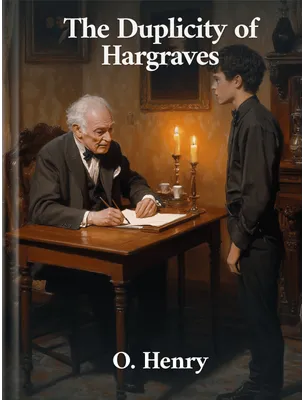
When Major Pendleton Talbot, of Mobile, sir, and his daughter, Miss Lydia Talbot, came to Washington to reside, they selected for a boarding place a house that stood fifty yards back from one of the quietest avenues. It was an old-fashioned brick building, with a portico upheld by tall white pillars. The yard was shaded by stately locusts and elms, and a catalpa tree in season rained its pink and white blossoms upon the grass. Rows of high box bushes lined the fence and walks. It was the Southern style and aspect of the place that pleased the eyes of the Talbots.
In this pleasant, private boarding house they engaged rooms, including a study for Major Talbot, who was adding the finishing chapters to his book, “Anecdotes and Reminiscences of the Alabama Army, Bench, and Bar.”
Major Talbot was of the old, old South. The present day had little interest or excellence in his eyes. His mind lived in that period before the Civil War, when the Talbots owned thousands of acres of fine cotton land and the slaves to till them; when the family mansion was the scene of princely hospitality, and drew its guests from the aristocracy of the South. Out of that period he had brought all its old pride and scruples of honour, an antiquated and punctilious politeness, and (you would think) its wardrobe.
Such clothes were surely never made within fifty years. The major was tall, but whenever he made that wonderful, archaic genuflexion he called a bow, the corners of his frock coat swept the floor. That garment was a surprise even to Washington, which has long ago ceased to shy at the frocks and broadbrimmed hats of Southern congressmen. One of the boarders christened it a “Father Hubbard,” and it certainly was high in the waist and full in the skirt.
But the major, with all his queer clothes, his immense area of plaited, ravelling shirt bosom, and the little black string tie with the bow always slipping on one side, both was smiled at and liked in Mrs. Vardeman’s select boarding house. Some of the young department clerks would often “string him,” as they called it, getting him started upon the subject dearest to him—the traditions and history of his beloved Southland. During his talks he would quote freely from the “Anecdotes and Reminiscences.” But they were very careful not to let him see their designs, for in spite of his sixty-eight years, he could make the boldest of them uncomfortable under the steady regard of his piercing gray eyes.
Miss Lydia was a plump, little old maid of thirty-five, with smoothly drawn, tightly twisted hair that made her look still older. Old fashioned, too, she was; but ante-bellum glory did not radiate from her as it did from the major. She possessed a thrifty common sense; and it was she who handled the finances of the family, and met all comers when there were bills to pay. The major regarded board bills and wash bills as contemptible nuisances. They kept coming in so persistently and so often. Why, the major wanted to know, could they not be filed and paid in a lump sum at some convenient period—say when the “Anecdotes and Reminiscences” had been published and paid for? Miss Lydia would calmly go on with her sewing and say, “We’ll pay as we go as long as the money lasts, and then perhaps they’ll have to lump it.”
Most of Mrs. Vardeman’s boarders were away during the day, being nearly all department clerks and business men; but there was one of them who was about the house a great deal from morning to night. This was a young man named Henry Hopkins Hargraves—every one in the house addressed him by his full name—who was engaged at one of the popular vaudeville theatres. Vaudeville has risen to such a respectable plane in the last few years, and Mr. Hargraves was such a modest and well-mannered person, that Mrs. Vardeman could find no objection to enrolling him upon her list of boarders.
At the theatre Hargraves was known as an all-round dialect comedian, having a large repertoire of German, Irish, Swede, and black-face specialties. But Mr. Hargraves was ambitious, and often spoke of his great desire to succeed in legitimate comedy.
This young man appeared to conceive a strong fancy for Major Talbot. Whenever that gentleman would begin his Southern reminiscences, or repeat some of the liveliest of the anecdotes, Hargraves could always be found, the most attentive among his listeners.
For a time the major showed an inclination to discourage the advances of the “play actor,” as he privately termed him; but soon the young man’s agreeable manner and indubitable appreciation of the old gentleman’s stories completely won him over.
It was not long before the two were like old chums. The major set apart each afternoon to read to him the manuscript of his book. During the anecdotes Hargraves never failed to laugh at exactly the right point. The major was moved to declare to Miss Lydia one day that young Hargraves possessed remarkable perception and a gratifying respect for the old regime. And when it came to talking of those old days—if Major Talbot liked to talk, Mr. Hargraves was entranced to listen.
Like almost all old people who talk of the past, the major loved to linger over details. In describing the splendid, almost royal, days of the old planters, he would hesitate until he had recalled the name of the Negro who held his horse, or the exact date of certain minor happenings, or the number of bales of cotton raised in such a year; but Hargraves never grew impatient or lost interest. On the contrary, he would advance questions on a variety of subjects connected with the life of that time, and he never failed to extract ready replies.
The fox hunts, the ’possum suppers, the hoe downs and jubilees in the Negro quarters, the banquets in the plantation-house hall, when invitations went for fifty miles around; the occasional feuds with the neighbouring gentry; the major’s duel with Rathbone Culbertson about Kitty Chalmers, who afterward married a Thwaite of South Carolina; and private yacht races for fabulous sums on Mobile Bay; the quaint beliefs, improvident habits, and loyal virtues of the old slaves—all these were subjects that held both the major and Hargraves absorbed for hours at a time.
Sometimes, at night, when the young man would be coming upstairs to his room after his turn at the theatre was over, the major would appear at the door of his study and beckon archly to him. Going in, Hargraves would find a little table set with a decanter, sugar bowl, fruit, and a big bunch of fresh green mint.
“It occurred to me,” the major would begin—he was always ceremonious—“that perhaps you might have found your duties at the—at your place of occupation—sufficiently arduous to enable you, Mr. Hargraves, to appreciate what the poet might well have had in his mind when he wrote, ‘tired Nature’s sweet restorer,’—one of our Southern juleps.”
It was a fascination to Hargraves to watch him make it. He took rank among artists when he began, and he never varied the process. With what delicacy he bruised the mint; with what exquisite nicety he estimated the ingredients; with what solicitous care he capped the compound with the scarlet fruit glowing against the dark green fringe! And then the hospitality and grace with which he offered it, after the selected oat straws had been plunged into its tinkling depths!
After about four months in Washington, Miss Lydia discovered one morning that they were almost without money. The “Anecdotes and Reminiscences” was completed, but publishers had not jumped at the collected gems of Alabama sense and wit. The rental of a small house which they still owned in Mobile was two months in arrears. Their board money for the month would be due in three days. Miss Lydia called her father to a consultation.
“No money?” said he with a surprised look. “It is quite annoying to be called on so frequently for these petty sums. Really, I—”
The major searched his pockets. He found only a two-dollar bill, which he returned to his vest pocket.
“I must attend to this at once, Lydia,” he said. “Kindly get me my umbrella and I will go down town immediately. The congressman from our district, General Fulghum, assured me some days ago that he would use his influence to get my book published at an early date. I will go to his hotel at once and see what arrangement has been made.”
With a sad little smile Miss Lydia watched him button his “Father Hubbard” and depart, pausing at the door, as he always did, to bow profoundly.
That evening, at dark, he returned. It seemed that Congressman Fulghum had seen the publisher who had the major’s manuscript for reading. That person had said that if the anecdotes, etc., were carefully pruned down about one half, in order to eliminate the sectional and class prejudice with which the book was dyed from end to end, he might consider its publication.
The major was in a white heat of anger, but regained his equanimity, according to his code of manners, as soon as he was in Miss Lydia’s presence.
“We must have money,” said Miss Lydia, with a little wrinkle above her nose. “Give me the two dollars, and I will telegraph to Uncle Ralph for some to-night.”
The major drew a small envelope from his upper vest pocket and tossed it on the table.
“Perhaps it was injudicious,” he said mildly, “but the sum was so merely nominal that I bought tickets to the theatre to-night. It’s a new war drama, Lydia. I thought you would be pleased to witness its first production in Washington. I am told that the South has very fair treatment in the play. I confess I should like to see the performance myself.”
Miss Lydia threw up her hands in silent despair.
Still, as the tickets were bought, they might as well be used. So that evening, as they sat in the theatre listening to the lively overture, even Miss Lydia was minded to relegate their troubles, for the hour, to second place. The major, in spotless linen, with his extraordinary coat showing only where it was closely buttoned, and his white hair smoothly roached, looked really fine and distinguished. The curtain went up on the first act of “A Magnolia Flower,” revealing a typical Southern plantation scene. Major Talbot betrayed some interest.
“Oh, see!” exclaimed Miss Lydia, nudging his arm, and pointing to her programme.
The major put on his glasses and read the line in the cast of characters that her finger indicated.
Col. Webster Calhoun.... H. Hopkins Hargraves.
“It’s our Mr. Hargraves,” said Miss Lydia. “It must be his first appearance in what he calls ‘the legitimate.’ I’m so glad for him.”
Not until the second act did Col. Webster Calhoun appear upon the stage. When he made his entry Major Talbot gave an audible sniff, glared at him, and seemed to freeze solid. Miss Lydia uttered a little, ambiguous squeak and crumpled her programme in her hand. For Colonel Calhoun was made up as nearly resembling Major Talbot as one pea does another. The long, thin white hair, curly at the ends, the aristocratic beak of a nose, the crumpled, wide, ravelling shirt front, the string tie, with the bow nearly under one ear, were almost exactly duplicated. And then, to clinch the imitation, he wore the twin to the major’s supposed to be unparalleled coat. High-collared, baggy, empire-waisted, ample-skirted, hanging a foot lower in front than behind, the garment could have been designed from no other pattern. From then on, the major and Miss Lydia sat bewitched, and saw the counterfeit presentment of a haughty Talbot “dragged,” as the major afterward expressed it, “through the slanderous mire of a corrupt stage.”
Mr. Hargraves had used his opportunities well. He had caught the major’s little idiosyncrasies of speech, accent, and intonation and his pompous courtliness to perfection—exaggerating all to the purposes of the stage. When he performed that marvellous bow that the major fondly imagined to be the pink of all salutations, the audience sent forth a sudden round of hearty applause.
Miss Lydia sat immovable, not daring to glance toward her father. Sometimes her hand next to him would be laid against her cheek, as if to conceal the smile which, in spite of her disapproval, she could not entirely suppress.
The culmination of Hargraves’s audacious imitation took place in the third act. The scene is where Colonel Calhoun entertains a few of the neighbouring planters in his “den.”
Standing at a table in the centre of the stage, with his friends grouped about him, he delivers that inimitable, rambling, character monologue so famous in “A Magnolia Flower,” at the same time that he deftly makes juleps for the party.
Major Talbot, sitting quietly, but white with indignation, heard his best stories retold, his pet theories and hobbies advanced and expanded, and the dream of the “Anecdotes and Reminiscences” served, exaggerated and garbled. His favourite narrative—that of his duel with Rathbone Culbertson—was not omitted, and it was delivered with more fire, egotism, and gusto than the major himself put into it.
The monologue concluded with a quaint, delicious, witty little lecture on the art of concocting a julep, illustrated by the act. Here Major Talbot’s delicate but showy science was reproduced to a hair’s breadth—from his dainty handling of the fragrant weed—“the one-thousandth part of a grain too much pressure, gentlemen, and you extract the bitterness, instead of the aroma, of this heaven-bestowed plant”—to his solicitous selection of the oaten straws.
At the close of the scene the audience raised a tumultuous roar of appreciation. The portrayal of the type was so exact, so sure and thorough, that the leading characters in the play were forgotten. After repeated calls, Hargraves came before the curtain and bowed, his rather boyish face bright and flushed with the knowledge of success.
At last Miss Lydia turned and looked at the major. His thin nostrils were working like the gills of a fish. He laid both shaking hands upon the arms of his chair to rise.
“We will go, Lydia,” he said chokingly. “This is an abominable—desecration.”
Before he could rise, she pulled him back into his seat. “We will stay it out,” she declared. “Do you want to advertise the copy by exhibiting the original coat?” So they remained to the end.
Hargraves’s success must have kept him up late that night, for neither at the breakfast nor at the dinner table did he appear.
About three in the afternoon he tapped at the door of Major Talbot’s study. The major opened it, and Hargraves walked in with his hands full of the morning papers—too full of his triumph to notice anything unusual in the major’s demeanour.
“I put it all over ’em last night, major,” he began exultantly. “I had my inning, and, I think, scored. Here’s what the Post says:
His conception and portrayal of the old-time Southern colonel, with his absurd grandiloquence, his eccentric garb, his quaint idioms and phrases, his moth-eaten pride of family, and his really kind heart, fastidious sense of honour, and lovable simplicity, is the best delineation of a character role on the boards to-day. The coat worn by Colonel Calhoun is itself nothing less than an evolution of genius. Mr. Hargraves has captured his public.
“How does that sound, major, for a first nighter?”
“I had the honour”—the major’s voice sounded ominously frigid—“of witnessing your very remarkable performance, sir, last night.”
Hargraves looked disconcerted.
“You were there? I didn’t know you ever—I didn’t know you cared for the theatre. Oh, I say, Major Talbot,” he exclaimed frankly, “don’t you be offended. I admit I did get a lot of pointers from you that helped me out wonderfully in the part. But it’s a type, you know—not individual. The way the audience caught on shows that. Half the patrons of that theatre are Southerners. They recognized it.”
“Mr. Hargraves,” said the major, who had remained standing, “you have put upon me an unpardonable insult. You have burlesqued my person, grossly betrayed my confidence, and misused my hospitality. If I thought you possessed the faintest conception of what is the sign manual of a gentleman, or what is due one, I would call you out, sir, old as I am. I will ask you to leave the room, sir.”
The actor appeared to be slightly bewildered, and seemed hardly to take in the full meaning of the old gentleman’s words.
“I am truly sorry you took offence,” he said regretfully. “Up here we don’t look at things just as you people do. I know men who would buy out half the house to have their personality put on the stage so the public would recognize it.”
“They are not from Alabama, sir,” said the major haughtily.
“Perhaps not. I have a pretty good memory, major; let me quote a few lines from your book. In response to a toast at a banquet given in—Milledgeville, I believe—you uttered, and intend to have printed, these words: