The original story was published in 1911 in a collection titled 'The Door in the Wall and Other Stories.'
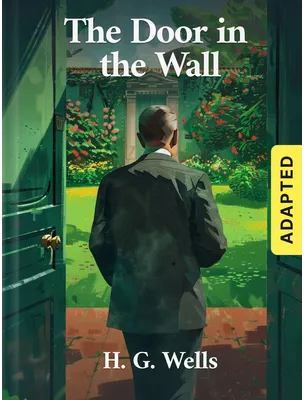
A man named Lionel Wallace tells a friend about a strange green door he found as a child. When he opened it, he entered a beautiful, magical garden that felt more real than anything else. As he grows older, Wallace spends his life searching for the door again, wondering if it was a dream or something more... This is an adapted version of the story, simplified to A2 level.
In H. G. Wells' captivating tale, "The Door in the Wall," readers are invited into a world where the boundaries of reality blur with the wonders of imagination. The story follows the life of Lionel Wallace, a man haunted by the memory of a mysterious door that once led him to a magical garden. This enchanting place, filled with beauty and freedom, stands in stark contrast to the struggles and constraints of his everyday existence. As Wallace grapples with the choices he has made and the dreams he has set aside, he finds himself torn between the allure of this lost paradise and the responsibilities of adulthood.
The central theme revolves around the conflict between dreams and reality, exploring what we sacrifice for the demands of life. With each reflection, Wells invites readers to ponder the nature of happiness, the impact of choices, and the yearning for freedom. "The Door in the Wall" is not just a journey through a fantastical landscape; it is a profound exploration of the human spirit and its eternal quest for fulfillment.
Full Name: Herbert George Wells
Birthdate: September 21, 1866
Place of Birth: Bromley, Kent, England
Date and Place of Death: August 13, 1946, in London, England
Occupation: Author, Historian, and Social Critic
Notable Works: Some of Wells' most famous books include "The Time Machine," "The War of the Worlds," "The Invisible Man," and "The First Men in the Moon."
Early Life: H. G. Wells was born into a working-class family. His father was a shopkeeper, and his mother was a domestic servant. Wells struggled in school but later received a scholarship to the Normal School of Science in London, where he studied biology.
Literary Career: Wells began writing while working as a teacher and a journalist. His first major success was "The Time Machine," published in 1895. He became known for his science fiction, exploring themes of technology, society, and humanity's future. His works often reflected his views on politics and social issues.
Personal Life: Wells married his first wife, Isabel, in 1891, but they separated in 1894. He later had relationships with several women, including writer Rebecca West. Wells was known for his progressive ideas and was involved in various social movements throughout his life.
H. G. Wells was an English writer known for his contributions to science fiction, including classics like 'The Time Machine' and 'The War of the Worlds.'
The story falls under the science fiction and fantasy genres, exploring themes of imagination and reality.
The main character is Lionel Wallace, who experiences a mysterious door that leads to a beautiful, idyllic world.
The story follows Lionel Wallace as he recalls his childhood encounter with a magical door that leads to a paradise, contrasting his adult life.
Key themes include the loss of innocence, the conflict between reality and fantasy, and the search for happiness.
The door symbolizes opportunities and the choices we make between reality and our dreams.
The story has been well-received, praised for its imaginative narrative and deep philosophical questions.
Yes, the story has been adapted into various forms, including radio plays and short films.
The story has influenced many works in the fantasy genre and continues to inspire discussions about the nature of reality and imagination.