'Death in Venice' was first published in 1912.
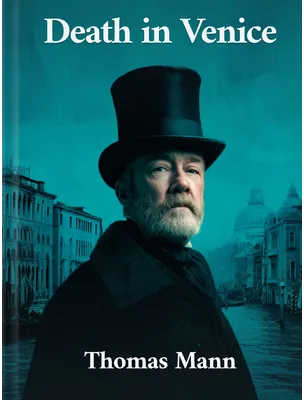
Gustav von Aschenbach is a famous writer searching for inspiration—and peace. Tired and restless, he travels to Venice, hoping the beautiful city will refresh his soul. But there, he becomes strangely drawn to a mysterious boy whose beauty stirs something deep inside him. As the days pass, Venice becomes more dreamlike... and more dangerous. What begins as a quiet escape turns into something far more intense.
In the hauntingly beautiful novella "Death in Venice," renowned German author Thomas Mann explores the complexities of desire, beauty, and mortality. The story follows Gustav von Aschenbach, a disciplined and successful writer who finds himself captivated by a strikingly handsome young boy named Tadzio while vacationing in the enchanting city of Venice. As Aschenbach becomes increasingly obsessed with Tadzio, he grapples with the tension between his artistic aspirations and his burgeoning passions. Set against the backdrop of a city both alluring and decaying, Mann weaves a tale that delves into the depths of human longing and the inevitable approach of death. Through Aschenbach's introspective journey, readers are invited to reflect on the nature of beauty and the risks of surrendering to desire. "Death in Venice" is a poignant exploration of the fragility of life and the haunting shadows that linger in its pursuit. This timeless classic resonates with anyone who has ever faced the perilous allure of unattainable beauty.
Full Name: Paul Thomas Mann
Birthdate: June 6, 1875
Place of Birth: Lübeck, Germany
Date and Place of Death: August 12, 1955, in Zürich, Switzerland
Occupation: Novelist, short story writer, and essayist
Notable Works: Some of his most famous works include "Buddenbrooks," "The Magic Mountain," "Death in Venice," and "Doctor Faustus."
Early Life: Thomas Mann was born into a wealthy family. His father was a grain merchant, and his mother came from a prominent family. After his father's death, Mann's family faced financial difficulties, which influenced his later writings.
Literary Career: Mann started his writing career with "Buddenbrooks," which won him acclaim and the Nobel Prize in Literature in 1929. He explored themes of decadence, identity, and the human condition. His works often reflect his views on society, politics, and art.
Personal Life: Mann married Katia Pringsheim in 1905, and they had six children. He was known for his intellectual circles and friendships with many artists and writers. His life was also marked by his opposition to the Nazi regime, which led him to leave Germany in 1933.
Thomas Mann was a German author known for his novels and essays. He won the Nobel Prize in Literature in 1929.
'Death in Venice' is primarily a novella, often categorized as literary fiction.
The main character is Gustav von Aschenbach, a writer, who becomes infatuated with a young boy named Tadzio.
The story follows Gustav von Aschenbach, who travels to Venice for inspiration but becomes obsessed with a beautiful boy named Tadzio.
Key themes include the conflict between art and life, beauty, obsession, and the inevitability of death.
Symbolism in the novella includes Venice itself, representing decay and beauty, and Tadzio, symbolizing idealized youth and desire.
'Death in Venice' received mixed reviews initially but has since been praised for its depth and complexity.
Yes, the novella has been adapted into films, operas, and plays, most notably the 1971 film directed by Luchino Visconti.
'Death in Venice' has influenced literature, art, and popular culture, often discussed for its exploration of beauty and mortality.