The book was published in 1883 and is a collection of letters written by Thomas Carlyle during his lifetime.
[{"id":"para_1","index":0,"start":0,"offset":406,"words":9,"paraNum":"","lastModified":1647389760000,"semanticType":"title-book-title","voicework":"no_audio","blockId":"the_correspondence_of_thomas_carlyle_and_ralph_wal30cb63f012da453cb0ad6c81d775cb47-bl2u","language":"en","wordsRange":{"start":372000000,"end":386000000},"paragraphVersion":139,"direction":"ltr","paragraph":"<h1 class=\"ilm-title\" id=\"para_1\" semantictype=\"title-book-title\" data-ilmid=\"the_correspondence_of_thomas_carlyle_and_ralph_wal30cb63f012da453cb0ad6c81d775cb47-bl2u\" data-chapter=\"para_1\" data-words-count=\"9\" data-before=\"0\" data-ww=\"\"><span class=\"block-pb\"> <span class=\"block-pb is-animated\"></span> </span><span class=\"itm-wrap\">The Correspondence of Thomas Carlyle and Ralph Waldo Emerson</span></h1>","hasContent":true,"isFirst":true,"isLast":false},{"id":"para_2","index":1,"start":406,"offset":366,"words":1,"paraNum":"","lastModified":1647434998000,"semanticType":"title-subtitle","voicework":"no_audio","blockId":"the_correspondence_of_thomas_carlyle_and_ralph_wal30cb63f012da453cb0ad6c81d775cb47-blvz","language":"en","wordsRange":{"start":668666667,"end":951333333},"paragraphVersion":44,"direction":"ltr","paragraph":"<h1 class=\"ilm-title ilm-subtitle\" id=\"para_2\" semantictype=\"title-subtitle\" data-ilmid=\"the_correspondence_of_thomas_carlyle_and_ralph_wal30cb63f012da453cb0ad6c81d775cb47-blvz\" data-chapter=\"para_2\" data-words-count=\"1\" data-before=\"9\" data-ww=\"\"><span class=\"block-pb\"> <span class=\"block-pb is-animated\"></span> </span><span class=\"itm-wrap\">1834-1872</span></h1>","hasContent":true,"isFirst":false,"isLast":false},{"id":"para_3","index":2,"start":772,"offset":420,"words":6,"paraNum":"","lastModified":1647436045000,"semanticType":"title-author","voicework":"no_audio","blockId":"the_correspondence_of_thomas_carlyle_and_ralph_wal30cb63f012da453cb0ad6c81d775cb47-blw0","language":"en","wordsRange":{"start":1045555555,"end":1139777778},"paragraphVersion":39,"direction":"ltr","paragraph":"<h1 class=\"ilm-title ilm-author ilm-x-large ilm-nopad\" id=\"para_3\" semantictype=\"title-author\" data-ilmid=\"the_correspondence_of_thomas_carlyle_and_ralph_wal30cb63f012da453cb0ad6c81d775cb47-blw0\" data-chapter=\"para_3\" data-words-count=\"6\" data-before=\"10\" data-ww=\"\"><span class=\"block-pb\"> <span class=\"block-pb is-animated\"></span> </span><span class=\"itm-wrap\">by<br>Thomas Carlyle and Ralph Waldo Emerson</span></h1>","hasContent":true,"isFirst":false,"isLast":false},{"id":"para_4","index":3,"start":1192,"offset":211,"words":0,"paraNum":"","lastModified":1647436040000,"semanticType":"line","blockId":"the_correspondence_of_thomas_carlyle_and_ralph_wal30cb63f012da453cb0ad6c81d775cb47-blw1","language":"en","wordsRange":{"start":1171185185,"end":1202592593},"paragraphVersion":35,"direction":"ltr","paragraph":"<hr class=\"ilm-hr ilm-small\" id=\"para_4\" semantictype=\"line\" data-ilmid=\"the_correspondence_of_thomas_carlyle_and_ralph_wal30cb63f012da453cb0ad6c81d775cb47-blw1\" data-words-count=\"0\" data-before=\"16\" data-ww=\"\">","hasContent":true,"isFirst":false,"isLast":false},{"id":"para_5","index":4,"start":1403,"offset":1456,"words":0,"paraNum":"","lastModified":1648040778000,"semanticType":"illustration","blockId":"the_correspondence_of_thomas_carlyle_and_ralph_wal30cb63f012da453cb0ad6c81d775cb47-blw2","language":"en","wordsRange":{"start":1213061729,"end":1223530864},"paragraphVersion":30,"direction":"ltr","paragraph":"<div class=\"ilm-illustration\" id=\"para_5\" semantictype=\"illustration\" data-ilmid=\"the_correspondence_of_thomas_carlyle_and_ralph_wal30cb63f012da453cb0ad6c81d775cb47-blw2\" data-words-count=\"0\" data-before=\"16\" data-ww=\"\"><img width=\"438\" height=\"600\" data-src=\"ch0p0\" src=\"data:image/webp;base64,UklGRjQDAABXRUJQVlA4ICgDAAAwDwCdASosADwAPm0yk0ckIyGhKBVccIANiWcAyY+wOxfzm+r5RpKG/fMQYH6Wuad5GXx+8JTgd8MxGoxe0H0Pzivm5f69WVi3vRIarK6Z7x5YN+aCa5NtQ2az/cFYh9oAWzt+8IV63mEGj+OS+0b6sT5m2BIBRVlJ9g3jf8T76R8AAP76v1W6rYnWqdG1Yq+yMIZclta5MuGYxhKntadciNDFL7756lHZn4JYgOucbgjzCM11IJ80nb1XbDAdaRD6jse+QkP0gMUo2nMon40uUD6N7TaP0kzAtFdYIcsf/gOGVCigAkBNbHW7GHebT6bGlqC4WL86Qx/PFQH34S5n89W/j0UlzB4cPsM9DWjdxWeCFoi271hItNbxRkt076Sf6/tektrb4d/tPUKMOtHbLG77Ew31KguvgfXeM78wKpT97zRUYTQZ2tqW1PTfE7buGAPa7oKeK+7PrggfFnYhOcPqxTxjc9djeDCvFXrtySAfdQDy6WB7wNGtOOr8m9fl5sHicUA19tcqY5udG/1gQdmIygrHYPmv87aFkWxBP3sjg+Efd+OzChSztfHEb+CaTGmOwou+jKm4k2BxKkuRyQx12d1OGZUf0a39lPF/JyWAt+Mz6ycrXZX5BYGy56mWygt/R2cLTz4yHNHjUdA3BG/OAfSCUc/xLL0Cxv7ClU/l6BMVAZJaN3uyl/20/ndb4JXoq6HNfWORn0XVPZ4FrFrwrJ8EYYirU+FFgZl5RLMp5NPIShFGg7NlVKrWquTgycwEOFvFtnlgPD38bQ6ye98jzGhC//rv3NKDVDAWbymO2We6fgnufw3PK0N1J4EO/R98kMImSoUQf56qsji8+mvvwjzrsJyjtpTLczfjXXRhRXQsmDvFJkndCbpmbG4fvqI2WSlN7H3/3N6eb/FFlNDPn8JnH8O6Baqnl04G/fVM2RaI0/zAvyiLhZXooOy3LxHlI314twJm0IVDqUJKmNpV1csfvyQAAwMNoBF517wzvtlb4wqw8g4PkbuJvtHcdhA8Mba9JMPg6WLcTEaPD2OiOMuwXwqsqYWvKBn5Rg4S71ycAAAA\" alt=\"The Correspondence of Thomas Carlyle Vol 1\"></div>","hasContent":true,"isFirst":false,"isLast":false},{"id":"para_6","index":5,"start":2859,"offset":378,"words":2,"paraNum":"","lastModified":1647437866000,"semanticType":"header-section-header","voicework":"no_audio","blockId":"the_correspondence_of_thomas_carlyle_and_ralph_wal30cb63f012da453cb0ad6c81d775cb47-bl32","language":"en","wordsRange":{"start":1234000000,"end":1237000000},"paragraphVersion":169,"direction":"ltr","paragraph":"<h1 class=\"ilm-header ilm-h1 ilm-large\" id=\"para_6\" semantictype=\"header-section-header\" data-ilmid=\"the_correspondence_of_thomas_carlyle_and_ralph_wal30cb63f012da453cb0ad6c81d775cb47-bl32\" data-chapter=\"para_6\" data-words-count=\"2\" data-before=\"16\" data-ww=\"\"><span class=\"block-pb\"> <span class=\"block-pb is-animated\"></span> </span><span class=\"itm-wrap\">Volume I</span></h1>","hasContent":true,"isFirst":false,"isLast":false},{"id":"para_7","index":6,"start":3237,"offset":443,"words":32,"paraNum":"","lastModified":1630168648000,"semanticType":"par","voicework":"no_audio","blockId":"the_correspondence_of_thomas_carlyle_and_ralph_wal30cb63f012da453cb0ad6c81d775cb47-bl33","language":"en","wordsRange":{"start":1337000000,"end":1368000000},"paragraphVersion":144,"direction":"ltr","paragraph":"<p id=\"para_7\" semantictype=\"par\" data-ilmid=\"the_correspondence_of_thomas_carlyle_and_ralph_wal30cb63f012da453cb0ad6c81d775cb47-bl33\" data-words-count=\"32\" data-before=\"18\" data-ww=\"\"><span class=\"block-pb\"> <span class=\"block-pb is-animated\"></span> </span><span class=\"itm-wrap\">“To my friend I write a letter, and from him I receive a letter. It is a spiritual gift, worthy of him to give, and of me to receive.” — Emerson</span></p>","hasContent":true,"isFirst":false,"isLast":false},{"id":"para_8","index":7,"start":3680,"offset":398,"words":19,"paraNum":"","lastModified":1630168645000,"semanticType":"par","voicework":"no_audio","blockId":"the_correspondence_of_thomas_carlyle_and_ralph_wal30cb63f012da453cb0ad6c81d775cb47-bl34","language":"en","wordsRange":{"start":1468000000,"end":1487000000},"paragraphVersion":149,"direction":"ltr","paragraph":"<p id=\"para_8\" semantictype=\"par\" data-ilmid=\"the_correspondence_of_thomas_carlyle_and_ralph_wal30cb63f012da453cb0ad6c81d775cb47-bl34\" data-words-count=\"19\" data-before=\"50\" data-ww=\"\"><span class=\"block-pb\"> <span class=\"block-pb is-animated\"></span> </span><span class=\"itm-wrap\">“What the writer did actually mean, the thing he then thought of, the thing he then was.” — Carlyle</span></p>","hasContent":true,"isFirst":false,"isLast":false},{"id":"para_9","index":8,"start":4078,"offset":211,"words":0,"paraNum":"","lastModified":1629710700000,"semanticType":"line","blockId":"the_correspondence_of_thomas_carlyle_and_ralph_wal30cb63f012da453cb0ad6c81d775cb47-bl3a","language":"en","wordsRange":{"start":2296000000,"end":2298000000},"paragraphVersion":197,"direction":"ltr","paragraph":"<hr class=\"ilm-hr ilm-small\" id=\"para_9\" semantictype=\"line\" data-ilmid=\"the_correspondence_of_thomas_carlyle_and_ralph_wal30cb63f012da453cb0ad6c81d775cb47-bl3a\" data-words-count=\"0\" data-before=\"69\" data-ww=\"\">","hasContent":true,"isFirst":false,"isLast":false},{"id":"para_10","index":9,"start":4289,"offset":761,"words":79,"paraNum":"i.1","lastModified":1647389621000,"semanticType":"par","voicework":"no_audio","blockId":"the_correspondence_of_thomas_carlyle_and_ralph_wal30cb63f012da453cb0ad6c81d775cb47-bl5r","language":"en","wordsRange":{"start":13452000000,"end":13526000000},"paragraphVersion":340,"direction":"ltr","paragraph":"<p id=\"para_10\" semantictype=\"par\" data-ilmid=\"the_correspondence_of_thomas_carlyle_and_ralph_wal30cb63f012da453cb0ad6c81d775cb47-bl5r\" data-words-count=\"79\" data-before=\"69\" data-ww=\"\"><span class=\"block-num\" data-id=\"i.1\"></span><span class=\"block-pb\"> <span class=\"block-pb is-animated\"></span> </span><span class=\"itm-wrap\">At the beginning of his “English Traits,” Mr. Emerson, writing of his visit to England in 1833, when he was thirty years old, says that it was mainly the attraction of three or four writers, of whom Carlyle was one, that had led him to Europe. Carlyle’s name was not then generally known, and it illustrates Emerson’s mental attitude that he should have thus early recognized his genius, and felt sympathy with it.</span></p>","hasContent":true,"isFirst":false,"isLast":false},{"id":"para_11","index":10,"start":5050,"offset":1289,"words":166,"paraNum":"i.2","lastModified":1647389621000,"semanticType":"par","voicework":"no_audio","blockId":"the_correspondence_of_thomas_carlyle_and_ralph_wal30cb63f012da453cb0ad6c81d775cb47-bl5s","language":"en","wordsRange":{"start":13626000000,"end":13778000000},"paragraphVersion":338,"direction":"ltr","paragraph":"<p id=\"para_11\" semantictype=\"par\" data-ilmid=\"the_correspondence_of_thomas_carlyle_and_ralph_wal30cb63f012da453cb0ad6c81d775cb47-bl5s\" data-words-count=\"166\" data-before=\"148\" data-ww=\"\"><span class=\"block-num\" data-id=\"i.2\"></span><span class=\"block-pb\"> <span class=\"block-pb is-animated\"></span> </span><span class=\"itm-wrap\">The decade from 1820 to 1830 was a period of unusual dulness in English thought and imagination. All the great literary reputations belonged to the beginning of the century, Byron, Scott, Wordsworth, Coleridge, Shelley, Keats, had said their say. The intellectual life of the new generation had not yet found expression. But toward the end of this time a series of articles, mostly on German literature, appearing in the Edinburgh and in the Foreign Quarterly Review, an essay on Burns, another on Voltaire, still more a paper entitled “Characteristics,” displayed the hand of a master, and a spirit in full sympathy with the hitherto unexpressed tendencies and aspirations of its time, and capable of giving them expression. Here was a writer whose convictions were based upon principles, and whose words stood for realities. His power was slowly acknowledged. As yet Carlyle had received hardly a token of recognition from his contemporaries.</span></p>","hasContent":true,"isFirst":false,"isLast":false},{"id":"para_12","index":11,"start":6339,"offset":1290,"words":181,"paraNum":"i.3","lastModified":1647389621000,"semanticType":"par","voicework":"no_audio","blockId":"the_correspondence_of_thomas_carlyle_and_ralph_wal30cb63f012da453cb0ad6c81d775cb47-bl5t","language":"en","wordsRange":{"start":13878000000,"end":14047000000},"paragraphVersion":340,"direction":"ltr","paragraph":"<p id=\"para_12\" semantictype=\"par\" data-ilmid=\"the_correspondence_of_thomas_carlyle_and_ralph_wal30cb63f012da453cb0ad6c81d775cb47-bl5t\" data-words-count=\"181\" data-before=\"314\" data-ww=\"\"><span class=\"block-num\" data-id=\"i.3\"></span><span class=\"block-pb\"> <span class=\"block-pb is-animated\"></span> </span><span class=\"itm-wrap\">He was living solitary, poor, independent, in “desperate hope,” at Craigenputtock. On August 24, 1833, he makes entry in his Journal as follows: “I am left here the solitariest, stranded, most helpless creature that I have been for many years... Nobody asks me to work at articles. The thing I want to write is quite other than an article… In <i>all</i> times there is a word which spoken to men; to the actual generation of men, would thrill their inmost soul. But the way to find that word? The way to speak it when found?” The next entry in his Journal shows that Carlyle had found the word. It is the name “Ralph Waldo Emerson,” the record of Emerson’s unexpected visit. “I shall never forget the visitor,” wrote Mrs. Carlyle, long afterwards, “who years ago, in the Desert, descended on us, out of the clouds as it were, and made one day there look like enchantment for us, and left me weeping that it was only one day.”</span></p>","hasContent":true,"isFirst":false,"isLast":false},{"id":"para_13","index":12,"start":7629,"offset":1268,"words":169,"paraNum":"i.4","lastModified":1647389621000,"semanticType":"par","voicework":"no_audio","blockId":"the_correspondence_of_thomas_carlyle_and_ralph_wal30cb63f012da453cb0ad6c81d775cb47-bl5u","language":"en","wordsRange":{"start":14147000000,"end":14303000000},"paragraphVersion":338,"direction":"ltr","paragraph":"<p id=\"para_13\" semantictype=\"par\" data-ilmid=\"the_correspondence_of_thomas_carlyle_and_ralph_wal30cb63f012da453cb0ad6c81d775cb47-bl5u\" data-words-count=\"169\" data-before=\"495\" data-ww=\"\"><span class=\"block-num\" data-id=\"i.4\"></span><span class=\"block-pb\"> <span class=\"block-pb is-animated\"></span> </span><span class=\"itm-wrap\">At the time of this memorable visit Emerson was morally not less solitary than Carlyle; he was still less known; his name had been unheard by his host in the desert. But his voice was soon to become also the voice of a leader. With temperaments sharply contrasted, with traditions, inheritances, and circumstances radically different, with views of life and of the universe widely at variance, the souls of these two young men were yet in sympathy, for their characters were based upon the same foundation of principle. In their independence and their sincerity they were alike; they were united in their faith in spiritual truth, and their reverence for it. Their modes of thought of expression were not merely dissimilar, but divergent, and yet, though parted by an ever widening cleft of difference, they knew, as Carlyle said, that beneath it “the rock-strata, miles deep, united again, and their two souls were at one”</span></p>","hasContent":true,"isFirst":false,"isLast":false},{"id":"para_14","index":13,"start":8897,"offset":405,"words":10,"paraNum":"i.5","lastModified":1647389621000,"semanticType":"par","voicework":"no_audio","blockId":"the_correspondence_of_thomas_carlyle_and_ralph_wal30cb63f012da453cb0ad6c81d775cb47-bl5v","language":"en","wordsRange":{"start":14403000000,"end":14414000000},"paragraphVersion":340,"direction":"ltr","paragraph":"<p id=\"para_14\" semantictype=\"par\" data-ilmid=\"the_correspondence_of_thomas_carlyle_and_ralph_wal30cb63f012da453cb0ad6c81d775cb47-bl5v\" data-words-count=\"10\" data-before=\"664\" data-ww=\"\"><span class=\"block-num\" data-id=\"i.5\"></span><span class=\"block-pb\"> <span class=\"block-pb is-animated\"></span> </span><span class=\"itm-wrap\">Two days after Emerson’s visit Carlyle wrote to his mother: —</span></p>","hasContent":true,"isFirst":false,"isLast":false},{"id":"para_15","index":14,"start":9302,"offset":1780,"words":285,"paraNum":"i.6","lastModified":1647389621000,"semanticType":"par","voicework":"no_audio","blockId":"the_correspondence_of_thomas_carlyle_and_ralph_wal30cb63f012da453cb0ad6c81d775cb47-bl5w","language":"en","wordsRange":{"start":14514000000,"end":14778000000},"paragraphVersion":338,"direction":"ltr","paragraph":"<p id=\"para_15\" semantictype=\"par\" data-ilmid=\"the_correspondence_of_thomas_carlyle_and_ralph_wal30cb63f012da453cb0ad6c81d775cb47-bl5w\" data-words-count=\"285\" data-before=\"674\" data-ww=\"\"><span class=\"block-num\" data-id=\"i.6\"></span><span class=\"block-pb\"> <span class=\"block-pb is-animated\"></span> </span><span class=\"itm-wrap\">“Three little happinesses have befallen us: first, a piano-tuner, procured for five shillings and sixpence, has been here, entirely reforming the piano, so that I can hear a little music now, which does me no little good. Secondly, Major Irving, of Gribton, who used at this season of the year to live and shoot at Craigenvey, came in one day to us, and after some clatter offered us a rent of five pounds for the right to shoot here, and even tabled the cash that moment, and would not pocket it again. Money easilier won never sat in my pocket; money for delivering us from a great nuisance, for now I will tell every gunner applicant, ‘I cannot, sir; it is let.’ Our third happiness was the arrival of a certain young unknown friend, named Emerson, from Boston, in the United States, who turned aside so far from his British, French, and Italian travels to see me here! He had an introduction from Mill, and a Frenchman (Baron d’Eichthal’s nephew) whom John knew at Rome. Of course we could do no other than welcome him; the rather as he seemed to be one of the most lovable creatures in himself we had ever looked on. He stayed till next day with us, and talked and heard talk to his heart’s content, and left us all really sad to part with him. Jane says it is the first journey since Noah’s Deluge undertaken to Craigenputtock for such a purpose. In any case, we had a cheerful day from it, and ought to be thankful.”</span></p>","hasContent":true,"isFirst":false,"isLast":false},{"id":"para_16","index":15,"start":11082,"offset":463,"words":23,"paraNum":"i.7","lastModified":1647389621000,"semanticType":"par","voicework":"no_audio","blockId":"the_correspondence_of_thomas_carlyle_and_ralph_wal30cb63f012da453cb0ad6c81d775cb47-bl5x","language":"en","wordsRange":{"start":14878000000,"end":14901000000},"paragraphVersion":338,"direction":"ltr","paragraph":"<p id=\"para_16\" semantictype=\"par\" data-ilmid=\"the_correspondence_of_thomas_carlyle_and_ralph_wal30cb63f012da453cb0ad6c81d775cb47-bl5x\" data-words-count=\"23\" data-before=\"959\" data-ww=\"\"><span class=\"block-num\" data-id=\"i.7\"></span><span class=\"block-pb\"> <span class=\"block-pb is-animated\"></span> </span><span class=\"itm-wrap\">On the next Sunday, a week after his visit, Emerson wrote the following account of it to his friend, Mr. Alexander Ireland.</span></p>","hasContent":true,"isFirst":false,"isLast":false},{"id":"para_17","index":16,"start":11545,"offset":2820,"words":419,"paraNum":"i.8","lastModified":1647389621000,"semanticType":"par","voicework":"no_audio","blockId":"the_correspondence_of_thomas_carlyle_and_ralph_wal30cb63f012da453cb0ad6c81d775cb47-bl5y","language":"en","wordsRange":{"start":15001000000,"end":15388000000},"paragraphVersion":354,"direction":"ltr","paragraph":"<p id=\"para_17\" semantictype=\"par\" data-ilmid=\"the_correspondence_of_thomas_carlyle_and_ralph_wal30cb63f012da453cb0ad6c81d775cb47-bl5y\" data-words-count=\"419\" data-before=\"982\" data-ww=\"\"><span class=\"block-num\" data-id=\"i.8\"></span><span class=\"block-pb\"> <span class=\"block-pb is-animated\"></span> </span><span class=\"itm-wrap\">“I found him one of the most simple and frank of men, and became acquainted with him at once. We walked over several miles of hills, and talked upon all the great questions that interest us most. The comfort of meeting a man is that he speaks sincerely; that he feels himself to be so rich, that he is above the meanness of pretending to knowledge which he has not, and Carlyle does not pretend to have solved the great problems, but rather to be an observer of their solution as it goes forward in the world. I asked him at what religious development the concluding passage in his piece in the Edinburgh Review upon German literature (say five years ago), and some passages in the piece called ‘Characteristics,’ pointed. He replied that he was not competent to state even to himself, — he waited rather to see. My own feeling was that I had met with men of far less power who had got greater insight into religious truth. He is, as you might guess from his papers, the most catholic of philosophers; he forgives and loves everybody, and wishes each to struggle on in his own place and arrive at his own ends. But his respect for eminent men, or rather his scale of eminence, is about the reverse of the popular scale. Scott, Mackintosh, Jeffrey, Gibbon, — even Bacon, — are no heroes of his; stranger yet, he hardly admires Socrates, the glory of the Greek world; but Burns, and Samuel Johnson, and Mirabeau, he said interested him, and I suppose whoever else has given himself with all his heart to a leading instinct, and has not calculated too much. But I cannot think of sketching even his opinions, or repeating his conversations here. I will cheerfully do it when you visit me here in America. He talks finely, seems to love the broad Scotch, and I loved him very much at once. I am afraid he finds his entire solitude tedious, but I could not help congratulating him upon his treasure in his wife, and I hope he will not leave the moors; ‘t is so much better for a man of letters to nurse himself in seclusion than to be filed down to the common level by the compliances and imitations of city <span class=\"intricate-word\"><span class=\"-nowrap-content\">society.”<a data-fnid=\"1\" epub:type=\"noteref\" href=\"#n0\"></a> </span></span></span></p><aside id=\"n0\" data-audio=\"0\" data-fnid=\"1\" class=\"bh-fn\" epub:type=\"footnote\" data-ww=\"\"><span><i>Ralph Waldo Emerson. Recollections of his Visits to England</i> By Alexander Ireland. London, 1882, p. 58. <br></span></aside>","hasContent":true,"isFirst":false,"isLast":false},{"id":"para_18","index":17,"start":14365,"offset":475,"words":22,"paraNum":"i.9","lastModified":1647389621000,"semanticType":"par","voicework":"no_audio","blockId":"the_correspondence_of_thomas_carlyle_and_ralph_wal30cb63f012da453cb0ad6c81d775cb47-bl61","language":"en","wordsRange":{"start":15692000000,"end":15713000000},"paragraphVersion":339,"direction":"ltr","paragraph":"<p id=\"para_18\" semantictype=\"par\" data-ilmid=\"the_correspondence_of_thomas_carlyle_and_ralph_wal30cb63f012da453cb0ad6c81d775cb47-bl61\" data-words-count=\"22\" data-before=\"1401\" data-ww=\"\"><span class=\"block-num\" data-id=\"i.9\"></span><span class=\"block-pb\"> <span class=\"block-pb is-animated\"></span> </span><span class=\"itm-wrap\">Twenty-three years later, in his “English Traits,” Emerson once more describes his visit, and tells of his impressions of Carlyle.</span></p>","hasContent":true,"isFirst":false,"isLast":false},{"id":"para_19","index":18,"start":14840,"offset":1658,"words":249,"paraNum":"i.10","lastModified":1647389621000,"semanticType":"par","voicework":"no_audio","blockId":"the_correspondence_of_thomas_carlyle_and_ralph_wal30cb63f012da453cb0ad6c81d775cb47-bl62","language":"en","wordsRange":{"start":15813000000,"end":16043000000},"paragraphVersion":338,"direction":"ltr","paragraph":"<p id=\"para_19\" semantictype=\"par\" data-ilmid=\"the_correspondence_of_thomas_carlyle_and_ralph_wal30cb63f012da453cb0ad6c81d775cb47-bl62\" data-words-count=\"249\" data-before=\"1423\" data-ww=\"\"><span class=\"block-num\" data-id=\"i.10\"></span><span class=\"block-pb\"> <span class=\"block-pb is-animated\"></span> </span><span class=\"itm-wrap\">“From Edinburgh I went to the Highlands. On my return I came from Glasgow to Dumfries, and being intent on delivering a letter which I had brought from Rome, inquired for Craigenputtock. It was a farm in Nithsdale, in the parish of Dunscore, sixteen miles distant. No public coach passed near it, so I took a private carriage from the inn. I found the house amid desolate heathery hills, where the lonely scholar nourished his mighty heart. Carlyle was a man from his youth, an author who did not need to hide from his readers, and as absolute a man of the world, unknown and exiled on that hill-farm, as if holding on his own terms what is best in London. He was tall and gaunt, with a cliff-like brow, self-possessed and holding his extraordinary powers of conversation in easy command; clinging to his northern accent with evident relish; full of lively anecdote, and with a streaming humor which floated everything he looked upon. His talk, playfully exalting the most familiar objects, put the companion at once into an acquaintance with his Lars and Lemurs, and it was very pleasant to learn what was predestined to be a pretty mythology. Few were the objects and lonely the man, ‘not a person to speak to within sixteen miles, except the minister of Dunscore’; so that books inevitably made his topics.</span></p>","hasContent":true,"isFirst":false,"isLast":false},{"id":"para_20","index":19,"start":16498,"offset":1613,"words":246,"paraNum":"i.11","lastModified":1647389621000,"semanticType":"par","voicework":"no_audio","blockId":"the_correspondence_of_thomas_carlyle_and_ralph_wal30cb63f012da453cb0ad6c81d775cb47-bl63","language":"en","wordsRange":{"start":16143000000,"end":16371000000},"paragraphVersion":338,"direction":"ltr","paragraph":"<p id=\"para_20\" semantictype=\"par\" data-ilmid=\"the_correspondence_of_thomas_carlyle_and_ralph_wal30cb63f012da453cb0ad6c81d775cb47-bl63\" data-words-count=\"246\" data-before=\"1672\" data-ww=\"\"><span class=\"block-num\" data-id=\"i.11\"></span><span class=\"block-pb\"> <span class=\"block-pb is-animated\"></span> </span><span class=\"itm-wrap\">“He had names of his own for all the matters familiar to his discourse. Blackwood’s was the ‘sand magazine’; Fraser’s nearer approach to possibility of life was the ‘mud magazine’; a piece of road near by that marked some failed enterprise was ‘the grave of the last sixpence.’ When too much praise of any genius annoyed him, he professed hugely to admire the talent shown by his pig. He had spent much time and contrivance in confining the poor beast to one enclosure in his Pen; but pig, by great strokes of judgment, had found out how to let a board down, and had foiled him. For all that, he still thought man the most plastic little fellow in the planet, and he liked Nero’s death, <i>Qualis </i><i>artifex </i><i>pereo!</i> better than most history. He worships a man that will manifest any truth to him. At one time he had inquired and read a good deal about America. Landor’s principle was mere rebellion, and <i>that,</i> he feared, was the American principle. The best thing he knew of that country was, that in it a man can have meat for his labor. He had read in Stewart’s book, that when he inquired in a New York hotel for the Boots, he had been shown across the street, and had found Mungo in his own house dining on roast turkey.</span></p>","hasContent":true,"isFirst":false,"isLast":false},{"id":"para_21","index":20,"start":18111,"offset":900,"words":107,"paraNum":"i.12","lastModified":1647389621000,"semanticType":"par","voicework":"no_audio","blockId":"the_correspondence_of_thomas_carlyle_and_ralph_wal30cb63f012da453cb0ad6c81d775cb47-bl64","language":"en","wordsRange":{"start":16471000000,"end":16571000000},"paragraphVersion":338,"direction":"ltr","paragraph":"<p id=\"para_21\" semantictype=\"par\" data-ilmid=\"the_correspondence_of_thomas_carlyle_and_ralph_wal30cb63f012da453cb0ad6c81d775cb47-bl64\" data-words-count=\"107\" data-before=\"1918\" data-ww=\"\"><span class=\"block-num\" data-id=\"i.12\"></span><span class=\"block-pb\"> <span class=\"block-pb is-animated\"></span> </span><span class=\"itm-wrap\">“We talked of books. Plato he does not read, and he disparaged Socrates; and, when pressed, persisted in making Mirabeau a hero. Gibbon he called the splendid bridge from the old world to the new. His own reading had been multifarious. Tristram Shandy was one of his first books after Robinson Crusoe and Robertson’s America, an early favorite. Rousseau’s Confessions had discovered to him that he was not a dunce; and it was now ten years since he had learned German, by the advice of a man who told him he would find in that language what he wanted.</span></p>","hasContent":true,"isFirst":false,"isLast":false},{"id":"para_22","index":21,"start":19011,"offset":617,"words":51,"paraNum":"i.13","lastModified":1647389621000,"semanticType":"par","voicework":"no_audio","blockId":"the_correspondence_of_thomas_carlyle_and_ralph_wal30cb63f012da453cb0ad6c81d775cb47-bl65","language":"en","wordsRange":{"start":16671000000,"end":16719000000},"paragraphVersion":338,"direction":"ltr","paragraph":"<p id=\"para_22\" semantictype=\"par\" data-ilmid=\"the_correspondence_of_thomas_carlyle_and_ralph_wal30cb63f012da453cb0ad6c81d775cb47-bl65\" data-words-count=\"51\" data-before=\"2025\" data-ww=\"\"><span class=\"block-num\" data-id=\"i.13\"></span><span class=\"block-pb\"> <span class=\"block-pb is-animated\"></span> </span><span class=\"itm-wrap\">“He took despairing or satirical views of literature at this moment; recounted the incredible sums paid in one year by the great booksellers for puffing. Hence it comes that no newspaper is trusted now, no books are bought, and the booksellers are on the eve of bankruptcy.</span></p>","hasContent":true,"isFirst":false,"isLast":false},{"id":"para_23","index":22,"start":19628,"offset":910,"words":114,"paraNum":"i.14","lastModified":1647389621000,"semanticType":"par","voicework":"no_audio","blockId":"the_correspondence_of_thomas_carlyle_and_ralph_wal30cb63f012da453cb0ad6c81d775cb47-bl66","language":"en","wordsRange":{"start":16819000000,"end":16926000000},"paragraphVersion":338,"direction":"ltr","paragraph":"<p id=\"para_23\" semantictype=\"par\" data-ilmid=\"the_correspondence_of_thomas_carlyle_and_ralph_wal30cb63f012da453cb0ad6c81d775cb47-bl66\" data-words-count=\"114\" data-before=\"2076\" data-ww=\"\"><span class=\"block-num\" data-id=\"i.14\"></span><span class=\"block-pb\"> <span class=\"block-pb is-animated\"></span> </span><span class=\"itm-wrap\">“He still returned to English pauperism, the crowded country, the selfish abdication by public men of all that public persons should perform. ‘Government should direct poor men what to do. Poor Irish folk come wandering over these moors; my dame makes it a rule to give to every son of Adam bread to eat, and supplies his wants to the next house. But here are thousands of acres which might give them all meat, and nobody to bid these poor Irish go to the moor and till it. They burned the stacks, and so found a way to force the rich people to attend to them.’</span></p>","hasContent":true,"isFirst":false,"isLast":false},{"id":"para_24","index":23,"start":20538,"offset":1009,"words":129,"paraNum":"i.15","lastModified":1647389621000,"semanticType":"par","voicework":"no_audio","blockId":"the_correspondence_of_thomas_carlyle_and_ralph_wal30cb63f012da453cb0ad6c81d775cb47-bl67","language":"en","wordsRange":{"start":17026000000,"end":17146000000},"paragraphVersion":338,"direction":"ltr","paragraph":"<p id=\"para_24\" semantictype=\"par\" data-ilmid=\"the_correspondence_of_thomas_carlyle_and_ralph_wal30cb63f012da453cb0ad6c81d775cb47-bl67\" data-words-count=\"129\" data-before=\"2190\" data-ww=\"\"><span class=\"block-num\" data-id=\"i.15\"></span><span class=\"block-pb\"> <span class=\"block-pb is-animated\"></span> </span><span class=\"itm-wrap\">“We went out to walk over long hills, and looked at Criffel, then without his cap, and down into Wordsworth’s country. There we sat down and talked of the immortality of the soul. It was not Carlyle’s fault that we talked on that topic, for he has the natural disinclination of every nimble spirit to bruise itself against walls, and did not like to place himself where no step can be taken. But he was honest and true, and cognizant of the subtile links that bind ages together, and saw how every event affects all the future. ‘Christ died on the tree that built Dunscore kirk yonder: that brought you and me together. Time has only a relative existence.’</span></p>","hasContent":true,"isFirst":false,"isLast":false},{"id":"para_25","index":24,"start":21547,"offset":866,"words":102,"paraNum":"i.16","lastModified":1647389621000,"semanticType":"par","voicework":"no_audio","blockId":"the_correspondence_of_thomas_carlyle_and_ralph_wal30cb63f012da453cb0ad6c81d775cb47-bl68","language":"en","wordsRange":{"start":17246000000,"end":17341000000},"paragraphVersion":338,"direction":"ltr","paragraph":"<p id=\"para_25\" semantictype=\"par\" data-ilmid=\"the_correspondence_of_thomas_carlyle_and_ralph_wal30cb63f012da453cb0ad6c81d775cb47-bl68\" data-words-count=\"102\" data-before=\"2319\" data-ww=\"\"><span class=\"block-num\" data-id=\"i.16\"></span><span class=\"block-pb\"> <span class=\"block-pb is-animated\"></span> </span><span class=\"itm-wrap\">“He was already turning his eyes towards London with a scholar’s appreciation. London is the heart of the world, he said, wonderful only from the mass of human beings. He liked the huge machine. Each keeps its own round. The baker’s boy brings muffins to the window at a fixed hour every day, and that is all the Londoner knows or wishes to know on the subject. But it turned out good men. He named certain individuals, especially one man of letters, his friend, the best mind he knew, whom London had well served.”</span></p>","hasContent":true,"isFirst":false,"isLast":false},{"id":"para_26","index":25,"start":22413,"offset":515,"words":30,"paraNum":"i.17","lastModified":1647389621000,"semanticType":"par","voicework":"no_audio","blockId":"the_correspondence_of_thomas_carlyle_and_ralph_wal30cb63f012da453cb0ad6c81d775cb47-bl69","language":"en","wordsRange":{"start":17441000000,"end":17470000000},"paragraphVersion":338,"direction":"ltr","paragraph":"<p id=\"para_26\" semantictype=\"par\" data-ilmid=\"the_correspondence_of_thomas_carlyle_and_ralph_wal30cb63f012da453cb0ad6c81d775cb47-bl69\" data-words-count=\"30\" data-before=\"2421\" data-ww=\"\"><span class=\"block-num\" data-id=\"i.17\"></span><span class=\"block-pb\"> <span class=\"block-pb is-animated\"></span> </span><span class=\"itm-wrap\">Such is the record of the beginnings of the friendship between Carlyle and Emerson. What place this friendship held in the lives of both, the following Correspondence shows.</span></p>","hasContent":true,"isFirst":false,"isLast":false},{"id":"para_27","index":26,"start":22928,"offset":214,"words":0,"paraNum":"","lastModified":1629710700000,"semanticType":"line","blockId":"the_correspondence_of_thomas_carlyle_and_ralph_wal30cb63f012da453cb0ad6c81d775cb47-bl6a","language":"en","wordsRange":{"start":17570000000,"end":17572000000},"paragraphVersion":107,"direction":"ltr","paragraph":"<hr class=\"ilm-hr ilm-small\" id=\"para_27\" semantictype=\"line\" data-ilmid=\"the_correspondence_of_thomas_carlyle_and_ralph_wal30cb63f012da453cb0ad6c81d775cb47-bl6a\" data-words-count=\"0\" data-before=\"2451\" data-ww=\"\">","hasContent":true,"isFirst":false,"isLast":false},{"id":"para_28","index":27,"start":23142,"offset":573,"words":3,"paraNum":"","lastModified":1647423784000,"semanticType":"header-chapter-header","voicework":"no_audio","blockId":"the_correspondence_of_thomas_carlyle_and_ralph_wal30cb63f012da453cb0ad6c81d775cb47-bl6b","language":"en","wordsRange":{"start":17672000000,"end":17677000000},"paragraphVersion":366,"direction":"ltr","paragraph":"<h2 class=\"ilm-header ilm-h2 ilm-large\" id=\"para_28\" semantictype=\"header-chapter-header\" data-ilmid=\"the_correspondence_of_thomas_carlyle_and_ralph_wal30cb63f012da453cb0ad6c81d775cb47-bl6b\" data-chapter=\"para_28\" data-words-count=\"3\" data-before=\"2451\" data-ww=\"\"><span class=\"block-pb\"> <span class=\"block-pb is-animated\"></span> </span><span class=\"itm-wrap\"><span class=\"chapter-text\"><span class=\"chapter-number\"><span class=\"chapter-label\"></span><span class=\"chapter-value\"></span></span><span class=\"chapter-title\">I <br>Emerson to Carlyle</span></span></span></h2>","hasContent":true,"isFirst":false,"isLast":false},{"id":"para_29","index":28,"start":23715,"offset":330,"words":5,"paraNum":"","lastModified":1630264352000,"semanticType":"par","voicework":"no_audio","blockId":"the_correspondence_of_thomas_carlyle_and_ralph_wal30cb63f012da453cb0ad6c81d775cb47-bl6c","language":"en","wordsRange":{"start":17777000000,"end":17783000000},"paragraphVersion":336,"direction":"ltr","paragraph":"<p id=\"para_29\" semantictype=\"par\" data-ilmid=\"the_correspondence_of_thomas_carlyle_and_ralph_wal30cb63f012da453cb0ad6c81d775cb47-bl6c\" data-words-count=\"5\" data-before=\"2454\" data-ww=\"\"><span class=\"block-pb\"> <span class=\"block-pb is-animated\"></span> </span><span class=\"itm-wrap\">Boston, Massachusetts, 14 May, 1884</span></p>","hasContent":true,"isFirst":false,"isLast":false},{"id":"para_30","index":29,"start":24045,"offset":557,"words":45,"paraNum":"1.1","lastModified":1647390870000,"semanticType":"par","voicework":"no_audio","blockId":"the_correspondence_of_thomas_carlyle_and_ralph_wal30cb63f012da453cb0ad6c81d775cb47-bl6d","language":"en","wordsRange":{"start":17883000000,"end":17926000000},"paragraphVersion":347,"direction":"ltr","paragraph":"<p id=\"para_30\" semantictype=\"par\" data-ilmid=\"the_correspondence_of_thomas_carlyle_and_ralph_wal30cb63f012da453cb0ad6c81d775cb47-bl6d\" data-words-count=\"45\" data-before=\"2459\" data-ww=\"\"><span class=\"block-num\" data-id=\"1.1\"></span><span class=\"block-pb\"> <span class=\"block-pb is-animated\"></span> </span><span class=\"itm-wrap\">My Dear Sir, — There are some purposes we delay long to execute simply because we have them more at heart than others, and such an one has been for many weeks, I may say months, my design of writing you an epistle.</span></p>","hasContent":true,"isFirst":false,"isLast":false},{"id":"para_31","index":30,"start":24602,"offset":2200,"words":339,"paraNum":"1.2","lastModified":1647390870000,"semanticType":"par","voicework":"no_audio","blockId":"the_correspondence_of_thomas_carlyle_and_ralph_wal30cb63f012da453cb0ad6c81d775cb47-bl6e","language":"en","wordsRange":{"start":18026000000,"end":18366000000},"paragraphVersion":344,"direction":"ltr","paragraph":"<p id=\"para_31\" semantictype=\"par\" data-ilmid=\"the_correspondence_of_thomas_carlyle_and_ralph_wal30cb63f012da453cb0ad6c81d775cb47-bl6e\" data-words-count=\"339\" data-before=\"2504\" data-ww=\"\"><span class=\"block-num\" data-id=\"1.2\"></span><span class=\"block-pb\"> <span class=\"block-pb is-animated\"></span> </span><span class=\"itm-wrap\">Some chance wind of Fame blew your name to me, perhaps two years ago, as the author of papers which I had already distinguished (as indeed it was very easy to do) from the mass of English periodical criticism as by far the most original and profound essays of the day, — the works of a man of Faith as well as Intellect, sportive as well as learned, and who, belonging to the despairing and deriding class of philosophers, was not ashamed to hope and to speak sincerely. Like somebody in <i>Wilhelm </i><i>Meister,</i> I said: This person has come under obligations to me and to all whom he has enlightened. He knows not how deeply I should grieve at his fall, if, in that exposed England where genius always hears the Devil’s whisper, “All these kingdoms will I give thee,” his virtue also should be an initial growth put off with age. When therefore I found myself in Europe, I went to your house only to say, “Faint not, — the word you utter is heard, though in the ends of the earth and by humblest men; it works, prevails.” Drawn by strong regard to one of my teachers I went to see his person, and as he might say his environment at Craigenputtock. Yet it was to fulfil my duty, finish my mission, not with much hope of gratifying him, — in the spirit of “If I love you, what is that to you?” Well, it happened to me that I was delighted with my visit, justified to myself in my respect, and many a time upon the sea in my homeward voyage I remembered with joy the favored condition of my lonely philosopher, his happiest wedlock, his fortunate temper, his steadfast simplicity, his all means of happiness; — not that I had the remotest hope that he should so far depart from his theories as to expect happiness. On my arrival at home I rehearsed to several attentive ears what I had seen and heard, and they with joy received it.</span></p>","hasContent":true,"isFirst":false,"isLast":false},{"id":"para_32","index":31,"start":26802,"offset":3774,"words":594,"paraNum":"1.3","lastModified":1647390870000,"semanticType":"par","voicework":"no_audio","blockId":"the_correspondence_of_thomas_carlyle_and_ralph_wal30cb63f012da453cb0ad6c81d775cb47-bl6f","language":"en","wordsRange":{"start":18466000000,"end":19014000000},"paragraphVersion":352,"direction":"ltr","paragraph":"<p id=\"para_32\" semantictype=\"par\" data-ilmid=\"the_correspondence_of_thomas_carlyle_and_ralph_wal30cb63f012da453cb0ad6c81d775cb47-bl6f\" data-words-count=\"594\" data-before=\"2843\" data-ww=\"\"><span class=\"block-num\" data-id=\"1.3\"></span><span class=\"block-pb\"> <span class=\"block-pb is-animated\"></span> </span><span class=\"itm-wrap\">In Liverpool I wrote to Mr. Fraser to send me Magazine, and I have now received four numbers of the <i>Sartor </i><i>Resartus,</i> for whose light thanks evermore. I am glad that one living scholar is self-centred, and will be true to himself though none ever were before; who, as Montaigne says, “puts his ear close by himself, and holds his breath and listens.” And none can be offended with the self-subsistency of one so catholic and jocund. And ‘t is good to have a new eye inspect our mouldy social forms, our politics, and schools, and religion. I say <i>our,</i> for it cannot have escaped you that a lecture upon these topics written for England may be read to America. Evermore thanks for the brave stand you have made for Spiritualism in these writings. But has literature any parallel to the oddity of the vehicle chosen to convey this treasure? I delight in the contents; the form, which my defective apprehension for a joke makes me not appreciate, I leave to your merry discretion. And yet did ever wise and philanthropic author use so defying a diction? As if society were not sufficiently shy of truth without providing it beforehand with an objection to the form. Can it be that this humor proceeds from a despair of finding a contemporary audience, and so the Prophet feels at liberty to utter his message in droll sounds. Did you not tell me, Mr. Thomas Carlyle, sitting upon one of your broad hills, that it was Jesus Christ built Dunscore Kirk yonder? If you love such sequences, then admit, as you will, that no poet is sent into the world before his time; that all the departed thinkers and actors have paved your way; that (at least when you surrender yourself) nations and ages do guide your pen, yes, and common goose-quills as well as your diamond graver. Believe then that harp and ear are formed by one revolution of the wheel; that men are waiting to hear your epical song; and so be pleased to skip those excursive involved glees, and give us the simple air, without the volley of variations. At least in some of your prefaces you should give us the theory of your rhetoric. I comprehend not why you should lavish in that spendthrift style of yours celestial truths. Bacon and Plato have something too solid to say than that they can afford to be humorists. You are dispensing that which is rarest, namely, the simplest truths, — truths which lie next to consciousness, and which only the Platos and Goethes perceive. I look for the hour with impatience when the vehicle will be worthy of the spirit, — when the word will be as simple, and so as resistless, as the thought, — and, in short, when your words will be one with things. I have no hope that you will find suddenly a large audience. Says not the sarcasm, “Truth hath the plague in his house”? Yet all men are <i>potentially</i> (as Mr. Coleridge would say) your audience, and if you will not in very Mephistophelism repel and defy them, shall be <span class=\"intricate-word\"><span class=\"-nowrap-content\">actually;<a data-fnid=\"1\" epub:type=\"noteref\" href=\"#n1\"></a> </span></span>and whatever the great or the small may say about the charm of diabolism, a true and majestic genius can afford to despise it.</span></p><aside id=\"n1\" data-audio=\"0\" data-fnid=\"1\" class=\"bh-fn\" epub:type=\"footnote\" data-ww=\"\"><span>This year, 1882, seventy thousand copies of a sixpenny edition of <i>Sartor Resartus</i> have been sold.</span></aside>","hasContent":true,"isFirst":false,"isLast":false},{"id":"para_33","index":32,"start":30576,"offset":831,"words":94,"paraNum":"1.4","lastModified":1647390870000,"semanticType":"par","voicework":"no_audio","blockId":"the_correspondence_of_thomas_carlyle_and_ralph_wal30cb63f012da453cb0ad6c81d775cb47-bl6i","language":"en","wordsRange":{"start":19318000000,"end":19406000000},"paragraphVersion":343,"direction":"ltr","paragraph":"<p id=\"para_33\" semantictype=\"par\" data-ilmid=\"the_correspondence_of_thomas_carlyle_and_ralph_wal30cb63f012da453cb0ad6c81d775cb47-bl6i\" data-words-count=\"94\" data-before=\"3437\" data-ww=\"\"><span class=\"block-num\" data-id=\"1.4\"></span><span class=\"block-pb\"> <span class=\"block-pb is-animated\"></span> </span><span class=\"itm-wrap\">I venture to amuse you with this homiletic criticism because it is the sense of uncritical truth seekers, to whom you are no more than Hecuba, whose instincts assure them that there is Wisdom in this grotesque Teutonic apocalyptic strain of yours, but that ‘t is hence hindered in its effect. And though with all my heart I would stand well with my Poet, yet if I offend I shall quietly retreat into my Universal relations, wherefrom I affectionately espy you as a man, myself as another.</span></p>","hasContent":true,"isFirst":false,"isLast":false},{"id":"para_34","index":33,"start":31407,"offset":732,"words":80,"paraNum":"1.5","lastModified":1647390870000,"semanticType":"par","voicework":"no_audio","blockId":"the_correspondence_of_thomas_carlyle_and_ralph_wal30cb63f012da453cb0ad6c81d775cb47-bl6j","language":"en","wordsRange":{"start":19506000000,"end":19581000000},"paragraphVersion":342,"direction":"ltr","paragraph":"<p id=\"para_34\" semantictype=\"par\" data-ilmid=\"the_correspondence_of_thomas_carlyle_and_ralph_wal30cb63f012da453cb0ad6c81d775cb47-bl6j\" data-words-count=\"80\" data-before=\"3531\" data-ww=\"\"><span class=\"block-num\" data-id=\"1.5\"></span><span class=\"block-pb\"> <span class=\"block-pb is-animated\"></span> </span><span class=\"itm-wrap\">And yet before I come to the end of my letter I may repent of my temerity and unsay my charge. For are not all our circlets of will as so many little eddies rounded in by the great Circle of Necessity, and <i>could</i> the Truth-speaker, perhaps now the best Thinker of the Saxon race, have written otherwise? And must not we say that Drunkenness is a virtue rather than that Cato has erred?</span></p>","hasContent":true,"isFirst":false,"isLast":false},{"id":"para_35","index":34,"start":32139,"offset":1997,"words":232,"paraNum":"1.6","lastModified":1647390870000,"semanticType":"par","voicework":"no_audio","blockId":"the_correspondence_of_thomas_carlyle_and_ralph_wal30cb63f012da453cb0ad6c81d775cb47-bl6k","language":"en","wordsRange":{"start":19681000000,"end":19896000000},"paragraphVersion":347,"direction":"ltr","paragraph":"<p id=\"para_35\" semantictype=\"par\" data-ilmid=\"the_correspondence_of_thomas_carlyle_and_ralph_wal30cb63f012da453cb0ad6c81d775cb47-bl6k\" data-words-count=\"232\" data-before=\"3611\" data-ww=\"\"><span class=\"block-num\" data-id=\"1.6\"></span><span class=\"block-pb\"> <span class=\"block-pb is-animated\"></span> </span><span class=\"itm-wrap\">I wish I could gratify you with any pleasing news of the regeneration, education, prospects, of man in this continent. But your philanthropy is so patient, so far-sighted, that present evils give you less solicitude. In the last six years government in the United States has been fast becoming a job, like great charities. A most unfit person in the Presidency has been doing the worst things; and the worse he grew, the more popular. Now things seem to mend. Webster, a good man and as strong as if he were a sinner, begins to find himself the centre of a great and enlarging party and his eloquence incarnated and enacted by them; yet men dare not hope that the majority shall be suddenly unseated. I send herewith a volume of Webster’s that you may see his speech on Foot’s Resolutions, a speech which the Americans have never done praising. I have great doubts whether the book reaches you, as I know not my agents. I shall put with it the little book of my Swedenborgian <span class=\"intricate-word\"><span class=\"-nowrap-content\">druggist,<a data-fnid=\"1\" epub:type=\"noteref\" href=\"#n2\"></a> </span></span>of whom I told you. And if, which is hardly to be hoped, any good book should be thrown out of our vortex of trade and politics, I shall not fail to give it the same direction.</span></p><aside id=\"n2\" data-audio=\"0\" data-fnid=\"1\" class=\"bh-fn\" epub:type=\"footnote\" data-ww=\"\"><span><i>Observations on the Growth of the Mind, </i>by Sampson Reed, first published in 1825. A fifth edition of this thoughtful little treatise was published in 1865. Mr. Reed was a graduate of Harvard College in 1818; he died in 1880, at the age of eighty.</span></aside>","hasContent":true,"isFirst":false,"isLast":false},{"id":"para_36","index":35,"start":34136,"offset":907,"words":114,"paraNum":"1.7","lastModified":1647390870000,"semanticType":"par","voicework":"no_audio","blockId":"the_correspondence_of_thomas_carlyle_and_ralph_wal30cb63f012da453cb0ad6c81d775cb47-bl6n","language":"en","wordsRange":{"start":20200000000,"end":20307000000},"paragraphVersion":343,"direction":"ltr","paragraph":"<p id=\"para_36\" semantictype=\"par\" data-ilmid=\"the_correspondence_of_thomas_carlyle_and_ralph_wal30cb63f012da453cb0ad6c81d775cb47-bl6n\" data-words-count=\"114\" data-before=\"3843\" data-ww=\"\"><span class=\"block-num\" data-id=\"1.7\"></span><span class=\"block-pb\"> <span class=\"block-pb is-animated\"></span> </span><span class=\"itm-wrap\">I need not tell you, my dear sir, what pleasure a letter from you would give me when you have a few moments to spare to so remote a friend. If any word in my letter should provoke you to a reply, I shall rejoice in my sauciness. I am spending the summer in the country, but my address is Boston, care of Barnard, Adams, & Co. Care of O. Rich, London. Please do make my affectionate respects to Mrs. Carlyle, whose kindness I shall always gratefully remember. I depend upon her intercession to insure your writing to me. May God grant you both his best blessing.</span></p>","hasContent":true,"isFirst":false,"isLast":false},{"id":"para_37","index":36,"start":35043,"offset":329,"words":5,"paraNum":"","lastModified":1647438208000,"semanticType":"par","voicework":"no_audio","blockId":"the_correspondence_of_thomas_carlyle_and_ralph_wal30cb63f012da453cb0ad6c81d775cb47-bl6o","language":"en","wordsRange":{"start":20407000000,"end":20413000000},"paragraphVersion":344,"direction":"ltr","paragraph":"<p id=\"para_37\" semantictype=\"par\" data-ilmid=\"the_correspondence_of_thomas_carlyle_and_ralph_wal30cb63f012da453cb0ad6c81d775cb47-bl6o\" data-words-count=\"5\" data-before=\"3957\" data-ww=\"\"><span class=\"block-pb\"> <span class=\"block-pb is-animated\"></span> </span><span class=\"itm-wrap\">Your friend,<br> R. Waldo Emerson</span></p>","hasContent":true,"isFirst":false,"isLast":false},{"id":"para_38","index":37,"start":35372,"offset":214,"words":0,"paraNum":"","lastModified":1630307702000,"semanticType":"line","blockId":"the_correspondence_of_thomas_carlyle_and_ralph_wal30cb63f012da453cb0ad6c81d775cb47-bltx","language":"en","wordsRange":{"start":20446333333,"end":20479666667},"paragraphVersion":111,"direction":"ltr","paragraph":"<hr class=\"ilm-hr ilm-small\" id=\"para_38\" semantictype=\"line\" data-ilmid=\"the_correspondence_of_thomas_carlyle_and_ralph_wal30cb63f012da453cb0ad6c81d775cb47-bltx\" data-words-count=\"0\" data-before=\"3962\" data-ww=\"\">","hasContent":true,"isFirst":false,"isLast":false},{"id":"para_39","index":38,"start":35586,"offset":574,"words":3,"paraNum":"","lastModified":1647423795000,"semanticType":"header-chapter-header","voicework":"no_audio","blockId":"the_correspondence_of_thomas_carlyle_and_ralph_wal30cb63f012da453cb0ad6c81d775cb47-bl6p","language":"en","wordsRange":{"start":20513000000,"end":20518000000},"paragraphVersion":375,"direction":"ltr","paragraph":"<h2 class=\"ilm-header ilm-h2 ilm-large\" id=\"para_39\" semantictype=\"header-chapter-header\" data-ilmid=\"the_correspondence_of_thomas_carlyle_and_ralph_wal30cb63f012da453cb0ad6c81d775cb47-bl6p\" data-chapter=\"para_39\" data-words-count=\"3\" data-before=\"3962\" data-ww=\"\"><span class=\"block-pb\"> <span class=\"block-pb is-animated\"></span> </span><span class=\"itm-wrap\"><span class=\"chapter-text\"><span class=\"chapter-number\"><span class=\"chapter-label\"></span><span class=\"chapter-value\"></span></span><span class=\"chapter-title\">II <br>Carlyle to Emerson</span></span></span></h2>","hasContent":true,"isFirst":false,"isLast":false},{"id":"para_40","index":39,"start":36160,"offset":347,"words":10,"paraNum":"","lastModified":1630307717000,"semanticType":"par","voicework":"no_audio","blockId":"the_correspondence_of_thomas_carlyle_and_ralph_wal30cb63f012da453cb0ad6c81d775cb47-bl6q","language":"en","wordsRange":{"start":20618000000,"end":20628000000},"paragraphVersion":352,"direction":"ltr","paragraph":"<p id=\"para_40\" semantictype=\"par\" data-ilmid=\"the_correspondence_of_thomas_carlyle_and_ralph_wal30cb63f012da453cb0ad6c81d775cb47-bl6q\" data-words-count=\"10\" data-before=\"3965\" data-ww=\"\"><span class=\"block-pb\"> <span class=\"block-pb is-animated\"></span> </span><span class=\"itm-wrap\">5 Great Cheyne Row, Chelsea, London 12 August, 1834</span></p>","hasContent":true,"isFirst":false,"isLast":false},{"id":"para_41","index":40,"start":36507,"offset":1359,"words":194,"paraNum":"2.1","lastModified":1630307778000,"semanticType":"par","voicework":"no_audio","blockId":"the_correspondence_of_thomas_carlyle_and_ralph_wal30cb63f012da453cb0ad6c81d775cb47-bl6r","language":"en","wordsRange":{"start":20728000000,"end":20908000000},"paragraphVersion":359,"direction":"ltr","paragraph":"<p id=\"para_41\" semantictype=\"par\" data-ilmid=\"the_correspondence_of_thomas_carlyle_and_ralph_wal30cb63f012da453cb0ad6c81d775cb47-bl6r\" data-words-count=\"194\" data-before=\"3975\" data-ww=\"\"><span class=\"block-num\" data-id=\"2.1\"></span><span class=\"block-pb\"> <span class=\"block-pb is-animated\"></span> </span><span class=\"itm-wrap\">My Dear Sir, — Some two weeks ago I received your kind gift from Fraser. To say that it was welcome would be saying little: is it not as a voice of affectionate remembrance, coming from beyond the Ocean waters, first decisively announcing for me that a whole New Continent <i>exists, — </i>that I too have part and lot there! “Not till we can think that here and there one is thinking of us, one is loving us, does this waste Earth become a peopled Garden.” Among the figures I can recollect as visiting our Nithsdale hermitage, — all like <i>Apparitions</i> now, bringing with them airs from Heaven or else blasts from the other region, — there is perhaps not one of a more undoubtedly supernal character than yourself: so pure and still, with intents so charitable; and then vanishing too so soon into the azure Inane, as an Apparition should! Never has your Address in my Notebook met my eye but with a friendly influence. Judge if I am glad to know that there, in Infinite Space, you still hold by me.</span></p>","hasContent":true,"isFirst":false,"isLast":false},{"id":"para_42","index":41,"start":37866,"offset":2004,"words":311,"paraNum":"2.2","lastModified":1630307748000,"semanticType":"par","voicework":"no_audio","blockId":"the_correspondence_of_thomas_carlyle_and_ralph_wal30cb63f012da453cb0ad6c81d775cb47-bl6s","language":"en","wordsRange":{"start":21008000000,"end":21293000000},"paragraphVersion":352,"direction":"ltr","paragraph":"<p id=\"para_42\" semantictype=\"par\" data-ilmid=\"the_correspondence_of_thomas_carlyle_and_ralph_wal30cb63f012da453cb0ad6c81d775cb47-bl6s\" data-words-count=\"311\" data-before=\"4169\" data-ww=\"\"><span class=\"block-num\" data-id=\"2.2\"></span><span class=\"block-pb\"> <span class=\"block-pb is-animated\"></span> </span><span class=\"itm-wrap\">I have read in both your books at leisure times, and now nearly finished the smaller one. He is a faithful thinker, that Swedenborgian Druggist of yours, with really deep ideas, who makes me too pause and think, were it only to consider what manner of man he must be, and what manner of thing, after all, Swedenborgianism must be. “Through the smallest window look well, and you can look out into the Infinite.” Webster also I can recognize a sufficient, effectual man, whom one must wish well to, and prophesy well of. The sound of him is nowise poetic-rhythmic; it is clear, one-toned, you might say metallic, yet distinct, significant, not without melody. In his face, above all, I discern that “indignation” which, if it do not make “verses,” makes <i>useful</i> way in the world. The higher such a man rises, the better pleased I shall be. And so here, looking over the water, let me repeat once more what I believe is already dimly the sentiment of all Englishmen, Cisoceanic and Transoceanic, that we and you are not two countries, and cannot for the life of us be; but only two <i>parishes</i> of one country, with such wholesome parish hospitalities, and dirty temporary parish feuds, as we see; both of which brave parishes Vivant! vivant! And among the glories of <i>both</i> be Yankee-doodle-doo, and the Felling of the Western Forest, proudly remembered; and for the rest, by way of parish constable, let each cheerfully take such George Washington or George Guelph as it can get, and bless Heaven! I am weary of hearing it said, “We love the Americans,” “We wish well,” &c., &c. What in God’s name should we do else?</span></p>","hasContent":true,"isFirst":false,"isLast":false},{"id":"para_43","index":42,"start":39870,"offset":6233,"words":767,"paraNum":"2.3","lastModified":1630307979000,"semanticType":"par","voicework":"no_audio","blockId":"the_correspondence_of_thomas_carlyle_and_ralph_wal30cb63f012da453cb0ad6c81d775cb47-bl6t","language":"en","wordsRange":{"start":21393000000,"end":22101000000},"paragraphVersion":358,"direction":"ltr","paragraph":"<p id=\"para_43\" semantictype=\"par\" data-ilmid=\"the_correspondence_of_thomas_carlyle_and_ralph_wal30cb63f012da453cb0ad6c81d775cb47-bl6t\" data-words-count=\"767\" data-before=\"4480\" data-ww=\"\"><span class=\"block-num\" data-id=\"2.3\"></span><span class=\"block-pb\"> <span class=\"block-pb is-animated\"></span> </span><span class=\"itm-wrap\">You thank me for <i>Teufelsdrockh;</i> how much more ought I to thank you for your hearty, genuine, though extravagant acknowledgment of it! Blessed is the voice that amid dispiritment, stupidity, and contradiction proclaims to us, <i>Euge!</i> Nothing ever was more ungenial than the soil this poor Teufelsdrockhish seed-corn has been thrown on here; none cries, Good speed to it; the sorriest nettle or hemlock seed, one would think, had been more welcome. For indeed our British periodical critics, and especially the public of <i>Fraser’s</i> Magazine (which I believe I have now done with), exceed all speech; require not even contempt, only oblivion. Poor Teufelsdrockh! — Creature of mischance, miscalculation, and thousand-fold obstruction! Here nevertheless he is, as you see; has struggled across the Stygian marshes, and now, as a stitched pamphlet “for Friends,” cannot be <i>burnt</i> or lost before his time. I send you one copy for your own behoof; three others you yourself can perhaps find fit readers for: as you spoke in the plural number, I thought there might be three; more would rather surprise me. From the British side of the water I have met simply one intelligent response, — clear, true, though almost enthusiastic as your own. My British Friend too is utterly a stranger, whose very name I know not, who did not print, but only write, and to an unknown third <span class=\"intricate-word\"><span class=\"-nowrap-content\">party.<a data-fnid=\"1\" epub:type=\"noteref\" href=\"#n3\"></a> </span></span>Shall I say then, “In the mouth of two witnesses”? In any case, God be thanked, I am done with it; can wash my hands of it, and send it forth; sure that the Devil will get his full share of it, and not a whit more, clutch as he may. But as for you, my Transoceanic brothers, read this earnestly, for it <i>was</i> earnestly meant and written, and contains no <i>voluntary</i> falsehood of mine. For the rest, if you dislike it, say that I wrote it four years ago, and could not now so write it, and on the whole (as Fritz the Only said) “will do better another time.” With regard to style and so forth, what you call your “saucy” objections are not only most intelligible to me, but welcome and instructive. You say well that I take up that attitude because I have no known public, am alone under the heavens, speaking into friendly or unfriendly space; add only, that I will not defend such attitude, that I call it questionable, tentative, and only the best that I, in these mad times, could conveniently hit upon. For you are to know, my view is that now at last we have lived to see all manner of Poetics and Rhetorics and Sermonics, and one may say generally all manner of <i>Pulpits</i> for addressing mankind from, as good as broken and abolished: alas, yes! if you have any earnest meaning which demands to be not only listened to, but <i>believed</i> and <i>done,</i> you cannot (at least I cannot) utter it <i>there,</i> but the sound sticks in my throat, as when a solemnity were <i>felt</i> to have become a mummery; and so one leaves the pasteboard coulisses, and three unities, and Blair’s Lectures, quite behind; and feels only that there is <i>nothing </i><i>sacred,</i> then, but the <i>Speech </i><i>of </i><i>Man</i> to believing Men! This, come what will, was, is, and forever must be <i>sacred;</i> and will one day, doubtless, anew environ itself with fit modes; with solemnities that are <i>not</i> mummeries. Meanwhile, however, is it not pitiable? For though Teufelsdrockh exclaims, “Pulpit! canst thou not make a pulpit by simply <i>inverting </i><i>the </i><i>nearest </i><i>tub?” </i>yet, alas! he does not sufficiently reflect that it is still only a tub, that the most inspired utterance will come from <i>it,</i> inconceivable, misconceivable, to the million; questionable (not of <i>ascertained</i> significance) even to the few. Pity us therefore; and with your just shake of the head join a sympathetic, even a hopeful smile. Since I saw you I have been trying, am still trying, other methods, and shall surely get nearer the truth, as I honestly strive for it. Meanwhile, I know no method of much consequence, except that of <i>believing,</i> of being <i>sincere:</i> from Homer and the Bible down to the poorest Burns’s Song, I find no other Art that promises to be perennial.</span></p><aside id=\"n3\" data-audio=\"0\" data-fnid=\"1\" class=\"bh-fn\" epub:type=\"footnote\" data-ww=\"\"><span>In his Diary, July 26, 1834, Carlyle writes — “In the midst of innumerable discouragements, all men indifferent or finding fault, let me mention two small circumstances that are comfortable. The first is a letter from some nameless Irishman in Cork to another here, (Fraser read it to me without names,) actually containing a true and one of the friendliest possible recognitions of me. One mortal, then, says I am not utterly wrong. Blessings on him for it! The second is a letter I got today from Emerson, of Boston in America; sincere, not baseless, of most exaggerated estimation. Precious is man to man.\" Fifteen years later, in his Reminiscences of My Irish Journey, he enters, under date of July 16, 1849: \"Near eleven o'clock [at night] announces himself 'Father O'Shea'! (who I thought had been dead); to my astonishment enter a little gray-haired, intelligent-and-bred-looking man, with much gesticulation, boundless loyal welcome, red with dinner and some wine, engages that we are to meet tomorrow, — and again with explosions of welcomes goes his way. This Father O'Shea, some fifteen years ago, had been, with Emerson of America, one of the two sons of Adam who encouraged poor bookseller Fraser, and didn't discourage him, to go on with Teufelsdrockh. I had often remembered him since; had not long before re-inquired his name, but understood somehow that he was dead — and now.”</span></aside>","hasContent":true,"isFirst":false,"isLast":false},{"id":"para_44","index":43,"start":46103,"offset":1291,"words":189,"paraNum":"2.4","lastModified":1630308008000,"semanticType":"par","voicework":"no_audio","blockId":"the_correspondence_of_thomas_carlyle_and_ralph_wal30cb63f012da453cb0ad6c81d775cb47-bl6w","language":"en","wordsRange":{"start":22405000000,"end":22580000000},"paragraphVersion":355,"direction":"ltr","paragraph":"<p id=\"para_44\" semantictype=\"par\" data-ilmid=\"the_correspondence_of_thomas_carlyle_and_ralph_wal30cb63f012da453cb0ad6c81d775cb47-bl6w\" data-words-count=\"189\" data-before=\"5247\" data-ww=\"\"><span class=\"block-num\" data-id=\"2.4\"></span><span class=\"block-pb\"> <span class=\"block-pb is-animated\"></span> </span><span class=\"itm-wrap\">But now quitting theoretics, let me explain what you long to know, how it is that I date from London. Yes, my friend, it is even so: Craigenputtock now stands solitary in the wilderness, with none but an old woman and foolish grouse-destroyers in it; and we for the last ten weeks, after a fierce universal disruption, are here with our household gods. Censure not; I came to London for the best of all reasons, — to seek bread and work. So it literally stands; and so do I literally stand with the hugest, gloomiest Future before me, which in all sane moments I good-humoredly defy. A strange element this, and I as good as an Alien in it. I care not for Radicalism, for Toryism, for Church, Tithes, or the “Confusion” of useful Knowledge. Much as I can speak and hear, I am alone, alone. My brave Father, now victorious from his toil, was wont to pray in evening worship: “Might we say, We are not alone, for God is with us!” Amen! Amen!</span></p>","hasContent":true,"isFirst":false,"isLast":false},{"id":"para_45","index":44,"start":47394,"offset":955,"words":117,"paraNum":"2.5","lastModified":1630308018000,"semanticType":"par","voicework":"no_audio","blockId":"the_correspondence_of_thomas_carlyle_and_ralph_wal30cb63f012da453cb0ad6c81d775cb47-bl6x","language":"en","wordsRange":{"start":22680000000,"end":22789000000},"paragraphVersion":354,"direction":"ltr","paragraph":"<p id=\"para_45\" semantictype=\"par\" data-ilmid=\"the_correspondence_of_thomas_carlyle_and_ralph_wal30cb63f012da453cb0ad6c81d775cb47-bl6x\" data-words-count=\"117\" data-before=\"5436\" data-ww=\"\"><span class=\"block-num\" data-id=\"2.5\"></span><span class=\"block-pb\"> <span class=\"block-pb is-animated\"></span> </span><span class=\"itm-wrap\">I brought a manuscript with me of another curious sort, entitled <i>The </i><i>Diamond </i><i>Necklace.</i> Perhaps it will be printed soon as an Article, or even as a separate Booklet, — a <i>queer</i> production, which you shall see. Finally, I am busy, constantly studying with my whole might for a Book on the French Revolution. It is part of my creed that the Only Poetry is History, could we tell it right. This truth (if it prove one) I have not yet got to the limitations of; and shall in no way except by <i>trying</i> it in practice. The story of the Necklace was the first attempt at an experiment.</span></p>","hasContent":true,"isFirst":false,"isLast":false},{"id":"para_46","index":45,"start":48349,"offset":885,"words":114,"paraNum":"2.6","lastModified":1630307748000,"semanticType":"par","voicework":"no_audio","blockId":"the_correspondence_of_thomas_carlyle_and_ralph_wal30cb63f012da453cb0ad6c81d775cb47-bl6y","language":"en","wordsRange":{"start":22889000000,"end":22996000000},"paragraphVersion":352,"direction":"ltr","paragraph":"<p id=\"para_46\" semantictype=\"par\" data-ilmid=\"the_correspondence_of_thomas_carlyle_and_ralph_wal30cb63f012da453cb0ad6c81d775cb47-bl6y\" data-words-count=\"114\" data-before=\"5553\" data-ww=\"\"><span class=\"block-num\" data-id=\"2.6\"></span><span class=\"block-pb\"> <span class=\"block-pb is-animated\"></span> </span><span class=\"itm-wrap\">My sheet is nearly done; and I have still to complain of you for telling me nothing of yourself except that you are in the country. Believe that I want to know much and all. My wife too remembers you with unmixed friendliness; bids me send you her kindest wishes. Understand too that your old bed stands in a new room here, and the old welcome at the door. Surely we shall see you in London one day. Or who knows but Mahomet may go to the mountain? It occasionally rises like a mad prophetic dream in me, that I might end in the Western Woods!</span></p>","hasContent":true,"isFirst":false,"isLast":false},{"id":"para_47","index":46,"start":49234,"offset":1329,"words":67,"paraNum":"2.7","lastModified":1630308033000,"semanticType":"par","voicework":"no_audio","blockId":"the_correspondence_of_thomas_carlyle_and_ralph_wal30cb63f012da453cb0ad6c81d775cb47-bl6z","language":"en","wordsRange":{"start":23096000000,"end":23159000000},"paragraphVersion":358,"direction":"ltr","paragraph":"<p id=\"para_47\" semantictype=\"par\" data-ilmid=\"the_correspondence_of_thomas_carlyle_and_ralph_wal30cb63f012da453cb0ad6c81d775cb47-bl6z\" data-words-count=\"67\" data-before=\"5667\" data-ww=\"\"><span class=\"block-num\" data-id=\"2.7\"></span><span class=\"block-pb\"> <span class=\"block-pb is-animated\"></span> </span><span class=\"itm-wrap\">From Germany I get letters, messages, and even visits; but now no tidings, no influences, of moment. Goethe’s Posthumous Works are all published; and Radicalism (poor hungry, yet inevitable Radicalism!) is the order of the day. The like, and even more, from France. Gustave d’Eichthal (did you hear?) has gone over to Greece, and become some kind of Manager under King <span class=\"intricate-word\"><span class=\"-nowrap-content\">Otho.<a data-fnid=\"1\" epub:type=\"noteref\" href=\"#n4\"></a> </span></span></span></p><aside id=\"n4\" data-audio=\"0\" data-fnid=\"1\" class=\"bh-fn\" epub:type=\"footnote\" data-ww=\"\"><span>Gustave d'Eichthal, whose acquaintance Emerson had made at Rome, and who had given him an introduction to Carlyle, was one of a family of rich Jewish bankers at Paris. He was an ardent follower of Saint-Simon, and an associate of Enfantin. After the dispersion of the Saint-Simonians in 1832, he traveled much, and continued to devote himself to the improvement of society.</span></aside>","hasContent":true,"isFirst":false,"isLast":false},{"id":"para_48","index":47,"start":50563,"offset":468,"words":25,"paraNum":"2.8","lastModified":1630308068000,"semanticType":"par","voicework":"no_audio","blockId":"the_correspondence_of_thomas_carlyle_and_ralph_wal30cb63f012da453cb0ad6c81d775cb47-blty","language":"en","wordsRange":{"start":23302333333,"end":23445666667},"paragraphVersion":106,"direction":"ltr","paragraph":"<p id=\"para_48\" semantictype=\"par\" data-ilmid=\"the_correspondence_of_thomas_carlyle_and_ralph_wal30cb63f012da453cb0ad6c81d775cb47-blty\" data-words-count=\"25\" data-before=\"5734\" data-ww=\"\"><span class=\"block-num\" data-id=\"2.8\"></span><span class=\"block-pb\"> <span class=\"block-pb is-animated\"></span> </span><span class=\"itm-wrap\">Continue to love me, you and my other friends; and as packets sail so swiftly, let me know it frequently. All good be with you!</span></p>","hasContent":true,"isFirst":false,"isLast":false},{"id":"para_49","index":48,"start":51031,"offset":327,"words":4,"paraNum":"","lastModified":1647438238000,"semanticType":"par","voicework":"no_audio","blockId":"the_correspondence_of_thomas_carlyle_and_ralph_wal30cb63f012da453cb0ad6c81d775cb47-bl73","language":"en","wordsRange":{"start":23589000000,"end":23594000000},"paragraphVersion":366,"direction":"ltr","paragraph":"<p id=\"para_49\" semantictype=\"par\" data-ilmid=\"the_correspondence_of_thomas_carlyle_and_ralph_wal30cb63f012da453cb0ad6c81d775cb47-bl73\" data-words-count=\"4\" data-before=\"5759\" data-ww=\"\"><span class=\"block-pb\"> <span class=\"block-pb is-animated\"></span> </span><span class=\"itm-wrap\">Most faithfully,<br> T. Carlyle</span></p>","hasContent":true,"isFirst":false,"isLast":false},{"id":"para_50","index":49,"start":51358,"offset":566,"words":39,"paraNum":"2.9","lastModified":1630308077000,"semanticType":"par","voicework":"no_audio","blockId":"the_correspondence_of_thomas_carlyle_and_ralph_wal30cb63f012da453cb0ad6c81d775cb47-bl74","language":"en","wordsRange":{"start":23694000000,"end":23731000000},"paragraphVersion":359,"direction":"ltr","paragraph":"<p id=\"para_50\" semantictype=\"par\" data-ilmid=\"the_correspondence_of_thomas_carlyle_and_ralph_wal30cb63f012da453cb0ad6c81d775cb47-bl74\" data-words-count=\"39\" data-before=\"5763\" data-ww=\"\"><span class=\"block-num\" data-id=\"2.9\"></span><span class=\"block-pb\"> <span class=\"block-pb is-animated\"></span> </span><span class=\"itm-wrap\">Coleridge, as you doubtless hear, is gone. How great a Possibility, how small a realized Result! They are delivering Orations about him, and emitting other kinds of froth, <i>ut </i><i>mos </i><i>est.</i> What hurt can it do?</span></p>","hasContent":true,"isFirst":false,"isLast":false},{"id":"para_51","index":50,"start":51924,"offset":214,"words":0,"paraNum":"","lastModified":1630319106000,"semanticType":"line","blockId":"the_correspondence_of_thomas_carlyle_and_ralph_wal30cb63f012da453cb0ad6c81d775cb47-bltz","language":"en","wordsRange":{"start":23764333333,"end":23797666667},"paragraphVersion":109,"direction":"ltr","paragraph":"<hr class=\"ilm-hr ilm-small\" id=\"para_51\" semantictype=\"line\" data-ilmid=\"the_correspondence_of_thomas_carlyle_and_ralph_wal30cb63f012da453cb0ad6c81d775cb47-bltz\" data-words-count=\"0\" data-before=\"5802\" data-ww=\"\">","hasContent":true,"isFirst":false,"isLast":false},{"id":"para_52","index":51,"start":52138,"offset":1027,"words":3,"paraNum":"","lastModified":1647423817000,"semanticType":"header-chapter-header","voicework":"no_audio","blockId":"the_correspondence_of_thomas_carlyle_and_ralph_wal30cb63f012da453cb0ad6c81d775cb47-bl75","language":"en","wordsRange":{"start":23831000000,"end":23836000000},"paragraphVersion":396,"direction":"ltr","paragraph":"<h2 class=\"ilm-header ilm-h2 ilm-large\" id=\"para_52\" semantictype=\"header-chapter-header\" data-ilmid=\"the_correspondence_of_thomas_carlyle_and_ralph_wal30cb63f012da453cb0ad6c81d775cb47-bl75\" data-chapter=\"para_52\" data-words-count=\"3\" data-before=\"5802\" data-ww=\"\"><span class=\"block-pb\"> <span class=\"block-pb is-animated\"></span> </span><span class=\"itm-wrap\"><span class=\"chapter-text\"><span class=\"chapter-number\"><span class=\"chapter-label\"></span><span class=\"chapter-value\"></span></span><span class=\"chapter-title\">III <br>Emerson to <span class=\"intricate-word\"><span class=\"-nowrap-content\">Carlyle<a data-fnid=\"1\" epub:type=\"noteref\" href=\"#n5\" class=\"space\"></a> </span></span></span></span></span></h2><aside id=\"n5\" data-audio=\"0\" data-fnid=\"1\" class=\"bh-fn\" epub:type=\"footnote\" data-ww=\"\"><span>This letter was printed in the Athenaeum, London, June 24, 1882. It, as well as three others which appeared in the same journal, is now reprinted, through the courtesy of its editor, from the original.</span></aside>","hasContent":true,"isFirst":false,"isLast":false},{"id":"para_53","index":52,"start":53165,"offset":328,"words":5,"paraNum":"","lastModified":1630308161000,"semanticType":"par","voicework":"no_audio","blockId":"the_correspondence_of_thomas_carlyle_and_ralph_wal30cb63f012da453cb0ad6c81d775cb47-bl76","language":"en","wordsRange":{"start":23936000000,"end":23942000000},"paragraphVersion":366,"direction":"ltr","paragraph":"<p id=\"para_53\" semantictype=\"par\" data-ilmid=\"the_correspondence_of_thomas_carlyle_and_ralph_wal30cb63f012da453cb0ad6c81d775cb47-bl76\" data-words-count=\"5\" data-before=\"5805\" data-ww=\"\"><span class=\"block-pb\"> <span class=\"block-pb is-animated\"></span> </span><span class=\"itm-wrap\">Concord, Mass., 20 November, 1834</span></p>","hasContent":true,"isFirst":false,"isLast":false},{"id":"para_54","index":53,"start":53493,"offset":2116,"words":171,"paraNum":"3.1","lastModified":1630308213000,"semanticType":"par","voicework":"no_audio","blockId":"the_correspondence_of_thomas_carlyle_and_ralph_wal30cb63f012da453cb0ad6c81d775cb47-bl77","language":"en","wordsRange":{"start":24042000000,"end":24201000000},"paragraphVersion":377,"direction":"ltr","paragraph":"<p id=\"para_54\" semantictype=\"par\" data-ilmid=\"the_correspondence_of_thomas_carlyle_and_ralph_wal30cb63f012da453cb0ad6c81d775cb47-bl77\" data-words-count=\"171\" data-before=\"5810\" data-ww=\"\"><span class=\"block-num\" data-id=\"3.1\"></span><span class=\"block-pb\"> <span class=\"block-pb is-animated\"></span> </span><span class=\"itm-wrap\">My Dear Sir, — Your letter, which I received last week, made a bright light in a solitary and saddened place. I had quite recently received the news of the death of a <span class=\"intricate-word\"><span class=\"-nowrap-content\">brother<a data-fnid=\"1\" epub:type=\"noteref\" href=\"#n6\" class=\"space\"></a> </span></span>in the island of Porto Rico, whose loss to me will be a lifelong sorrow. As he passes out of sight, come to me visible as well as spiritual tokens of a fraternal friendliness which, by its own law, transcends the tedious barriers of custom and nation; and opens its way to the heart. This is a true consolation, and I thanked my jealous [Greek] for the godsend so significantly timed. It, for the moment, realizes the hope to which I have clung with both hands, through each disappointment, that I might converse with a man whose ear of faith was not stopped, and whose argument I could not predict. May I use the word, “I thank my God whenever I call you to remembrance.”</span></p><aside id=\"n6\" data-audio=\"0\" data-fnid=\"1\" class=\"bh-fn\" epub:type=\"footnote\" data-ww=\"\"><span>Edward Bliss Emerson, his next younger brother, \"brother of the brief but blazing star,\" of whom Emerson wrote<i> </i><i>In </i><i>Memoriam:</i> —<br><br> \"There is no record left on earth, <br> Save in tablets of the heart, <br> Of the rich, inherent worth, <br> Of the grace that on him shone, <br> Of eloquent lips, of joyful wit; <br> He could not frame a word unfit, <br> An act unworthy to be done. <br><br>On his young promise Beauty smiled, <br> Drew his free homage unbeguiled, <br> And prosperous Age held out his hand, <br> And richly his large future planned, <br> And troops of friends enjoyed the tide, —<br> All, all was given, and only health denied.\"</span></aside>","hasContent":true,"isFirst":false,"isLast":false},{"id":"para_55","index":54,"start":55609,"offset":1254,"words":89,"paraNum":"3.2","lastModified":1630308299000,"semanticType":"par","voicework":"no_audio","blockId":"the_correspondence_of_thomas_carlyle_and_ralph_wal30cb63f012da453cb0ad6c81d775cb47-bl7d","language":"en","wordsRange":{"start":24946000000,"end":25029000000},"paragraphVersion":378,"direction":"ltr","paragraph":"<p id=\"para_55\" semantictype=\"par\" data-ilmid=\"the_correspondence_of_thomas_carlyle_and_ralph_wal30cb63f012da453cb0ad6c81d775cb47-bl7d\" data-words-count=\"89\" data-before=\"5981\" data-ww=\"\"><span class=\"block-num\" data-id=\"3.2\"></span><span class=\"block-pb\"> <span class=\"block-pb is-animated\"></span> </span><span class=\"itm-wrap\">I receive with great pleasure the wonderful Professor now that first the decent limbs of Osiris are <span class=\"intricate-word\"><span class=\"-nowrap-content\">collected.<a data-fnid=\"1\" epub:type=\"noteref\" href=\"#n7\"></a> </span></span>We greet him well to Cape Cod and Boston Bay. The rigid laws of matter prohibit that the soul imprisoned within the strait edges of these types should add one syllable thereto, or we had adjured the Sage by every name of veneration to take possession by so much as a Salve! of his Western World, but he remained inexorable for any new communications.</span></p><aside id=\"n7\" data-audio=\"0\" data-fnid=\"1\" class=\"bh-fn\" epub:type=\"footnote\" data-ww=\"\"><span>The four copies of <i>Sartor</i> which Carlyle had sent were a \"stitched pamphlet,\" with a title-page bearing the words: \"Sartor Resartus: in Three Books. Reprinted for Friends, from Fraser's Magazine. London, 1834.\"</span></aside>","hasContent":true,"isFirst":false,"isLast":false},{"id":"para_56","index":55,"start":56863,"offset":3547,"words":555,"paraNum":"3.3","lastModified":1630308347000,"semanticType":"par","voicework":"no_audio","blockId":"the_correspondence_of_thomas_carlyle_and_ralph_wal30cb63f012da453cb0ad6c81d775cb47-bl7g","language":"en","wordsRange":{"start":25333000000,"end":25844000000},"paragraphVersion":380,"direction":"ltr","paragraph":"<p id=\"para_56\" semantictype=\"par\" data-ilmid=\"the_correspondence_of_thomas_carlyle_and_ralph_wal30cb63f012da453cb0ad6c81d775cb47-bl7g\" data-words-count=\"555\" data-before=\"6070\" data-ww=\"\"><span class=\"block-num\" data-id=\"3.3\"></span><span class=\"block-pb\"> <span class=\"block-pb is-animated\"></span> </span><span class=\"itm-wrap\">I feel like congratulating you upon the cold welcome which you say <span class=\"intricate-word\"><span class=\"-nowrap-content\">Teufelsdrockh<a data-fnid=\"1\" epub:type=\"noteref\" href=\"#n8\" class=\"space\"></a> </span></span>has met. As it is not earthly happy, it is marked of a high sacred sort. I like it a great deal better than ever, and before it was all published I had eaten nearly all my words of objection. But do not think it shall lack a present popularity. That it should not be known seems possible, for if a memoir of Laplace had been thrown into that muck-heap of Fraser’s Magazine, who would be the wiser? But this has too much wit and imagination not to strike a class who would not care for it as a faithful mirror of this very Hour. But you know the proverb, “To be fortunate, be not too wise.” The great men of the day are on a plane so low as to be thoroughly intelligible to the vulgar. Nevertheless, as God maketh the world forevermore, whatever the devils may seem to do, so the thoughts of the best minds always become the last opinion of Society. Truth is ever born in a manger, but is compensated by living till it has all souls for its kingdom. Far, far better seems to me the unpopularity of this Philosophical Poem (shall I call it?) than the adulation that followed your eminent friend Goethe. With him I am becoming better acquainted, but mine must be a qualified admiration. It is a singular piece of good-nature in you to apotheosize him. I cannot but regard it as his misfortune, with conspicuous bad influence on his genius, that velvet life he led. What incongruity for genius, whose fit ornaments and reliefs are poverty and hatred, to repose fifty years on chairs of state and what pity that his Duke did not cut off his head to save him from the mean end (forgive) of retiring from the municipal incense “to arrange tastefully his gifts and medals”! Then the Puritan in me accepts no apology for bad morals in such as he. We can tolerate vice in a splendid nature whilst that nature is battling with the brute majority in defence of some human principle. The sympathy his manhood and his misfortunes call out adopts even his faults; but genius pampered, acknowledged, crowned, can only retain our sympathy by turning the same force once expended against outward enemies now against inward, and carrying forward and planting the standard of Oromasdes so many leagues farther on into the envious Dark. Failing this, it loses its nature and becomes talent, according to the definition, — mere skill in attaining vulgar ends. A certain wonderful friend of mine said that “a false priest is the falsest of false things.” But what makes the priest? A cassock? O Diogenes! Or the power (and thence the call) to teach man’s duties as they flow from the Superhuman? Is not he who perceives and proclaims the Superhumanities, he who has once intelligently pronounced the words “Self-Renouncement,” “Invisible Leader,” “Heavenly Powers of Sorrow,” and so on, forever the liege of the same?</span></p><aside id=\"n8\" data-audio=\"0\" data-fnid=\"1\" class=\"bh-fn\" epub:type=\"footnote\" data-ww=\"\"><span>Emerson uniformly spells this name \"Teufelsdroch.\"</span></aside>","hasContent":true,"isFirst":false,"isLast":false},{"id":"para_57","index":56,"start":60410,"offset":835,"words":94,"paraNum":"3.4","lastModified":1630308268000,"semanticType":"par","voicework":"no_audio","blockId":"the_correspondence_of_thomas_carlyle_and_ralph_wal30cb63f012da453cb0ad6c81d775cb47-bl7j","language":"en","wordsRange":{"start":26148000000,"end":26236000000},"paragraphVersion":373,"direction":"ltr","paragraph":"<p id=\"para_57\" semantictype=\"par\" data-ilmid=\"the_correspondence_of_thomas_carlyle_and_ralph_wal30cb63f012da453cb0ad6c81d775cb47-bl7j\" data-words-count=\"94\" data-before=\"6625\" data-ww=\"\"><span class=\"block-num\" data-id=\"3.4\"></span><span class=\"block-pb\"> <span class=\"block-pb is-animated\"></span> </span><span class=\"itm-wrap\">Then to write luxuriously is not the same thing as to live so, but a new and worse offence. It implies an intellectual defect also, the not perceiving that the present corrupt condition of human nature (which condition this harlot muse helps to perpetuate) is a temporary or superficial state. The good word lasts forever: the impure word can only buoy itself in the gross gas that now envelops us, and will sink altogether to ground as that works itself clear in the everlasting effort of God.</span></p>","hasContent":true,"isFirst":false,"isLast":false},{"id":"para_58","index":57,"start":61245,"offset":1032,"words":137,"paraNum":"3.5","lastModified":1630308268000,"semanticType":"par","voicework":"no_audio","blockId":"the_correspondence_of_thomas_carlyle_and_ralph_wal30cb63f012da453cb0ad6c81d775cb47-bl7k","language":"en","wordsRange":{"start":26336000000,"end":26464000000},"paragraphVersion":372,"direction":"ltr","paragraph":"<p id=\"para_58\" semantictype=\"par\" data-ilmid=\"the_correspondence_of_thomas_carlyle_and_ralph_wal30cb63f012da453cb0ad6c81d775cb47-bl7k\" data-words-count=\"137\" data-before=\"6719\" data-ww=\"\"><span class=\"block-num\" data-id=\"3.5\"></span><span class=\"block-pb\"> <span class=\"block-pb is-animated\"></span> </span><span class=\"itm-wrap\">May I not call it temporary? for when I ascend into the pure region of truth (or under my undermost garment, as Epictetus and Teufelsdrockh would say), I see that to abide inviolate, although all men fall away from it; yea, though the whole generation of Adam should be healed as a sore off the face of the creation. So, my friend, live Socrates and Milton, those starch Puritans, for evermore! Strange is it to me that you should not sympathize (yet so you said) with Socrates, so ironical, so true, and who “tramped in the mire with wooden shoes whenever they would force him into the clouds.” I seem to see him offering the hand to you across the ages which some time you will grasp.</span></p>","hasContent":true,"isFirst":false,"isLast":false},{"id":"para_59","index":58,"start":62277,"offset":1564,"words":231,"paraNum":"3.6","lastModified":1630308386000,"semanticType":"par","voicework":"no_audio","blockId":"the_correspondence_of_thomas_carlyle_and_ralph_wal30cb63f012da453cb0ad6c81d775cb47-bl7l","language":"en","wordsRange":{"start":26564000000,"end":26777000000},"paragraphVersion":374,"direction":"ltr","paragraph":"<p id=\"para_59\" semantictype=\"par\" data-ilmid=\"the_correspondence_of_thomas_carlyle_and_ralph_wal30cb63f012da453cb0ad6c81d775cb47-bl7l\" data-words-count=\"231\" data-before=\"6856\" data-ww=\"\"><span class=\"block-num\" data-id=\"3.6\"></span><span class=\"block-pb\"> <span class=\"block-pb is-animated\"></span> </span><span class=\"itm-wrap\">I am glad you like Sampson Reed, and that he has inspired some curiosity respecting his Church. Swedenborgianism, if you should be fortunate in your first meetings, has many points of attraction for you: for instance, this article, “The poetry of the Old Church is the reality of the New,” which is to be literally understood, for they esteem, in common with all the Trismegisti, the Natural World as strictly the symbol or exponent of the Spiritual, and part for part; the animals to be the incarnations of certain affections; and scarce a popular expression esteemed figurative, but they affirm to be the simplest statement of fact. Then is their whole theory of social relations — both in and out of the body — most philosophical, and, though at variance with the popular theology, self-evident. It is only when they come to their descriptive theism, if I may say so, and then to their drollest heaven, and to some autocratic not moral decrees of God, that the mythus loses me. In general, too, they receive the fable instead of the moral of their Aesop. They are to me, however, deeply interesting, as a sect which I think must contribute more than all other sects to the new faith which must arise out of all.</span></p>","hasContent":true,"isFirst":false,"isLast":false},{"id":"para_60","index":59,"start":63841,"offset":1516,"words":238,"paraNum":"3.7","lastModified":1630308395000,"semanticType":"par","voicework":"no_audio","blockId":"the_correspondence_of_thomas_carlyle_and_ralph_wal30cb63f012da453cb0ad6c81d775cb47-bl7m","language":"en","wordsRange":{"start":26877000000,"end":27098000000},"paragraphVersion":374,"direction":"ltr","paragraph":"<p id=\"para_60\" semantictype=\"par\" data-ilmid=\"the_correspondence_of_thomas_carlyle_and_ralph_wal30cb63f012da453cb0ad6c81d775cb47-bl7m\" data-words-count=\"238\" data-before=\"7087\" data-ww=\"\"><span class=\"block-num\" data-id=\"3.7\"></span><span class=\"block-pb\"> <span class=\"block-pb is-animated\"></span> </span><span class=\"itm-wrap\">You express a desire to know something of myself. Account me “a drop in the ocean seeking another drop,” or God-ward, striving to keep so true a sphericity as to receive the due ray from every point of the concave heaven. Since my return home, I have been left very much at leisure. It were long to tell all my speculations on my profession and my doings thereon; but, possessing my liberty, I am determined to keep it, at the risk of uselessness (which risk God can very well abide), until such duties offer themselves as I can with integrity discharge. One thing I believe, — that Utterance is place enough: and should I attain through any inward revelation to a more clear perception of my assigned task, I shall embrace it with joy and praise. I shall not esteem it a low place, for instance, if I could strengthen your hands by true expressions of the hope and pleasure which your writings communicate to me and to some of my countrymen. Yet the best poem of the Poet is his own mind, and more even than in any of the works I rejoice in the promise of the workman. Now I am only reading and musing, and when I have any news to tell of myself, you shall hear them.</span></p>","hasContent":true,"isFirst":false,"isLast":false}]
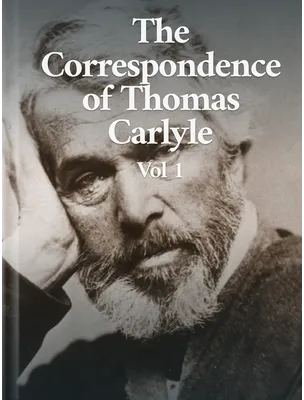
1834-1872
by
Thomas Carlyle and Ralph Waldo Emerson

Volume I
“To my friend I write a letter, and from him I receive a letter. It is a spiritual gift, worthy of him to give, and of me to receive.” — Emerson
“What the writer did actually mean, the thing he then thought of, the thing he then was.” — Carlyle
At the beginning of his “English Traits,” Mr. Emerson, writing of his visit to England in 1833, when he was thirty years old, says that it was mainly the attraction of three or four writers, of whom Carlyle was one, that had led him to Europe. Carlyle’s name was not then generally known, and it illustrates Emerson’s mental attitude that he should have thus early recognized his genius, and felt sympathy with it.
The decade from 1820 to 1830 was a period of unusual dulness in English thought and imagination. All the great literary reputations belonged to the beginning of the century, Byron, Scott, Wordsworth, Coleridge, Shelley, Keats, had said their say. The intellectual life of the new generation had not yet found expression. But toward the end of this time a series of articles, mostly on German literature, appearing in the Edinburgh and in the Foreign Quarterly Review, an essay on Burns, another on Voltaire, still more a paper entitled “Characteristics,” displayed the hand of a master, and a spirit in full sympathy with the hitherto unexpressed tendencies and aspirations of its time, and capable of giving them expression. Here was a writer whose convictions were based upon principles, and whose words stood for realities. His power was slowly acknowledged. As yet Carlyle had received hardly a token of recognition from his contemporaries.
He was living solitary, poor, independent, in “desperate hope,” at Craigenputtock. On August 24, 1833, he makes entry in his Journal as follows: “I am left here the solitariest, stranded, most helpless creature that I have been for many years... Nobody asks me to work at articles. The thing I want to write is quite other than an article… In all times there is a word which spoken to men; to the actual generation of men, would thrill their inmost soul. But the way to find that word? The way to speak it when found?” The next entry in his Journal shows that Carlyle had found the word. It is the name “Ralph Waldo Emerson,” the record of Emerson’s unexpected visit. “I shall never forget the visitor,” wrote Mrs. Carlyle, long afterwards, “who years ago, in the Desert, descended on us, out of the clouds as it were, and made one day there look like enchantment for us, and left me weeping that it was only one day.”
At the time of this memorable visit Emerson was morally not less solitary than Carlyle; he was still less known; his name had been unheard by his host in the desert. But his voice was soon to become also the voice of a leader. With temperaments sharply contrasted, with traditions, inheritances, and circumstances radically different, with views of life and of the universe widely at variance, the souls of these two young men were yet in sympathy, for their characters were based upon the same foundation of principle. In their independence and their sincerity they were alike; they were united in their faith in spiritual truth, and their reverence for it. Their modes of thought of expression were not merely dissimilar, but divergent, and yet, though parted by an ever widening cleft of difference, they knew, as Carlyle said, that beneath it “the rock-strata, miles deep, united again, and their two souls were at one”
Two days after Emerson’s visit Carlyle wrote to his mother: —
“Three little happinesses have befallen us: first, a piano-tuner, procured for five shillings and sixpence, has been here, entirely reforming the piano, so that I can hear a little music now, which does me no little good. Secondly, Major Irving, of Gribton, who used at this season of the year to live and shoot at Craigenvey, came in one day to us, and after some clatter offered us a rent of five pounds for the right to shoot here, and even tabled the cash that moment, and would not pocket it again. Money easilier won never sat in my pocket; money for delivering us from a great nuisance, for now I will tell every gunner applicant, ‘I cannot, sir; it is let.’ Our third happiness was the arrival of a certain young unknown friend, named Emerson, from Boston, in the United States, who turned aside so far from his British, French, and Italian travels to see me here! He had an introduction from Mill, and a Frenchman (Baron d’Eichthal’s nephew) whom John knew at Rome. Of course we could do no other than welcome him; the rather as he seemed to be one of the most lovable creatures in himself we had ever looked on. He stayed till next day with us, and talked and heard talk to his heart’s content, and left us all really sad to part with him. Jane says it is the first journey since Noah’s Deluge undertaken to Craigenputtock for such a purpose. In any case, we had a cheerful day from it, and ought to be thankful.”
On the next Sunday, a week after his visit, Emerson wrote the following account of it to his friend, Mr. Alexander Ireland.
“I found him one of the most simple and frank of men, and became acquainted with him at once. We walked over several miles of hills, and talked upon all the great questions that interest us most. The comfort of meeting a man is that he speaks sincerely; that he feels himself to be so rich, that he is above the meanness of pretending to knowledge which he has not, and Carlyle does not pretend to have solved the great problems, but rather to be an observer of their solution as it goes forward in the world. I asked him at what religious development the concluding passage in his piece in the Edinburgh Review upon German literature (say five years ago), and some passages in the piece called ‘Characteristics,’ pointed. He replied that he was not competent to state even to himself, — he waited rather to see. My own feeling was that I had met with men of far less power who had got greater insight into religious truth. He is, as you might guess from his papers, the most catholic of philosophers; he forgives and loves everybody, and wishes each to struggle on in his own place and arrive at his own ends. But his respect for eminent men, or rather his scale of eminence, is about the reverse of the popular scale. Scott, Mackintosh, Jeffrey, Gibbon, — even Bacon, — are no heroes of his; stranger yet, he hardly admires Socrates, the glory of the Greek world; but Burns, and Samuel Johnson, and Mirabeau, he said interested him, and I suppose whoever else has given himself with all his heart to a leading instinct, and has not calculated too much. But I cannot think of sketching even his opinions, or repeating his conversations here. I will cheerfully do it when you visit me here in America. He talks finely, seems to love the broad Scotch, and I loved him very much at once. I am afraid he finds his entire solitude tedious, but I could not help congratulating him upon his treasure in his wife, and I hope he will not leave the moors; ‘t is so much better for a man of letters to nurse himself in seclusion than to be filed down to the common level by the compliances and imitations of city society.”
Twenty-three years later, in his “English Traits,” Emerson once more describes his visit, and tells of his impressions of Carlyle.
“From Edinburgh I went to the Highlands. On my return I came from Glasgow to Dumfries, and being intent on delivering a letter which I had brought from Rome, inquired for Craigenputtock. It was a farm in Nithsdale, in the parish of Dunscore, sixteen miles distant. No public coach passed near it, so I took a private carriage from the inn. I found the house amid desolate heathery hills, where the lonely scholar nourished his mighty heart. Carlyle was a man from his youth, an author who did not need to hide from his readers, and as absolute a man of the world, unknown and exiled on that hill-farm, as if holding on his own terms what is best in London. He was tall and gaunt, with a cliff-like brow, self-possessed and holding his extraordinary powers of conversation in easy command; clinging to his northern accent with evident relish; full of lively anecdote, and with a streaming humor which floated everything he looked upon. His talk, playfully exalting the most familiar objects, put the companion at once into an acquaintance with his Lars and Lemurs, and it was very pleasant to learn what was predestined to be a pretty mythology. Few were the objects and lonely the man, ‘not a person to speak to within sixteen miles, except the minister of Dunscore’; so that books inevitably made his topics.
“He had names of his own for all the matters familiar to his discourse. Blackwood’s was the ‘sand magazine’; Fraser’s nearer approach to possibility of life was the ‘mud magazine’; a piece of road near by that marked some failed enterprise was ‘the grave of the last sixpence.’ When too much praise of any genius annoyed him, he professed hugely to admire the talent shown by his pig. He had spent much time and contrivance in confining the poor beast to one enclosure in his Pen; but pig, by great strokes of judgment, had found out how to let a board down, and had foiled him. For all that, he still thought man the most plastic little fellow in the planet, and he liked Nero’s death, Qualis artifex pereo! better than most history. He worships a man that will manifest any truth to him. At one time he had inquired and read a good deal about America. Landor’s principle was mere rebellion, and that, he feared, was the American principle. The best thing he knew of that country was, that in it a man can have meat for his labor. He had read in Stewart’s book, that when he inquired in a New York hotel for the Boots, he had been shown across the street, and had found Mungo in his own house dining on roast turkey.
“We talked of books. Plato he does not read, and he disparaged Socrates; and, when pressed, persisted in making Mirabeau a hero. Gibbon he called the splendid bridge from the old world to the new. His own reading had been multifarious. Tristram Shandy was one of his first books after Robinson Crusoe and Robertson’s America, an early favorite. Rousseau’s Confessions had discovered to him that he was not a dunce; and it was now ten years since he had learned German, by the advice of a man who told him he would find in that language what he wanted.
“He took despairing or satirical views of literature at this moment; recounted the incredible sums paid in one year by the great booksellers for puffing. Hence it comes that no newspaper is trusted now, no books are bought, and the booksellers are on the eve of bankruptcy.
“He still returned to English pauperism, the crowded country, the selfish abdication by public men of all that public persons should perform. ‘Government should direct poor men what to do. Poor Irish folk come wandering over these moors; my dame makes it a rule to give to every son of Adam bread to eat, and supplies his wants to the next house. But here are thousands of acres which might give them all meat, and nobody to bid these poor Irish go to the moor and till it. They burned the stacks, and so found a way to force the rich people to attend to them.’
“We went out to walk over long hills, and looked at Criffel, then without his cap, and down into Wordsworth’s country. There we sat down and talked of the immortality of the soul. It was not Carlyle’s fault that we talked on that topic, for he has the natural disinclination of every nimble spirit to bruise itself against walls, and did not like to place himself where no step can be taken. But he was honest and true, and cognizant of the subtile links that bind ages together, and saw how every event affects all the future. ‘Christ died on the tree that built Dunscore kirk yonder: that brought you and me together. Time has only a relative existence.’
“He was already turning his eyes towards London with a scholar’s appreciation. London is the heart of the world, he said, wonderful only from the mass of human beings. He liked the huge machine. Each keeps its own round. The baker’s boy brings muffins to the window at a fixed hour every day, and that is all the Londoner knows or wishes to know on the subject. But it turned out good men. He named certain individuals, especially one man of letters, his friend, the best mind he knew, whom London had well served.”
Such is the record of the beginnings of the friendship between Carlyle and Emerson. What place this friendship held in the lives of both, the following Correspondence shows.
I
Emerson to Carlyle
Boston, Massachusetts, 14 May, 1884
My Dear Sir, — There are some purposes we delay long to execute simply because we have them more at heart than others, and such an one has been for many weeks, I may say months, my design of writing you an epistle.
Some chance wind of Fame blew your name to me, perhaps two years ago, as the author of papers which I had already distinguished (as indeed it was very easy to do) from the mass of English periodical criticism as by far the most original and profound essays of the day, — the works of a man of Faith as well as Intellect, sportive as well as learned, and who, belonging to the despairing and deriding class of philosophers, was not ashamed to hope and to speak sincerely. Like somebody in Wilhelm Meister, I said: This person has come under obligations to me and to all whom he has enlightened. He knows not how deeply I should grieve at his fall, if, in that exposed England where genius always hears the Devil’s whisper, “All these kingdoms will I give thee,” his virtue also should be an initial growth put off with age. When therefore I found myself in Europe, I went to your house only to say, “Faint not, — the word you utter is heard, though in the ends of the earth and by humblest men; it works, prevails.” Drawn by strong regard to one of my teachers I went to see his person, and as he might say his environment at Craigenputtock. Yet it was to fulfil my duty, finish my mission, not with much hope of gratifying him, — in the spirit of “If I love you, what is that to you?” Well, it happened to me that I was delighted with my visit, justified to myself in my respect, and many a time upon the sea in my homeward voyage I remembered with joy the favored condition of my lonely philosopher, his happiest wedlock, his fortunate temper, his steadfast simplicity, his all means of happiness; — not that I had the remotest hope that he should so far depart from his theories as to expect happiness. On my arrival at home I rehearsed to several attentive ears what I had seen and heard, and they with joy received it.
In Liverpool I wrote to Mr. Fraser to send me Magazine, and I have now received four numbers of the Sartor Resartus, for whose light thanks evermore. I am glad that one living scholar is self-centred, and will be true to himself though none ever were before; who, as Montaigne says, “puts his ear close by himself, and holds his breath and listens.” And none can be offended with the self-subsistency of one so catholic and jocund. And ‘t is good to have a new eye inspect our mouldy social forms, our politics, and schools, and religion. I say our, for it cannot have escaped you that a lecture upon these topics written for England may be read to America. Evermore thanks for the brave stand you have made for Spiritualism in these writings. But has literature any parallel to the oddity of the vehicle chosen to convey this treasure? I delight in the contents; the form, which my defective apprehension for a joke makes me not appreciate, I leave to your merry discretion. And yet did ever wise and philanthropic author use so defying a diction? As if society were not sufficiently shy of truth without providing it beforehand with an objection to the form. Can it be that this humor proceeds from a despair of finding a contemporary audience, and so the Prophet feels at liberty to utter his message in droll sounds. Did you not tell me, Mr. Thomas Carlyle, sitting upon one of your broad hills, that it was Jesus Christ built Dunscore Kirk yonder? If you love such sequences, then admit, as you will, that no poet is sent into the world before his time; that all the departed thinkers and actors have paved your way; that (at least when you surrender yourself) nations and ages do guide your pen, yes, and common goose-quills as well as your diamond graver. Believe then that harp and ear are formed by one revolution of the wheel; that men are waiting to hear your epical song; and so be pleased to skip those excursive involved glees, and give us the simple air, without the volley of variations. At least in some of your prefaces you should give us the theory of your rhetoric. I comprehend not why you should lavish in that spendthrift style of yours celestial truths. Bacon and Plato have something too solid to say than that they can afford to be humorists. You are dispensing that which is rarest, namely, the simplest truths, — truths which lie next to consciousness, and which only the Platos and Goethes perceive. I look for the hour with impatience when the vehicle will be worthy of the spirit, — when the word will be as simple, and so as resistless, as the thought, — and, in short, when your words will be one with things. I have no hope that you will find suddenly a large audience. Says not the sarcasm, “Truth hath the plague in his house”? Yet all men are potentially (as Mr. Coleridge would say) your audience, and if you will not in very Mephistophelism repel and defy them, shall be actually; and whatever the great or the small may say about the charm of diabolism, a true and majestic genius can afford to despise it.
I venture to amuse you with this homiletic criticism because it is the sense of uncritical truth seekers, to whom you are no more than Hecuba, whose instincts assure them that there is Wisdom in this grotesque Teutonic apocalyptic strain of yours, but that ‘t is hence hindered in its effect. And though with all my heart I would stand well with my Poet, yet if I offend I shall quietly retreat into my Universal relations, wherefrom I affectionately espy you as a man, myself as another.
And yet before I come to the end of my letter I may repent of my temerity and unsay my charge. For are not all our circlets of will as so many little eddies rounded in by the great Circle of Necessity, and could the Truth-speaker, perhaps now the best Thinker of the Saxon race, have written otherwise? And must not we say that Drunkenness is a virtue rather than that Cato has erred?
I wish I could gratify you with any pleasing news of the regeneration, education, prospects, of man in this continent. But your philanthropy is so patient, so far-sighted, that present evils give you less solicitude. In the last six years government in the United States has been fast becoming a job, like great charities. A most unfit person in the Presidency has been doing the worst things; and the worse he grew, the more popular. Now things seem to mend. Webster, a good man and as strong as if he were a sinner, begins to find himself the centre of a great and enlarging party and his eloquence incarnated and enacted by them; yet men dare not hope that the majority shall be suddenly unseated. I send herewith a volume of Webster’s that you may see his speech on Foot’s Resolutions, a speech which the Americans have never done praising. I have great doubts whether the book reaches you, as I know not my agents. I shall put with it the little book of my Swedenborgian druggist, of whom I told you. And if, which is hardly to be hoped, any good book should be thrown out of our vortex of trade and politics, I shall not fail to give it the same direction.
I need not tell you, my dear sir, what pleasure a letter from you would give me when you have a few moments to spare to so remote a friend. If any word in my letter should provoke you to a reply, I shall rejoice in my sauciness. I am spending the summer in the country, but my address is Boston, care of Barnard, Adams, & Co. Care of O. Rich, London. Please do make my affectionate respects to Mrs. Carlyle, whose kindness I shall always gratefully remember. I depend upon her intercession to insure your writing to me. May God grant you both his best blessing.
Your friend,
R. Waldo Emerson
II
Carlyle to Emerson
5 Great Cheyne Row, Chelsea, London 12 August, 1834
My Dear Sir, — Some two weeks ago I received your kind gift from Fraser. To say that it was welcome would be saying little: is it not as a voice of affectionate remembrance, coming from beyond the Ocean waters, first decisively announcing for me that a whole New Continent exists, — that I too have part and lot there! “Not till we can think that here and there one is thinking of us, one is loving us, does this waste Earth become a peopled Garden.” Among the figures I can recollect as visiting our Nithsdale hermitage, — all like Apparitions now, bringing with them airs from Heaven or else blasts from the other region, — there is perhaps not one of a more undoubtedly supernal character than yourself: so pure and still, with intents so charitable; and then vanishing too so soon into the azure Inane, as an Apparition should! Never has your Address in my Notebook met my eye but with a friendly influence. Judge if I am glad to know that there, in Infinite Space, you still hold by me.
I have read in both your books at leisure times, and now nearly finished the smaller one. He is a faithful thinker, that Swedenborgian Druggist of yours, with really deep ideas, who makes me too pause and think, were it only to consider what manner of man he must be, and what manner of thing, after all, Swedenborgianism must be. “Through the smallest window look well, and you can look out into the Infinite.” Webster also I can recognize a sufficient, effectual man, whom one must wish well to, and prophesy well of. The sound of him is nowise poetic-rhythmic; it is clear, one-toned, you might say metallic, yet distinct, significant, not without melody. In his face, above all, I discern that “indignation” which, if it do not make “verses,” makes useful way in the world. The higher such a man rises, the better pleased I shall be. And so here, looking over the water, let me repeat once more what I believe is already dimly the sentiment of all Englishmen, Cisoceanic and Transoceanic, that we and you are not two countries, and cannot for the life of us be; but only two parishes of one country, with such wholesome parish hospitalities, and dirty temporary parish feuds, as we see; both of which brave parishes Vivant! vivant! And among the glories of both be Yankee-doodle-doo, and the Felling of the Western Forest, proudly remembered; and for the rest, by way of parish constable, let each cheerfully take such George Washington or George Guelph as it can get, and bless Heaven! I am weary of hearing it said, “We love the Americans,” “We wish well,” &c., &c. What in God’s name should we do else?
You thank me for Teufelsdrockh; how much more ought I to thank you for your hearty, genuine, though extravagant acknowledgment of it! Blessed is the voice that amid dispiritment, stupidity, and contradiction proclaims to us, Euge! Nothing ever was more ungenial than the soil this poor Teufelsdrockhish seed-corn has been thrown on here; none cries, Good speed to it; the sorriest nettle or hemlock seed, one would think, had been more welcome. For indeed our British periodical critics, and especially the public of Fraser’s Magazine (which I believe I have now done with), exceed all speech; require not even contempt, only oblivion. Poor Teufelsdrockh! — Creature of mischance, miscalculation, and thousand-fold obstruction! Here nevertheless he is, as you see; has struggled across the Stygian marshes, and now, as a stitched pamphlet “for Friends,” cannot be burnt or lost before his time. I send you one copy for your own behoof; three others you yourself can perhaps find fit readers for: as you spoke in the plural number, I thought there might be three; more would rather surprise me. From the British side of the water I have met simply one intelligent response, — clear, true, though almost enthusiastic as your own. My British Friend too is utterly a stranger, whose very name I know not, who did not print, but only write, and to an unknown third party. Shall I say then, “In the mouth of two witnesses”? In any case, God be thanked, I am done with it; can wash my hands of it, and send it forth; sure that the Devil will get his full share of it, and not a whit more, clutch as he may. But as for you, my Transoceanic brothers, read this earnestly, for it was earnestly meant and written, and contains no voluntary falsehood of mine. For the rest, if you dislike it, say that I wrote it four years ago, and could not now so write it, and on the whole (as Fritz the Only said) “will do better another time.” With regard to style and so forth, what you call your “saucy” objections are not only most intelligible to me, but welcome and instructive. You say well that I take up that attitude because I have no known public, am alone under the heavens, speaking into friendly or unfriendly space; add only, that I will not defend such attitude, that I call it questionable, tentative, and only the best that I, in these mad times, could conveniently hit upon. For you are to know, my view is that now at last we have lived to see all manner of Poetics and Rhetorics and Sermonics, and one may say generally all manner of Pulpits for addressing mankind from, as good as broken and abolished: alas, yes! if you have any earnest meaning which demands to be not only listened to, but believed and done, you cannot (at least I cannot) utter it there, but the sound sticks in my throat, as when a solemnity were felt to have become a mummery; and so one leaves the pasteboard coulisses, and three unities, and Blair’s Lectures, quite behind; and feels only that there is nothing sacred, then, but the Speech of Man to believing Men! This, come what will, was, is, and forever must be sacred; and will one day, doubtless, anew environ itself with fit modes; with solemnities that are not mummeries. Meanwhile, however, is it not pitiable? For though Teufelsdrockh exclaims, “Pulpit! canst thou not make a pulpit by simply inverting the nearest tub?” yet, alas! he does not sufficiently reflect that it is still only a tub, that the most inspired utterance will come from it, inconceivable, misconceivable, to the million; questionable (not of ascertained significance) even to the few. Pity us therefore; and with your just shake of the head join a sympathetic, even a hopeful smile. Since I saw you I have been trying, am still trying, other methods, and shall surely get nearer the truth, as I honestly strive for it. Meanwhile, I know no method of much consequence, except that of believing, of being sincere: from Homer and the Bible down to the poorest Burns’s Song, I find no other Art that promises to be perennial.
But now quitting theoretics, let me explain what you long to know, how it is that I date from London. Yes, my friend, it is even so: Craigenputtock now stands solitary in the wilderness, with none but an old woman and foolish grouse-destroyers in it; and we for the last ten weeks, after a fierce universal disruption, are here with our household gods. Censure not; I came to London for the best of all reasons, — to seek bread and work. So it literally stands; and so do I literally stand with the hugest, gloomiest Future before me, which in all sane moments I good-humoredly defy. A strange element this, and I as good as an Alien in it. I care not for Radicalism, for Toryism, for Church, Tithes, or the “Confusion” of useful Knowledge. Much as I can speak and hear, I am alone, alone. My brave Father, now victorious from his toil, was wont to pray in evening worship: “Might we say, We are not alone, for God is with us!” Amen! Amen!
I brought a manuscript with me of another curious sort, entitled The Diamond Necklace. Perhaps it will be printed soon as an Article, or even as a separate Booklet, — a queer production, which you shall see. Finally, I am busy, constantly studying with my whole might for a Book on the French Revolution. It is part of my creed that the Only Poetry is History, could we tell it right. This truth (if it prove one) I have not yet got to the limitations of; and shall in no way except by trying it in practice. The story of the Necklace was the first attempt at an experiment.
My sheet is nearly done; and I have still to complain of you for telling me nothing of yourself except that you are in the country. Believe that I want to know much and all. My wife too remembers you with unmixed friendliness; bids me send you her kindest wishes. Understand too that your old bed stands in a new room here, and the old welcome at the door. Surely we shall see you in London one day. Or who knows but Mahomet may go to the mountain? It occasionally rises like a mad prophetic dream in me, that I might end in the Western Woods!
From Germany I get letters, messages, and even visits; but now no tidings, no influences, of moment. Goethe’s Posthumous Works are all published; and Radicalism (poor hungry, yet inevitable Radicalism!) is the order of the day. The like, and even more, from France. Gustave d’Eichthal (did you hear?) has gone over to Greece, and become some kind of Manager under King Otho.
Continue to love me, you and my other friends; and as packets sail so swiftly, let me know it frequently. All good be with you!
Most faithfully,
T. Carlyle
Coleridge, as you doubtless hear, is gone. How great a Possibility, how small a realized Result! They are delivering Orations about him, and emitting other kinds of froth, ut mos est. What hurt can it do?
Concord, Mass., 20 November, 1834
My Dear Sir, — Your letter, which I received last week, made a bright light in a solitary and saddened place. I had quite recently received the news of the death of a brother in the island of Porto Rico, whose loss to me will be a lifelong sorrow. As he passes out of sight, come to me visible as well as spiritual tokens of a fraternal friendliness which, by its own law, transcends the tedious barriers of custom and nation; and opens its way to the heart. This is a true consolation, and I thanked my jealous [Greek] for the godsend so significantly timed. It, for the moment, realizes the hope to which I have clung with both hands, through each disappointment, that I might converse with a man whose ear of faith was not stopped, and whose argument I could not predict. May I use the word, “I thank my God whenever I call you to remembrance.”
I receive with great pleasure the wonderful Professor now that first the decent limbs of Osiris are collected. We greet him well to Cape Cod and Boston Bay. The rigid laws of matter prohibit that the soul imprisoned within the strait edges of these types should add one syllable thereto, or we had adjured the Sage by every name of veneration to take possession by so much as a Salve! of his Western World, but he remained inexorable for any new communications.
I feel like congratulating you upon the cold welcome which you say Teufelsdrockh has met. As it is not earthly happy, it is marked of a high sacred sort. I like it a great deal better than ever, and before it was all published I had eaten nearly all my words of objection. But do not think it shall lack a present popularity. That it should not be known seems possible, for if a memoir of Laplace had been thrown into that muck-heap of Fraser’s Magazine, who would be the wiser? But this has too much wit and imagination not to strike a class who would not care for it as a faithful mirror of this very Hour. But you know the proverb, “To be fortunate, be not too wise.” The great men of the day are on a plane so low as to be thoroughly intelligible to the vulgar. Nevertheless, as God maketh the world forevermore, whatever the devils may seem to do, so the thoughts of the best minds always become the last opinion of Society. Truth is ever born in a manger, but is compensated by living till it has all souls for its kingdom. Far, far better seems to me the unpopularity of this Philosophical Poem (shall I call it?) than the adulation that followed your eminent friend Goethe. With him I am becoming better acquainted, but mine must be a qualified admiration. It is a singular piece of good-nature in you to apotheosize him. I cannot but regard it as his misfortune, with conspicuous bad influence on his genius, that velvet life he led. What incongruity for genius, whose fit ornaments and reliefs are poverty and hatred, to repose fifty years on chairs of state and what pity that his Duke did not cut off his head to save him from the mean end (forgive) of retiring from the municipal incense “to arrange tastefully his gifts and medals”! Then the Puritan in me accepts no apology for bad morals in such as he. We can tolerate vice in a splendid nature whilst that nature is battling with the brute majority in defence of some human principle. The sympathy his manhood and his misfortunes call out adopts even his faults; but genius pampered, acknowledged, crowned, can only retain our sympathy by turning the same force once expended against outward enemies now against inward, and carrying forward and planting the standard of Oromasdes so many leagues farther on into the envious Dark. Failing this, it loses its nature and becomes talent, according to the definition, — mere skill in attaining vulgar ends. A certain wonderful friend of mine said that “a false priest is the falsest of false things.” But what makes the priest? A cassock? O Diogenes! Or the power (and thence the call) to teach man’s duties as they flow from the Superhuman? Is not he who perceives and proclaims the Superhumanities, he who has once intelligently pronounced the words “Self-Renouncement,” “Invisible Leader,” “Heavenly Powers of Sorrow,” and so on, forever the liege of the same?
Then to write luxuriously is not the same thing as to live so, but a new and worse offence. It implies an intellectual defect also, the not perceiving that the present corrupt condition of human nature (which condition this harlot muse helps to perpetuate) is a temporary or superficial state. The good word lasts forever: the impure word can only buoy itself in the gross gas that now envelops us, and will sink altogether to ground as that works itself clear in the everlasting effort of God.
May I not call it temporary? for when I ascend into the pure region of truth (or under my undermost garment, as Epictetus and Teufelsdrockh would say), I see that to abide inviolate, although all men fall away from it; yea, though the whole generation of Adam should be healed as a sore off the face of the creation. So, my friend, live Socrates and Milton, those starch Puritans, for evermore! Strange is it to me that you should not sympathize (yet so you said) with Socrates, so ironical, so true, and who “tramped in the mire with wooden shoes whenever they would force him into the clouds.” I seem to see him offering the hand to you across the ages which some time you will grasp.
I am glad you like Sampson Reed, and that he has inspired some curiosity respecting his Church. Swedenborgianism, if you should be fortunate in your first meetings, has many points of attraction for you: for instance, this article, “The poetry of the Old Church is the reality of the New,” which is to be literally understood, for they esteem, in common with all the Trismegisti, the Natural World as strictly the symbol or exponent of the Spiritual, and part for part; the animals to be the incarnations of certain affections; and scarce a popular expression esteemed figurative, but they affirm to be the simplest statement of fact. Then is their whole theory of social relations — both in and out of the body — most philosophical, and, though at variance with the popular theology, self-evident. It is only when they come to their descriptive theism, if I may say so, and then to their drollest heaven, and to some autocratic not moral decrees of God, that the mythus loses me. In general, too, they receive the fable instead of the moral of their Aesop. They are to me, however, deeply interesting, as a sect which I think must contribute more than all other sects to the new faith which must arise out of all.
You express a desire to know something of myself. Account me “a drop in the ocean seeking another drop,” or God-ward, striving to keep so true a sphericity as to receive the due ray from every point of the concave heaven. Since my return home, I have been left very much at leisure. It were long to tell all my speculations on my profession and my doings thereon; but, possessing my liberty, I am determined to keep it, at the risk of uselessness (which risk God can very well abide), until such duties offer themselves as I can with integrity discharge. One thing I believe, — that Utterance is place enough: and should I attain through any inward revelation to a more clear perception of my assigned task, I shall embrace it with joy and praise. I shall not esteem it a low place, for instance, if I could strengthen your hands by true expressions of the hope and pleasure which your writings communicate to me and to some of my countrymen. Yet the best poem of the Poet is his own mind, and more even than in any of the works I rejoice in the promise of the workman. Now I am only reading and musing, and when I have any news to tell of myself, you shall hear them.