The book was published in various formats over the years, with the most notable collections appearing in the late 19th century. It compiles Douglass's writings from newspapers and magazines.
[{"id":"para_1","index":0,"start":0,"offset":351,"words":5,"paraNum":"","lastModified":1643361759000,"semanticType":"title-book-title","voicework":"no_audio","blockId":"collected_articles_of_frederick_douglass_ffa_en-bl41","language":"en","wordsRange":{"start":33333333,"end":66666667},"paragraphVersion":46,"direction":"ltr","paragraph":"<h1 class=\"ilm-title\" id=\"para_1\" semantictype=\"title-book-title\" data-ilmid=\"collected_articles_of_frederick_douglass_ffa_en-bl41\" data-chapter=\"para_1\" data-words-count=\"5\" data-before=\"0\" data-ww=\"\"><span class=\"block-pb\"> <span class=\"block-pb is-animated\"></span> </span><span class=\"itm-wrap\">Collected Articles of Frederick Douglass</span></h1>","hasContent":true,"isFirst":true,"isLast":false},{"id":"para_2","index":1,"start":351,"offset":368,"words":2,"paraNum":"","lastModified":1643356718000,"semanticType":"title-author","voicework":"no_audio","blockId":"collected_articles_of_frederick_douglass_ffa_en-bl42","language":"en","wordsRange":{"start":77777778,"end":88888889},"paragraphVersion":50,"direction":"ltr","paragraph":"<h1 class=\"ilm-title ilm-author ilm-x-large ilm-nopad\" id=\"para_2\" semantictype=\"title-author\" data-ilmid=\"collected_articles_of_frederick_douglass_ffa_en-bl42\" data-chapter=\"para_2\" data-words-count=\"2\" data-before=\"5\" data-ww=\"\"><span class=\"block-pb\"> <span class=\"block-pb is-animated\"></span> </span><span class=\"itm-wrap\">by<br>Frederick Douglass<br></span></h1>","hasContent":true,"isFirst":false,"isLast":false},{"id":"para_3","index":2,"start":719,"offset":193,"words":0,"paraNum":"","lastModified":1624776490000,"semanticType":"line","blockId":"collected_articles_of_frederick_douglass_ffa_en-bl43","language":"en","wordsRange":{"start":92592593,"end":96296296},"paragraphVersion":43,"direction":"ltr","paragraph":"<hr class=\"ilm-hr ilm-small ilm-outpad-bottom\" id=\"para_3\" semantictype=\"line\" data-ilmid=\"collected_articles_of_frederick_douglass_ffa_en-bl43\" data-words-count=\"0\" data-before=\"7\" data-ww=\"\">","hasContent":true,"isFirst":false,"isLast":false},{"id":"para_4","index":3,"start":912,"offset":1290,"words":0,"paraNum":"","lastModified":1643356536000,"semanticType":"illustration","blockId":"collected_articles_of_frederick_douglass_ffa_en-bl47","language":"en","wordsRange":{"start":97530864,"end":98765432},"paragraphVersion":38,"direction":"ltr","paragraph":"<div class=\"ilm-illustration\" id=\"para_4\" semantictype=\"illustration\" data-ilmid=\"collected_articles_of_frederick_douglass_ffa_en-bl47\" data-words-count=\"0\" data-before=\"7\" data-ww=\"\"><img width=\"362\" height=\"600\" data-src=\"ch0p0\" src=\"data:image/webp;base64,UklGRtQCAABXRUJQVlA4IMgCAADwDQCdASokADwAPm0sk0ckIiGhKrgLAIANiUAVUffBhviMGqm0sVy2nOv4I6ZuaF5GNQXpCmptkadIUVKLrTTomebn5ak/mV3YQpkThLCyTPIpU1AuCSSriDTebwilk//SDGBdrDX/IYJSWZ2Hx5AMTrcGvG8QeAAA/vz9r9kpGezNHXEkNM3uY2K9QH+kEAUUEcJE9/lPi3HD24RNdjmL5t6wDZTkR6oCGGtjEvmA2RY26l+CIacJFAGlpz+XzsPYOA0gGfXUr0smKSj/GBgtJj8MVcUbvdPLf5MvJjCks1dNUNUek3Xog4pu15QxmwfygNMK2uLTaXNFtex2x6g7/aufhF9KIjB+0Yvrw6Sy1QcZdR//Y2l6pvXffR+yidPkxHfD7ZAytah/I3ObVzFG2VvEWiPkfilbgYYvxt9v0Db5YujRvkUW+Csa4pdAO2Pq3CfjfQqlGFvBRJRCUnXTLc6sca1K6z/Py9YTzsIMDQuQyxZz+fpKdiHoHd5GL9VME6W4V02OGClUsTZkSAeZwmxN4k8Ik+261xsJysbGl8FfmHyFUG+EVULO4KfPyuUftju3+LfaNNctcW9EN9KCqVMop4NcJkxI9PVRLmnm8nr4lLFwenkN5NRCsZwYGOKNqH46/fj6Dd6q4XsgFJqgSS16v9C2rU9ezGJ2nFyYc+9/NM9v21157aXL9OLKFX3U9CXpQwcrWeDFevozib2lIZsJQkJ1hMwdc47OcU1FHhjh6N2dsA3Pm/w2KyDv2xnQlDVjWScN4qbRExrBQf9fPtHbY99doNW1TqyZ2XuHxBNiM+NLjmV3wFlZ3x9SNBWfYWtSEEVCz6kIWThwZbD1FOOP6D2JqnW7K0jDT8+wqqm7+bS9/oqEHrdAwRRWOCC+rqVTTKX/fcy++HKp/ZkeXi2ykZl1TTpzllcDGLoZCcCJ1MveIAAA\" alt=\"Collected Articles of Frederick Douglass\"></div>","hasContent":true,"isFirst":false,"isLast":false},{"id":"para_5","index":4,"start":2202,"offset":907,"words":4,"paraNum":"","lastModified":1643378702000,"semanticType":"header-chapter-header","voicework":"no_audio","blockId":"collected_articles_of_frederick_douglass_ffa_en-bl2u","language":"en","wordsRange":{"start":367000000,"end":372000000},"paragraphVersion":59,"direction":"ltr","paragraph":"<h2 class=\"ilm-header ilm-h2 ilm-large\" id=\"para_5\" semantictype=\"header-chapter-header\" data-ilmid=\"collected_articles_of_frederick_douglass_ffa_en-bl2u\" data-chapter=\"para_5\" data-words-count=\"4\" data-before=\"7\" data-ww=\"\"><span class=\"block-pb\"> <span class=\"block-pb is-animated\"></span> </span><span class=\"itm-wrap\"><span class=\"chapter-text\"><span class=\"chapter-number\"><span class=\"chapter-label\"></span><span class=\"chapter-value\"></span></span><span class=\"chapter-title\">My Escape from <span class=\"intricate-word\"><span class=\"-nowrap-content\">Slavery<a data-fnid=\"1\" epub:type=\"noteref\" href=\"#n0\" class=\"space\"></a> </span></span></span></span></span></h2><aside id=\"n0\" data-audio=\"0\" data-fnid=\"1\" class=\"bh-fn\" epub:type=\"footnote\" data-ww=\"\"><span>Douglass, Frederick. “My Escape from Slavery.”<br>The Century Illustrated Magazine 23, n. s. 1 (Nov. 1881): 125-131. <br></span></aside>","hasContent":true,"isFirst":false,"isLast":false},{"id":"para_6","index":5,"start":3109,"offset":2353,"words":363,"paraNum":"1.1","lastModified":1624776584000,"semanticType":"par","voicework":"no_audio","blockId":"collected_articles_of_frederick_douglass_ffa_en-bl2v","language":"en","wordsRange":{"start":472000000,"end":836000000},"paragraphVersion":55,"direction":"ltr","paragraph":"<p id=\"para_6\" semantictype=\"par\" data-ilmid=\"collected_articles_of_frederick_douglass_ffa_en-bl2v\" data-words-count=\"363\" data-before=\"11\" data-ww=\"\"><span class=\"block-num\" data-id=\"1.1\"></span><span class=\"block-pb\"> <span class=\"block-pb is-animated\"></span> </span><span class=\"itm-wrap\">In the first narrative of my experience in slavery, written nearly forty years ago, and in various writings since, I have given the public what I considered very good reasons for withholding the manner of my escape. In substance these reasons were, first, that such publication at any time during the existence of slavery might be used by the master against the slave, and prevent the future escape of any who might adopt the same means that I did. The second reason was, if possible, still more binding to silence: the publication of details would certainly have put in peril the persons and property of those who assisted. Murder itself was not more sternly and certainly punished in the State of Maryland than that of aiding and abetting the escape of a slave. Many colored men, for no other crime than that of giving aid to a fugitive slave, have, like Charles T. Torrey, perished in prison. The abolition of slavery in my native State and throughout the country, and the lapse of time, render the caution hitherto observed no longer necessary. But even since the abolition of slavery, I have sometimes thought it well enough to baffle curiosity by saying that while slavery existed there were good reasons for not telling the manner of my escape, and since slavery had ceased to exist, there was no reason for telling it. I shall now, however, cease to avail myself of this formula, and, as far as I can, endeavor to satisfy this very natural curiosity. I should, perhaps, have yielded to that feeling sooner, had there been anything very heroic or thrilling in the incidents connected with my escape, for I am sorry to say I have nothing of that sort to tell; and yet the courage that could risk betrayal and the bravery which was ready to encounter death, if need be, in pursuit of freedom, were essential features in the undertaking. My success was due to address rather than courage, to good luck rather than bravery. My means of escape were provided for me by the very men who were making laws to hold and bind me more securely in slavery.</span></p>","hasContent":true,"isFirst":false,"isLast":false},{"id":"para_7","index":6,"start":5462,"offset":2389,"words":369,"paraNum":"1.2","lastModified":1624776584000,"semanticType":"par","voicework":"no_audio","blockId":"collected_articles_of_frederick_douglass_ffa_en-bl2w","language":"en","wordsRange":{"start":936000000,"end":1306000000},"paragraphVersion":55,"direction":"ltr","paragraph":"<p id=\"para_7\" semantictype=\"par\" data-ilmid=\"collected_articles_of_frederick_douglass_ffa_en-bl2w\" data-words-count=\"369\" data-before=\"374\" data-ww=\"\"><span class=\"block-num\" data-id=\"1.2\"></span><span class=\"block-pb\"> <span class=\"block-pb is-animated\"></span> </span><span class=\"itm-wrap\">It was the custom in the State of Maryland to require the free colored people to have what were called free papers. These instruments they were required to renew very often, and by charging a fee for this writing, considerable sums from time to time were collected by the State. In these papers the name, age, color, height, and form of the freeman were described, together with any scars or other marks upon his person which could assist in his identification. This device in some measure defeated itself — since more than one man could be found to answer the same general description. Hence many slaves could escape by personating the owner of one set of papers; and this was often done as follows: A slave, nearly or sufficiently answering the description set forth in the papers, would borrow or hire them till by means of them he could escape to a free State, and then, by mail or otherwise, would return them to the owner. The operation was a hazardous one for the lender as well as for the borrower. A failure on the part of the fugitive to send back the papers would imperil his benefactor, and the discovery of the papers in possession of the wrong man would imperil both the fugitive and his friend. It was, therefore, an act of supreme trust on the part of a freeman of color thus to put in jeopardy his own liberty that another might be free. It was, however, not unfrequently bravely done, and was seldom discovered. I was not so fortunate as to resemble any of my free acquaintances sufficiently to answer the description of their papers. But I had a friend — a sailor — who owned a sailor’s protection, which answered somewhat the purpose of free papers — describing his person, and certifying to the fact that he was a free American sailor. The instrument had at its head the American eagle, which gave it the appearance at once of an authorized document. This protection, when in my hands, did not describe its bearer very accurately. Indeed, it called for a man much darker than myself, and close examination of it would have caused my arrest at the start.</span></p>","hasContent":true,"isFirst":false,"isLast":false},{"id":"para_8","index":7,"start":7851,"offset":2357,"words":363,"paraNum":"1.3","lastModified":1624776584000,"semanticType":"par","voicework":"no_audio","blockId":"collected_articles_of_frederick_douglass_ffa_en-bl2x","language":"en","wordsRange":{"start":1406000000,"end":1770000000},"paragraphVersion":55,"direction":"ltr","paragraph":"<p id=\"para_8\" semantictype=\"par\" data-ilmid=\"collected_articles_of_frederick_douglass_ffa_en-bl2x\" data-words-count=\"363\" data-before=\"743\" data-ww=\"\"><span class=\"block-num\" data-id=\"1.3\"></span><span class=\"block-pb\"> <span class=\"block-pb is-animated\"></span> </span><span class=\"itm-wrap\">In order to avoid this fatal scrutiny on the part of railroad officials, I arranged with Isaac Rolls, a Baltimore hackman, to bring my baggage to the Philadelphia train just on the moment of starting, and jumped upon the car myself when the train was in motion. Had I gone into the station and offered to purchase a ticket, I should have been instantly and carefully examined, and undoubtedly arrested. In choosing this plan I considered the jostle of the train, and the natural haste of the conductor, in a train crowded with passengers, and relied upon my skill and address in playing the sailor, as described in my protection, to do the rest. One element in my favor was the kind feeling which prevailed in Baltimore and other sea-ports at the time, toward “those who go down to the sea in ships.” “Free trade and sailors’ rights” just then expressed the sentiment of the country. In my clothing I was rigged out in sailor style. I had on a red shirt and a tarpaulin hat, and a black cravat tied in sailor fashion carelessly and loosely about my neck. My knowledge of ships and sailor’s talk came much to my assistance, for I knew a ship from stem to stern, and from keelson to cross-trees, and could talk sailor like an “old salt.” I was well on the way to Havre de Grace before the conductor came into the negro car to collect tickets and examine the papers of his black passengers. This was a critical moment in the drama. My whole future depended upon the decision of this conductor. Agitated though I was while this ceremony was proceeding, still, externally, at least, I was apparently calm and self-possessed. He went on with his duty — examining several colored passengers before reaching me. He was somewhat harsh in tome and peremptory in manner until he reached me, when, strange enough, and to my surprise and relief, his whole manner changed. Seeing that I did not readily produce my free papers, as the other colored persons in the car had done, he said to me, in friendly contrast with his bearing toward the others:</span></p>","hasContent":true,"isFirst":false,"isLast":false},{"id":"para_9","index":8,"start":10208,"offset":346,"words":7,"paraNum":"1.4","lastModified":1624776584000,"semanticType":"par","voicework":"no_audio","blockId":"collected_articles_of_frederick_douglass_ffa_en-bl2y","language":"en","wordsRange":{"start":1870000000,"end":1878000000},"paragraphVersion":55,"direction":"ltr","paragraph":"<p id=\"para_9\" semantictype=\"par\" data-ilmid=\"collected_articles_of_frederick_douglass_ffa_en-bl2y\" data-words-count=\"7\" data-before=\"1106\" data-ww=\"\"><span class=\"block-num\" data-id=\"1.4\"></span><span class=\"block-pb\"> <span class=\"block-pb is-animated\"></span> </span><span class=\"itm-wrap\">“I suppose you have your free papers?”</span></p>","hasContent":true,"isFirst":false,"isLast":false},{"id":"para_10","index":9,"start":10554,"offset":325,"words":4,"paraNum":"1.5","lastModified":1624776584000,"semanticType":"par","voicework":"no_audio","blockId":"collected_articles_of_frederick_douglass_ffa_en-bl2z","language":"en","wordsRange":{"start":1978000000,"end":1983000000},"paragraphVersion":55,"direction":"ltr","paragraph":"<p id=\"para_10\" semantictype=\"par\" data-ilmid=\"collected_articles_of_frederick_douglass_ffa_en-bl2z\" data-words-count=\"4\" data-before=\"1113\" data-ww=\"\"><span class=\"block-num\" data-id=\"1.5\"></span><span class=\"block-pb\"> <span class=\"block-pb is-animated\"></span> </span><span class=\"itm-wrap\">To which I answered:</span></p>","hasContent":true,"isFirst":false,"isLast":false},{"id":"para_11","index":10,"start":10879,"offset":364,"words":12,"paraNum":"1.6","lastModified":1624776584000,"semanticType":"par","voicework":"no_audio","blockId":"collected_articles_of_frederick_douglass_ffa_en-bl30","language":"en","wordsRange":{"start":2083000000,"end":2096000000},"paragraphVersion":55,"direction":"ltr","paragraph":"<p id=\"para_11\" semantictype=\"par\" data-ilmid=\"collected_articles_of_frederick_douglass_ffa_en-bl30\" data-words-count=\"12\" data-before=\"1117\" data-ww=\"\"><span class=\"block-num\" data-id=\"1.6\"></span><span class=\"block-pb\"> <span class=\"block-pb is-animated\"></span> </span><span class=\"itm-wrap\">“No sir; I never carry my free papers to sea with me.”</span></p>","hasContent":true,"isFirst":false,"isLast":false},{"id":"para_12","index":11,"start":11243,"offset":381,"words":13,"paraNum":"1.7","lastModified":1624776584000,"semanticType":"par","voicework":"no_audio","blockId":"collected_articles_of_frederick_douglass_ffa_en-bl31","language":"en","wordsRange":{"start":2196000000,"end":2210000000},"paragraphVersion":55,"direction":"ltr","paragraph":"<p id=\"para_12\" semantictype=\"par\" data-ilmid=\"collected_articles_of_frederick_douglass_ffa_en-bl31\" data-words-count=\"13\" data-before=\"1129\" data-ww=\"\"><span class=\"block-num\" data-id=\"1.7\"></span><span class=\"block-pb\"> <span class=\"block-pb is-animated\"></span> </span><span class=\"itm-wrap\">“But you have something to show that you are a freeman, haven’t you?”</span></p>","hasContent":true,"isFirst":false,"isLast":false},{"id":"para_13","index":12,"start":11624,"offset":426,"words":22,"paraNum":"1.8","lastModified":1624776584000,"semanticType":"par","voicework":"no_audio","blockId":"collected_articles_of_frederick_douglass_ffa_en-bl32","language":"en","wordsRange":{"start":2310000000,"end":2333000000},"paragraphVersion":55,"direction":"ltr","paragraph":"<p id=\"para_13\" semantictype=\"par\" data-ilmid=\"collected_articles_of_frederick_douglass_ffa_en-bl32\" data-words-count=\"22\" data-before=\"1142\" data-ww=\"\"><span class=\"block-num\" data-id=\"1.8\"></span><span class=\"block-pb\"> <span class=\"block-pb is-animated\"></span> </span><span class=\"itm-wrap\">“Yes, sir,” I answered; “I have a paper with the American Eagle on it, and that will carry me around the world.”</span></p>","hasContent":true,"isFirst":false,"isLast":false},{"id":"para_14","index":13,"start":12050,"offset":1300,"words":186,"paraNum":"1.9","lastModified":1624776584000,"semanticType":"par","voicework":"no_audio","blockId":"collected_articles_of_frederick_douglass_ffa_en-bl33","language":"en","wordsRange":{"start":2433000000,"end":2620000000},"paragraphVersion":55,"direction":"ltr","paragraph":"<p id=\"para_14\" semantictype=\"par\" data-ilmid=\"collected_articles_of_frederick_douglass_ffa_en-bl33\" data-words-count=\"186\" data-before=\"1164\" data-ww=\"\"><span class=\"block-num\" data-id=\"1.9\"></span><span class=\"block-pb\"> <span class=\"block-pb is-animated\"></span> </span><span class=\"itm-wrap\">With this I drew from my deep sailor’s pocket my seaman’s protection, as before described. The merest glance at the paper satisfied him, and he took my fare and went on about his business. This moment of time was one of the most anxious I ever experienced. Had the conductor looked closely at the paper, he could not have failed to discover that it called for a very different-looking person from myself, and in that case it would have been his duty to arrest me on the instant, and send me back to Baltimore from the first station. When he left me with the assurance that I was all right, though much relieved, I realized that I was still in great danger: I was still in Maryland, and subject to arrest at any moment. I saw on the train several persons who would have known me in any other clothes, and I feared they might recognize me, even in my sailor “rig,” and report me to the conductor, who would then subject me to a closer examination, which I knew well would be fatal to me.</span></p>","hasContent":true,"isFirst":false,"isLast":false},{"id":"para_15","index":14,"start":13350,"offset":2589,"words":429,"paraNum":"1.10","lastModified":1624776584000,"semanticType":"par","voicework":"no_audio","blockId":"collected_articles_of_frederick_douglass_ffa_en-bl34","language":"en","wordsRange":{"start":2720000000,"end":3150000000},"paragraphVersion":55,"direction":"ltr","paragraph":"<p id=\"para_15\" semantictype=\"par\" data-ilmid=\"collected_articles_of_frederick_douglass_ffa_en-bl34\" data-words-count=\"429\" data-before=\"1350\" data-ww=\"\"><span class=\"block-num\" data-id=\"1.10\"></span><span class=\"block-pb\"> <span class=\"block-pb is-animated\"></span> </span><span class=\"itm-wrap\">Though I was not a murderer fleeing from justice, I felt perhaps quite as miserable as such a criminal. The train was moving at a very high rate of speed for that epoch of railroad travel, but to my anxious mind it was moving far too slowly. Minutes were hours, and hours were days during this part of my flight. After Maryland, I was to pass through Delaware — another slave State, where slave-catchers generally awaited their prey, for it was not in the interior of the State, but on its borders, that these human hounds were most vigilant and active. The border lines between slavery and freedom were the dangerous ones for the fugitives. The heart of no fox or deer, with hungry hounds on his trail in full chase, could have beaten more anxiously or noisily than did mine from the time I left Baltimore till I reached Philadelphia. The passage of the Susquehanna River at Havre de Grace was at that time made by ferry-boat, on board of which I met a young colored man by the name of Nichols, who came very near betraying me. He was a “hand” on the boat, but, instead of minding his business, he insisted upon knowing me, and asking me dangerous questions as to where I was going, when I was coming back, etc. I got away from my old and inconvenient acquaintance as soon as I could decently do so, and went to another part of the boat. Once across the river, I encountered a new danger. Only a few days before, I had been at work on a revenue cutter, in Mr. Price’s ship-yard in Baltimore, under the care of Captain McGowan. On the meeting at this point of the two trains, the one going south stopped on the track just opposite to the one going north, and it so happened that this Captain McGowan sat at a window where he could see me very distinctly, and would certainly have recognized me had he looked at me but for a second. Fortunately, in the hurry of the moment, he did not see me; and the trains soon passed each other on their respective ways. But this was not my only hair-breadth escape. A German blacksmith whom I knew well was on the train with me, and looked at me very intently, as if he thought he had seen me somewhere before in his travels. I really believe he knew me, but had no heart to betray me. At any rate, he saw me escaping and held his peace.</span></p>","hasContent":true,"isFirst":false,"isLast":false},{"id":"para_16","index":15,"start":15939,"offset":909,"words":106,"paraNum":"1.11","lastModified":1624776584000,"semanticType":"par","voicework":"no_audio","blockId":"collected_articles_of_frederick_douglass_ffa_en-bl35","language":"en","wordsRange":{"start":3250000000,"end":3357000000},"paragraphVersion":55,"direction":"ltr","paragraph":"<p id=\"para_16\" semantictype=\"par\" data-ilmid=\"collected_articles_of_frederick_douglass_ffa_en-bl35\" data-words-count=\"106\" data-before=\"1779\" data-ww=\"\"><span class=\"block-num\" data-id=\"1.11\"></span><span class=\"block-pb\"> <span class=\"block-pb is-animated\"></span> </span><span class=\"itm-wrap\">The last point of imminent danger, and the one I dreaded most, was Wilmington. Here we left the train and took the steam-boat for Philadelphia. In making the change here I again apprehended arrest, but no one disturbed me, and I was soon on the broad and beautiful Delaware, speeding away to the Quaker City. On reaching Philadelphia in the afternoon, I inquired of a colored man how I could get on to New York. He directed me to the William-street depot, and thither I went, taking the train that night. I reached New York Tuesday morning, having completed the journey in less than twenty-four hours.</span></p>","hasContent":true,"isFirst":false,"isLast":false},{"id":"para_17","index":16,"start":16848,"offset":2928,"words":496,"paraNum":"1.12","lastModified":1643378725000,"semanticType":"par","voicework":"no_audio","blockId":"collected_articles_of_frederick_douglass_ffa_en-bl36","language":"en","wordsRange":{"start":3457000000,"end":3953000000},"paragraphVersion":74,"direction":"ltr","paragraph":"<p id=\"para_17\" semantictype=\"par\" data-ilmid=\"collected_articles_of_frederick_douglass_ffa_en-bl36\" data-words-count=\"496\" data-before=\"1885\" data-ww=\"\"><span class=\"block-num\" data-id=\"1.12\"></span><span class=\"block-pb\"> <span class=\"block-pb is-animated\"></span> </span><span class=\"itm-wrap\">My free life began on the third of September, 1838. On the morning of the fourth of that month, after an anxious and most perilous but safe journey, I found myself in the big city of New York, a <i>free </i><i>man</i> — one more added to the mighty throng which, like the confused waves of the troubled sea, surged to and fro between the lofty walls of Broadway. Though dazzled with the wonders which met me on every hand, my thoughts could not be much withdrawn from my strange situation. For the moment, the dreams of my youth and the hopes of my manhood were completely fulfilled. The bonds that had held me to “old master” were broken. No man now had a right to call me his slave or assert mastery over me. I was in the rough and tumble of an outdoor world, to take my chance with the rest of its busy number. I have often been asked how I felt when first I found myself on free soil. There is scarcely anything in my experience about which I could not give a more satisfactory answer. A new world had opened upon me. If life is more than breath and the “quick round of blood,” I lived more in that one day than in a year of my slave life. It was a time of joyous excitement which words can but tamely describe. In a letter written to a friend soon after reaching New York, I said: “I felt as one might feel upon escape from a den of hungry lions.” Anguish and grief, like darkness and rain, may be depicted; but gladness and joy, like the rainbow, defy the skill of pen or pencil. During ten or fifteen years I had been, as it were, dragging a heavy chain which no strength of mine could break; I was not only a slave, but a slave for life. I might become a husband, a father, an aged man, but through all, from birth to death, from the cradle to the grave, I had felt myself doomed. All efforts I had previously made to secure my freedom had not only failed, but had seemed only to rivet my fetters the more firmly, and to render my escape more difficult. Baffled, entangled, and discouraged, I had at times asked myself the question, May not my condition after all be God’s work, and ordered for a wise purpose, and if so, Is not submission my duty? A contest had in fact been going on in my mind for a long time, between the clear consciousness of right and the plausible make-shifts of theology and superstition. The one held me an abject slave — a prisoner for life, punished for some transgression in which I had no lot nor part; and the other counseled me to manly endeavor to secure my freedom. This contest was now ended; my chains were broken, and the victory brought me unspeakable joy.</span></p>","hasContent":true,"isFirst":false,"isLast":false},{"id":"para_18","index":17,"start":19776,"offset":1981,"words":309,"paraNum":"1.13","lastModified":1643378733000,"semanticType":"par","voicework":"no_audio","blockId":"collected_articles_of_frederick_douglass_ffa_en-bl37","language":"en","wordsRange":{"start":4053000000,"end":4363000000},"paragraphVersion":69,"direction":"ltr","paragraph":"<p id=\"para_18\" semantictype=\"par\" data-ilmid=\"collected_articles_of_frederick_douglass_ffa_en-bl37\" data-words-count=\"309\" data-before=\"2381\" data-ww=\"\"><span class=\"block-num\" data-id=\"1.13\"></span><span class=\"block-pb\"> <span class=\"block-pb is-animated\"></span> </span><span class=\"itm-wrap\">But my gladness was short-lived, for I was not yet out of the reach and power of the slave-holders. I soon found that New York was not quite so free or so safe a refuge as I had supposed, and a sense of loneliness and insecurity again oppressed me most sadly. I chanced to meet on the street, a few hours after my landing, a fugitive slave whom I had once known well in slavery. The information received from him alarmed me. The fugitive in question was known in Baltimore as “Allender’s Jake,” but in New York he wore the more respectable name of “William Dixon.” Jake, in law, was the property of Doctor Allender, and Tolly Allender, the son of the doctor, had once made an effort to recapture <i>Mr. </i><i>Dixon</i>, but had failed for want of evidence to support his claim. Jake told me the circumstances of this attempt, and how narrowly he escaped being sent back to slavery and torture. He told me that New York was then full of Southerners returning from the Northern watering-places; that the colored people of New York were not to be trusted; that there were hired men of my own color who would betray me for a few dollars; that there were hired men ever on the lookout for fugitives; that I must trust no man with my secret; that I must not think of going either upon the wharves or into any colored boarding-house, for all such places were closely watched; that he was himself unable to help me; and, in fact, he seemed while speaking to me to fear lest I myself might be a spy and a betrayer. Under this apprehension, as I suppose, he showed signs of wishing to be rid of me, and with whitewash brush in hand, in search of work, he soon disappeared.</span></p>","hasContent":true,"isFirst":false,"isLast":false},{"id":"para_19","index":18,"start":21757,"offset":2824,"words":463,"paraNum":"1.14","lastModified":1624776584000,"semanticType":"par","voicework":"no_audio","blockId":"collected_articles_of_frederick_douglass_ffa_en-bl38","language":"en","wordsRange":{"start":4463000000,"end":4927000000},"paragraphVersion":55,"direction":"ltr","paragraph":"<p id=\"para_19\" semantictype=\"par\" data-ilmid=\"collected_articles_of_frederick_douglass_ffa_en-bl38\" data-words-count=\"463\" data-before=\"2690\" data-ww=\"\"><span class=\"block-num\" data-id=\"1.14\"></span><span class=\"block-pb\"> <span class=\"block-pb is-animated\"></span> </span><span class=\"itm-wrap\">This picture, given by poor “Jake,” of New York, was a damper to my enthusiasm. My little store of money would soon be exhausted, and since it would be unsafe for me to go on the wharves for work, and I had no introductions elsewhere, the prospect for me was far from cheerful. I saw the wisdom of keeping away from the ship-yards, for, if pursued, as I felt certain I should be, Mr. Auld, my “master,” would naturally seek me there among the calkers. Every door seemed closed against me. I was in the midst of an ocean of my fellow-men, and yet a perfect stranger to every one. I was without home, without acquaintance, without money, without credit, without work, and without any definite knowledge as to what course to take, or where to look for succor. In such an extremity, a man had something besides his new-born freedom to think of. While wandering about the streets of New York, and lodging at least one night among the barrels on one of the wharves, I was indeed free — from slavery, but free from food and shelter as well. I kept my secret to myself as long as I could, but I was compelled at last to seek some one who would befriend me without taking advantage of my destitution to betray me. Such a person I found in a sailor named Stuart, a warm-hearted and generous fellow, who, from his humble home on Centre street, saw me standing on the opposite sidewalk, near the Tombs prison. As he approached me, I ventured a remark to him which at once enlisted his interest in me. He took me to his home to spend the night, and in the morning went with me to Mr. David Ruggles, the secretary of the New York Vigilance Committee, a co-worker with Isaac T. Hopper, Lewis and Arthur Tappan, Theodore S. Wright, Samuel Cornish, Thomas Downing, Philip A. Bell, and other true men of their time. All these (save Mr. Bell, who still lives, and is editor and publisher of a paper called the “Elevator,” in San Francisco) have finished their work on earth. Once in the hands of these brave and wise men, I felt comparatively safe. With Mr. Ruggles, on the corner of Lispenard and Church streets, I was hidden several days, during which time my intended wife came on from Baltimore at my call, to share the burdens of life with me. She was a free woman, and came at once on getting the good news of my safety. We were married by Rev. J. W. C. Pennington, then a well-known and respected Presbyterian minister. I had no money with which to pay the marriage fee, but he seemed well pleased with our thanks.</span></p>","hasContent":true,"isFirst":false,"isLast":false},{"id":"para_20","index":19,"start":24581,"offset":3047,"words":496,"paraNum":"1.15","lastModified":1624776584000,"semanticType":"par","voicework":"no_audio","blockId":"collected_articles_of_frederick_douglass_ffa_en-bl39","language":"en","wordsRange":{"start":5027000000,"end":5524000000},"paragraphVersion":55,"direction":"ltr","paragraph":"<p id=\"para_20\" semantictype=\"par\" data-ilmid=\"collected_articles_of_frederick_douglass_ffa_en-bl39\" data-words-count=\"496\" data-before=\"3153\" data-ww=\"\"><span class=\"block-num\" data-id=\"1.15\"></span><span class=\"block-pb\"> <span class=\"block-pb is-animated\"></span> </span><span class=\"itm-wrap\">Mr. Ruggles was the first officer on the “Underground Railroad” whom I met after coming North, and was, indeed, the only one with whom I had anything to do till I became such an officer myself. Learning that my trade was that of a calker, he promptly decided that the best place for me was in New Bedford, Mass. He told me that many ships for whaling voyages were fitted out there, and that I might there find work at my trade and make a good living. So, on the day of the marriage ceremony, we took our little luggage to the steamer John W. Richmond, which, at that time, was one of the line running between New York and Newport, R. I. Forty-three years ago colored travelers were not permitted in the cabin, nor allowed abaft the paddle-wheels of a steam vessel. They were compelled, whatever the weather might be, — whether cold or hot, wet or dry, — to spend the night on deck. Unjust as this regulation was, it did not trouble us much; we had fared much harder before. We arrived at Newport the next morning, and soon after an old fashioned stage-coach, with “New Bedford” in large yellow letters on its sides, came down to the wharf. I had not money enough to pay our fare, and stood hesitating what to do. Fortunately for us, there were two Quaker gentlemen who were about to take passage on the stage, — Friends William C. Taber and Joseph Ricketson, — who at once discerned our true situation, and, in a peculiarly quiet way, addressing me, Mr. Taber said: “Thee get in.” I never obeyed an order with more alacrity, and we were soon on our way to our new home. When we reached “Stone Bridge” the passengers alighted for breakfast, and paid their fares to the driver. We took no breakfast, and, when asked for our fares, I told the driver I would make it right with him when we reached New Bedford. I expected some objection to this on his part, but he made none. When, however, we reached New Bedford, he took our baggage, including three music-books, — two of them collections by Dyer, and one by Shaw, — and held them until I was able to redeem them by paying to him the amount due for our rides. This was soon done, for Mr. Nathan Johnson not only received me kindly and hospitably, but, on being informed about our baggage, at once loaned me the two dollars with which to square accounts with the stage-driver. Mr. and Mrs. Nathan Johnson reached a good old age, and now rest from their labors. I am under many grateful obligations to them. They not only “took me in when a stranger” and “fed me when hungry,” but taught me how to make an honest living. Thus, in a fortnight after my flight from Maryland, I was safe in New Bedford, a citizen of the grand old commonwealth of Massachusetts.</span></p>","hasContent":true,"isFirst":false,"isLast":false},{"id":"para_21","index":20,"start":27628,"offset":1905,"words":276,"paraNum":"1.16","lastModified":1624776584000,"semanticType":"par","voicework":"no_audio","blockId":"collected_articles_of_frederick_douglass_ffa_en-bl3a","language":"en","wordsRange":{"start":5624000000,"end":5901000000},"paragraphVersion":55,"direction":"ltr","paragraph":"<p id=\"para_21\" semantictype=\"par\" data-ilmid=\"collected_articles_of_frederick_douglass_ffa_en-bl3a\" data-words-count=\"276\" data-before=\"3649\" data-ww=\"\"><span class=\"block-num\" data-id=\"1.16\"></span><span class=\"block-pb\"> <span class=\"block-pb is-animated\"></span> </span><span class=\"itm-wrap\">Once initiated into my new life of freedom and assured by Mr. Johnson that I need not fear recapture in that city, a comparatively unimportant question arose as to the name by which I should be known thereafter in my new relation as a free man. The name given me by my dear mother was no less pretentious and long than Frederick Augustus Washington Bailey. I had, however, while living in Maryland, dispensed with the Augustus Washington, and retained only Frederick Bailey. Between Baltimore and New Bedford, the better to conceal myself from the slave-hunters, I had parted with Bailey and called myself Johnson; but in New Bedford I found that the Johnson family was already so numerous as to cause some confusion in distinguishing them, hence a change in this name seemed desirable. Nathan Johnson, mine host, placed great emphasis upon this necessity, and wished me to allow him to select a name for me. I consented, and he called me by my present name — the one by which I have been known for three and forty years — Frederick Douglass. Mr. Johnson had just been reading the “Lady of the Lake,” and so pleased was he with its great character that he wished me to bear his name. Since reading that charming poem myself, I have often thought that, considering the noble hospitality and manly character of Nathan Johnson — black man though he was — he, far more than I, illustrated the virtues of the Douglas of Scotland. Sure am I that, if any slave-catcher had entered his domicile with a view to my recapture, Johnson would have shown himself like him of the “stalwart hand.”</span></p>","hasContent":true,"isFirst":false,"isLast":false},{"id":"para_22","index":21,"start":29533,"offset":2076,"words":308,"paraNum":"1.17","lastModified":1624776584000,"semanticType":"par","voicework":"no_audio","blockId":"collected_articles_of_frederick_douglass_ffa_en-bl3b","language":"en","wordsRange":{"start":6001000000,"end":6310000000},"paragraphVersion":55,"direction":"ltr","paragraph":"<p id=\"para_22\" semantictype=\"par\" data-ilmid=\"collected_articles_of_frederick_douglass_ffa_en-bl3b\" data-words-count=\"308\" data-before=\"3925\" data-ww=\"\"><span class=\"block-num\" data-id=\"1.17\"></span><span class=\"block-pb\"> <span class=\"block-pb is-animated\"></span> </span><span class=\"itm-wrap\">The reader may be surprised at the impressions I had in some way conceived of the social and material condition of the people at the North. I had no proper idea of the wealth, refinement, enterprise, and high civilization of this section of the country. My “Columbian Orator,” almost my only book, had done nothing to enlighten me concerning Northern society. I had been taught that slavery was the bottom fact of all wealth. With this foundation idea, I came naturally to the conclusion that poverty must be the general condition of the people of the free States. In the country from which I came, a white man holding no slaves was usually an ignorant and poverty-stricken man, and men of this class were contemptuously called “poor white trash.” Hence I supposed that, since the non-slave-holders at the South were ignorant, poor, and degraded as a class, the non-slave-holders at the North must be in a similar condition. I could have landed in no part of the United States where I should have found a more striking and gratifying contrast, not only to life generally in the South, but in the condition of the colored people there, than in New Bedford. I was amazed when Mr. Johnson told me that there was nothing in the laws or constitution of Massachusetts that would prevent a colored man from being governor of the State, if the people should see fit to elect him. There, too, the black man’s children attended the public schools with the white man’s children, and apparently without objection from any quarter. To impress me with my security from recapture and return to slavery, Mr. Johnson assured me that no slave-holder could take a slave out of New Bedford; that there were men there who would lay down their lives to save me from such a fate.</span></p>","hasContent":true,"isFirst":false,"isLast":false},{"id":"para_23","index":22,"start":31609,"offset":1476,"words":206,"paraNum":"1.18","lastModified":1643393297000,"semanticType":"par","voicework":"no_audio","blockId":"collected_articles_of_frederick_douglass_ffa_en-bl3c","language":"en","wordsRange":{"start":6410000000,"end":6617000000},"paragraphVersion":70,"direction":"ltr","paragraph":"<p id=\"para_23\" semantictype=\"par\" data-ilmid=\"collected_articles_of_frederick_douglass_ffa_en-bl3c\" data-words-count=\"206\" data-before=\"4233\" data-ww=\"\"><span class=\"block-num\" data-id=\"1.18\"></span><span class=\"block-pb\"> <span class=\"block-pb is-animated\"></span> </span><span class=\"itm-wrap\">The fifth day after my arrival, I put on the clothes of a common laborer, and went upon the wharves in search of work. On my way down Union street I saw a large pile of coal in front of the house of Rev. Ephraim Peabody, the Unitarian minister. I went to the kitchen door and asked the privilege of bringing in and putting away this coal. “What will you charge?” said the lady. “I will leave that to you, madam.” “You may put it away,” she said. I was not long in accomplishing the job, when the dear lady put into my hand <i>two </i><i>silver </i><i>half-dollars</i>. To understand the emotion which swelled my heart as I clasped this money, realizing that I had no master who could take it from me, — <i>that </i><i>it </i><i>was </i><i>mine </i>— <i> </i><i>that </i><i>my </i><i>hands </i><i>were </i><i>my </i><i>own</i>, and could earn more of the precious coin, — one must have been in some sense himself a slave. My next job was stowing a sloop at Uncle Gid. Howland’s wharf with a cargo of oil for New York. I was not only a freeman, but a free working-man, and no “master” stood ready at the end of the week to seize my hard earnings.</span></p>","hasContent":true,"isFirst":false,"isLast":false},{"id":"para_24","index":23,"start":33085,"offset":1303,"words":187,"paraNum":"1.19","lastModified":1624776584000,"semanticType":"par","voicework":"no_audio","blockId":"collected_articles_of_frederick_douglass_ffa_en-bl3d","language":"en","wordsRange":{"start":6717000000,"end":6905000000},"paragraphVersion":55,"direction":"ltr","paragraph":"<p id=\"para_24\" semantictype=\"par\" data-ilmid=\"collected_articles_of_frederick_douglass_ffa_en-bl3d\" data-words-count=\"187\" data-before=\"4439\" data-ww=\"\"><span class=\"block-num\" data-id=\"1.19\"></span><span class=\"block-pb\"> <span class=\"block-pb is-animated\"></span> </span><span class=\"itm-wrap\">The season was growing late and work was plenty. Ships were being fitted out for whaling, and much wood was used in storing them. The sawing this wood was considered a good job. With the help of old Friend Johnson (blessings on his memory) I got a saw and “buck,” and went at it. When I went into a store to buy a cord with which to brace up my saw in the frame, I asked for a “fip’s” worth of cord. The man behind the counter looked rather sharply at me, and said with equal sharpness, “You don’t belong about here.” I was alarmed, and thought I had betrayed myself. A fip in Maryland was six and a quarter cents, called fourpence in Massachusetts. But no harm came from the “fi’penny-bit” blunder, and I confidently and cheerfully went to work with my saw and buck. It was new business to me, but I never did better work, or more of it, in the same space of time on the plantation for Covey, the negro-breaker, than I did for myself in these earliest years of my freedom.</span></p>","hasContent":true,"isFirst":false,"isLast":false},{"id":"para_25","index":24,"start":34388,"offset":2481,"words":392,"paraNum":"1.20","lastModified":1624776584000,"semanticType":"par","voicework":"no_audio","blockId":"collected_articles_of_frederick_douglass_ffa_en-bl3e","language":"en","wordsRange":{"start":7005000000,"end":7397000000},"paragraphVersion":55,"direction":"ltr","paragraph":"<p id=\"para_25\" semantictype=\"par\" data-ilmid=\"collected_articles_of_frederick_douglass_ffa_en-bl3e\" data-words-count=\"392\" data-before=\"4626\" data-ww=\"\"><span class=\"block-num\" data-id=\"1.20\"></span><span class=\"block-pb\"> <span class=\"block-pb is-animated\"></span> </span><span class=\"itm-wrap\">Notwithstanding the just and humane sentiment of New Bedford three and forty years ago, the place was not entirely free from race and color prejudice. The good influence of the Roaches, Rodmans, Arnolds, Grinnells, and Robesons did not pervade all classes of its people. The test of the real civilization of the community came when I applied for work at my trade, and then my repulse was emphatic and decisive. It so happened that Mr. Rodney French, a wealthy and enterprising citizen, distinguished as an anti-slavery man, was fitting out a vessel for a whaling voyage, upon which there was a heavy job of calking and coppering to be done. I had some skill in both branches, and applied to Mr. French for work. He, generous man that he was, told me he would employ me, and I might go at once to the vessel. I obeyed him, but upon reaching the float-stage, where others [sic] calkers were at work, I was told that every white man would leave the ship, in her unfinished condition, if I struck a blow at my trade upon her. This uncivil, inhuman, and selfish treatment was not so shocking and scandalous in my eyes at the time as it now appears to me. Slavery had inured me to hardships that made ordinary trouble sit lightly upon me. Could I have worked at my trade I could have earned two dollars a day, but as a common laborer I received but one dollar. The difference was of great importance to me, but if I could not get two dollars, I was glad to get one; and so I went to work for Mr. French as a common laborer. The consciousness that I was free — no longer a slave — kept me cheerful under this, and many similar proscriptions, which I was destined to meet in New Bedford and elsewhere on the free soil of Massachusetts. For instance, though colored children attended the schools, and were treated kindly by their teachers, the New Bedford Lyceum refused, till several years after my residence in that city, to allow any colored person to attend the lectures delivered in its hall. Not until such men as Charles Sumner, Theodore Parker, Ralph Waldo Emerson, and Horace Mann refused to lecture in their course while there was such a restriction, was it abandoned.</span></p>","hasContent":true,"isFirst":false,"isLast":false},{"id":"para_26","index":25,"start":36869,"offset":606,"words":55,"paraNum":"1.21","lastModified":1624776584000,"semanticType":"par","voicework":"no_audio","blockId":"collected_articles_of_frederick_douglass_ffa_en-bl3f","language":"en","wordsRange":{"start":7497000000,"end":7553000000},"paragraphVersion":55,"direction":"ltr","paragraph":"<p id=\"para_26\" semantictype=\"par\" data-ilmid=\"collected_articles_of_frederick_douglass_ffa_en-bl3f\" data-words-count=\"55\" data-before=\"5018\" data-ww=\"\"><span class=\"block-num\" data-id=\"1.21\"></span><span class=\"block-pb\"> <span class=\"block-pb is-animated\"></span> </span><span class=\"itm-wrap\">Becoming satisfied that I could not rely on my trade in New Bedford to give me a living, I prepared myself to do any kind of work that came to hand. I sawed wood, shoveled coal, dug cellars, moved rubbish from back yards, worked on the wharves, loaded and unloaded vessels, and scoured their cabins.</span></p>","hasContent":true,"isFirst":false,"isLast":false},{"id":"para_27","index":26,"start":37475,"offset":1877,"words":297,"paraNum":"1.22","lastModified":1624776584000,"semanticType":"par","voicework":"no_audio","blockId":"collected_articles_of_frederick_douglass_ffa_en-bl3g","language":"en","wordsRange":{"start":7653000000,"end":7951000000},"paragraphVersion":56,"direction":"ltr","paragraph":"<p id=\"para_27\" semantictype=\"par\" data-ilmid=\"collected_articles_of_frederick_douglass_ffa_en-bl3g\" data-words-count=\"297\" data-before=\"5073\" data-ww=\"\"><span class=\"block-num\" data-id=\"1.22\"></span><span class=\"block-pb\"> <span class=\"block-pb is-animated\"></span> </span><span class=\"itm-wrap\">I afterward got steady work at the brass-foundry owned by Mr. Richmond. My duty here was to blow the bellows, swing the crane, and empty the flasks in which castings were made; and at times this was hot and heavy work. The articles produced here were mostly for ship work, and in the busy season the foundry was in operation night and day. I have often worked two nights and every working day of the week. My foreman, Mr. Cobb, was a good man, and more than once protected me from abuse that one or more of the hands was disposed to throw upon me. While in this situation I had little time for mental improvement. Hard work, night and day, over a furnace hot enough to keep the metal running like water, was more favorable to action than thought; yet here I often nailed a newspaper to the post near my bellows, and read while I was performing the up and down motion of the heavy beam by which the bellows was inflated and discharged. It was the pursuit of knowledge under difficulties, and I look back to it now, after so many years, with some complacency and a little wonder that I could have been so earnest and persevering in any pursuit other than for my daily bread. I certainly saw nothing in the conduct of those around to inspire me with such interest: they were all devoted exclusively to what their hands found to do. I am glad to be able to say that, during my engagement in this foundry, no complaint was ever made against me that I did not do my work, and do it well. The bellows which I worked by main strength was, after I left, moved by a steam-engine.</span></p>","hasContent":true,"isFirst":false,"isLast":false},{"id":"para_28","index":27,"start":39352,"offset":179,"words":0,"paraNum":"","lastModified":1624777118000,"semanticType":"line","blockId":"collected_articles_of_frederick_douglass_ffa_en-bl45","language":"en","wordsRange":{"start":8093333333,"end":8126666667},"paragraphVersion":37,"direction":"ltr","paragraph":"<hr class=\"ilm-hr ilm-small\" id=\"para_28\" semantictype=\"line\" data-ilmid=\"collected_articles_of_frederick_douglass_ffa_en-bl45\" data-words-count=\"0\" data-before=\"5370\" data-ww=\"\">","hasContent":true,"isFirst":false,"isLast":false},{"id":"para_29","index":28,"start":39531,"offset":866,"words":1,"paraNum":"","lastModified":1643378149000,"semanticType":"header-chapter-header","voicework":"no_audio","blockId":"collected_articles_of_frederick_douglass_ffa_en-bl3i","language":"en","wordsRange":{"start":8160000000,"end":8162000000},"paragraphVersion":50,"direction":"ltr","paragraph":"<h2 class=\"ilm-header ilm-h2 ilm-large\" id=\"para_29\" semantictype=\"header-chapter-header\" data-ilmid=\"collected_articles_of_frederick_douglass_ffa_en-bl3i\" data-chapter=\"para_29\" data-words-count=\"1\" data-before=\"5370\" data-ww=\"\"><span class=\"block-pb\"> <span class=\"block-pb is-animated\"></span> </span><span class=\"itm-wrap\"><span class=\"chapter-text\"><span class=\"chapter-number\"><span class=\"chapter-label\"></span><span class=\"chapter-value\"></span></span><span class=\"chapter-title\"><span class=\"intricate-word\"><span class=\"-nowrap-content\">Reconstruction<a data-fnid=\"1\" epub:type=\"noteref\" href=\"#n1\" class=\"space\"></a> </span></span></span></span></span></h2><aside id=\"n1\" data-audio=\"0\" data-fnid=\"1\" class=\"bh-fn\" epub:type=\"footnote\" data-ww=\"\"><span>Douglass, Frederick. “Reconstruction.”<br>Atlantic Monthly 18 (1866): 761-765. <br></span></aside>","hasContent":true,"isFirst":false,"isLast":false},{"id":"para_30","index":29,"start":40397,"offset":483,"words":29,"paraNum":"2.1","lastModified":1624777196000,"semanticType":"par","voicework":"no_audio","blockId":"collected_articles_of_frederick_douglass_ffa_en-bl3j","language":"en","wordsRange":{"start":8262000000,"end":8292000000},"paragraphVersion":61,"direction":"ltr","paragraph":"<p id=\"para_30\" semantictype=\"par\" data-ilmid=\"collected_articles_of_frederick_douglass_ffa_en-bl3j\" data-words-count=\"29\" data-before=\"5371\" data-ww=\"\"><span class=\"block-num\" data-id=\"2.1\"></span><span class=\"block-pb\"> <span class=\"block-pb is-animated\"></span> </span><span class=\"itm-wrap\">The assembling of the Second Session of the Thirty-ninth Congress may very properly be made the occasion of a few earnest words on the already much-worn topic of reconstruction.</span></p>","hasContent":true,"isFirst":false,"isLast":false},{"id":"para_31","index":30,"start":40880,"offset":672,"words":58,"paraNum":"2.2","lastModified":1624777196000,"semanticType":"par","voicework":"no_audio","blockId":"collected_articles_of_frederick_douglass_ffa_en-bl3k","language":"en","wordsRange":{"start":8392000000,"end":8451000000},"paragraphVersion":61,"direction":"ltr","paragraph":"<p id=\"para_31\" semantictype=\"par\" data-ilmid=\"collected_articles_of_frederick_douglass_ffa_en-bl3k\" data-words-count=\"58\" data-before=\"5400\" data-ww=\"\"><span class=\"block-num\" data-id=\"2.2\"></span><span class=\"block-pb\"> <span class=\"block-pb is-animated\"></span> </span><span class=\"itm-wrap\">Seldom has any legislative body been the subject of a solicitude more intense, or of aspirations more sincere and ardent. There are the best of reasons for this profound interest. Questions of vast moment, left undecided by the last session of Congress, must be manfully grappled with by this. No political skirmishing will avail. The occasion demands statesmanship.</span></p>","hasContent":true,"isFirst":false,"isLast":false},{"id":"para_32","index":31,"start":41552,"offset":2408,"words":353,"paraNum":"2.3","lastModified":1624777196000,"semanticType":"par","voicework":"no_audio","blockId":"collected_articles_of_frederick_douglass_ffa_en-bl3l","language":"en","wordsRange":{"start":8551000000,"end":8905000000},"paragraphVersion":61,"direction":"ltr","paragraph":"<p id=\"para_32\" semantictype=\"par\" data-ilmid=\"collected_articles_of_frederick_douglass_ffa_en-bl3l\" data-words-count=\"353\" data-before=\"5458\" data-ww=\"\"><span class=\"block-num\" data-id=\"2.3\"></span><span class=\"block-pb\"> <span class=\"block-pb is-animated\"></span> </span><span class=\"itm-wrap\">Whether the tremendous war so heroically fought and so victoriously ended shall pass into history a miserable failure, barren of permanent results, — a scandalous and shocking waste of blood and treasure, — a strife for empire, as Earl Russell characterized it, of no value to liberty or civilization, — an attempt to re-establish a Union by force, which must be the merest mockery of a Union, — an effort to bring under Federal authority States into which no loyal man from the North may safely enter, and to bring men into the national councils who deliberate with daggers and vote with revolvers, and who do not even conceal their deadly hate of the country that conquered them; or whether, on the other hand, we shall, as the rightful reward of victory over treason, have a solid nation, entirely delivered from all contradictions and social antagonisms, based upon loyalty, liberty, and equality, must be determined one way or the other by the present session of Congress. The last session really did nothing which can be considered final as to these questions. The Civil Rights Bill and the Freedmen’s Bureau Bill and the proposed constitutional amendments, with the amendment already adopted and recognized as the law of the land, do not reach the difficulty, and cannot, unless the whole structure of the government is changed from a government by States to something like a despotic central government, with power to control even the municipal regulations of States, and to make them conform to its own despotic will. While there remains such an idea as the right of each State to control its own local affairs, — an idea, by the way, more deeply rooted in the minds of men of all sections of the country than perhaps any one other political idea, — no general assertion of human rights can be of any practical value. To change the character of the government at this point is neither possible nor desirable. All that is necessary to be done is to make the government consistent with itself, and render the rights of the States compatible with the sacred rights of human nature.</span></p>","hasContent":true,"isFirst":false,"isLast":false},{"id":"para_33","index":32,"start":43960,"offset":606,"words":53,"paraNum":"2.4","lastModified":1624777196000,"semanticType":"par","voicework":"no_audio","blockId":"collected_articles_of_frederick_douglass_ffa_en-bl3m","language":"en","wordsRange":{"start":9005000000,"end":9059000000},"paragraphVersion":61,"direction":"ltr","paragraph":"<p id=\"para_33\" semantictype=\"par\" data-ilmid=\"collected_articles_of_frederick_douglass_ffa_en-bl3m\" data-words-count=\"53\" data-before=\"5811\" data-ww=\"\"><span class=\"block-num\" data-id=\"2.4\"></span><span class=\"block-pb\"> <span class=\"block-pb is-animated\"></span> </span><span class=\"itm-wrap\">The arm of the Federal government is long, but it is far too short to protect the rights of individuals in the interior of distant States. They must have the power to protect themselves, or they will go unprotected, spite of all the laws the Federal government can put upon the national statute-book.</span></p>","hasContent":true,"isFirst":false,"isLast":false},{"id":"para_34","index":33,"start":44566,"offset":1448,"words":197,"paraNum":"2.5","lastModified":1624777196000,"semanticType":"par","voicework":"no_audio","blockId":"collected_articles_of_frederick_douglass_ffa_en-bl3n","language":"en","wordsRange":{"start":9159000000,"end":9357000000},"paragraphVersion":61,"direction":"ltr","paragraph":"<p id=\"para_34\" semantictype=\"par\" data-ilmid=\"collected_articles_of_frederick_douglass_ffa_en-bl3n\" data-words-count=\"197\" data-before=\"5864\" data-ww=\"\"><span class=\"block-num\" data-id=\"2.5\"></span><span class=\"block-pb\"> <span class=\"block-pb is-animated\"></span> </span><span class=\"itm-wrap\">Slavery, like all other great systems of wrong, founded in the depths of human selfishness, and existing for ages, has not neglected its own conservation. It has steadily exerted an influence upon all around it favorable to its own continuance. And to-day it is so strong that it could exist, not only without law, but even against law. Custom, manners, morals, religion, are all on its side everywhere in the South; and when you add the ignorance and servility of the ex-slave to the intelligence and accustomed authority of the master, you have the conditions, not out of which slavery will again grow, but under which it is impossible for the Federal government to wholly destroy it, unless the Federal government be armed with despotic power, to blot out State authority, and to station a Federal officer at every cross-road. This, of course, cannot be done, and ought not even if it could. The true way and the easiest way is to make our government entirely consistent with itself, and give to every loyal citizen the elective franchise, — a right and power which will be ever present, and will form a wall of fire for his protection.</span></p>","hasContent":true,"isFirst":false,"isLast":false},{"id":"para_35","index":34,"start":46014,"offset":727,"words":71,"paraNum":"2.6","lastModified":1624777196000,"semanticType":"par","voicework":"no_audio","blockId":"collected_articles_of_frederick_douglass_ffa_en-bl3o","language":"en","wordsRange":{"start":9457000000,"end":9529000000},"paragraphVersion":61,"direction":"ltr","paragraph":"<p id=\"para_35\" semantictype=\"par\" data-ilmid=\"collected_articles_of_frederick_douglass_ffa_en-bl3o\" data-words-count=\"71\" data-before=\"6061\" data-ww=\"\"><span class=\"block-num\" data-id=\"2.6\"></span><span class=\"block-pb\"> <span class=\"block-pb is-animated\"></span> </span><span class=\"itm-wrap\">One of the invaluable compensations of the late Rebellion is the highly instructive disclosure it made of the true source of danger to republican government. Whatever may be tolerated in monarchical and despotic governments, no republic is safe that tolerates a privileged class, or denies to any of its citizens equal rights and equal means to maintain them. What was theory before the war has been made fact by the war.</span></p>","hasContent":true,"isFirst":false,"isLast":false},{"id":"para_36","index":35,"start":46741,"offset":927,"words":111,"paraNum":"2.7","lastModified":1624777196000,"semanticType":"par","voicework":"no_audio","blockId":"collected_articles_of_frederick_douglass_ffa_en-bl3p","language":"en","wordsRange":{"start":9629000000,"end":9741000000},"paragraphVersion":61,"direction":"ltr","paragraph":"<p id=\"para_36\" semantictype=\"par\" data-ilmid=\"collected_articles_of_frederick_douglass_ffa_en-bl3p\" data-words-count=\"111\" data-before=\"6132\" data-ww=\"\"><span class=\"block-num\" data-id=\"2.7\"></span><span class=\"block-pb\"> <span class=\"block-pb is-animated\"></span> </span><span class=\"itm-wrap\">There is cause to be thankful even for rebellion. It is an impressive teacher, though a stern and terrible one. In both characters it has come to us, and it was perhaps needed in both. It is an instructor never a day before its time, for it comes only when all other means of progress and enlightenment have failed. Whether the oppressed and despairing bondman, no longer able to repress his deep yearnings for manhood, or the tyrant, in his pride and impatience, takes the initiative, and strikes the blow for a firmer hold and a longer lease of oppression, the result is the same, — society is instructed, or may be.</span></p>","hasContent":true,"isFirst":false,"isLast":false},{"id":"para_37","index":36,"start":47668,"offset":978,"words":111,"paraNum":"2.8","lastModified":1624777196000,"semanticType":"par","voicework":"no_audio","blockId":"collected_articles_of_frederick_douglass_ffa_en-bl3q","language":"en","wordsRange":{"start":9841000000,"end":9953000000},"paragraphVersion":61,"direction":"ltr","paragraph":"<p id=\"para_37\" semantictype=\"par\" data-ilmid=\"collected_articles_of_frederick_douglass_ffa_en-bl3q\" data-words-count=\"111\" data-before=\"6243\" data-ww=\"\"><span class=\"block-num\" data-id=\"2.8\"></span><span class=\"block-pb\"> <span class=\"block-pb is-animated\"></span> </span><span class=\"itm-wrap\">Such are the limitations of the common mind, and so thoroughly engrossing are the cares of common life, that only the few among men can discern through the glitter and dazzle of present prosperity the dark outlines of approaching disasters, even though they may have come up to our very gates, and are already within striking distance. The yawning seam and corroded bolt conceal their defects from the mariner until the storm calls all hands to the pumps. Prophets, indeed, were abundant before the war; but who cares for prophets while their predictions remain unfulfilled, and the calamities of which they tell are masked behind a blinding blaze of national prosperity?</span></p>","hasContent":true,"isFirst":false,"isLast":false},{"id":"para_38","index":37,"start":48646,"offset":954,"words":108,"paraNum":"2.9","lastModified":1624777196000,"semanticType":"par","voicework":"no_audio","blockId":"collected_articles_of_frederick_douglass_ffa_en-bl3r","language":"en","wordsRange":{"start":10053000000,"end":10162000000},"paragraphVersion":61,"direction":"ltr","paragraph":"<p id=\"para_38\" semantictype=\"par\" data-ilmid=\"collected_articles_of_frederick_douglass_ffa_en-bl3r\" data-words-count=\"108\" data-before=\"6354\" data-ww=\"\"><span class=\"block-num\" data-id=\"2.9\"></span><span class=\"block-pb\"> <span class=\"block-pb is-animated\"></span> </span><span class=\"itm-wrap\">It is asked, said Henry Clay, on a memorable occasion, Will slavery never come to an end? That question, said he, was asked fifty years ago, and it has been answered by fifty years of unprecedented prosperity. Spite of the eloquence of the earnest Abolitionists, — poured out against slavery during thirty years, — even they must confess, that, in all the probabilities of the case, that system of barbarism would have continued its horrors far beyond the limits of the nineteenth century but for the Rebellion, and perhaps only have disappeared at last in a fiery conflict, even more fierce and bloody than that which has now been suppressed.</span></p>","hasContent":true,"isFirst":false,"isLast":false},{"id":"para_39","index":38,"start":49600,"offset":1382,"words":182,"paraNum":"2.10","lastModified":1624777196000,"semanticType":"par","voicework":"no_audio","blockId":"collected_articles_of_frederick_douglass_ffa_en-bl3s","language":"en","wordsRange":{"start":10262000000,"end":10445000000},"paragraphVersion":61,"direction":"ltr","paragraph":"<p id=\"para_39\" semantictype=\"par\" data-ilmid=\"collected_articles_of_frederick_douglass_ffa_en-bl3s\" data-words-count=\"182\" data-before=\"6462\" data-ww=\"\"><span class=\"block-num\" data-id=\"2.10\"></span><span class=\"block-pb\"> <span class=\"block-pb is-animated\"></span> </span><span class=\"itm-wrap\">It is no disparagement to truth, that it can only prevail where reason prevails. War begins where reason ends. The thing worse than rebellion is the thing that causes rebellion. What that thing is, we have been taught to our cost. It remains now to be seen whether we have the needed courage to have that cause entirely removed from the Republic. At any rate, to this grand work of national regeneration and entire purification Congress must now address Itself, with full purpose that the work shall this time be thoroughly done. The deadly upas, root and branch, leaf and fibre, body and sap, must be utterly destroyed. The country is evidently not in a condition to listen patiently to pleas for postponement, however plausible, nor will it permit the responsibility to be shifted to other shoulders. Authority and power are here commensurate with the duty imposed. There are no cloud-flung shadows to obscure the way. Truth shines with brighter light and intenser heat at every moment, and a country torn and rent and bleeding implores relief from its distress and agony.</span></p>","hasContent":true,"isFirst":false,"isLast":false},{"id":"para_40","index":39,"start":50982,"offset":2882,"words":434,"paraNum":"2.11","lastModified":1624777196000,"semanticType":"par","voicework":"no_audio","blockId":"collected_articles_of_frederick_douglass_ffa_en-bl3t","language":"en","wordsRange":{"start":10545000000,"end":10980000000},"paragraphVersion":61,"direction":"ltr","paragraph":"<p id=\"para_40\" semantictype=\"par\" data-ilmid=\"collected_articles_of_frederick_douglass_ffa_en-bl3t\" data-words-count=\"434\" data-before=\"6644\" data-ww=\"\"><span class=\"block-num\" data-id=\"2.11\"></span><span class=\"block-pb\"> <span class=\"block-pb is-animated\"></span> </span><span class=\"itm-wrap\">If time was at first needed, Congress has now had time. All the requisite materials from which to form an intelligent judgment are now before it. Whether its members look at the origin, the progress, the termination of the war, or at the mockery of a peace now existing, they will find only one unbroken chain of argument in favor of a radical policy of reconstruction. For the omissions of the last session, some excuses may be allowed. A treacherous President stood in the way; and it can be easily seen how reluctant good men might be to admit an apostasy which involved so much of baseness and ingratitude. It was natural that they should seek to save him by bending to him even when he leaned to the side of error. But all is changed now. Congress knows now that it must go on without his aid, and even against his machinations. The advantage of the present session over the last is immense. Where that investigated, this has the facts. Where that walked by faith, this may walk by sight. Where that halted, this must go forward, and where that failed, this must succeed, giving the country whole measures where that gave us half-measures, merely as a means of saving the elections in a few doubtful districts. That Congress saw what was right, but distrusted the enlightenment of the loyal masses; but what was forborne in distrust of the people must now be done with a full knowledge that the people expect and require it. The members go to Washington fresh from the inspiring presence of the people. In every considerable public meeting, and in almost every conceivable way, whether at court-house, school-house, or cross-roads, in doors and out, the subject has been discussed, and the people have emphatically pronounced in favor of a radical policy. Listening to the doctrines of expediency and compromise with pity, impatience, and disgust, they have everywhere broken into demonstrations of the wildest enthusiasm when a brave word has been spoken in favor of equal rights and impartial suffrage. Radicalism, so far from being odious, is not the popular passport to power. The men most bitterly charged with it go to Congress with the largest majorities, while the timid and doubtful are sent by lean majorities, or else left at home. The strange controversy between the President and the Congress, at one time so threatening, is disposed of by the people. The high reconstructive powers which he so confidently, ostentatiously, and haughtily claimed, have been disallowed, denounced, and utterly repudiated; while those claimed by Congress have been confirmed.</span></p>","hasContent":true,"isFirst":false,"isLast":false},{"id":"para_41","index":40,"start":53864,"offset":1734,"words":227,"paraNum":"2.12","lastModified":1624777196000,"semanticType":"par","voicework":"no_audio","blockId":"collected_articles_of_frederick_douglass_ffa_en-bl3u","language":"en","wordsRange":{"start":11080000000,"end":11308000000},"paragraphVersion":61,"direction":"ltr","paragraph":"<p id=\"para_41\" semantictype=\"par\" data-ilmid=\"collected_articles_of_frederick_douglass_ffa_en-bl3u\" data-words-count=\"227\" data-before=\"7078\" data-ww=\"\"><span class=\"block-num\" data-id=\"2.12\"></span><span class=\"block-pb\"> <span class=\"block-pb is-animated\"></span> </span><span class=\"itm-wrap\">Of the spirit and magnitude of the canvass nothing need be said. The appeal was to the people, and the verdict was worthy of the tribunal. Upon an occasion of his own selection, with the advice and approval of his astute Secretary, soon after the members of the Congress had returned to their constituents, the President quitted the executive mansion, sandwiched himself between two recognized heroes, — men whom the whole country delighted to honor, — and, with all the advantage which such company could give him, stumped the country from the Atlantic to the Mississippi, advocating everywhere his policy as against that of Congress. It was a strange sight, and perhaps the most disgraceful exhibition ever made by any President; but, as no evil is entirely unmixed, good has come of this, as from many others. Ambitious, unscrupulous, energetic, indefatigable, voluble, and plausible, — a political gladiator, ready for a “set-to” in any crowd, — he is beaten in his own chosen field, and stands to-day before the country as a convicted usurper, a political criminal, guilty of a bold and persistent attempt to possess himself of the legislative powers solemnly secured to Congress by the Constitution. No vindication could be more complete, no condemnation could be more absolute and humiliating. Unless reopened by the sword, as recklessly threatened in some circles, this question is now closed for all time.</span></p>","hasContent":true,"isFirst":false,"isLast":false},{"id":"para_42","index":41,"start":55598,"offset":1663,"words":213,"paraNum":"2.13","lastModified":1624777196000,"semanticType":"par","voicework":"no_audio","blockId":"collected_articles_of_frederick_douglass_ffa_en-bl3v","language":"en","wordsRange":{"start":11408000000,"end":11622000000},"paragraphVersion":61,"direction":"ltr","paragraph":"<p id=\"para_42\" semantictype=\"par\" data-ilmid=\"collected_articles_of_frederick_douglass_ffa_en-bl3v\" data-words-count=\"213\" data-before=\"7305\" data-ww=\"\"><span class=\"block-num\" data-id=\"2.13\"></span><span class=\"block-pb\"> <span class=\"block-pb is-animated\"></span> </span><span class=\"itm-wrap\">Without attempting to settle here the metaphysical and somewhat theological question (about which so much has already been said and written), whether once in the Union means always in the Union, — agreeably to the formula, Once in grace always in grace, — it is obvious to common sense that the rebellious States stand to-day, in point of law, precisely where they stood when, exhausted, beaten, conquered, they fell powerless at the feet of Federal authority. Their State governments were overthrown, and the lives and property of the leaders of the Rebellion were forfeited. In reconstructing the institutions of these shattered and overthrown States, Congress should begin with a clean slate, and make clean work of it. Let there be no hesitation. It would be a cowardly deference to a defeated and treacherous President, if any account were made of the illegitimate, one-sided, sham governments hurried into existence for a malign purpose in the absence of Congress. These pretended governments, which were never submitted to the people, and from participation in which four millions of the loyal people were excluded by Presidential order, should now be treated according to their true character, as shams and impositions, and supplanted by true and legitimate governments, in the formation of which loyal men, black and white, shall participate.</span></p>","hasContent":true,"isFirst":false,"isLast":false},{"id":"para_43","index":42,"start":57261,"offset":1279,"words":169,"paraNum":"2.14","lastModified":1624777196000,"semanticType":"par","voicework":"no_audio","blockId":"collected_articles_of_frederick_douglass_ffa_en-bl3w","language":"en","wordsRange":{"start":11722000000,"end":11892000000},"paragraphVersion":61,"direction":"ltr","paragraph":"<p id=\"para_43\" semantictype=\"par\" data-ilmid=\"collected_articles_of_frederick_douglass_ffa_en-bl3w\" data-words-count=\"169\" data-before=\"7518\" data-ww=\"\"><span class=\"block-num\" data-id=\"2.14\"></span><span class=\"block-pb\"> <span class=\"block-pb is-animated\"></span> </span><span class=\"itm-wrap\">It is not, however, within the scope of this paper to point out the precise steps to be taken, and the means to be employed. The people are less concerned about these than the grand end to be attained. They demand such a reconstruction as shall put an end to the present anarchical state of things in the late rebellious States, — where frightful murders and wholesale massacres are perpetrated in the very presence of Federal soldiers. This horrible business they require shall cease. They want a reconstruction such as will protect loyal men, black and white, in their persons and property; such a one as will cause Northern industry, Northern capital, and Northern civilization to flow into the South, and make a man from New England as much at home in Carolina as elsewhere in the Republic. No Chinese wall can now be tolerated. The South must be opened to the light of law and liberty, and this session of Congress is relied upon to accomplish this important work.</span></p>","hasContent":true,"isFirst":false,"isLast":false},{"id":"para_44","index":43,"start":58540,"offset":785,"words":83,"paraNum":"2.15","lastModified":1624777196000,"semanticType":"par","voicework":"no_audio","blockId":"collected_articles_of_frederick_douglass_ffa_en-bl3x","language":"en","wordsRange":{"start":11992000000,"end":12076000000},"paragraphVersion":61,"direction":"ltr","paragraph":"<p id=\"para_44\" semantictype=\"par\" data-ilmid=\"collected_articles_of_frederick_douglass_ffa_en-bl3x\" data-words-count=\"83\" data-before=\"7687\" data-ww=\"\"><span class=\"block-num\" data-id=\"2.15\"></span><span class=\"block-pb\"> <span class=\"block-pb is-animated\"></span> </span><span class=\"itm-wrap\">The plain, common-sense way of doing this work, as intimated at the beginning, is simply to establish in the South one law, one government, one administration of justice, one condition to the exercise of the elective franchise, for men of all races and colors alike. This great measure is sought as earnestly by loyal white men as by loyal blacks, and is needed alike by both. Let sound political prescience but take the place of an unreasoning prejudice, and this will be done.</span></p>","hasContent":true,"isFirst":false,"isLast":false},{"id":"para_45","index":44,"start":59325,"offset":786,"words":85,"paraNum":"2.16","lastModified":1624777196000,"semanticType":"par","voicework":"no_audio","blockId":"collected_articles_of_frederick_douglass_ffa_en-bl3y","language":"en","wordsRange":{"start":12176000000,"end":12262000000},"paragraphVersion":61,"direction":"ltr","paragraph":"<p id=\"para_45\" semantictype=\"par\" data-ilmid=\"collected_articles_of_frederick_douglass_ffa_en-bl3y\" data-words-count=\"85\" data-before=\"7770\" data-ww=\"\"><span class=\"block-num\" data-id=\"2.16\"></span><span class=\"block-pb\"> <span class=\"block-pb is-animated\"></span> </span><span class=\"itm-wrap\">Men denounce the negro for his prominence in this discussion; but it is no fault of his that in peace as in war, that in conquering Rebel armies as in reconstructing the rebellious States, the right of the negro is the true solution of our national troubles. The stern logic of events, which goes directly to the point, disdaining all concern for the color or features of men, has determined the interests of the country as identical with and inseparable from those of the negro.</span></p>","hasContent":true,"isFirst":false,"isLast":false},{"id":"para_46","index":45,"start":60111,"offset":644,"words":61,"paraNum":"2.17","lastModified":1624777196000,"semanticType":"par","voicework":"no_audio","blockId":"collected_articles_of_frederick_douglass_ffa_en-bl3z","language":"en","wordsRange":{"start":12362000000,"end":12424000000},"paragraphVersion":61,"direction":"ltr","paragraph":"<p id=\"para_46\" semantictype=\"par\" data-ilmid=\"collected_articles_of_frederick_douglass_ffa_en-bl3z\" data-words-count=\"61\" data-before=\"7855\" data-ww=\"\"><span class=\"block-num\" data-id=\"2.17\"></span><span class=\"block-pb\"> <span class=\"block-pb is-animated\"></span> </span><span class=\"itm-wrap\">The policy that emancipated and armed the negro — now seen to have been wise and proper by the dullest — was not certainly more sternly demanded than is now the policy of enfranchisement. If with the negro was success in war, and without him failure, so in peace it will be found that the nation must fall or flourish with the negro.</span></p>","hasContent":true,"isFirst":false,"isLast":false},{"id":"para_47","index":46,"start":60755,"offset":1371,"words":180,"paraNum":"2.18","lastModified":1624777196000,"semanticType":"par","voicework":"no_audio","blockId":"collected_articles_of_frederick_douglass_ffa_en-bl40","language":"en","wordsRange":{"start":12524000000,"end":12705000000},"paragraphVersion":62,"direction":"ltr","paragraph":"<p id=\"para_47\" semantictype=\"par\" data-ilmid=\"collected_articles_of_frederick_douglass_ffa_en-bl40\" data-words-count=\"180\" data-before=\"7916\" data-ww=\"\"><span class=\"block-num\" data-id=\"2.18\"></span><span class=\"block-pb\"> <span class=\"block-pb is-animated\"></span> </span><span class=\"itm-wrap\">Fortunately, the Constitution of the United States knows no distinction between citizens on account of color. Neither does it know any difference between a citizen of a State and a citizen of the United States. Citizenship evidently includes all the rights of citizens, whether State or national. If the Constitution knows none, it is clearly no part of the duty of a Republican Congress now to institute one. The mistake of the last session was the attempt to do this very thing, by a renunciation of its power to secure political rights to any class of citizens, with the obvious purpose to allow the rebellious States to disfranchise, if they should see fit, their colored citizens. This unfortunate blunder must now be retrieved, and the emasculated citizenship given to the negro supplanted by that contemplated in the Constitution of the United States, which declares that the citizens of each State shall enjoy all the rights and immunities of citizens of the several States, — so that a legal voter in any State shall be a legal voter in all the States.</span></p>","hasContent":true,"isFirst":false,"isLast":false},{"id":"para_48","index":47,"start":62126,"offset":179,"words":0,"paraNum":"","lastModified":1624779531000,"semanticType":"line","blockId":"collected_articles_of_frederick_douglass_ffa_en-bl46","language":"en","wordsRange":{"start":12805000000,"end":12905000000},"paragraphVersion":35,"direction":"ltr","paragraph":"<hr class=\"ilm-hr ilm-small\" id=\"para_48\" semantictype=\"line\" data-ilmid=\"collected_articles_of_frederick_douglass_ffa_en-bl46\" data-words-count=\"0\" data-before=\"8096\" data-ww=\"\">","hasContent":true,"isFirst":false,"isLast":true}]
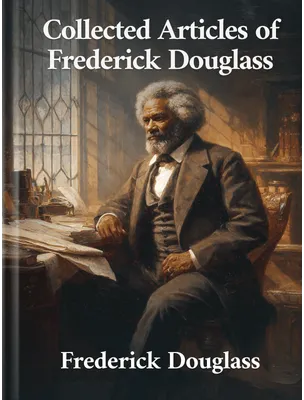
by
Frederick Douglass

In the first narrative of my experience in slavery, written nearly forty years ago, and in various writings since, I have given the public what I considered very good reasons for withholding the manner of my escape. In substance these reasons were, first, that such publication at any time during the existence of slavery might be used by the master against the slave, and prevent the future escape of any who might adopt the same means that I did. The second reason was, if possible, still more binding to silence: the publication of details would certainly have put in peril the persons and property of those who assisted. Murder itself was not more sternly and certainly punished in the State of Maryland than that of aiding and abetting the escape of a slave. Many colored men, for no other crime than that of giving aid to a fugitive slave, have, like Charles T. Torrey, perished in prison. The abolition of slavery in my native State and throughout the country, and the lapse of time, render the caution hitherto observed no longer necessary. But even since the abolition of slavery, I have sometimes thought it well enough to baffle curiosity by saying that while slavery existed there were good reasons for not telling the manner of my escape, and since slavery had ceased to exist, there was no reason for telling it. I shall now, however, cease to avail myself of this formula, and, as far as I can, endeavor to satisfy this very natural curiosity. I should, perhaps, have yielded to that feeling sooner, had there been anything very heroic or thrilling in the incidents connected with my escape, for I am sorry to say I have nothing of that sort to tell; and yet the courage that could risk betrayal and the bravery which was ready to encounter death, if need be, in pursuit of freedom, were essential features in the undertaking. My success was due to address rather than courage, to good luck rather than bravery. My means of escape were provided for me by the very men who were making laws to hold and bind me more securely in slavery.
It was the custom in the State of Maryland to require the free colored people to have what were called free papers. These instruments they were required to renew very often, and by charging a fee for this writing, considerable sums from time to time were collected by the State. In these papers the name, age, color, height, and form of the freeman were described, together with any scars or other marks upon his person which could assist in his identification. This device in some measure defeated itself — since more than one man could be found to answer the same general description. Hence many slaves could escape by personating the owner of one set of papers; and this was often done as follows: A slave, nearly or sufficiently answering the description set forth in the papers, would borrow or hire them till by means of them he could escape to a free State, and then, by mail or otherwise, would return them to the owner. The operation was a hazardous one for the lender as well as for the borrower. A failure on the part of the fugitive to send back the papers would imperil his benefactor, and the discovery of the papers in possession of the wrong man would imperil both the fugitive and his friend. It was, therefore, an act of supreme trust on the part of a freeman of color thus to put in jeopardy his own liberty that another might be free. It was, however, not unfrequently bravely done, and was seldom discovered. I was not so fortunate as to resemble any of my free acquaintances sufficiently to answer the description of their papers. But I had a friend — a sailor — who owned a sailor’s protection, which answered somewhat the purpose of free papers — describing his person, and certifying to the fact that he was a free American sailor. The instrument had at its head the American eagle, which gave it the appearance at once of an authorized document. This protection, when in my hands, did not describe its bearer very accurately. Indeed, it called for a man much darker than myself, and close examination of it would have caused my arrest at the start.
In order to avoid this fatal scrutiny on the part of railroad officials, I arranged with Isaac Rolls, a Baltimore hackman, to bring my baggage to the Philadelphia train just on the moment of starting, and jumped upon the car myself when the train was in motion. Had I gone into the station and offered to purchase a ticket, I should have been instantly and carefully examined, and undoubtedly arrested. In choosing this plan I considered the jostle of the train, and the natural haste of the conductor, in a train crowded with passengers, and relied upon my skill and address in playing the sailor, as described in my protection, to do the rest. One element in my favor was the kind feeling which prevailed in Baltimore and other sea-ports at the time, toward “those who go down to the sea in ships.” “Free trade and sailors’ rights” just then expressed the sentiment of the country. In my clothing I was rigged out in sailor style. I had on a red shirt and a tarpaulin hat, and a black cravat tied in sailor fashion carelessly and loosely about my neck. My knowledge of ships and sailor’s talk came much to my assistance, for I knew a ship from stem to stern, and from keelson to cross-trees, and could talk sailor like an “old salt.” I was well on the way to Havre de Grace before the conductor came into the negro car to collect tickets and examine the papers of his black passengers. This was a critical moment in the drama. My whole future depended upon the decision of this conductor. Agitated though I was while this ceremony was proceeding, still, externally, at least, I was apparently calm and self-possessed. He went on with his duty — examining several colored passengers before reaching me. He was somewhat harsh in tome and peremptory in manner until he reached me, when, strange enough, and to my surprise and relief, his whole manner changed. Seeing that I did not readily produce my free papers, as the other colored persons in the car had done, he said to me, in friendly contrast with his bearing toward the others:
“I suppose you have your free papers?”
To which I answered:
“No sir; I never carry my free papers to sea with me.”
“But you have something to show that you are a freeman, haven’t you?”
“Yes, sir,” I answered; “I have a paper with the American Eagle on it, and that will carry me around the world.”
With this I drew from my deep sailor’s pocket my seaman’s protection, as before described. The merest glance at the paper satisfied him, and he took my fare and went on about his business. This moment of time was one of the most anxious I ever experienced. Had the conductor looked closely at the paper, he could not have failed to discover that it called for a very different-looking person from myself, and in that case it would have been his duty to arrest me on the instant, and send me back to Baltimore from the first station. When he left me with the assurance that I was all right, though much relieved, I realized that I was still in great danger: I was still in Maryland, and subject to arrest at any moment. I saw on the train several persons who would have known me in any other clothes, and I feared they might recognize me, even in my sailor “rig,” and report me to the conductor, who would then subject me to a closer examination, which I knew well would be fatal to me.
Though I was not a murderer fleeing from justice, I felt perhaps quite as miserable as such a criminal. The train was moving at a very high rate of speed for that epoch of railroad travel, but to my anxious mind it was moving far too slowly. Minutes were hours, and hours were days during this part of my flight. After Maryland, I was to pass through Delaware — another slave State, where slave-catchers generally awaited their prey, for it was not in the interior of the State, but on its borders, that these human hounds were most vigilant and active. The border lines between slavery and freedom were the dangerous ones for the fugitives. The heart of no fox or deer, with hungry hounds on his trail in full chase, could have beaten more anxiously or noisily than did mine from the time I left Baltimore till I reached Philadelphia. The passage of the Susquehanna River at Havre de Grace was at that time made by ferry-boat, on board of which I met a young colored man by the name of Nichols, who came very near betraying me. He was a “hand” on the boat, but, instead of minding his business, he insisted upon knowing me, and asking me dangerous questions as to where I was going, when I was coming back, etc. I got away from my old and inconvenient acquaintance as soon as I could decently do so, and went to another part of the boat. Once across the river, I encountered a new danger. Only a few days before, I had been at work on a revenue cutter, in Mr. Price’s ship-yard in Baltimore, under the care of Captain McGowan. On the meeting at this point of the two trains, the one going south stopped on the track just opposite to the one going north, and it so happened that this Captain McGowan sat at a window where he could see me very distinctly, and would certainly have recognized me had he looked at me but for a second. Fortunately, in the hurry of the moment, he did not see me; and the trains soon passed each other on their respective ways. But this was not my only hair-breadth escape. A German blacksmith whom I knew well was on the train with me, and looked at me very intently, as if he thought he had seen me somewhere before in his travels. I really believe he knew me, but had no heart to betray me. At any rate, he saw me escaping and held his peace.
The last point of imminent danger, and the one I dreaded most, was Wilmington. Here we left the train and took the steam-boat for Philadelphia. In making the change here I again apprehended arrest, but no one disturbed me, and I was soon on the broad and beautiful Delaware, speeding away to the Quaker City. On reaching Philadelphia in the afternoon, I inquired of a colored man how I could get on to New York. He directed me to the William-street depot, and thither I went, taking the train that night. I reached New York Tuesday morning, having completed the journey in less than twenty-four hours.
My free life began on the third of September, 1838. On the morning of the fourth of that month, after an anxious and most perilous but safe journey, I found myself in the big city of New York, a free man — one more added to the mighty throng which, like the confused waves of the troubled sea, surged to and fro between the lofty walls of Broadway. Though dazzled with the wonders which met me on every hand, my thoughts could not be much withdrawn from my strange situation. For the moment, the dreams of my youth and the hopes of my manhood were completely fulfilled. The bonds that had held me to “old master” were broken. No man now had a right to call me his slave or assert mastery over me. I was in the rough and tumble of an outdoor world, to take my chance with the rest of its busy number. I have often been asked how I felt when first I found myself on free soil. There is scarcely anything in my experience about which I could not give a more satisfactory answer. A new world had opened upon me. If life is more than breath and the “quick round of blood,” I lived more in that one day than in a year of my slave life. It was a time of joyous excitement which words can but tamely describe. In a letter written to a friend soon after reaching New York, I said: “I felt as one might feel upon escape from a den of hungry lions.” Anguish and grief, like darkness and rain, may be depicted; but gladness and joy, like the rainbow, defy the skill of pen or pencil. During ten or fifteen years I had been, as it were, dragging a heavy chain which no strength of mine could break; I was not only a slave, but a slave for life. I might become a husband, a father, an aged man, but through all, from birth to death, from the cradle to the grave, I had felt myself doomed. All efforts I had previously made to secure my freedom had not only failed, but had seemed only to rivet my fetters the more firmly, and to render my escape more difficult. Baffled, entangled, and discouraged, I had at times asked myself the question, May not my condition after all be God’s work, and ordered for a wise purpose, and if so, Is not submission my duty? A contest had in fact been going on in my mind for a long time, between the clear consciousness of right and the plausible make-shifts of theology and superstition. The one held me an abject slave — a prisoner for life, punished for some transgression in which I had no lot nor part; and the other counseled me to manly endeavor to secure my freedom. This contest was now ended; my chains were broken, and the victory brought me unspeakable joy.
But my gladness was short-lived, for I was not yet out of the reach and power of the slave-holders. I soon found that New York was not quite so free or so safe a refuge as I had supposed, and a sense of loneliness and insecurity again oppressed me most sadly. I chanced to meet on the street, a few hours after my landing, a fugitive slave whom I had once known well in slavery. The information received from him alarmed me. The fugitive in question was known in Baltimore as “Allender’s Jake,” but in New York he wore the more respectable name of “William Dixon.” Jake, in law, was the property of Doctor Allender, and Tolly Allender, the son of the doctor, had once made an effort to recapture Mr. Dixon, but had failed for want of evidence to support his claim. Jake told me the circumstances of this attempt, and how narrowly he escaped being sent back to slavery and torture. He told me that New York was then full of Southerners returning from the Northern watering-places; that the colored people of New York were not to be trusted; that there were hired men of my own color who would betray me for a few dollars; that there were hired men ever on the lookout for fugitives; that I must trust no man with my secret; that I must not think of going either upon the wharves or into any colored boarding-house, for all such places were closely watched; that he was himself unable to help me; and, in fact, he seemed while speaking to me to fear lest I myself might be a spy and a betrayer. Under this apprehension, as I suppose, he showed signs of wishing to be rid of me, and with whitewash brush in hand, in search of work, he soon disappeared.
This picture, given by poor “Jake,” of New York, was a damper to my enthusiasm. My little store of money would soon be exhausted, and since it would be unsafe for me to go on the wharves for work, and I had no introductions elsewhere, the prospect for me was far from cheerful. I saw the wisdom of keeping away from the ship-yards, for, if pursued, as I felt certain I should be, Mr. Auld, my “master,” would naturally seek me there among the calkers. Every door seemed closed against me. I was in the midst of an ocean of my fellow-men, and yet a perfect stranger to every one. I was without home, without acquaintance, without money, without credit, without work, and without any definite knowledge as to what course to take, or where to look for succor. In such an extremity, a man had something besides his new-born freedom to think of. While wandering about the streets of New York, and lodging at least one night among the barrels on one of the wharves, I was indeed free — from slavery, but free from food and shelter as well. I kept my secret to myself as long as I could, but I was compelled at last to seek some one who would befriend me without taking advantage of my destitution to betray me. Such a person I found in a sailor named Stuart, a warm-hearted and generous fellow, who, from his humble home on Centre street, saw me standing on the opposite sidewalk, near the Tombs prison. As he approached me, I ventured a remark to him which at once enlisted his interest in me. He took me to his home to spend the night, and in the morning went with me to Mr. David Ruggles, the secretary of the New York Vigilance Committee, a co-worker with Isaac T. Hopper, Lewis and Arthur Tappan, Theodore S. Wright, Samuel Cornish, Thomas Downing, Philip A. Bell, and other true men of their time. All these (save Mr. Bell, who still lives, and is editor and publisher of a paper called the “Elevator,” in San Francisco) have finished their work on earth. Once in the hands of these brave and wise men, I felt comparatively safe. With Mr. Ruggles, on the corner of Lispenard and Church streets, I was hidden several days, during which time my intended wife came on from Baltimore at my call, to share the burdens of life with me. She was a free woman, and came at once on getting the good news of my safety. We were married by Rev. J. W. C. Pennington, then a well-known and respected Presbyterian minister. I had no money with which to pay the marriage fee, but he seemed well pleased with our thanks.
Mr. Ruggles was the first officer on the “Underground Railroad” whom I met after coming North, and was, indeed, the only one with whom I had anything to do till I became such an officer myself. Learning that my trade was that of a calker, he promptly decided that the best place for me was in New Bedford, Mass. He told me that many ships for whaling voyages were fitted out there, and that I might there find work at my trade and make a good living. So, on the day of the marriage ceremony, we took our little luggage to the steamer John W. Richmond, which, at that time, was one of the line running between New York and Newport, R. I. Forty-three years ago colored travelers were not permitted in the cabin, nor allowed abaft the paddle-wheels of a steam vessel. They were compelled, whatever the weather might be, — whether cold or hot, wet or dry, — to spend the night on deck. Unjust as this regulation was, it did not trouble us much; we had fared much harder before. We arrived at Newport the next morning, and soon after an old fashioned stage-coach, with “New Bedford” in large yellow letters on its sides, came down to the wharf. I had not money enough to pay our fare, and stood hesitating what to do. Fortunately for us, there were two Quaker gentlemen who were about to take passage on the stage, — Friends William C. Taber and Joseph Ricketson, — who at once discerned our true situation, and, in a peculiarly quiet way, addressing me, Mr. Taber said: “Thee get in.” I never obeyed an order with more alacrity, and we were soon on our way to our new home. When we reached “Stone Bridge” the passengers alighted for breakfast, and paid their fares to the driver. We took no breakfast, and, when asked for our fares, I told the driver I would make it right with him when we reached New Bedford. I expected some objection to this on his part, but he made none. When, however, we reached New Bedford, he took our baggage, including three music-books, — two of them collections by Dyer, and one by Shaw, — and held them until I was able to redeem them by paying to him the amount due for our rides. This was soon done, for Mr. Nathan Johnson not only received me kindly and hospitably, but, on being informed about our baggage, at once loaned me the two dollars with which to square accounts with the stage-driver. Mr. and Mrs. Nathan Johnson reached a good old age, and now rest from their labors. I am under many grateful obligations to them. They not only “took me in when a stranger” and “fed me when hungry,” but taught me how to make an honest living. Thus, in a fortnight after my flight from Maryland, I was safe in New Bedford, a citizen of the grand old commonwealth of Massachusetts.
Once initiated into my new life of freedom and assured by Mr. Johnson that I need not fear recapture in that city, a comparatively unimportant question arose as to the name by which I should be known thereafter in my new relation as a free man. The name given me by my dear mother was no less pretentious and long than Frederick Augustus Washington Bailey. I had, however, while living in Maryland, dispensed with the Augustus Washington, and retained only Frederick Bailey. Between Baltimore and New Bedford, the better to conceal myself from the slave-hunters, I had parted with Bailey and called myself Johnson; but in New Bedford I found that the Johnson family was already so numerous as to cause some confusion in distinguishing them, hence a change in this name seemed desirable. Nathan Johnson, mine host, placed great emphasis upon this necessity, and wished me to allow him to select a name for me. I consented, and he called me by my present name — the one by which I have been known for three and forty years — Frederick Douglass. Mr. Johnson had just been reading the “Lady of the Lake,” and so pleased was he with its great character that he wished me to bear his name. Since reading that charming poem myself, I have often thought that, considering the noble hospitality and manly character of Nathan Johnson — black man though he was — he, far more than I, illustrated the virtues of the Douglas of Scotland. Sure am I that, if any slave-catcher had entered his domicile with a view to my recapture, Johnson would have shown himself like him of the “stalwart hand.”
The reader may be surprised at the impressions I had in some way conceived of the social and material condition of the people at the North. I had no proper idea of the wealth, refinement, enterprise, and high civilization of this section of the country. My “Columbian Orator,” almost my only book, had done nothing to enlighten me concerning Northern society. I had been taught that slavery was the bottom fact of all wealth. With this foundation idea, I came naturally to the conclusion that poverty must be the general condition of the people of the free States. In the country from which I came, a white man holding no slaves was usually an ignorant and poverty-stricken man, and men of this class were contemptuously called “poor white trash.” Hence I supposed that, since the non-slave-holders at the South were ignorant, poor, and degraded as a class, the non-slave-holders at the North must be in a similar condition. I could have landed in no part of the United States where I should have found a more striking and gratifying contrast, not only to life generally in the South, but in the condition of the colored people there, than in New Bedford. I was amazed when Mr. Johnson told me that there was nothing in the laws or constitution of Massachusetts that would prevent a colored man from being governor of the State, if the people should see fit to elect him. There, too, the black man’s children attended the public schools with the white man’s children, and apparently without objection from any quarter. To impress me with my security from recapture and return to slavery, Mr. Johnson assured me that no slave-holder could take a slave out of New Bedford; that there were men there who would lay down their lives to save me from such a fate.
The fifth day after my arrival, I put on the clothes of a common laborer, and went upon the wharves in search of work. On my way down Union street I saw a large pile of coal in front of the house of Rev. Ephraim Peabody, the Unitarian minister. I went to the kitchen door and asked the privilege of bringing in and putting away this coal. “What will you charge?” said the lady. “I will leave that to you, madam.” “You may put it away,” she said. I was not long in accomplishing the job, when the dear lady put into my hand two silver half-dollars. To understand the emotion which swelled my heart as I clasped this money, realizing that I had no master who could take it from me, — that it was mine — that my hands were my own, and could earn more of the precious coin, — one must have been in some sense himself a slave. My next job was stowing a sloop at Uncle Gid. Howland’s wharf with a cargo of oil for New York. I was not only a freeman, but a free working-man, and no “master” stood ready at the end of the week to seize my hard earnings.
The season was growing late and work was plenty. Ships were being fitted out for whaling, and much wood was used in storing them. The sawing this wood was considered a good job. With the help of old Friend Johnson (blessings on his memory) I got a saw and “buck,” and went at it. When I went into a store to buy a cord with which to brace up my saw in the frame, I asked for a “fip’s” worth of cord. The man behind the counter looked rather sharply at me, and said with equal sharpness, “You don’t belong about here.” I was alarmed, and thought I had betrayed myself. A fip in Maryland was six and a quarter cents, called fourpence in Massachusetts. But no harm came from the “fi’penny-bit” blunder, and I confidently and cheerfully went to work with my saw and buck. It was new business to me, but I never did better work, or more of it, in the same space of time on the plantation for Covey, the negro-breaker, than I did for myself in these earliest years of my freedom.
Notwithstanding the just and humane sentiment of New Bedford three and forty years ago, the place was not entirely free from race and color prejudice. The good influence of the Roaches, Rodmans, Arnolds, Grinnells, and Robesons did not pervade all classes of its people. The test of the real civilization of the community came when I applied for work at my trade, and then my repulse was emphatic and decisive. It so happened that Mr. Rodney French, a wealthy and enterprising citizen, distinguished as an anti-slavery man, was fitting out a vessel for a whaling voyage, upon which there was a heavy job of calking and coppering to be done. I had some skill in both branches, and applied to Mr. French for work. He, generous man that he was, told me he would employ me, and I might go at once to the vessel. I obeyed him, but upon reaching the float-stage, where others [sic] calkers were at work, I was told that every white man would leave the ship, in her unfinished condition, if I struck a blow at my trade upon her. This uncivil, inhuman, and selfish treatment was not so shocking and scandalous in my eyes at the time as it now appears to me. Slavery had inured me to hardships that made ordinary trouble sit lightly upon me. Could I have worked at my trade I could have earned two dollars a day, but as a common laborer I received but one dollar. The difference was of great importance to me, but if I could not get two dollars, I was glad to get one; and so I went to work for Mr. French as a common laborer. The consciousness that I was free — no longer a slave — kept me cheerful under this, and many similar proscriptions, which I was destined to meet in New Bedford and elsewhere on the free soil of Massachusetts. For instance, though colored children attended the schools, and were treated kindly by their teachers, the New Bedford Lyceum refused, till several years after my residence in that city, to allow any colored person to attend the lectures delivered in its hall. Not until such men as Charles Sumner, Theodore Parker, Ralph Waldo Emerson, and Horace Mann refused to lecture in their course while there was such a restriction, was it abandoned.
Becoming satisfied that I could not rely on my trade in New Bedford to give me a living, I prepared myself to do any kind of work that came to hand. I sawed wood, shoveled coal, dug cellars, moved rubbish from back yards, worked on the wharves, loaded and unloaded vessels, and scoured their cabins.
I afterward got steady work at the brass-foundry owned by Mr. Richmond. My duty here was to blow the bellows, swing the crane, and empty the flasks in which castings were made; and at times this was hot and heavy work. The articles produced here were mostly for ship work, and in the busy season the foundry was in operation night and day. I have often worked two nights and every working day of the week. My foreman, Mr. Cobb, was a good man, and more than once protected me from abuse that one or more of the hands was disposed to throw upon me. While in this situation I had little time for mental improvement. Hard work, night and day, over a furnace hot enough to keep the metal running like water, was more favorable to action than thought; yet here I often nailed a newspaper to the post near my bellows, and read while I was performing the up and down motion of the heavy beam by which the bellows was inflated and discharged. It was the pursuit of knowledge under difficulties, and I look back to it now, after so many years, with some complacency and a little wonder that I could have been so earnest and persevering in any pursuit other than for my daily bread. I certainly saw nothing in the conduct of those around to inspire me with such interest: they were all devoted exclusively to what their hands found to do. I am glad to be able to say that, during my engagement in this foundry, no complaint was ever made against me that I did not do my work, and do it well. The bellows which I worked by main strength was, after I left, moved by a steam-engine.
The assembling of the Second Session of the Thirty-ninth Congress may very properly be made the occasion of a few earnest words on the already much-worn topic of reconstruction.
Seldom has any legislative body been the subject of a solicitude more intense, or of aspirations more sincere and ardent. There are the best of reasons for this profound interest. Questions of vast moment, left undecided by the last session of Congress, must be manfully grappled with by this. No political skirmishing will avail. The occasion demands statesmanship.
Whether the tremendous war so heroically fought and so victoriously ended shall pass into history a miserable failure, barren of permanent results, — a scandalous and shocking waste of blood and treasure, — a strife for empire, as Earl Russell characterized it, of no value to liberty or civilization, — an attempt to re-establish a Union by force, which must be the merest mockery of a Union, — an effort to bring under Federal authority States into which no loyal man from the North may safely enter, and to bring men into the national councils who deliberate with daggers and vote with revolvers, and who do not even conceal their deadly hate of the country that conquered them; or whether, on the other hand, we shall, as the rightful reward of victory over treason, have a solid nation, entirely delivered from all contradictions and social antagonisms, based upon loyalty, liberty, and equality, must be determined one way or the other by the present session of Congress. The last session really did nothing which can be considered final as to these questions. The Civil Rights Bill and the Freedmen’s Bureau Bill and the proposed constitutional amendments, with the amendment already adopted and recognized as the law of the land, do not reach the difficulty, and cannot, unless the whole structure of the government is changed from a government by States to something like a despotic central government, with power to control even the municipal regulations of States, and to make them conform to its own despotic will. While there remains such an idea as the right of each State to control its own local affairs, — an idea, by the way, more deeply rooted in the minds of men of all sections of the country than perhaps any one other political idea, — no general assertion of human rights can be of any practical value. To change the character of the government at this point is neither possible nor desirable. All that is necessary to be done is to make the government consistent with itself, and render the rights of the States compatible with the sacred rights of human nature.
The arm of the Federal government is long, but it is far too short to protect the rights of individuals in the interior of distant States. They must have the power to protect themselves, or they will go unprotected, spite of all the laws the Federal government can put upon the national statute-book.
Slavery, like all other great systems of wrong, founded in the depths of human selfishness, and existing for ages, has not neglected its own conservation. It has steadily exerted an influence upon all around it favorable to its own continuance. And to-day it is so strong that it could exist, not only without law, but even against law. Custom, manners, morals, religion, are all on its side everywhere in the South; and when you add the ignorance and servility of the ex-slave to the intelligence and accustomed authority of the master, you have the conditions, not out of which slavery will again grow, but under which it is impossible for the Federal government to wholly destroy it, unless the Federal government be armed with despotic power, to blot out State authority, and to station a Federal officer at every cross-road. This, of course, cannot be done, and ought not even if it could. The true way and the easiest way is to make our government entirely consistent with itself, and give to every loyal citizen the elective franchise, — a right and power which will be ever present, and will form a wall of fire for his protection.
One of the invaluable compensations of the late Rebellion is the highly instructive disclosure it made of the true source of danger to republican government. Whatever may be tolerated in monarchical and despotic governments, no republic is safe that tolerates a privileged class, or denies to any of its citizens equal rights and equal means to maintain them. What was theory before the war has been made fact by the war.
There is cause to be thankful even for rebellion. It is an impressive teacher, though a stern and terrible one. In both characters it has come to us, and it was perhaps needed in both. It is an instructor never a day before its time, for it comes only when all other means of progress and enlightenment have failed. Whether the oppressed and despairing bondman, no longer able to repress his deep yearnings for manhood, or the tyrant, in his pride and impatience, takes the initiative, and strikes the blow for a firmer hold and a longer lease of oppression, the result is the same, — society is instructed, or may be.
Such are the limitations of the common mind, and so thoroughly engrossing are the cares of common life, that only the few among men can discern through the glitter and dazzle of present prosperity the dark outlines of approaching disasters, even though they may have come up to our very gates, and are already within striking distance. The yawning seam and corroded bolt conceal their defects from the mariner until the storm calls all hands to the pumps. Prophets, indeed, were abundant before the war; but who cares for prophets while their predictions remain unfulfilled, and the calamities of which they tell are masked behind a blinding blaze of national prosperity?
It is asked, said Henry Clay, on a memorable occasion, Will slavery never come to an end? That question, said he, was asked fifty years ago, and it has been answered by fifty years of unprecedented prosperity. Spite of the eloquence of the earnest Abolitionists, — poured out against slavery during thirty years, — even they must confess, that, in all the probabilities of the case, that system of barbarism would have continued its horrors far beyond the limits of the nineteenth century but for the Rebellion, and perhaps only have disappeared at last in a fiery conflict, even more fierce and bloody than that which has now been suppressed.
It is no disparagement to truth, that it can only prevail where reason prevails. War begins where reason ends. The thing worse than rebellion is the thing that causes rebellion. What that thing is, we have been taught to our cost. It remains now to be seen whether we have the needed courage to have that cause entirely removed from the Republic. At any rate, to this grand work of national regeneration and entire purification Congress must now address Itself, with full purpose that the work shall this time be thoroughly done. The deadly upas, root and branch, leaf and fibre, body and sap, must be utterly destroyed. The country is evidently not in a condition to listen patiently to pleas for postponement, however plausible, nor will it permit the responsibility to be shifted to other shoulders. Authority and power are here commensurate with the duty imposed. There are no cloud-flung shadows to obscure the way. Truth shines with brighter light and intenser heat at every moment, and a country torn and rent and bleeding implores relief from its distress and agony.
If time was at first needed, Congress has now had time. All the requisite materials from which to form an intelligent judgment are now before it. Whether its members look at the origin, the progress, the termination of the war, or at the mockery of a peace now existing, they will find only one unbroken chain of argument in favor of a radical policy of reconstruction. For the omissions of the last session, some excuses may be allowed. A treacherous President stood in the way; and it can be easily seen how reluctant good men might be to admit an apostasy which involved so much of baseness and ingratitude. It was natural that they should seek to save him by bending to him even when he leaned to the side of error. But all is changed now. Congress knows now that it must go on without his aid, and even against his machinations. The advantage of the present session over the last is immense. Where that investigated, this has the facts. Where that walked by faith, this may walk by sight. Where that halted, this must go forward, and where that failed, this must succeed, giving the country whole measures where that gave us half-measures, merely as a means of saving the elections in a few doubtful districts. That Congress saw what was right, but distrusted the enlightenment of the loyal masses; but what was forborne in distrust of the people must now be done with a full knowledge that the people expect and require it. The members go to Washington fresh from the inspiring presence of the people. In every considerable public meeting, and in almost every conceivable way, whether at court-house, school-house, or cross-roads, in doors and out, the subject has been discussed, and the people have emphatically pronounced in favor of a radical policy. Listening to the doctrines of expediency and compromise with pity, impatience, and disgust, they have everywhere broken into demonstrations of the wildest enthusiasm when a brave word has been spoken in favor of equal rights and impartial suffrage. Radicalism, so far from being odious, is not the popular passport to power. The men most bitterly charged with it go to Congress with the largest majorities, while the timid and doubtful are sent by lean majorities, or else left at home. The strange controversy between the President and the Congress, at one time so threatening, is disposed of by the people. The high reconstructive powers which he so confidently, ostentatiously, and haughtily claimed, have been disallowed, denounced, and utterly repudiated; while those claimed by Congress have been confirmed.
Of the spirit and magnitude of the canvass nothing need be said. The appeal was to the people, and the verdict was worthy of the tribunal. Upon an occasion of his own selection, with the advice and approval of his astute Secretary, soon after the members of the Congress had returned to their constituents, the President quitted the executive mansion, sandwiched himself between two recognized heroes, — men whom the whole country delighted to honor, — and, with all the advantage which such company could give him, stumped the country from the Atlantic to the Mississippi, advocating everywhere his policy as against that of Congress. It was a strange sight, and perhaps the most disgraceful exhibition ever made by any President; but, as no evil is entirely unmixed, good has come of this, as from many others. Ambitious, unscrupulous, energetic, indefatigable, voluble, and plausible, — a political gladiator, ready for a “set-to” in any crowd, — he is beaten in his own chosen field, and stands to-day before the country as a convicted usurper, a political criminal, guilty of a bold and persistent attempt to possess himself of the legislative powers solemnly secured to Congress by the Constitution. No vindication could be more complete, no condemnation could be more absolute and humiliating. Unless reopened by the sword, as recklessly threatened in some circles, this question is now closed for all time.
Without attempting to settle here the metaphysical and somewhat theological question (about which so much has already been said and written), whether once in the Union means always in the Union, — agreeably to the formula, Once in grace always in grace, — it is obvious to common sense that the rebellious States stand to-day, in point of law, precisely where they stood when, exhausted, beaten, conquered, they fell powerless at the feet of Federal authority. Their State governments were overthrown, and the lives and property of the leaders of the Rebellion were forfeited. In reconstructing the institutions of these shattered and overthrown States, Congress should begin with a clean slate, and make clean work of it. Let there be no hesitation. It would be a cowardly deference to a defeated and treacherous President, if any account were made of the illegitimate, one-sided, sham governments hurried into existence for a malign purpose in the absence of Congress. These pretended governments, which were never submitted to the people, and from participation in which four millions of the loyal people were excluded by Presidential order, should now be treated according to their true character, as shams and impositions, and supplanted by true and legitimate governments, in the formation of which loyal men, black and white, shall participate.
It is not, however, within the scope of this paper to point out the precise steps to be taken, and the means to be employed. The people are less concerned about these than the grand end to be attained. They demand such a reconstruction as shall put an end to the present anarchical state of things in the late rebellious States, — where frightful murders and wholesale massacres are perpetrated in the very presence of Federal soldiers. This horrible business they require shall cease. They want a reconstruction such as will protect loyal men, black and white, in their persons and property; such a one as will cause Northern industry, Northern capital, and Northern civilization to flow into the South, and make a man from New England as much at home in Carolina as elsewhere in the Republic. No Chinese wall can now be tolerated. The South must be opened to the light of law and liberty, and this session of Congress is relied upon to accomplish this important work.
The plain, common-sense way of doing this work, as intimated at the beginning, is simply to establish in the South one law, one government, one administration of justice, one condition to the exercise of the elective franchise, for men of all races and colors alike. This great measure is sought as earnestly by loyal white men as by loyal blacks, and is needed alike by both. Let sound political prescience but take the place of an unreasoning prejudice, and this will be done.
Men denounce the negro for his prominence in this discussion; but it is no fault of his that in peace as in war, that in conquering Rebel armies as in reconstructing the rebellious States, the right of the negro is the true solution of our national troubles. The stern logic of events, which goes directly to the point, disdaining all concern for the color or features of men, has determined the interests of the country as identical with and inseparable from those of the negro.
The policy that emancipated and armed the negro — now seen to have been wise and proper by the dullest — was not certainly more sternly demanded than is now the policy of enfranchisement. If with the negro was success in war, and without him failure, so in peace it will be found that the nation must fall or flourish with the negro.
Fortunately, the Constitution of the United States knows no distinction between citizens on account of color. Neither does it know any difference between a citizen of a State and a citizen of the United States. Citizenship evidently includes all the rights of citizens, whether State or national. If the Constitution knows none, it is clearly no part of the duty of a Republican Congress now to institute one. The mistake of the last session was the attempt to do this very thing, by a renunciation of its power to secure political rights to any class of citizens, with the obvious purpose to allow the rebellious States to disfranchise, if they should see fit, their colored citizens. This unfortunate blunder must now be retrieved, and the emasculated citizenship given to the negro supplanted by that contemplated in the Constitution of the United States, which declares that the citizens of each State shall enjoy all the rights and immunities of citizens of the several States, — so that a legal voter in any State shall be a legal voter in all the States.