The book was published in 1886.
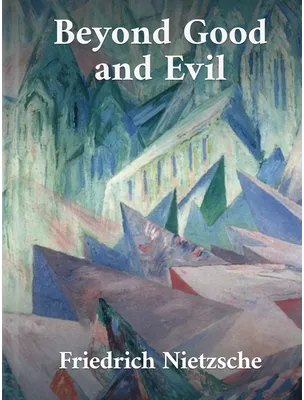
Beyond Good and Evil is a book written by philosopher Friedrich Nietzche. The book takes the author's philosophical ideas and expands and defines them. He attacks philosophy and other philosophers for their lack of sense and other complaints. Read how the great philosopher tackles morality and knowledge. What does "beyond good and evil" really mean?
In the provocative world of Friedrich Nietzsche's "Beyond Good and Evil," readers are invited to journey into the depths of morality and the human condition. This philosophical exploration challenges the conventional notions of right and wrong, urging us to question the very foundations of our beliefs. Nietzsche himself acts as the central figure, guiding us through a landscape filled with profound ideas and daring concepts. With a sharp wit and a critical eye, he dissects the dogmas of society, encouraging a bold re-evaluation of values.
The central theme revolves around the conflict between traditional moralities and the pursuit of individual truth. Nietzsche confronts the constraints imposed by societal norms, advocating for a life lived authentically and passionately. As we navigate through his thought-provoking passages, we are compelled to reflect on our own lives and the beliefs we hold dear. Prepare to embark on a philosophical odyssey that will challenge your perceptions and inspire a deeper understanding of what it means to transcend beyond good and evil.
Full Name: Friedrich Wilhelm Nietzsche
Birthdate: October 15, 1844
Place of Birth: Röcken, Prussia (now Germany)
Date and Place of Death: August 25, 1900, Weimar, Germany
Occupation: Philosopher, poet, and cultural critic
Notable Works: Some of his most famous works include "Thus Spoke Zarathustra," "Beyond Good and Evil," and "The Birth of Tragedy."
Early Life: Nietzsche was born into a Lutheran family. His father, a pastor, died when Nietzsche was just five years old. He excelled in school and later attended the University of Bonn and Leipzig, where he studied theology and philology.
Literary Career: Nietzsche began his literary career as a philologist but soon turned to philosophy. His works often explore themes of morality, culture, and the nature of existence. He is known for his critique of traditional values and religion, especially Christianity. His writing style is characterized by its poetic and aphoristic nature.
Personal Life: Nietzsche had a complex personal life. He struggled with health issues, including mental illness later in life, which led to his institutionalization. Though he had relationships, he never married. He spent much of his life in solitude, focusing on his writing and philosophical ideas.
Friedrich Nietzsche was a German philosopher, poet, and cultural critic known for his ideas on morality, culture, and individuality.
'Beyond Good and Evil' is a philosophical work that combines elements of essays and critiques.
The book does not have traditional characters; instead, it presents Nietzsche's ideas and thoughts through various philosophical arguments.
The book challenges traditional notions of morality and encourages readers to question accepted truths and beliefs.
Key themes include the critique of morality, the will to power, and the concept of perspectivism.
Yes, Nietzsche uses symbols like the 'Übermensch' (Overman) to represent the ideal individual who transcends conventional morality.
The book received mixed reviews initially but has since become a foundational text in philosophy and is widely studied.
There are no major film or theatrical adaptations, but its ideas have influenced many works in literature, art, and philosophy.
The book has significantly influenced modern philosophy, psychology, and literature, inspiring thinkers and artists around the world.