'Bacon' was published in 1884.
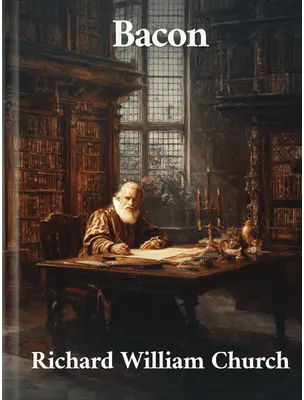
Francis Bacon, 1st Viscount St Alban, PC, also known as Lord Verulam, was an English philosopher and statesman who served as Attorney General and Lord Chancellor of England. Bacon has been called the father of empiricism. He argued for the possibility of scientific knowledge based only upon inductive reasoning and careful observation of events in nature. This book is his 1884 biography by Richard William Church.
In the evocative pages of "Bacon," Richard William Church invites readers into a world where culinary passion meets the complexities of human relationships. The story revolves around the charming yet conflicted protagonist, Jack, a young chef with dreams of creating the perfect dish. As Jack navigates the bustling corridors of a prestigious restaurant, he grapples with the pressure of high expectations and his own insecurities. Alongside him are his wise mentor, Chef Louise, who pushes him to reach his potential, and Mia, a fellow chef whose friendship complicates his journey. The central theme of "Bacon" explores the delicate balance between ambition and authenticity, highlighting how the pursuit of greatness can sometimes lead to self-discovery. With rich descriptions and relatable characters, this novel serves up a feast for the soul, reminding us that the ingredients of life often come from the most unexpected places. Join Jack as he stirs together flavors of friendship, passion, and the quest for identity in a tale that is as savory as it is heartwarming.
Full Name: Richard William Church
Birthdate: December 12, 1815
Place of Birth: London, England
Date and Place of Death: April 14, 1890, in Oxford, England
Occupation: Poet, essayist, and critic
Notable Works: Church is known for his poems and essays, including "The Oxford Movement," "The Life and Letters of John Keble," and "The Last of the Great." His works often reflect his deep interest in religion and philosophy.
Early Life: Richard William Church was born into a well-educated family. He attended St. Paul's School and later went to Trinity College, Oxford. He excelled in his studies and developed a passion for literature and theology.
Literary Career: Church began his literary career with poetry but gained fame for his essays and critiques. He was involved with the Oxford Movement, which aimed to revive the spiritual heritage of the Church of England. His writing is characterized by its clarity and depth, making complex ideas accessible to readers.
Personal Life: Church was a devoted family man. He married and had children, balancing his literary pursuits with his responsibilities at home. He was respected in literary circles and had friendships with notable writers of his time. His legacy continues through his contributions to English literature and theology.
Richard William Church was a British author and poet known for his literary works in the 19th century.
Church was inspired by the philosophical ideas of Francis Bacon and aimed to explore themes of knowledge and human experience.
'Bacon' is primarily a philosophical and literary work that combines elements of essay and biography.
The main focus is on Francis Bacon himself, exploring his life, thoughts, and contributions to philosophy and science.
'Bacon' offers an overview of Francis Bacon's life and ideas, emphasizing his impact on modern thought and the scientific method.
Key themes include the pursuit of knowledge, the importance of empirical evidence, and the evolution of human understanding.
Symbolism in 'Bacon' often relates to light and darkness, representing knowledge and ignorance.
'Bacon' was generally well-received, praised for its insightful analysis and engaging style.
As of now, there are no major adaptations of 'Bacon' into film or theater.
'Bacon' has contributed to the appreciation of Francis Bacon's ideas, influencing discussions in philosophy and science.