It was first published in 1728, long after Cellini's death in 1571.
[{"id":"para_1","index":0,"start":0,"offset":345,"words":5,"paraNum":"","lastModified":1670142698000,"semanticType":"title-book-title","voicework":"no_audio","blockId":"autobiography_of_benvenuto_cellini_1_ffa_en-bl50","language":"en","wordsRange":{"start":10597000000,"end":10603000000},"paragraphVersion":380,"direction":"ltr","paragraph":"<h1 class=\"ilm-title\" id=\"para_1\" semantictype=\"title-book-title\" data-ilmid=\"autobiography_of_benvenuto_cellini_1_ffa_en-bl50\" data-chapter=\"para_1\" data-words-count=\"5\" data-before=\"0\" data-ww=\"\"><span class=\"block-pb\"> <span class=\"block-pb is-animated\"></span> </span><span class=\"itm-wrap\">The Autobiography of Benvenuto Cellini</span></h1>","hasContent":true,"isFirst":true,"isLast":false},{"id":"para_2","index":1,"start":345,"offset":364,"words":2,"paraNum":"","lastModified":1670143929000,"semanticType":"title-author","voicework":"no_audio","blockId":"autobiography_of_benvenuto_cellini_1_ffa_en-bl17c","language":"en","wordsRange":{"start":10636333333,"end":10669666667},"paragraphVersion":232,"direction":"ltr","paragraph":"<h1 class=\"ilm-title ilm-author ilm-x-large ilm-nopad\" id=\"para_2\" semantictype=\"title-author\" data-ilmid=\"autobiography_of_benvenuto_cellini_1_ffa_en-bl17c\" data-chapter=\"para_2\" data-words-count=\"2\" data-before=\"5\" data-ww=\"\"><span class=\"block-pb\"> <span class=\"block-pb is-animated\"></span> </span><span class=\"itm-wrap\">by<br>Benvenuto Cellini<br></span></h1>","hasContent":true,"isFirst":false,"isLast":false},{"id":"para_3","index":2,"start":709,"offset":370,"words":5,"paraNum":"","lastModified":1670142815000,"semanticType":"title-translator","voicework":"no_audio","blockId":"autobiography_of_benvenuto_cellini_1_ffa_en-bl51","language":"en","wordsRange":{"start":10703000000,"end":10709000000},"paragraphVersion":390,"direction":"ltr","paragraph":"<h1 class=\"ilm-title ilm-translator ilm-x-small\" id=\"para_3\" semantictype=\"title-translator\" data-ilmid=\"autobiography_of_benvenuto_cellini_1_ffa_en-bl51\" data-chapter=\"para_3\" data-words-count=\"5\" data-before=\"7\" data-ww=\"\"><span class=\"block-pb\"> <span class=\"block-pb is-animated\"></span> </span><span class=\"itm-wrap\">Translated by John Addington Symonds</span></h1>","hasContent":true,"isFirst":false,"isLast":false},{"id":"para_4","index":3,"start":1079,"offset":172,"words":0,"paraNum":"","lastModified":1663249110000,"semanticType":"line","blockId":"autobiography_of_benvenuto_cellini_1_ffa_en-bl53","language":"en","wordsRange":{"start":10916000000,"end":10918000000},"paragraphVersion":218,"direction":"ltr","paragraph":"<hr class=\"ilm-hr ilm-small\" id=\"para_4\" semantictype=\"line\" data-ilmid=\"autobiography_of_benvenuto_cellini_1_ffa_en-bl53\" data-words-count=\"0\" data-before=\"12\" data-ww=\"\">","hasContent":true,"isFirst":false,"isLast":false},{"id":"para_5","index":4,"start":1251,"offset":990,"words":0,"paraNum":"","lastModified":1671012402000,"semanticType":"illustration","blockId":"autobiography_of_benvenuto_cellini_1_ffa_en-bl1cl","language":"en","wordsRange":{"start":10940555556,"end":10963111111},"paragraphVersion":29,"direction":"ltr","paragraph":"<div class=\"ilm-illustration\" id=\"para_5\" semantictype=\"illustration\" data-ilmid=\"autobiography_of_benvenuto_cellini_1_ffa_en-bl1cl\" data-words-count=\"0\" data-before=\"12\" data-ww=\"\"><img width=\"379\" height=\"600\" data-src=\"ch0p0\" src=\"data:image/webp;base64,UklGRvQBAABXRUJQVlA4IOgBAAAQDACdASomADwAPm0ukUYkIqGhMBVcAIANiWcAzNW2scIdzLlEMofCwUs+oEJ8SUzMYH0ogqTpjB85U9qlskWnOZQtebniucZ5g8SApuLSUVkZ7mV5Ls4cZNaWUBNZcFmzbIJKO7vJ17gA/mVflEEoW5mu2P5/7UGvF22r3t65BjFLrYAYMdie6mlTPJ9YPUylA16gsX+vVLbkyWydrJyO7fhSxdjb/R87Y9kgqfR6XSGcF8AU3OSgkmTvjFtG71USZLcqftKf2kbr8LjN0/40aOzRLRkT8/Ywa4navqLSgQMo6fy2WQWFk+2Mc3eHuiLXF2551QEVVlRmBkgoQMe+a/i0NjssiAS0VvNTeKigfrtrqBPhCBB51wDSgmwe1f3IuoQTMV5I1nrwjUI1wvcP+OqtTWdEa62KVPp2nf05aObUK+S+do3QYxZXip/I2HadLGpHZqLsPTfYmEKQ9WO42wAG5weQjm7zsmMo2K0LL55hShGp+3vBG2KatwdffpeNAZDzZNQ5W6w8xJUPygdgPK1AQTDzR4pA6msiZsqASYZ3MhQ0OBalVyoXpR0Di5pn7Qh1XLr3rBIsdjS9rZ1xf7NALvMVHSpwIcXfS4CffB55IdjFSpcZvgVs+tuSc+jdjQkgLIAAAA==\" alt=\"The Autobiography of Benvenuto Cellini\"></div>","hasContent":true,"isFirst":false,"isLast":false},{"id":"para_6","index":5,"start":2241,"offset":336,"words":2,"paraNum":"","lastModified":1670718745000,"semanticType":"header-subheader","voicework":"no_audio","blockId":"autobiography_of_benvenuto_cellini_1_ffa_en-bl17d","language":"en","wordsRange":{"start":10985666667,"end":11053333333},"paragraphVersion":252,"direction":"ltr","paragraph":"<h3 class=\"ilm-header ilm-h3\" id=\"para_6\" semantictype=\"header-subheader\" data-ilmid=\"autobiography_of_benvenuto_cellini_1_ffa_en-bl17d\" data-chapter=\"para_6\" data-words-count=\"2\" data-before=\"12\" data-ww=\"\"><span class=\"block-pb\"> <span class=\"block-pb is-animated\"></span> </span><span class=\"itm-wrap\">Introductory Sonnet</span></h3>","hasContent":true,"isFirst":false,"isLast":false},{"id":"para_7","index":6,"start":2577,"offset":964,"words":97,"paraNum":"i.1","lastModified":1670997865000,"semanticType":"par","voicework":"no_audio","blockId":"autobiography_of_benvenuto_cellini_1_ffa_en-bl55","language":"en","wordsRange":{"start":11121000000,"end":11232000000},"paragraphVersion":434,"direction":"ltr","paragraph":"<p id=\"para_7\" semantictype=\"par\" data-ilmid=\"autobiography_of_benvenuto_cellini_1_ffa_en-bl55\" data-words-count=\"97\" data-before=\"14\" data-ww=\"\"><span class=\"block-num\" data-id=\"i.1\"></span><span class=\"block-pb\"> <span class=\"block-pb is-animated\"></span> </span><span class=\"itm-wrap\">This tale of my sore-troubled life I write,<br>To thank the God of nature, who conveyed<br>My soul to me, and with such care hath stayed<br>That divers noble deeds I’ve brought to light.<br>’Twas He subdued my cruel fortune’s spite:<br>Life glory virtue measureless hath made<br>Such grace worth beauty be through me displayed<br>That few can rival, none surpass me quite.<br>Only it grieves me when I understand<br>What precious time in vanity I’ve spent —<br>The wind it beareth man’s frail thoughts away.<br>Yet, since remorse avails not, I’m content,<br>As erst I came, <i>welcome</i> to go one day,<br>Here in the Flower of this fair Tuscan land.</span></p>","hasContent":true,"isFirst":false,"isLast":false},{"id":"para_8","index":7,"start":3541,"offset":334,"words":2,"paraNum":"","lastModified":1670282941000,"semanticType":"header-subheader","voicework":"no_audio","blockId":"autobiography_of_benvenuto_cellini_1_ffa_en-bl56","language":"en","wordsRange":{"start":11332000000,"end":11335000000},"paragraphVersion":410,"direction":"ltr","paragraph":"<h3 class=\"ilm-header ilm-h3\" id=\"para_8\" semantictype=\"header-subheader\" data-ilmid=\"autobiography_of_benvenuto_cellini_1_ffa_en-bl56\" data-chapter=\"para_8\" data-words-count=\"2\" data-before=\"111\" data-ww=\"\"><span class=\"block-pb\"> <span class=\"block-pb is-animated\"></span> </span><span class=\"itm-wrap\">Introductory Note</span></h3>","hasContent":true,"isFirst":false,"isLast":false},{"id":"para_9","index":8,"start":3875,"offset":712,"words":65,"paraNum":"i.2","lastModified":1670852572000,"semanticType":"par","voicework":"no_audio","blockId":"autobiography_of_benvenuto_cellini_1_ffa_en-bl57","language":"en","wordsRange":{"start":11435000000,"end":11503000000},"paragraphVersion":423,"direction":"ltr","paragraph":"<p id=\"para_9\" semantictype=\"par\" data-ilmid=\"autobiography_of_benvenuto_cellini_1_ffa_en-bl57\" data-words-count=\"65\" data-before=\"113\" data-ww=\"\"><span class=\"block-num\" data-id=\"i.2\"></span><span class=\"block-pb\"> <span class=\"block-pb is-animated\"></span> </span><span class=\"itm-wrap\">Among the vast number of men who have thought fit to write down the history of their own lives, three or four have achieved masterpieces which stand out preeminently: Saint Augustine in his “Confessions,” Samuel Pepys in his “Diary,” Rousseau in his “Confessions.” It is among these extraordinary documents, and unsurpassed by any of them, that the autobiography of Benvenuto Cellini takes its place.</span></p>","hasContent":true,"isFirst":false,"isLast":false},{"id":"para_10","index":9,"start":4587,"offset":1684,"words":250,"paraNum":"i.3","lastModified":1670852594000,"semanticType":"par","voicework":"no_audio","blockId":"autobiography_of_benvenuto_cellini_1_ffa_en-bl58","language":"en","wordsRange":{"start":11603000000,"end":11855000000},"paragraphVersion":414,"direction":"ltr","paragraph":"<p id=\"para_10\" semantictype=\"par\" data-ilmid=\"autobiography_of_benvenuto_cellini_1_ffa_en-bl58\" data-words-count=\"250\" data-before=\"178\" data-ww=\"\"><span class=\"block-num\" data-id=\"i.3\"></span><span class=\"block-pb\"> <span class=\"block-pb is-animated\"></span> </span><span class=\"itm-wrap\">The “Life” of himself which Cellini wrote was due to other motives than those which produced its chief competitors for first place in its class. St. Augustine’s aim was religious and didactic, Pepys noted down in his diary the daily events of his life for his sole satisfaction and with no intention that any one should read the cipher in which they were recorded. But Cellini wrote that the world might know, after he was dead, what a fellow he had been; what great things he had attempted, and against what odds he had carried them through. “All men,” he held, “whatever be their condition, who have done anything of merit, or which verily has a semblance of merit, if so be they are men of truth and good repute, should write the tale of their life with their own hand.” That he had done many things of merit, he had no manner of doubt. His repute was great in his day, and perhaps good in the sense in which he meant goodness; as to whether he was a man of truth, there is still dispute among scholars. Of some misrepresentations, some suppressions of damaging facts, there seems to be evidence only too good — a man with Cellini’s passion for proving himself in the right could hardly have avoided being guilty of such — ; but of the general trustworthiness of his record, of the kind of man he was and the kind of life he led, there is no reasonable doubt.</span></p>","hasContent":true,"isFirst":false,"isLast":false},{"id":"para_11","index":10,"start":6271,"offset":881,"words":103,"paraNum":"i.4","lastModified":1670282997000,"semanticType":"par","voicework":"no_audio","blockId":"autobiography_of_benvenuto_cellini_1_ffa_en-bl59","language":"en","wordsRange":{"start":11955000000,"end":12059000000},"paragraphVersion":407,"direction":"ltr","paragraph":"<p id=\"para_11\" semantictype=\"par\" data-ilmid=\"autobiography_of_benvenuto_cellini_1_ffa_en-bl59\" data-words-count=\"103\" data-before=\"428\" data-ww=\"\"><span class=\"block-num\" data-id=\"i.4\"></span><span class=\"block-pb\"> <span class=\"block-pb is-animated\"></span> </span><span class=\"itm-wrap\">The period covered by the autobiography is from Cellini’s birth in 1500 to 1562; the scene is mainly in Italy and France. Of the great events of the time, the time of the Reformation and the Counter-Reformation, of the strife of Pope and Emperor and King, we get only glimpses. The leaders in these events appear in the foreground of the picture only when they come into personal relations with the hero; and then not mainly as statesmen or warriors, but as connoisseurs and patrons of art. Such an event as the Sack of Rome is described because Benvenuto himself fought in it.</span></p>","hasContent":true,"isFirst":false,"isLast":false},{"id":"para_12","index":11,"start":7152,"offset":739,"words":77,"paraNum":"i.5","lastModified":1670282997000,"semanticType":"par","voicework":"no_audio","blockId":"autobiography_of_benvenuto_cellini_1_ffa_en-bl5a","language":"en","wordsRange":{"start":12159000000,"end":12237000000},"paragraphVersion":405,"direction":"ltr","paragraph":"<p id=\"para_12\" semantictype=\"par\" data-ilmid=\"autobiography_of_benvenuto_cellini_1_ffa_en-bl5a\" data-words-count=\"77\" data-before=\"531\" data-ww=\"\"><span class=\"block-num\" data-id=\"i.5\"></span><span class=\"block-pb\"> <span class=\"block-pb is-animated\"></span> </span><span class=\"itm-wrap\">Much more complete is the view he gives of the artistic life of the time. It was the age of Michelangelo, and in the throng of great artists which then filled the Italian cities, Cellini was no inconsiderable figure. Michelangelo himself he knew and adored. Nowhere can we gain a better idea than in this book of the passionate enthusiasm for the creation of beauty which has bestowed upon the Italy of the Renaissance its greatest glory.</span></p>","hasContent":true,"isFirst":false,"isLast":false},{"id":"para_13","index":12,"start":7891,"offset":1272,"words":168,"paraNum":"i.6","lastModified":1670282997000,"semanticType":"par","voicework":"no_audio","blockId":"autobiography_of_benvenuto_cellini_1_ffa_en-bl5b","language":"en","wordsRange":{"start":12337000000,"end":12506000000},"paragraphVersion":407,"direction":"ltr","paragraph":"<p id=\"para_13\" semantictype=\"par\" data-ilmid=\"autobiography_of_benvenuto_cellini_1_ffa_en-bl5b\" data-words-count=\"168\" data-before=\"608\" data-ww=\"\"><span class=\"block-num\" data-id=\"i.6\"></span><span class=\"block-pb\"> <span class=\"block-pb is-animated\"></span> </span><span class=\"itm-wrap\">Very vivid, too, is the impression we receive of the social life of the sixteenth century; of its violence and licentiousness, of its zeal for fine craftsmanship, of its abounding vitality, its versatility and its idealism. For Cellini himself is an epitome of that century. This man who tells here the story of his life was a murderer and a braggart, insolent, sensual, inordinately proud and passionate; but he was also a worker in gold and silver, rejoicing in delicate chasing and subtle modelling of precious surfaces; a sculptor and a musician; and, as all who read his book must testify, a great master of narrative. Keen as was Benvenuto’s interest in himself, and much as he loved to dwell on the splendor of his exploits and achievements, he had little idea that centuries after his death he would live again, less by his “Perseus” and his goldsmith’s work than by the book which he dictated casually to a lad of fourteen, while he went about his work.</span></p>","hasContent":true,"isFirst":false,"isLast":false},{"id":"para_14","index":13,"start":9163,"offset":827,"words":96,"paraNum":"i.7","lastModified":1670282997000,"semanticType":"par","voicework":"no_audio","blockId":"autobiography_of_benvenuto_cellini_1_ffa_en-bl5c","language":"en","wordsRange":{"start":12606000000,"end":12703000000},"paragraphVersion":407,"direction":"ltr","paragraph":"<p id=\"para_14\" semantictype=\"par\" data-ilmid=\"autobiography_of_benvenuto_cellini_1_ffa_en-bl5c\" data-words-count=\"96\" data-before=\"776\" data-ww=\"\"><span class=\"block-num\" data-id=\"i.7\"></span><span class=\"block-pb\"> <span class=\"block-pb is-animated\"></span> </span><span class=\"itm-wrap\">The autobiography was composed between 1558 and 1566, but it brings the record down only to 1562. The remainder of Cellini’s life seems to have been somewhat more peaceful. In 1565 he married Piera de Salvadore Parigi, a servant who had nursed him when he was sick; and in the care of his children, as earlier of his sister and nieces, he showed more tenderness than might have been expected from a man of his boisterous nature. He died at Florence, May 13, 1571, and was buried in The Church of the Annunziata in that city.</span></p>","hasContent":true,"isFirst":false,"isLast":false},{"id":"para_15","index":14,"start":9990,"offset":174,"words":0,"paraNum":"","lastModified":1663249110000,"semanticType":"line","blockId":"autobiography_of_benvenuto_cellini_1_ffa_en-bl5d","language":"en","wordsRange":{"start":12803000000,"end":12805000000},"paragraphVersion":216,"direction":"ltr","paragraph":"<hr class=\"ilm-hr ilm-small\" id=\"para_15\" semantictype=\"line\" data-ilmid=\"autobiography_of_benvenuto_cellini_1_ffa_en-bl5d\" data-words-count=\"0\" data-before=\"872\" data-ww=\"\">","hasContent":true,"isFirst":false,"isLast":false},{"id":"para_16","index":15,"start":10164,"offset":359,"words":4,"paraNum":"","lastModified":1670403221000,"semanticType":"header-section-header","voicework":"no_audio","blockId":"autobiography_of_benvenuto_cellini_1_ffa_en-bl1bn","language":"en","wordsRange":{"start":12873333333,"end":12941666667},"paragraphVersion":74,"direction":"ltr","paragraph":"<h1 class=\"ilm-header ilm-h1\" id=\"para_16\" semantictype=\"header-section-header\" data-ilmid=\"autobiography_of_benvenuto_cellini_1_ffa_en-bl1bn\" data-chapter=\"para_16\" data-words-count=\"4\" data-before=\"872\" data-ww=\"\"><span class=\"block-pb\"> <span class=\"block-pb is-animated\"></span> </span><span class=\"itm-wrap\">Autobiography of Benvenuto Cellini</span></h1>","hasContent":true,"isFirst":false,"isLast":false},{"id":"para_17","index":16,"start":10523,"offset":510,"words":1,"paraNum":"","lastModified":1670403203000,"semanticType":"header-chapter-header","voicework":"no_audio","blockId":"autobiography_of_benvenuto_cellini_1_ffa_en-bl5f","language":"en","wordsRange":{"start":13010000000,"end":13012000000},"paragraphVersion":416,"direction":"ltr","paragraph":"<h2 class=\"ilm-header ilm-h2 ilm-large\" id=\"para_17\" semantictype=\"header-chapter-header\" data-ilmid=\"autobiography_of_benvenuto_cellini_1_ffa_en-bl5f\" data-chapter=\"para_17\" data-words-count=\"1\" data-before=\"876\" data-ww=\"\"><span class=\"block-pb\"> <span class=\"block-pb is-animated\"></span> </span><span class=\"itm-wrap\"><span class=\"chapter-text\"><span class=\"chapter-number\"><span class=\"chapter-label\"></span><span class=\"chapter-value\"></span></span><span class=\"chapter-title\">I</span></span></span></h2>","hasContent":true,"isFirst":false,"isLast":false},{"id":"para_18","index":17,"start":11033,"offset":1304,"words":184,"paraNum":"1.1.1","lastModified":1670852604000,"semanticType":"par","voicework":"no_audio","blockId":"autobiography_of_benvenuto_cellini_1_ffa_en-bl5g","language":"en","wordsRange":{"start":13112000000,"end":13295000000},"paragraphVersion":425,"direction":"ltr","paragraph":"<p id=\"para_18\" semantictype=\"par\" data-ilmid=\"autobiography_of_benvenuto_cellini_1_ffa_en-bl5g\" data-words-count=\"184\" data-before=\"877\" data-ww=\"\"><span class=\"block-num\" data-id=\"1.1.1\"></span><span class=\"block-pb\"> <span class=\"block-pb is-animated\"></span> </span><span class=\"itm-wrap\">All men of whatsoever quality they be, who have done anything of excellence, or which may properly resemble excellence, ought, if they are persons of truth and honesty, to describe their life with their own hand; but they ought not to attempt so fine an enterprise till they have passed the age of forty. This duty occurs to my own mind now that I am travelling beyond the term of fifty-eight years, and am in Florence, the city of my birth. Many untoward things can I remember, such as happen to all who live upon our earth; and from those adversities I am now more free than at any previous period of my career — nay, it seems to me that I enjoy greater content of soul and health of body than ever I did in bygone years. I can also bring to mind some pleasant goods and some inestimable evils, which, when I turn my thoughts backward, strike terror in me, and astonishment that I should have reached this age of fifty-eight, wherein, thanks be to God, I am still travelling prosperously forward.</span></p>","hasContent":true,"isFirst":false,"isLast":false},{"id":"para_19","index":18,"start":12337,"offset":176,"words":0,"paraNum":"","lastModified":1670166880000,"semanticType":"line","blockId":"autobiography_of_benvenuto_cellini_1_ffa_en-bl17f","language":"en","wordsRange":{"start":13328333333,"end":13361666667},"paragraphVersion":218,"direction":"ltr","paragraph":"<hr class=\"ilm-hr ilm-small\" id=\"para_19\" semantictype=\"line\" data-ilmid=\"autobiography_of_benvenuto_cellini_1_ffa_en-bl17f\" data-words-count=\"0\" data-before=\"1061\" data-ww=\"\">","hasContent":true,"isFirst":false,"isLast":false},{"id":"para_20","index":19,"start":12513,"offset":512,"words":1,"paraNum":"","lastModified":1670403203000,"semanticType":"header-chapter-header","voicework":"no_audio","blockId":"autobiography_of_benvenuto_cellini_1_ffa_en-bl5h","language":"en","wordsRange":{"start":13395000000,"end":13397000000},"paragraphVersion":419,"direction":"ltr","paragraph":"<h2 class=\"ilm-header ilm-h2 ilm-large\" id=\"para_20\" semantictype=\"header-chapter-header\" data-ilmid=\"autobiography_of_benvenuto_cellini_1_ffa_en-bl5h\" data-chapter=\"para_20\" data-words-count=\"1\" data-before=\"1061\" data-ww=\"\"><span class=\"block-pb\"> <span class=\"block-pb is-animated\"></span> </span><span class=\"itm-wrap\"><span class=\"chapter-text\"><span class=\"chapter-number\"><span class=\"chapter-label\"></span><span class=\"chapter-value\"></span></span><span class=\"chapter-title\">II</span></span></span></h2>","hasContent":true,"isFirst":false,"isLast":false},{"id":"para_21","index":20,"start":13025,"offset":806,"words":93,"paraNum":"1.2.1","lastModified":1670852610000,"semanticType":"par","voicework":"no_audio","blockId":"autobiography_of_benvenuto_cellini_1_ffa_en-bl5i","language":"en","wordsRange":{"start":13497000000,"end":13591000000},"paragraphVersion":424,"direction":"ltr","paragraph":"<p id=\"para_21\" semantictype=\"par\" data-ilmid=\"autobiography_of_benvenuto_cellini_1_ffa_en-bl5i\" data-words-count=\"93\" data-before=\"1062\" data-ww=\"\"><span class=\"block-num\" data-id=\"1.2.1\"></span><span class=\"block-pb\"> <span class=\"block-pb is-animated\"></span> </span><span class=\"itm-wrap\">It is true that men who have laboured with some show of excellence, have already given knowledge of themselves to the world; and this alone ought to suffice them; I mean the fact that they have proved their manhood and achieved renown. Yet one must needs live like others; and so in a work like this there will always be found occasion for natural bragging, which is of divers kinds, and the first is that a man should let others know he draws his lineage from persons of worth and most ancient origin.</span></p>","hasContent":true,"isFirst":false,"isLast":false},{"id":"para_22","index":21,"start":13831,"offset":1338,"words":187,"paraNum":"1.2.2","lastModified":1670403203000,"semanticType":"par","voicework":"no_audio","blockId":"autobiography_of_benvenuto_cellini_1_ffa_en-bl5j","language":"en","wordsRange":{"start":13691000000,"end":13879000000},"paragraphVersion":407,"direction":"ltr","paragraph":"<p id=\"para_22\" semantictype=\"par\" data-ilmid=\"autobiography_of_benvenuto_cellini_1_ffa_en-bl5j\" data-words-count=\"187\" data-before=\"1155\" data-ww=\"\"><span class=\"block-num\" data-id=\"1.2.2\"></span><span class=\"block-pb\"> <span class=\"block-pb is-animated\"></span> </span><span class=\"itm-wrap\">I am called Benvenuto Cellini, son of Maestro Giovanni, son of Andrea, son of Cristofano Cellini; my mother was Madonna Elisabetta, daughter to Stefano Granacci; both parents citizens of Florence. It is found written in chronicles made by our ancestors of Florence, men of old time and of credibility, even as Giovanni Villani writes, that the city of Florence was evidently built in imitation of the fair city of Rome; and certain remnants of the Colosseum and the Baths can yet be traced. These things are near Santa Croce. The Capitol was where is now the Old Market. The Rotonda is entire, which was made for the temple of Mars, and is now dedicated to our Saint John. That thus is was, can very well be seen, and cannot be denied, but the said buildings are much smaller than those of Rome. He who caused them to built, they say, was Julius Cæsar, in concert with some noble Romans, who, when Fiesole had been stormed and taken, raised a city in this place, and each of them took in hand to erect one of these notable edifices.</span></p>","hasContent":true,"isFirst":false,"isLast":false},{"id":"para_23","index":22,"start":15169,"offset":2392,"words":259,"paraNum":"1.2.3","lastModified":1670403203000,"semanticType":"par","voicework":"no_audio","blockId":"autobiography_of_benvenuto_cellini_1_ffa_en-bl5k","language":"en","wordsRange":{"start":13979000000,"end":14241000000},"paragraphVersion":419,"direction":"ltr","paragraph":"<p id=\"para_23\" semantictype=\"par\" data-ilmid=\"autobiography_of_benvenuto_cellini_1_ffa_en-bl5k\" data-words-count=\"259\" data-before=\"1342\" data-ww=\"\"><span class=\"block-num\" data-id=\"1.2.3\"></span><span class=\"block-pb\"> <span class=\"block-pb is-animated\"></span> </span><span class=\"itm-wrap\">Julius Cæsar had among his captains a man of highest rank and valour, who was called Fiorino of Cellino, which is a village about two miles distant from Monte Fiascone. Now this Fiorino took up his quarters under the hill of Fiesole, on the ground where Florence now stands, in order to be near the river Arno, and for the convenience of the troops. All those soldiers and others who had to do with the said captain, used then to say: “Let us go to Fiorenze;” as well because the said captain was called Fiorino, as also because the place he had chosen for his quarters was by nature very rich in flowers. Upon the foundation of the city, therefore, since this name struck Julius Cæsar as being fair and apt, and given by circumstance, and seeing furthermore that flowers themselves bring good augury, he appointed the name of Florence for the town. He wished besides to pay his valiant captain this compliment; and he loved him all the more for having drawn him from a very humble place, and for the reason that so excellent a man was a creature of his own. The name that learned inventors and investigators of such etymologies adduce, as that Florence is flowing at the Arno, cannot hold; seeing that Rome is flowing at the Tiber, Ferrara is flowing at the Po, Lyons is flowing at the Saone, Paris is flowing at the Seine, and yet the names of all these towns are different, and have come to them by other <span class=\"intricate-word\"><span class=\"-nowrap-content\">ways.<a data-fnid=\"1\" epub:type=\"noteref\" href=\"#n0\"></a> </span></span></span></p><aside id=\"n0\" data-audio=\"0\" data-fnid=\"1\" class=\"bh-fn\" epub:type=\"footnote\" data-ww=\"\"><span>He is alluding to the name ‘Fluenzia,’ which some antiquaries of his day thought to have been the earliest name of the city, derived from its being near ‘Arno Fluente.’ I have translated the word ‘fluente’ in the text literally, though of course it signifies “situated on a flowing river.” I need not call attention to the apocryphal nature of Cellini’s own derivation from the name of his supposed ancestor. <br></span></aside>","hasContent":true,"isFirst":false,"isLast":false},{"id":"para_24","index":23,"start":17561,"offset":1151,"words":155,"paraNum":"1.2.4","lastModified":1670403203000,"semanticType":"par","voicework":"no_audio","blockId":"autobiography_of_benvenuto_cellini_1_ffa_en-bl5l","language":"en","wordsRange":{"start":14341000000,"end":14497000000},"paragraphVersion":407,"direction":"ltr","paragraph":"<p id=\"para_24\" semantictype=\"par\" data-ilmid=\"autobiography_of_benvenuto_cellini_1_ffa_en-bl5l\" data-words-count=\"155\" data-before=\"1601\" data-ww=\"\"><span class=\"block-num\" data-id=\"1.2.4\"></span><span class=\"block-pb\"> <span class=\"block-pb is-animated\"></span> </span><span class=\"itm-wrap\">Thus then we find; and thus we believe that we are descended from a man of worth. Furthermore, we find that there are Cellinis of our stock in Ravenna, that most ancient town of Italy, where too are plenty of gentle folk. In Pisa also there are some, and I have discovered them in many parts of Christendom; and in this state also the breed exists, men devoted to the profession of arms; for not many years ago a young man, called Luca Cellini, a beardless youth, fought with a soldier of experience and a most valorous man, named Francesco da Vicorati, who had frequently fought before in single combat. This Luca, by his own valour, with sword in hand, overcame and slew him, with such bravery and stoutness that he moved the folk to wonder, who were expecting quite the contrary issue; so that I glory in tracing my descent from men of valour.</span></p>","hasContent":true,"isFirst":false,"isLast":false},{"id":"para_25","index":24,"start":18712,"offset":839,"words":101,"paraNum":"1.2.5","lastModified":1670403203000,"semanticType":"par","voicework":"no_audio","blockId":"autobiography_of_benvenuto_cellini_1_ffa_en-bl5m","language":"en","wordsRange":{"start":14597000000,"end":14699000000},"paragraphVersion":409,"direction":"ltr","paragraph":"<p id=\"para_25\" semantictype=\"par\" data-ilmid=\"autobiography_of_benvenuto_cellini_1_ffa_en-bl5m\" data-words-count=\"101\" data-before=\"1756\" data-ww=\"\"><span class=\"block-num\" data-id=\"1.2.5\"></span><span class=\"block-pb\"> <span class=\"block-pb is-animated\"></span> </span><span class=\"itm-wrap\">As for the trifling honours which I have gained for my house, under the well-known conditions of our present ways of living, and by means of my art, albeit the same are matters of no great moment, I will relate these in their proper time and place, taking much more pride in having been born humble and having laid some honourable foundation for my family, than if I had been born of great lineage and had stained or overclouded that by my base qualities. So then I will make a beginning by saying how it pleased God I should be born.</span></p>","hasContent":true,"isFirst":false,"isLast":false},{"id":"para_26","index":25,"start":19551,"offset":176,"words":0,"paraNum":"","lastModified":1670166898000,"semanticType":"line","blockId":"autobiography_of_benvenuto_cellini_1_ffa_en-bl17g","language":"en","wordsRange":{"start":14790333333,"end":14881666667},"paragraphVersion":217,"direction":"ltr","paragraph":"<hr class=\"ilm-hr ilm-small\" id=\"para_26\" semantictype=\"line\" data-ilmid=\"autobiography_of_benvenuto_cellini_1_ffa_en-bl17g\" data-words-count=\"0\" data-before=\"1857\" data-ww=\"\">","hasContent":true,"isFirst":false,"isLast":false},{"id":"para_27","index":26,"start":19727,"offset":513,"words":1,"paraNum":"","lastModified":1670403203000,"semanticType":"header-chapter-header","voicework":"no_audio","blockId":"autobiography_of_benvenuto_cellini_1_ffa_en-bl5o","language":"en","wordsRange":{"start":14973000000,"end":14975000000},"paragraphVersion":422,"direction":"ltr","paragraph":"<h2 class=\"ilm-header ilm-h2 ilm-large\" id=\"para_27\" semantictype=\"header-chapter-header\" data-ilmid=\"autobiography_of_benvenuto_cellini_1_ffa_en-bl5o\" data-chapter=\"para_27\" data-words-count=\"1\" data-before=\"1857\" data-ww=\"\"><span class=\"block-pb\"> <span class=\"block-pb is-animated\"></span> </span><span class=\"itm-wrap\"><span class=\"chapter-text\"><span class=\"chapter-number\"><span class=\"chapter-label\"></span><span class=\"chapter-value\"></span></span><span class=\"chapter-title\">III</span></span></span></h2>","hasContent":true,"isFirst":false,"isLast":false},{"id":"para_28","index":27,"start":20240,"offset":2289,"words":352,"paraNum":"1.3.1","lastModified":1670815681000,"semanticType":"par","voicework":"no_audio","blockId":"autobiography_of_benvenuto_cellini_1_ffa_en-bl5p","language":"en","wordsRange":{"start":15075000000,"end":15428000000},"paragraphVersion":423,"direction":"ltr","paragraph":"<p id=\"para_28\" semantictype=\"par\" data-ilmid=\"autobiography_of_benvenuto_cellini_1_ffa_en-bl5p\" data-words-count=\"352\" data-before=\"1858\" data-ww=\"\"><span class=\"block-num\" data-id=\"1.3.1\"></span><span class=\"block-pb\"> <span class=\"block-pb is-animated\"></span> </span><span class=\"itm-wrap\">My ancestors dwelt in Val d’ Ambra, where they owned large estates, and lived like little lords, in retirement, however, on account of the then contending factions. They were all men devoted to arms and of notable bravery. In that time one of their sons, the younger, who was called Cristofano, roused a great feud with certain of their friends and neighbours. Now the heads of the families on both sides took part in it, and the fire kindled seemed to them so threatening that their houses were like to perish utterly; the elders upon this consideration, in concert with my own ancestors, removed Cristofano; and the other youth with whom the quarrel began was also sent away. They sent their young man to Siena. Our folk sent Cristofano to Florence; and there they bought for him a little house in Via Chiara, close to the convent of S. Orsola, and they also purchased for him some very good property near the Ponte a Rifredi. The said Cristofano took wife in Florence, and had sons and daughters; and when all the daughters had been portioned off, the sons, after their father’s death, divided what remained. The house in Via Chiara with some other trifles fell to the share of one of the said sons, who had the name of Andrea. He also took wife, and had four male children. The first was called Girolamo, the second Bartolommeo, the third Giovanni, who was afterwards my father, and the fourth Francesco. This Andrea Cellini was very well versed in architecture, as it was then practised, and lived by it as his trade. Giovanni, who was my father, paid more attention to it than any of the other brothers. And since Vitruvius says, amongst other things, that one who wishes to practise that art well must have something of music and good drawing, Giovanni, when he had mastered drawing, began to turn his mind to music, and together with the theory learned to play most excellently on the viol and the flute; and being a person of studious habits, he left his home but seldom.</span></p>","hasContent":true,"isFirst":false,"isLast":false},{"id":"para_29","index":28,"start":22529,"offset":2082,"words":334,"paraNum":"1.3.2","lastModified":1670403203000,"semanticType":"par","voicework":"no_audio","blockId":"autobiography_of_benvenuto_cellini_1_ffa_en-bl5q","language":"en","wordsRange":{"start":15528000000,"end":15866000000},"paragraphVersion":413,"direction":"ltr","paragraph":"<p id=\"para_29\" semantictype=\"par\" data-ilmid=\"autobiography_of_benvenuto_cellini_1_ffa_en-bl5q\" data-words-count=\"334\" data-before=\"2210\" data-ww=\"\"><span class=\"block-num\" data-id=\"1.3.2\"></span><span class=\"block-pb\"> <span class=\"block-pb is-animated\"></span> </span><span class=\"itm-wrap\">They had for neighbour in the next house a man called Stefano Granacci, who had several daughters, all of them of remarkable beauty. As it pleased God, Giovanni noticed one of these girls who was named Elisabetta; and she found such favour with him that he asked her in marriage. The fathers of both of them being well acquainted through their close neighbourhood, it was easy to make this match up; and each thought that he had very well arranged his affairs. First of all the two good old men agreed upon the marriage; then they began to discuss the dowry, which led to a certain amount of friendly difference; for Andrea said to Stefano: “My son Giovanni is the stoutest youth of Florence, and of all Italy to boot, and if I had wanted earlier to have him married, I could have procured one of the largest dowries which folk of our rank get in Florence:” whereupon Stefano answered: “You have a thousand reasons on your side; but here am I with five daughters and as many sons, and when my reckoning is made, this is as much as I can possibly afford.” Giovanni, who had been listening awhile unseen by them, suddenly broke in and said: “O my father, I have sought and loved that girl and not their money. Ill luck to those who seek to fill their pockets by the dowry of their wife! As you have boasted that I am a fellow of such parts, do you not think that I shall be able to provide for my wife and satisfy her needs, even if I receive something short of the portion you would like to get? Now I must make you understand that the woman is mine, and you may take the dowry for yourself.” At this Andrea Cellini, who was a man of rather awkward temper, grew a trifle angry; but after a few days Giovanni took his wife, and never asked for other portion with her.</span></p>","hasContent":true,"isFirst":false,"isLast":false},{"id":"para_30","index":29,"start":24611,"offset":2980,"words":325,"paraNum":"1.3.3","lastModified":1670852635000,"semanticType":"par","voicework":"no_audio","blockId":"autobiography_of_benvenuto_cellini_1_ffa_en-bl5r","language":"en","wordsRange":{"start":15966000000,"end":16298000000},"paragraphVersion":433,"direction":"ltr","paragraph":"<p id=\"para_30\" semantictype=\"par\" data-ilmid=\"autobiography_of_benvenuto_cellini_1_ffa_en-bl5r\" data-words-count=\"325\" data-before=\"2544\" data-ww=\"\"><span class=\"block-num\" data-id=\"1.3.3\"></span><span class=\"block-pb\"> <span class=\"block-pb is-animated\"></span> </span><span class=\"itm-wrap\">They enjoyed their youth and wedded love through eighteen years, always greatly desiring to be blessed with children. At the end of this time Giovanni’s wife miscarried of two boys through the unskilfulness of the doctors. Later on she was again with child, and gave birth to a girl, whom they called Cosa, after the mother of my <span class=\"intricate-word\"><span class=\"-nowrap-content\">father.<a data-fnid=\"1\" epub:type=\"noteref\" href=\"#n1\"></a> </span></span>At the end of two years she was once more with child; and inasmuch as those longings to which pregnant women are subject, and to which they pay much attention, were now exactly the same as those of her former pregnancy, they made their minds up that she would give birth to a female as before, and agreed to call the child Reparata, after the mother of my mother. It happened that she was delivered on a night of All Saints, following the feast-day, at half-past four precisely, in the year <span class=\"intricate-word\"><span class=\"-nowrap-content\">1500.<a data-fnid=\"2\" epub:type=\"noteref\" href=\"#n2\"></a> </span></span>The midwife, who knew that they were expecting a girl, after she had washed the baby and wrapped it in the fairest white linen, came softly to my father Giovanni and said: “I am bringing you a fine present, such as you did not anticipate.” My father, who was a true philosopher, was walking up and down, and answered: “What God gives me is always dear to me;” and when he opened the swaddling clothes, he saw with his own eyes the unexpected male child. Joining together the palms of his old hands, he raised them with his eyes to God, and said, “Lord, I thank Thee with my whole heart; this gift is very dear to me; let him be Welcome.” All the persons who were there asked him joyfully what name the child should bear. Giovanni would make no other answer than “Let him be Welcome — <span class=\"intricate-word\"><span class=\"-nowrap-content\">Benvenuto;”<a data-fnid=\"3\" epub:type=\"noteref\" href=\"#n3\"></a> </span></span>and so they resolved, and this name was given me at Holy Baptism, and by it I still am living with the grace of God.</span></p><aside id=\"n1\" data-audio=\"0\" data-fnid=\"1\" class=\"bh-fn\" epub:type=\"footnote\" data-ww=\"\"><span>Cosa is Florentine for Niccolòsa. <br></span></aside><aside id=\"n2\" data-audio=\"0\" data-fnid=\"2\" class=\"bh-fn\" epub:type=\"footnote\" data-ww=\"\"><span>The hour is reckoned, according to the old Italian fashion, from sunset of one day to sunset of the next — twenty-four hours. <br></span></aside><aside id=\"n3\" data-audio=\"0\" data-fnid=\"3\" class=\"bh-fn\" epub:type=\"footnote\" data-ww=\"\"><span>Benvenuto means Welcome. <br></span></aside>","hasContent":true,"isFirst":false,"isLast":false},{"id":"para_31","index":30,"start":27591,"offset":176,"words":0,"paraNum":"","lastModified":1670167009000,"semanticType":"line","blockId":"autobiography_of_benvenuto_cellini_1_ffa_en-bl17h","language":"en","wordsRange":{"start":16444000000,"end":16590000000},"paragraphVersion":216,"direction":"ltr","paragraph":"<hr class=\"ilm-hr ilm-small\" id=\"para_31\" semantictype=\"line\" data-ilmid=\"autobiography_of_benvenuto_cellini_1_ffa_en-bl17h\" data-words-count=\"0\" data-before=\"2869\" data-ww=\"\">","hasContent":true,"isFirst":false,"isLast":false},{"id":"para_32","index":31,"start":27767,"offset":512,"words":1,"paraNum":"","lastModified":1670403203000,"semanticType":"header-chapter-header","voicework":"no_audio","blockId":"autobiography_of_benvenuto_cellini_1_ffa_en-bl5v","language":"en","wordsRange":{"start":16736000000,"end":16738000000},"paragraphVersion":434,"direction":"ltr","paragraph":"<h2 class=\"ilm-header ilm-h2 ilm-large\" id=\"para_32\" semantictype=\"header-chapter-header\" data-ilmid=\"autobiography_of_benvenuto_cellini_1_ffa_en-bl5v\" data-chapter=\"para_32\" data-words-count=\"1\" data-before=\"2869\" data-ww=\"\"><span class=\"block-pb\"> <span class=\"block-pb is-animated\"></span> </span><span class=\"itm-wrap\"><span class=\"chapter-text\"><span class=\"chapter-number\"><span class=\"chapter-label\"></span><span class=\"chapter-value\"></span></span><span class=\"chapter-title\">IV</span></span></span></h2>","hasContent":true,"isFirst":false,"isLast":false},{"id":"para_33","index":32,"start":28279,"offset":1962,"words":252,"paraNum":"1.4.1","lastModified":1670815651000,"semanticType":"par","voicework":"no_audio","blockId":"autobiography_of_benvenuto_cellini_1_ffa_en-bl5w","language":"en","wordsRange":{"start":16838000000,"end":17093000000},"paragraphVersion":434,"direction":"ltr","paragraph":"<p id=\"para_33\" semantictype=\"par\" data-ilmid=\"autobiography_of_benvenuto_cellini_1_ffa_en-bl5w\" data-words-count=\"252\" data-before=\"2870\" data-ww=\"\"><span class=\"block-num\" data-id=\"1.4.1\"></span><span class=\"block-pb\"> <span class=\"block-pb is-animated\"></span> </span><span class=\"itm-wrap\">Andrea Cellini was yet alive when I was about three years old, and he had passed his hundredth. One day they had been altering a certain conduit pertaining to a cistern, and there issued from it a great scorpion unperceived by them, which crept down from the cistern to the ground, and slank away beneath a bench. I saw it, and ran up to it, and laid my hands upon it. It was so big that when I had it in my little hands, it put out its tail on one side, and on the other thrust forth both its <span class=\"intricate-word\"><span class=\"-nowrap-content\">mouths.<a data-fnid=\"1\" epub:type=\"noteref\" href=\"#n4\"></a> </span></span>They relate that I ran in high joy to my grandfather, crying out: “Look, grandpapa, at my pretty little crab.” When he recognised that the creature was a scorpion, he was on the point of falling dead for the great fear he had and anxiety about me. He coaxed and entreated me to give it him; but the more he begged, the tighter I clasped it, crying and saying I would not give it to any one. My father, who was also in the house, ran up when he heard my screams, and in his stupefaction could not think how to prevent the venomous animal from killing me. Just then his eyes chanced to fall upon a pair of scissors; and so, while soothing and caressing me, he cut its tail and mouths off. Afterwards, when the great peril had been thus averted, he took the occurrence for a good augury.</span></p><aside id=\"n4\" data-audio=\"0\" data-fnid=\"1\" class=\"bh-fn\" epub:type=\"footnote\" data-ww=\"\"><span>The word is ‘bocche,’ so I have translated it by ‘mouths.’ But Cellini clearly meant the gaping claws of the scorpion. <br></span></aside>","hasContent":true,"isFirst":false,"isLast":false},{"id":"para_34","index":33,"start":30241,"offset":1293,"words":199,"paraNum":"","lastModified":1670403203000,"semanticType":"par","voicework":"no_audio","blockId":"autobiography_of_benvenuto_cellini_1_ffa_en-bl5x","language":"en","wordsRange":{"start":17193000000,"end":17394000000},"paragraphVersion":425,"direction":"ltr","paragraph":"<p id=\"para_34\" semantictype=\"par\" data-ilmid=\"autobiography_of_benvenuto_cellini_1_ffa_en-bl5x\" data-words-count=\"199\" data-before=\"3122\" data-ww=\"\"><span class=\"block-pb\"> <span class=\"block-pb is-animated\"></span> </span><span class=\"itm-wrap\">When I was about five years old my father happened to be in a basement-chamber of our house, where they had been washing, and where a good fire of oak-logs was still burning; he had a viol in his hand, and was playing and singing alone beside the fire. The weather was very cold. Happening to look into the fire, he spied in the middle of those most burning flames a little creature like a lizard, which was sporting in the core of the intensest coals. Becoming instantly aware of what the thing was, he had my sister and me called, and pointing it out to us children, gave me a great box on the ears, which caused me to howl and weep with all my might. Then he pacified me good-humouredly, and spoke as follows: “My dear little boy, I am not striking you for any wrong that you have done, but only to make you remember that that lizard which you see in the fire is a salamander, a creature which has never been seen before by any one of whom we have credible information.” So saying, he kissed me and gave me some pieces of money.</span></p>","hasContent":true,"isFirst":false,"isLast":false},{"id":"para_35","index":34,"start":31534,"offset":176,"words":0,"paraNum":"","lastModified":1670167028000,"semanticType":"line","blockId":"autobiography_of_benvenuto_cellini_1_ffa_en-bl17i","language":"en","wordsRange":{"start":17468666667,"end":17543333333},"paragraphVersion":215,"direction":"ltr","paragraph":"<hr class=\"ilm-hr ilm-small\" id=\"para_35\" semantictype=\"line\" data-ilmid=\"autobiography_of_benvenuto_cellini_1_ffa_en-bl17i\" data-words-count=\"0\" data-before=\"3321\" data-ww=\"\">","hasContent":true,"isFirst":false,"isLast":false},{"id":"para_36","index":35,"start":31710,"offset":511,"words":1,"paraNum":"","lastModified":1670403203000,"semanticType":"header-chapter-header","voicework":"no_audio","blockId":"autobiography_of_benvenuto_cellini_1_ffa_en-bl5z","language":"en","wordsRange":{"start":17618000000,"end":17620000000},"paragraphVersion":434,"direction":"ltr","paragraph":"<h2 class=\"ilm-header ilm-h2 ilm-large\" id=\"para_36\" semantictype=\"header-chapter-header\" data-ilmid=\"autobiography_of_benvenuto_cellini_1_ffa_en-bl5z\" data-chapter=\"para_36\" data-words-count=\"1\" data-before=\"3321\" data-ww=\"\"><span class=\"block-pb\"> <span class=\"block-pb is-animated\"></span> </span><span class=\"itm-wrap\"><span class=\"chapter-text\"><span class=\"chapter-number\"><span class=\"chapter-label\"></span><span class=\"chapter-value\"></span></span><span class=\"chapter-title\">V</span></span></span></h2>","hasContent":true,"isFirst":false,"isLast":false},{"id":"para_37","index":36,"start":32221,"offset":2901,"words":385,"paraNum":"1.5.1","lastModified":1670852649000,"semanticType":"par","voicework":"no_audio","blockId":"autobiography_of_benvenuto_cellini_1_ffa_en-bl60","language":"en","wordsRange":{"start":17720000000,"end":18105000000},"paragraphVersion":445,"direction":"ltr","paragraph":"<p id=\"para_37\" semantictype=\"par\" data-ilmid=\"autobiography_of_benvenuto_cellini_1_ffa_en-bl60\" data-words-count=\"385\" data-before=\"3322\" data-ww=\"\"><span class=\"block-num\" data-id=\"1.5.1\"></span><span class=\"block-pb\"> <span class=\"block-pb is-animated\"></span> </span><span class=\"itm-wrap\">My father began teaching me to play upon the flute and sing by note; by notwithstanding I was of that tender age when little children are wont to take pastime in whistles and such toys, I had an inexpressible dislike for it, and played and sang only to obey him. My father in those times fashioned wonderful organs with pipes of wood, spinets the fairest and most excellent which then could be seen, viols and lutes and harps of the most beautiful and perfect construction. He was an engineer, and had marvellous skill in making instruments for lowering bridges and for working mills, and other machines of that sort. In ivory he was the first who wrought really well. But after he had fallen in love with the woman who was destined to become my mother — perhaps what brought them together was that little flute, to which indeed he paid more attention than was proper — he was entreated by the fifers of the Signory to play in their company. Accordingly he did so for some time to amuse himself, until by constant importunity they induced him to become a member of their band. Lorenzo de’ Medici and Pietro his son, who had a great liking for him, perceived later on that he was devoting himself wholly to the fife, and was neglecting his fine engineering talent and his beautiful <span class=\"intricate-word\"><span class=\"-nowrap-content\">art.<a data-fnid=\"1\" epub:type=\"noteref\" href=\"#n5\"></a> </span></span>So they had him removed from that post. My father took this very ill, and it seemed to him that they had done him a great despite. Yet he immediately resumed his art, and fashioned a mirror, about a cubit in diameter, out of bone and ivory, with figures and foliage of great finish and grand design. The mirror was in the form of a wheel. In the middle was the looking-glass; around it were seven circular pieces, on which were the Seven Virtues, carved and joined of ivory and black bone. The whole mirror, together with the Virtues, was placed in equilibrium, so that when the wheel turned, all the Virtues moved, and they had weights at their feet which kept them upright. Possessing some acquaintance with the Latin tongue, he put a legend in Latin round his looking-glass, to this effect — “Whithersoever the wheel of Fortune turns, Virtue stands firm upon her feet:”</span></p><aside id=\"n5\" data-audio=\"0\" data-fnid=\"1\" class=\"bh-fn\" epub:type=\"footnote\" data-ww=\"\"><span>The Medici here mentioned were Lorenzo the Magnificent, and his son Pietro, who was expelled from Florence in the year 1494. He never returned, but died in the river Garigliano in 1504. <br></span></aside>","hasContent":true,"isFirst":false,"isLast":false},{"id":"para_38","index":37,"start":35122,"offset":350,"words":8,"paraNum":"1.5.2","lastModified":1670403203000,"semanticType":"par","voicework":"no_audio","blockId":"autobiography_of_benvenuto_cellini_1_ffa_en-bl61","language":"en","wordsRange":{"start":18205000000,"end":18214000000},"paragraphVersion":423,"direction":"ltr","paragraph":"<p id=\"para_38\" semantictype=\"par\" data-ilmid=\"autobiography_of_benvenuto_cellini_1_ffa_en-bl61\" data-words-count=\"8\" data-before=\"3707\" data-ww=\"\"><span class=\"block-num\" data-id=\"1.5.2\"></span><span class=\"block-pb\"> <span class=\"block-pb is-animated\"></span> </span><span class=\"itm-wrap\">Rota sum: semper, quoquo me verto, stat Virtus.</span></p>","hasContent":true,"isFirst":false,"isLast":false},{"id":"para_39","index":38,"start":35472,"offset":1506,"words":144,"paraNum":"1.5.3","lastModified":1670403203000,"semanticType":"par","voicework":"no_audio","blockId":"autobiography_of_benvenuto_cellini_1_ffa_en-bl62","language":"en","wordsRange":{"start":18314000000,"end":18460000000},"paragraphVersion":431,"direction":"ltr","paragraph":"<p id=\"para_39\" semantictype=\"par\" data-ilmid=\"autobiography_of_benvenuto_cellini_1_ffa_en-bl62\" data-words-count=\"144\" data-before=\"3715\" data-ww=\"\"><span class=\"block-num\" data-id=\"1.5.3\"></span><span class=\"block-pb\"> <span class=\"block-pb is-animated\"></span> </span><span class=\"itm-wrap\">A little while after this he obtained his place again among the fifers. Although some of these things happened before I was born, my familiarity with them has moved me to set them down here. In those days the musicians of the Signory were all of them members of the most honourable trades, and some of them belonged to the greater guilds of silk and <span class=\"intricate-word\"><span class=\"-nowrap-content\">wool;<a data-fnid=\"1\" epub:type=\"noteref\" href=\"#n6\"></a> </span></span>and that was the reason why my father did not disdain to follow this profession, and his chief desire with regard to me was always that I should become a great performer on the flute. I for my part felt never more discontented than when he chose to talk to me about this scheme, and to tell me that, if I liked, he discerned in me such aptitudes that I might become the best man in the world.</span></p><aside id=\"n6\" data-audio=\"0\" data-fnid=\"1\" class=\"bh-fn\" epub:type=\"footnote\" data-ww=\"\"><span>In the Middle Ages the burghers of Florence were divided into industrial guilds called the Greater and the Lesser Arts. The former took precedence of the latter, both in political importance and in social esteem. <br></span></aside>","hasContent":true,"isFirst":false,"isLast":false},{"id":"para_40","index":39,"start":36978,"offset":176,"words":0,"paraNum":"","lastModified":1670167044000,"semanticType":"line","blockId":"autobiography_of_benvenuto_cellini_1_ffa_en-bl17j","language":"en","wordsRange":{"start":18584333333,"end":18708666667},"paragraphVersion":214,"direction":"ltr","paragraph":"<hr class=\"ilm-hr ilm-small\" id=\"para_40\" semantictype=\"line\" data-ilmid=\"autobiography_of_benvenuto_cellini_1_ffa_en-bl17j\" data-words-count=\"0\" data-before=\"3859\" data-ww=\"\">","hasContent":true,"isFirst":false,"isLast":false},{"id":"para_41","index":40,"start":37154,"offset":512,"words":1,"paraNum":"","lastModified":1670403203000,"semanticType":"header-chapter-header","voicework":"no_audio","blockId":"autobiography_of_benvenuto_cellini_1_ffa_en-bl65","language":"en","wordsRange":{"start":18833000000,"end":18835000000},"paragraphVersion":440,"direction":"ltr","paragraph":"<h2 class=\"ilm-header ilm-h2 ilm-large\" id=\"para_41\" semantictype=\"header-chapter-header\" data-ilmid=\"autobiography_of_benvenuto_cellini_1_ffa_en-bl65\" data-chapter=\"para_41\" data-words-count=\"1\" data-before=\"3859\" data-ww=\"\"><span class=\"block-pb\"> <span class=\"block-pb is-animated\"></span> </span><span class=\"itm-wrap\"><span class=\"chapter-text\"><span class=\"chapter-number\"><span class=\"chapter-label\"></span><span class=\"chapter-value\"></span></span><span class=\"chapter-title\">VI</span></span></span></h2>","hasContent":true,"isFirst":false,"isLast":false},{"id":"para_42","index":41,"start":37666,"offset":2249,"words":249,"paraNum":"1.6.1","lastModified":1670815694000,"semanticType":"par","voicework":"no_audio","blockId":"autobiography_of_benvenuto_cellini_1_ffa_en-bl66","language":"en","wordsRange":{"start":18935000000,"end":19189000000},"paragraphVersion":444,"direction":"ltr","paragraph":"<p id=\"para_42\" semantictype=\"par\" data-ilmid=\"autobiography_of_benvenuto_cellini_1_ffa_en-bl66\" data-words-count=\"249\" data-before=\"3860\" data-ww=\"\"><span class=\"block-num\" data-id=\"1.6.1\"></span><span class=\"block-pb\"> <span class=\"block-pb is-animated\"></span> </span><span class=\"itm-wrap\">As I have said, my father was the devoted servant and attached friend of the house of Medici; and when Piero was banished, he entrusted him with many affairs of the greatest possible importance. Afterwards, when the magnificent Piero Soderini was elected, and my father continued in his office of musician, Soderini, perceiving his wonderful talent, began to employ him in many matters of great importance as an <span class=\"intricate-word\"><span class=\"-nowrap-content\">engineer.<a data-fnid=\"1\" epub:type=\"noteref\" href=\"#n7\"></a> </span></span>So long as Soderini remained in Florence, he showed the utmost good-will to my father; and in those days, I being still of tender age, my father had me carried, and made me perform upon the flute; I used to play treble in concert with the musicians of the palace before the Signory, following my notes: and a beadle used to carry me upon his shoulders. The Gonfalonier, that is, Soderini, whom I have already mentioned, took much pleasure in making me chatter, and gave me comfits, and was wont to say to my father: “Maestro Giovanni, besides music, teach the boy those other arts which do you so much honour.” To which my father answered: “I do not wish him to practise any art but playing and composing; for in this profession I hope to make him the greatest man of the world, if God prolongs his life.” To these words one of the old counsellors made answer: “Ah! Maestro Giovanni, do what the Gonfalonier tells you! for why should he never become anything more than a good musician?”</span></p><aside id=\"n7\" data-audio=\"0\" data-fnid=\"1\" class=\"bh-fn\" epub:type=\"footnote\" data-ww=\"\"><span>1. Piero Soderini was elected Gonfalonier of the Florentine Republic for life in the year 1502. After nine years of government, he was banished, and when he died, Machiavelli wrote the famous sneering epitaph upon him. See J. A. Symonds’ ‘Renaissance in Italy,’ vol. i. p. 297. <br></span></aside>","hasContent":true,"isFirst":false,"isLast":false},{"id":"para_43","index":42,"start":39915,"offset":1859,"words":135,"paraNum":"1.6.2","lastModified":1670403203000,"semanticType":"par","voicework":"no_audio","blockId":"autobiography_of_benvenuto_cellini_1_ffa_en-bl67","language":"en","wordsRange":{"start":19289000000,"end":19427000000},"paragraphVersion":434,"direction":"ltr","paragraph":"<p id=\"para_43\" semantictype=\"par\" data-ilmid=\"autobiography_of_benvenuto_cellini_1_ffa_en-bl67\" data-words-count=\"135\" data-before=\"4109\" data-ww=\"\"><span class=\"block-num\" data-id=\"1.6.2\"></span><span class=\"block-pb\"> <span class=\"block-pb is-animated\"></span> </span><span class=\"itm-wrap\">Thus some time passed, until the Medici <span class=\"intricate-word\"><span class=\"-nowrap-content\">returned.<a data-fnid=\"1\" epub:type=\"noteref\" href=\"#n8\"></a> </span></span>When they arrived, the Cardinal, who afterwards became Pope Leo, received my father very kindly. During their exile the scutcheons which were on the palace of the Medici had had their balls erased, and a great red cross painted over them, which was the bearing of the <span class=\"intricate-word\"><span class=\"-nowrap-content\">Commune.<a data-fnid=\"2\" epub:type=\"noteref\" href=\"#n9\"></a> </span></span>Accordingly, as soon as they returned, the red cross was scratched out, and on the scutcheon the red balls and the golden field were painted in again, and finished with great beauty. My father, who possessed a simple vein of poetry, instilled in him by nature, together with a certain touch of prophecy, which was doubtless a divine gift in him, wrote these four verses under the said arms of the Medici, when they were uncovered to the view: —</span></p><aside id=\"n8\" data-audio=\"0\" data-fnid=\"1\" class=\"bh-fn\" epub:type=\"footnote\" data-ww=\"\"><span>This was in 1512, when Lorenzo’s two sons, Giuliano and Giovanni (afterwards Pope Leo X), came back through the aid of a Spanish army, after the great battle at Ravenna. <br></span></aside><aside id=\"n9\" data-audio=\"0\" data-fnid=\"2\" class=\"bh-fn\" epub:type=\"footnote\" data-ww=\"\"><span>The Medicean arms were “or, six pellets gules, three, two, and one.” The Florentine Commune bore, “argent a cross gules.”<br></span></aside>","hasContent":true,"isFirst":false,"isLast":false},{"id":"para_44","index":43,"start":41774,"offset":516,"words":29,"paraNum":"1.6.3","lastModified":1670815169000,"semanticType":"par","voicework":"no_audio","blockId":"autobiography_of_benvenuto_cellini_1_ffa_en-bl68","language":"en","wordsRange":{"start":19527000000,"end":19560000000},"paragraphVersion":456,"direction":"ltr","paragraph":"<p class=\"ilm-blockquote\" id=\"para_44\" semantictype=\"par\" data-ilmid=\"autobiography_of_benvenuto_cellini_1_ffa_en-bl68\" data-words-count=\"29\" data-before=\"4244\" data-ww=\"\"><span class=\"block-num\" data-id=\"1.6.3\"></span><span class=\"block-pb\"> <span class=\"block-pb is-animated\"></span> </span><span class=\"itm-wrap\">These arms, which have so long from sight been laid<br>Beneath the holy cross, that symbol meek,<br>Now lift their glorious glad face, and seek<br>With Peter’s sacred cloak to be arrayed.</span></p>","hasContent":true,"isFirst":false,"isLast":false},{"id":"para_45","index":44,"start":42290,"offset":1407,"words":125,"paraNum":"1.6.4","lastModified":1670403203000,"semanticType":"par","voicework":"no_audio","blockId":"autobiography_of_benvenuto_cellini_1_ffa_en-bl69","language":"en","wordsRange":{"start":19660000000,"end":19787000000},"paragraphVersion":439,"direction":"ltr","paragraph":"<p id=\"para_45\" semantictype=\"par\" data-ilmid=\"autobiography_of_benvenuto_cellini_1_ffa_en-bl69\" data-words-count=\"125\" data-before=\"4273\" data-ww=\"\"><span class=\"block-num\" data-id=\"1.6.4\"></span><span class=\"block-pb\"> <span class=\"block-pb is-animated\"></span> </span><span class=\"itm-wrap\">This epigram was read by all Florence. A few days afterwards Pope Julius II. died. The Cardinal de’ Medici went to Rome, and was elected Pope against the expectation of everybody. He reigned as Leo X, that generous and great soul. My father sent him his four prophetic verses. The Pope sent to tell him to come to Rome; for this would be to his advantage. But he had no will to go; and so, in lieu of reward, his place in the palace was taken from him by Jacopo Salviati, upon that man’s election as <span class=\"intricate-word\"><span class=\"-nowrap-content\">Gonfalonier.<a data-fnid=\"1\" epub:type=\"noteref\" href=\"#n10\"></a> </span></span>This was the reason why I commenced goldsmith; after which I spent part of my time in learning that art, and part in playing, much against my will.</span></p><aside id=\"n10\" data-audio=\"0\" data-fnid=\"1\" class=\"bh-fn\" epub:type=\"footnote\" data-ww=\"\"><span>Cellini makes a mistake here. Salviati married a daughter of Lorenzo de’ Medici, and obtained great influence in Florence; but we have no record of his appointment to the office of Gonfalonier. <br></span></aside>","hasContent":true,"isFirst":false,"isLast":false},{"id":"para_46","index":45,"start":43697,"offset":176,"words":0,"paraNum":"","lastModified":1670167062000,"semanticType":"line","blockId":"autobiography_of_benvenuto_cellini_1_ffa_en-bl17k","language":"en","wordsRange":{"start":20001000000,"end":20215000000},"paragraphVersion":213,"direction":"ltr","paragraph":"<hr class=\"ilm-hr ilm-small\" id=\"para_46\" semantictype=\"line\" data-ilmid=\"autobiography_of_benvenuto_cellini_1_ffa_en-bl17k\" data-words-count=\"0\" data-before=\"4398\" data-ww=\"\">","hasContent":true,"isFirst":false,"isLast":false},{"id":"para_47","index":46,"start":43873,"offset":513,"words":1,"paraNum":"","lastModified":1670403203000,"semanticType":"header-chapter-header","voicework":"no_audio","blockId":"autobiography_of_benvenuto_cellini_1_ffa_en-bl6e","language":"en","wordsRange":{"start":20429000000,"end":20431000000},"paragraphVersion":450,"direction":"ltr","paragraph":"<h2 class=\"ilm-header ilm-h2 ilm-large\" id=\"para_47\" semantictype=\"header-chapter-header\" data-ilmid=\"autobiography_of_benvenuto_cellini_1_ffa_en-bl6e\" data-chapter=\"para_47\" data-words-count=\"1\" data-before=\"4398\" data-ww=\"\"><span class=\"block-pb\"> <span class=\"block-pb is-animated\"></span> </span><span class=\"itm-wrap\"><span class=\"chapter-text\"><span class=\"chapter-number\"><span class=\"chapter-label\"></span><span class=\"chapter-value\"></span></span><span class=\"chapter-title\">VII</span></span></span></h2>","hasContent":true,"isFirst":false,"isLast":false},{"id":"para_48","index":47,"start":44386,"offset":2311,"words":264,"paraNum":"1.7.1","lastModified":1670852675000,"semanticType":"par","voicework":"no_audio","blockId":"autobiography_of_benvenuto_cellini_1_ffa_en-bl6f","language":"en","wordsRange":{"start":20531000000,"end":20798000000},"paragraphVersion":461,"direction":"ltr","paragraph":"<p id=\"para_48\" semantictype=\"par\" data-ilmid=\"autobiography_of_benvenuto_cellini_1_ffa_en-bl6f\" data-words-count=\"264\" data-before=\"4399\" data-ww=\"\"><span class=\"block-num\" data-id=\"1.7.1\"></span><span class=\"block-pb\"> <span class=\"block-pb is-animated\"></span> </span><span class=\"itm-wrap\">When my father spoke to me in the way I have above described, I entreated him to let me draw a certain fixed number of hours in the day; all the rest of my time I would give to music, only with the view of satisfying his desire. Upon this he said to me: “So then, you take no pleasure in playing?” To which I answered, “No;” because that art seemed too base in comparison with what I had in my own mind. My good father, driven to despair by this fixed idea of mine, placed me in the workshop of Cavaliere Bandinello’s father, who was called Michel Agnolo, a goldsmith from Pinzi di Monte, and a master excellent in that <span class=\"intricate-word\"><span class=\"-nowrap-content\">craft.<a data-fnid=\"1\" epub:type=\"noteref\" href=\"#n11\"></a> </span></span>He had no distinction of birth whatever, but was the son of a charcoal-seller. This is no blame to Bandinello, who has founded the honour of the family — if only he had done so honestly! However that may be, I have no cause now to talk about him. After I had stayed there some days, my father took me away from Michel Agnolo, finding himself unable to live without having me always under his eyes. Accordingly, much to my discontent, I remained at music till I reached the age of fifteen. If I were to describe all the wonderful things that happened to me up to that time, and all the great dangers to my own life which I ran, I should astound my readers; but, in order to avoid prolixity, and having very much to relate, I will omit these incidents.</span></p><aside id=\"n11\" data-audio=\"0\" data-fnid=\"1\" class=\"bh-fn\" epub:type=\"footnote\" data-ww=\"\"><span>Baccio Bandinello, the sculptor, and a great rival of Cellini’s, as will appear in the ensuing pages, was born in 1487, and received the honour of knighthood from Clement VII and Charles V. Posterity has confirmed Cellini’s opinion of Bandinello as an artist; for his works are coarse, pretentious, and incapable of giving pleasure to any person of refined intelligence. <br></span></aside>","hasContent":true,"isFirst":false,"isLast":false},{"id":"para_49","index":48,"start":46697,"offset":1529,"words":233,"paraNum":"1.7.2","lastModified":1670403203000,"semanticType":"par","voicework":"no_audio","blockId":"autobiography_of_benvenuto_cellini_1_ffa_en-bl6g","language":"en","wordsRange":{"start":20898000000,"end":21132000000},"paragraphVersion":443,"direction":"ltr","paragraph":"<p id=\"para_49\" semantictype=\"par\" data-ilmid=\"autobiography_of_benvenuto_cellini_1_ffa_en-bl6g\" data-words-count=\"233\" data-before=\"4663\" data-ww=\"\"><span class=\"block-num\" data-id=\"1.7.2\"></span><span class=\"block-pb\"> <span class=\"block-pb is-animated\"></span> </span><span class=\"itm-wrap\">When I reached the age of fifteen, I put myself, against my father’s will, to the goldsmith’s trade with a man called Antonio, son of Sandro, known commonly as Marcone the goldsmith. He was a most excellent craftsman and a very good fellow to boot, high-spirited and frank in all his ways. My father would not let him give me wages like the other apprentices; for having taken up the study of this art to please myself, he wished me to indulge my whim for drawing to the full. I did so willingly enough; and that honest master of mine took marvellous delight in my performances. He had an only son, a bastard, to whom he often gave his orders, in order to spare me. My liking for the art was so great, or, I may truly say, my natural bias, both one and the other, that in a few months I caught up the good, nay, the best young craftsmen in our business, and began to reap the fruits of my labours. I did not, however, neglect to gratify my good father from time to time by playing on the flute or cornet. Each time he heard me, I used to make his tears fall accompanied with deep-drawn sighs of satisfaction. My filial piety often made me give him that contentment, and induce me to pretend that I enjoyed the music too.</span></p>","hasContent":true,"isFirst":false,"isLast":false},{"id":"para_50","index":49,"start":48226,"offset":176,"words":0,"paraNum":"","lastModified":1670167095000,"semanticType":"line","blockId":"autobiography_of_benvenuto_cellini_1_ffa_en-bl17l","language":"en","wordsRange":{"start":21219666667,"end":21307333333},"paragraphVersion":212,"direction":"ltr","paragraph":"<hr class=\"ilm-hr ilm-small\" id=\"para_50\" semantictype=\"line\" data-ilmid=\"autobiography_of_benvenuto_cellini_1_ffa_en-bl17l\" data-words-count=\"0\" data-before=\"4896\" data-ww=\"\">","hasContent":true,"isFirst":false,"isLast":false},{"id":"para_51","index":50,"start":48402,"offset":514,"words":1,"paraNum":"","lastModified":1670403203000,"semanticType":"header-chapter-header","voicework":"no_audio","blockId":"autobiography_of_benvenuto_cellini_1_ffa_en-bl6i","language":"en","wordsRange":{"start":21395000000,"end":21397000000},"paragraphVersion":456,"direction":"ltr","paragraph":"<h2 class=\"ilm-header ilm-h2 ilm-large\" id=\"para_51\" semantictype=\"header-chapter-header\" data-ilmid=\"autobiography_of_benvenuto_cellini_1_ffa_en-bl6i\" data-chapter=\"para_51\" data-words-count=\"1\" data-before=\"4896\" data-ww=\"\"><span class=\"block-pb\"> <span class=\"block-pb is-animated\"></span> </span><span class=\"itm-wrap\"><span class=\"chapter-text\"><span class=\"chapter-number\"><span class=\"chapter-label\"></span><span class=\"chapter-value\"></span></span><span class=\"chapter-title\">VIII</span></span></span></h2>","hasContent":true,"isFirst":false,"isLast":false},{"id":"para_52","index":51,"start":48916,"offset":2317,"words":285,"paraNum":"1.8.1","lastModified":1670815711000,"semanticType":"par","voicework":"no_audio","blockId":"autobiography_of_benvenuto_cellini_1_ffa_en-bl6j","language":"en","wordsRange":{"start":21497000000,"end":21785000000},"paragraphVersion":455,"direction":"ltr","paragraph":"<p id=\"para_52\" semantictype=\"par\" data-ilmid=\"autobiography_of_benvenuto_cellini_1_ffa_en-bl6j\" data-words-count=\"285\" data-before=\"4897\" data-ww=\"\"><span class=\"block-num\" data-id=\"1.8.1\"></span><span class=\"block-pb\"> <span class=\"block-pb is-animated\"></span> </span><span class=\"itm-wrap\">At that time I had a brother, younger by two years, a youth of extreme boldness and fierce temper. He afterwards became one of the great soldiers in the school of that marvellous general Giovannino de’ Medici, father of Duke <span class=\"intricate-word\"><span class=\"-nowrap-content\">Cosimo.<a data-fnid=\"1\" epub:type=\"noteref\" href=\"#n12\"></a> </span></span>The boy was about fourteen, and I two years older. One Sunday evening, just before nightfall, he happened to find himself between the gate San Gallo and the Porta a Pinti; in this quarter he came to duel with a young fellow of twenty or thereabouts. They both had swords; and my brother dealt so valiantly that, after having badly wounded him, he was upon the point of following up his advantage. There was a great crowd of people present, among whom were many of the adversary’s kinsfolk. Seeing that the thing was going ill for their own man, they put hand to their slings, a stone from one of which hit my poor brother in the head. He fell to the ground at once in a dead faint. It so chanced that I had been upon the spot alone, and without arms; and I had done my best to get my brother out of the fray by calling to him: “Make off; you have done enough.” Meanwhile, as luck would have it, he fell, as I have said, half dead to earth. I ran up at once, seized his sword, and stood in front of him, bearing the brunt of several rapiers and a shower of stones. I never left his side until some brave soldiers came from the gate San Gallo and rescued me from the raging crowd; they marvelled much, the while, to find such valour in so young a boy.</span></p><aside id=\"n12\" data-audio=\"0\" data-fnid=\"1\" class=\"bh-fn\" epub:type=\"footnote\" data-ww=\"\"><span>Cellini refers to the famous Giovanni delle Bande Nere, who was killed in an engagement in Lombardy in November 1526, by the Imperialist troops marching to the sack of Rome. His son Cosimo, after the murder of Duke Alessandro, established the second Medicean dynasty in Florence. <br></span></aside>","hasContent":true,"isFirst":false,"isLast":false},{"id":"para_53","index":52,"start":51233,"offset":1865,"words":225,"paraNum":"1.8.2","lastModified":1670403203000,"semanticType":"par","voicework":"no_audio","blockId":"autobiography_of_benvenuto_cellini_1_ffa_en-bl6k","language":"en","wordsRange":{"start":21885000000,"end":22113000000},"paragraphVersion":453,"direction":"ltr","paragraph":"<p id=\"para_53\" semantictype=\"par\" data-ilmid=\"autobiography_of_benvenuto_cellini_1_ffa_en-bl6k\" data-words-count=\"225\" data-before=\"5182\" data-ww=\"\"><span class=\"block-num\" data-id=\"1.8.2\"></span><span class=\"block-pb\"> <span class=\"block-pb is-animated\"></span> </span><span class=\"itm-wrap\">Then I carried my brother home for dead, and it was only with great difficulty that he came to himself again. When he was cured, the Eight, who had already condemned out adversaries and banished them for a term of years, sent us also into exile for six months at a distance of ten miles from <span class=\"intricate-word\"><span class=\"-nowrap-content\">Florence.<a data-fnid=\"1\" epub:type=\"noteref\" href=\"#n13\"></a> </span></span>I said to my brother: “Come along with me;” and so we took leave of our poor father; and instead of giving us money, for he had none, he bestowed on us his blessing. I went to Siena, wishing to look up a certain worthy man called Maestro Francesco Castoro. On another occasion, when I had run away from my father, I went to this good man, and stayed some time with him, working at the goldsmith’s trade until my father sent for me back. Francesco, when I reached him, recognised me at once, and gave me work to do While thus occupied, he placed a house at my disposal for the whole time of my sojourn in Siena. Into this I moved, together with my brother, and applied myself to labour for the space of several months. My brother had acquired the rudiments of Latin, but was still so young that he could not yet relish the taste of virtuous employment, but passed his time in dissipation.</span></p><aside id=\"n13\" data-audio=\"0\" data-fnid=\"1\" class=\"bh-fn\" epub:type=\"footnote\" data-ww=\"\"><span>The Eight, or Gli Otto, were a magistracy in Florence with cognizance of matters affecting the internal peace of the city. <br></span></aside>","hasContent":true,"isFirst":false,"isLast":false},{"id":"para_54","index":53,"start":53098,"offset":176,"words":0,"paraNum":"","lastModified":1670167111000,"semanticType":"line","blockId":"autobiography_of_benvenuto_cellini_1_ffa_en-bl17m","language":"en","wordsRange":{"start":22237333333,"end":22361666667},"paragraphVersion":211,"direction":"ltr","paragraph":"<hr class=\"ilm-hr ilm-small\" id=\"para_54\" semantictype=\"line\" data-ilmid=\"autobiography_of_benvenuto_cellini_1_ffa_en-bl17m\" data-words-count=\"0\" data-before=\"5407\" data-ww=\"\">","hasContent":true,"isFirst":false,"isLast":false},{"id":"para_55","index":54,"start":53274,"offset":512,"words":1,"paraNum":"","lastModified":1670403203000,"semanticType":"header-chapter-header","voicework":"no_audio","blockId":"autobiography_of_benvenuto_cellini_1_ffa_en-bl6n","language":"en","wordsRange":{"start":22486000000,"end":22488000000},"paragraphVersion":464,"direction":"ltr","paragraph":"<h2 class=\"ilm-header ilm-h2 ilm-large\" id=\"para_55\" semantictype=\"header-chapter-header\" data-ilmid=\"autobiography_of_benvenuto_cellini_1_ffa_en-bl6n\" data-chapter=\"para_55\" data-words-count=\"1\" data-before=\"5407\" data-ww=\"\"><span class=\"block-pb\"> <span class=\"block-pb is-animated\"></span> </span><span class=\"itm-wrap\"><span class=\"chapter-text\"><span class=\"chapter-number\"><span class=\"chapter-label\"></span><span class=\"chapter-value\"></span></span><span class=\"chapter-title\">IX</span></span></span></h2>","hasContent":true,"isFirst":false,"isLast":false},{"id":"para_56","index":55,"start":53786,"offset":1613,"words":121,"paraNum":"1.9.1","lastModified":1670815736000,"semanticType":"par","voicework":"no_audio","blockId":"autobiography_of_benvenuto_cellini_1_ffa_en-bl6o","language":"en","wordsRange":{"start":22588000000,"end":22711000000},"paragraphVersion":461,"direction":"ltr","paragraph":"<p id=\"para_56\" semantictype=\"par\" data-ilmid=\"autobiography_of_benvenuto_cellini_1_ffa_en-bl6o\" data-words-count=\"121\" data-before=\"5408\" data-ww=\"\"><span class=\"block-num\" data-id=\"1.9.1\"></span><span class=\"block-pb\"> <span class=\"block-pb is-animated\"></span> </span><span class=\"itm-wrap\">The Cardinal De’ Medici, who afterwards became Pope Clement VII., had us recalled to Florence at the entreaty of my <span class=\"intricate-word\"><span class=\"-nowrap-content\">father.<a data-fnid=\"1\" epub:type=\"noteref\" href=\"#n14\"></a> </span></span>A certain pupil of my father’s, moved by his own bad nature, suggested to the Cardinal that he ought to send me to Bologna, in order to learn to play well from a great master there. The name of this master was Antonio, and he was in truth a worthy man in the musician’s art. The Cardinal said to my father that, if he sent me there he would give me letters of recommendation and support. My father, dying with joy at such an opportunity, sent me off; and I being eager to see the world, went with good grace.</span></p><aside id=\"n14\" data-audio=\"0\" data-fnid=\"1\" class=\"bh-fn\" epub:type=\"footnote\" data-ww=\"\"><span>This Cardinal and Pope was Giulio, a natural son of Giuliano, Lorenzo de’ Medici’s brother, who had been killed in the Pazzi conspiracy, year 1478. Giulio lived to become Pope Clement VII., to suffer the sack of Rome in 1527, and to make the concordat with Charles V. at Bologna in 1529-30, which settled for three centuries the destiny of Italy. We shall hear much more of him from Cellini in the course of this narrative. <br></span></aside>","hasContent":true,"isFirst":false,"isLast":false},{"id":"para_57","index":56,"start":55399,"offset":911,"words":110,"paraNum":"1.9.2","lastModified":1670403203000,"semanticType":"par","voicework":"no_audio","blockId":"autobiography_of_benvenuto_cellini_1_ffa_en-bl6p","language":"en","wordsRange":{"start":22811000000,"end":22922000000},"paragraphVersion":449,"direction":"ltr","paragraph":"<p id=\"para_57\" semantictype=\"par\" data-ilmid=\"autobiography_of_benvenuto_cellini_1_ffa_en-bl6p\" data-words-count=\"110\" data-before=\"5529\" data-ww=\"\"><span class=\"block-num\" data-id=\"1.9.2\"></span><span class=\"block-pb\"> <span class=\"block-pb is-animated\"></span> </span><span class=\"itm-wrap\">When I reached Bologna, I put myself under a certain Maestro Ercole del Piffero, and began to earn something by my trade. In the meantime I used to go every day to take my music lesson, and in a few weeks made considerable progress in that accursed art. However I made still greater in my trade of goldsmith; for the Cardinal having given me no assistance, I went to live with a Bolognese illuminator who was called Scipione Cavalletti (his house was in the street of our Lady del Baraccan); and while there I devoted myself to drawing and working for one Graziadio, a Jew, with whom I earned considerably.</span></p>","hasContent":true,"isFirst":false,"isLast":false},{"id":"para_58","index":57,"start":56310,"offset":3396,"words":579,"paraNum":"1.9.3","lastModified":1670403203000,"semanticType":"par","voicework":"no_audio","blockId":"autobiography_of_benvenuto_cellini_1_ffa_en-bl6q","language":"en","wordsRange":{"start":23022000000,"end":23608000000},"paragraphVersion":451,"direction":"ltr","paragraph":"<p id=\"para_58\" semantictype=\"par\" data-ilmid=\"autobiography_of_benvenuto_cellini_1_ffa_en-bl6q\" data-words-count=\"579\" data-before=\"5639\" data-ww=\"\"><span class=\"block-num\" data-id=\"1.9.3\"></span><span class=\"block-pb\"> <span class=\"block-pb is-animated\"></span> </span><span class=\"itm-wrap\">At the end of six months I returned to Florence, where that fellow Pierino, who had been my father’s pupil, was greatly mortified by my return. To please my father, I went to his house and played the cornet and the flute with one of his brothers, who was named Girolamo, several years younger than the said Piero, a very worthy young man, and quite the contrary of his brother. On one of those days my father came to Piero’s house to hear us play, and in ecstasy at my performance exclaimed: “I shall yet make you a marvellous musician against the will of all or any one who may desire to prevent me.” To this Piero answered, and spoke the truth: “Your Benvenuto will get much more honour and profit if he devotes himself to the goldsmiths trade than to this piping.” These words made my father angry, seeing that I too had the same opinion as Piero, that he flew into a rage and cried out at him: “Well did I know that it was you, you who put obstacles in the way of my cherished wish; you are the man who had me ousted from my place at the palace, paying me back with that black ingratitude which is the usual recompense of great benefits. I got you promoted, and you have got me cashiered; I taught you to play with all the little art you have, and you are preventing my son from obeying me; but bear in mind these words of prophecy: not years or months, I say, but only a few weeks will pass before this dirty ingratitude of yours shall plunge you into ruin.” To these words answered Pierino and said: “Maestro Giovanni, the majority of men, when they grow old, go mad at the same time; and this has happened to you. I am not astonished at it, because most liberally have you squandered all your property, without reflecting that your children had need of it. I mind to do just the opposite, and to leave my children so much that they shall be able to succour yours.” To this my father answered: “No bad tree ever bore good fruit; quite the contrary; and I tell you further that you are bad, and that your children will be mad and paupers, and will cringe for alms to my virtuous and wealthy sons.” Thereupon we left the house, muttering words of anger on both sides. I had taken my father’s part; and when we stepped into the street together, I told him I was quite ready to take vengeance for the insults heaped on him by that scoundrel, provided he permit me to give myself up to the art of design. He answered: “My dear son, I too in my time was a good draughtsman; but for recreation, after such stupendous labours, and for the love of me who am your father, who begat you and brought you up and implanted so many honourable talents in you, for the sake of recreation, I say, will not you promise sometimes to take in hand your flute and that seductive cornet, and to play upon them to your heart’s content, inviting the delight of music?” I promised I would do so, and very willingly for his love’s sake. Then my good father said that such excellent parts as I possessed would be the greatest vengeance I could take for the insults of his enemies.</span></p>","hasContent":true,"isFirst":false,"isLast":false},{"id":"para_59","index":58,"start":59706,"offset":2316,"words":376,"paraNum":"1.9.4","lastModified":1670403203000,"semanticType":"par","voicework":"no_audio","blockId":"autobiography_of_benvenuto_cellini_1_ffa_en-bl6r","language":"en","wordsRange":{"start":23708000000,"end":24086000000},"paragraphVersion":453,"direction":"ltr","paragraph":"<p id=\"para_59\" semantictype=\"par\" data-ilmid=\"autobiography_of_benvenuto_cellini_1_ffa_en-bl6r\" data-words-count=\"376\" data-before=\"6218\" data-ww=\"\"><span class=\"block-num\" data-id=\"1.9.4\"></span><span class=\"block-pb\"> <span class=\"block-pb is-animated\"></span> </span><span class=\"itm-wrap\">Not a whole month had been completed after this scene before the man Pierino happened to be building a vault in a house of his, which he had in the Via dello Studio; and being one day in a ground-floor room above the vault which he was making, together with much company around him, he fell to talking about his old master, my father. While repeating the words which he had said to him concerning his ruin, no sooner had they escaped his lips than the floor where he was standing (either because the vault had been badly built, or rather through the sheer mightiness of God, who does not always pay on Saturday) suddenly gave way. Some of the stones and bricks of the vault, which fell with him, broke both his legs. The friends who were with him, remaining on the border of the broken vault took no harm, but were astounded and full of wonder, especially because of the prophecy which he had just contemptuously repeated to them. When my father heard of this, he took his sword, and went to see the man. There, in the presence of his father, who was called Niccolaio da Volterra, a trumpeter of the Signory, he said, “O Piero, my dear pupil, I am sorely grieved at your mischance; but if you remember it was only a short time ago that I warned you of it; and as much as I then said will come to happen between your children and mine.” Shortly afterwards, the ungrateful Piero died of that illness. He left a wife of bad character and one son, who after the lapse of some years came to me to beg for alms in Rome. I gave him something, as well because it is my nature to be charitable, as also because I recalled with tears the happy state which Pierino held when my father spake those words of prophecy, namely, that Pierino’s children should live to crave succour from his own virtuous sons. Of this perhaps enough is now said; but let none ever laugh at the prognostications of any worthy man whom he has wrongfully insulted; because it is not he who speaks, nay, but the very voice of God through him.</span></p>","hasContent":true,"isFirst":false,"isLast":false},{"id":"para_60","index":59,"start":62022,"offset":176,"words":0,"paraNum":"","lastModified":1670167126000,"semanticType":"line","blockId":"autobiography_of_benvenuto_cellini_1_ffa_en-bl17n","language":"en","wordsRange":{"start":24179000000,"end":24272000000},"paragraphVersion":210,"direction":"ltr","paragraph":"<hr class=\"ilm-hr ilm-small\" id=\"para_60\" semantictype=\"line\" data-ilmid=\"autobiography_of_benvenuto_cellini_1_ffa_en-bl17n\" data-words-count=\"0\" data-before=\"6594\" data-ww=\"\">","hasContent":true,"isFirst":false,"isLast":false}]
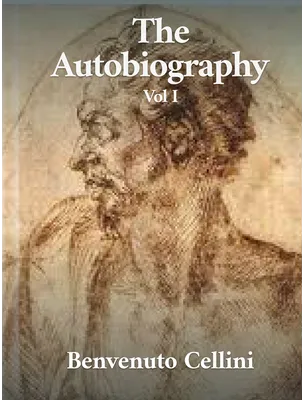
by
Benvenuto Cellini
Translated by John Addington Symonds

Introductory Sonnet
This tale of my sore-troubled life I write,
To thank the God of nature, who conveyed
My soul to me, and with such care hath stayed
That divers noble deeds I’ve brought to light.
’Twas He subdued my cruel fortune’s spite:
Life glory virtue measureless hath made
Such grace worth beauty be through me displayed
That few can rival, none surpass me quite.
Only it grieves me when I understand
What precious time in vanity I’ve spent —
The wind it beareth man’s frail thoughts away.
Yet, since remorse avails not, I’m content,
As erst I came, welcome to go one day,
Here in the Flower of this fair Tuscan land.
Introductory Note
Among the vast number of men who have thought fit to write down the history of their own lives, three or four have achieved masterpieces which stand out preeminently: Saint Augustine in his “Confessions,” Samuel Pepys in his “Diary,” Rousseau in his “Confessions.” It is among these extraordinary documents, and unsurpassed by any of them, that the autobiography of Benvenuto Cellini takes its place.
The “Life” of himself which Cellini wrote was due to other motives than those which produced its chief competitors for first place in its class. St. Augustine’s aim was religious and didactic, Pepys noted down in his diary the daily events of his life for his sole satisfaction and with no intention that any one should read the cipher in which they were recorded. But Cellini wrote that the world might know, after he was dead, what a fellow he had been; what great things he had attempted, and against what odds he had carried them through. “All men,” he held, “whatever be their condition, who have done anything of merit, or which verily has a semblance of merit, if so be they are men of truth and good repute, should write the tale of their life with their own hand.” That he had done many things of merit, he had no manner of doubt. His repute was great in his day, and perhaps good in the sense in which he meant goodness; as to whether he was a man of truth, there is still dispute among scholars. Of some misrepresentations, some suppressions of damaging facts, there seems to be evidence only too good — a man with Cellini’s passion for proving himself in the right could hardly have avoided being guilty of such — ; but of the general trustworthiness of his record, of the kind of man he was and the kind of life he led, there is no reasonable doubt.
The period covered by the autobiography is from Cellini’s birth in 1500 to 1562; the scene is mainly in Italy and France. Of the great events of the time, the time of the Reformation and the Counter-Reformation, of the strife of Pope and Emperor and King, we get only glimpses. The leaders in these events appear in the foreground of the picture only when they come into personal relations with the hero; and then not mainly as statesmen or warriors, but as connoisseurs and patrons of art. Such an event as the Sack of Rome is described because Benvenuto himself fought in it.
Much more complete is the view he gives of the artistic life of the time. It was the age of Michelangelo, and in the throng of great artists which then filled the Italian cities, Cellini was no inconsiderable figure. Michelangelo himself he knew and adored. Nowhere can we gain a better idea than in this book of the passionate enthusiasm for the creation of beauty which has bestowed upon the Italy of the Renaissance its greatest glory.
Very vivid, too, is the impression we receive of the social life of the sixteenth century; of its violence and licentiousness, of its zeal for fine craftsmanship, of its abounding vitality, its versatility and its idealism. For Cellini himself is an epitome of that century. This man who tells here the story of his life was a murderer and a braggart, insolent, sensual, inordinately proud and passionate; but he was also a worker in gold and silver, rejoicing in delicate chasing and subtle modelling of precious surfaces; a sculptor and a musician; and, as all who read his book must testify, a great master of narrative. Keen as was Benvenuto’s interest in himself, and much as he loved to dwell on the splendor of his exploits and achievements, he had little idea that centuries after his death he would live again, less by his “Perseus” and his goldsmith’s work than by the book which he dictated casually to a lad of fourteen, while he went about his work.
The autobiography was composed between 1558 and 1566, but it brings the record down only to 1562. The remainder of Cellini’s life seems to have been somewhat more peaceful. In 1565 he married Piera de Salvadore Parigi, a servant who had nursed him when he was sick; and in the care of his children, as earlier of his sister and nieces, he showed more tenderness than might have been expected from a man of his boisterous nature. He died at Florence, May 13, 1571, and was buried in The Church of the Annunziata in that city.
Autobiography of Benvenuto Cellini
I
All men of whatsoever quality they be, who have done anything of excellence, or which may properly resemble excellence, ought, if they are persons of truth and honesty, to describe their life with their own hand; but they ought not to attempt so fine an enterprise till they have passed the age of forty. This duty occurs to my own mind now that I am travelling beyond the term of fifty-eight years, and am in Florence, the city of my birth. Many untoward things can I remember, such as happen to all who live upon our earth; and from those adversities I am now more free than at any previous period of my career — nay, it seems to me that I enjoy greater content of soul and health of body than ever I did in bygone years. I can also bring to mind some pleasant goods and some inestimable evils, which, when I turn my thoughts backward, strike terror in me, and astonishment that I should have reached this age of fifty-eight, wherein, thanks be to God, I am still travelling prosperously forward.
II
It is true that men who have laboured with some show of excellence, have already given knowledge of themselves to the world; and this alone ought to suffice them; I mean the fact that they have proved their manhood and achieved renown. Yet one must needs live like others; and so in a work like this there will always be found occasion for natural bragging, which is of divers kinds, and the first is that a man should let others know he draws his lineage from persons of worth and most ancient origin.
I am called Benvenuto Cellini, son of Maestro Giovanni, son of Andrea, son of Cristofano Cellini; my mother was Madonna Elisabetta, daughter to Stefano Granacci; both parents citizens of Florence. It is found written in chronicles made by our ancestors of Florence, men of old time and of credibility, even as Giovanni Villani writes, that the city of Florence was evidently built in imitation of the fair city of Rome; and certain remnants of the Colosseum and the Baths can yet be traced. These things are near Santa Croce. The Capitol was where is now the Old Market. The Rotonda is entire, which was made for the temple of Mars, and is now dedicated to our Saint John. That thus is was, can very well be seen, and cannot be denied, but the said buildings are much smaller than those of Rome. He who caused them to built, they say, was Julius Cæsar, in concert with some noble Romans, who, when Fiesole had been stormed and taken, raised a city in this place, and each of them took in hand to erect one of these notable edifices.
Julius Cæsar had among his captains a man of highest rank and valour, who was called Fiorino of Cellino, which is a village about two miles distant from Monte Fiascone. Now this Fiorino took up his quarters under the hill of Fiesole, on the ground where Florence now stands, in order to be near the river Arno, and for the convenience of the troops. All those soldiers and others who had to do with the said captain, used then to say: “Let us go to Fiorenze;” as well because the said captain was called Fiorino, as also because the place he had chosen for his quarters was by nature very rich in flowers. Upon the foundation of the city, therefore, since this name struck Julius Cæsar as being fair and apt, and given by circumstance, and seeing furthermore that flowers themselves bring good augury, he appointed the name of Florence for the town. He wished besides to pay his valiant captain this compliment; and he loved him all the more for having drawn him from a very humble place, and for the reason that so excellent a man was a creature of his own. The name that learned inventors and investigators of such etymologies adduce, as that Florence is flowing at the Arno, cannot hold; seeing that Rome is flowing at the Tiber, Ferrara is flowing at the Po, Lyons is flowing at the Saone, Paris is flowing at the Seine, and yet the names of all these towns are different, and have come to them by other ways.
Thus then we find; and thus we believe that we are descended from a man of worth. Furthermore, we find that there are Cellinis of our stock in Ravenna, that most ancient town of Italy, where too are plenty of gentle folk. In Pisa also there are some, and I have discovered them in many parts of Christendom; and in this state also the breed exists, men devoted to the profession of arms; for not many years ago a young man, called Luca Cellini, a beardless youth, fought with a soldier of experience and a most valorous man, named Francesco da Vicorati, who had frequently fought before in single combat. This Luca, by his own valour, with sword in hand, overcame and slew him, with such bravery and stoutness that he moved the folk to wonder, who were expecting quite the contrary issue; so that I glory in tracing my descent from men of valour.
As for the trifling honours which I have gained for my house, under the well-known conditions of our present ways of living, and by means of my art, albeit the same are matters of no great moment, I will relate these in their proper time and place, taking much more pride in having been born humble and having laid some honourable foundation for my family, than if I had been born of great lineage and had stained or overclouded that by my base qualities. So then I will make a beginning by saying how it pleased God I should be born.
III
My ancestors dwelt in Val d’ Ambra, where they owned large estates, and lived like little lords, in retirement, however, on account of the then contending factions. They were all men devoted to arms and of notable bravery. In that time one of their sons, the younger, who was called Cristofano, roused a great feud with certain of their friends and neighbours. Now the heads of the families on both sides took part in it, and the fire kindled seemed to them so threatening that their houses were like to perish utterly; the elders upon this consideration, in concert with my own ancestors, removed Cristofano; and the other youth with whom the quarrel began was also sent away. They sent their young man to Siena. Our folk sent Cristofano to Florence; and there they bought for him a little house in Via Chiara, close to the convent of S. Orsola, and they also purchased for him some very good property near the Ponte a Rifredi. The said Cristofano took wife in Florence, and had sons and daughters; and when all the daughters had been portioned off, the sons, after their father’s death, divided what remained. The house in Via Chiara with some other trifles fell to the share of one of the said sons, who had the name of Andrea. He also took wife, and had four male children. The first was called Girolamo, the second Bartolommeo, the third Giovanni, who was afterwards my father, and the fourth Francesco. This Andrea Cellini was very well versed in architecture, as it was then practised, and lived by it as his trade. Giovanni, who was my father, paid more attention to it than any of the other brothers. And since Vitruvius says, amongst other things, that one who wishes to practise that art well must have something of music and good drawing, Giovanni, when he had mastered drawing, began to turn his mind to music, and together with the theory learned to play most excellently on the viol and the flute; and being a person of studious habits, he left his home but seldom.
They had for neighbour in the next house a man called Stefano Granacci, who had several daughters, all of them of remarkable beauty. As it pleased God, Giovanni noticed one of these girls who was named Elisabetta; and she found such favour with him that he asked her in marriage. The fathers of both of them being well acquainted through their close neighbourhood, it was easy to make this match up; and each thought that he had very well arranged his affairs. First of all the two good old men agreed upon the marriage; then they began to discuss the dowry, which led to a certain amount of friendly difference; for Andrea said to Stefano: “My son Giovanni is the stoutest youth of Florence, and of all Italy to boot, and if I had wanted earlier to have him married, I could have procured one of the largest dowries which folk of our rank get in Florence:” whereupon Stefano answered: “You have a thousand reasons on your side; but here am I with five daughters and as many sons, and when my reckoning is made, this is as much as I can possibly afford.” Giovanni, who had been listening awhile unseen by them, suddenly broke in and said: “O my father, I have sought and loved that girl and not their money. Ill luck to those who seek to fill their pockets by the dowry of their wife! As you have boasted that I am a fellow of such parts, do you not think that I shall be able to provide for my wife and satisfy her needs, even if I receive something short of the portion you would like to get? Now I must make you understand that the woman is mine, and you may take the dowry for yourself.” At this Andrea Cellini, who was a man of rather awkward temper, grew a trifle angry; but after a few days Giovanni took his wife, and never asked for other portion with her.
They enjoyed their youth and wedded love through eighteen years, always greatly desiring to be blessed with children. At the end of this time Giovanni’s wife miscarried of two boys through the unskilfulness of the doctors. Later on she was again with child, and gave birth to a girl, whom they called Cosa, after the mother of my father. At the end of two years she was once more with child; and inasmuch as those longings to which pregnant women are subject, and to which they pay much attention, were now exactly the same as those of her former pregnancy, they made their minds up that she would give birth to a female as before, and agreed to call the child Reparata, after the mother of my mother. It happened that she was delivered on a night of All Saints, following the feast-day, at half-past four precisely, in the year 1500. The midwife, who knew that they were expecting a girl, after she had washed the baby and wrapped it in the fairest white linen, came softly to my father Giovanni and said: “I am bringing you a fine present, such as you did not anticipate.” My father, who was a true philosopher, was walking up and down, and answered: “What God gives me is always dear to me;” and when he opened the swaddling clothes, he saw with his own eyes the unexpected male child. Joining together the palms of his old hands, he raised them with his eyes to God, and said, “Lord, I thank Thee with my whole heart; this gift is very dear to me; let him be Welcome.” All the persons who were there asked him joyfully what name the child should bear. Giovanni would make no other answer than “Let him be Welcome — Benvenuto;” and so they resolved, and this name was given me at Holy Baptism, and by it I still am living with the grace of God.
IV
Andrea Cellini was yet alive when I was about three years old, and he had passed his hundredth. One day they had been altering a certain conduit pertaining to a cistern, and there issued from it a great scorpion unperceived by them, which crept down from the cistern to the ground, and slank away beneath a bench. I saw it, and ran up to it, and laid my hands upon it. It was so big that when I had it in my little hands, it put out its tail on one side, and on the other thrust forth both its mouths. They relate that I ran in high joy to my grandfather, crying out: “Look, grandpapa, at my pretty little crab.” When he recognised that the creature was a scorpion, he was on the point of falling dead for the great fear he had and anxiety about me. He coaxed and entreated me to give it him; but the more he begged, the tighter I clasped it, crying and saying I would not give it to any one. My father, who was also in the house, ran up when he heard my screams, and in his stupefaction could not think how to prevent the venomous animal from killing me. Just then his eyes chanced to fall upon a pair of scissors; and so, while soothing and caressing me, he cut its tail and mouths off. Afterwards, when the great peril had been thus averted, he took the occurrence for a good augury.
When I was about five years old my father happened to be in a basement-chamber of our house, where they had been washing, and where a good fire of oak-logs was still burning; he had a viol in his hand, and was playing and singing alone beside the fire. The weather was very cold. Happening to look into the fire, he spied in the middle of those most burning flames a little creature like a lizard, which was sporting in the core of the intensest coals. Becoming instantly aware of what the thing was, he had my sister and me called, and pointing it out to us children, gave me a great box on the ears, which caused me to howl and weep with all my might. Then he pacified me good-humouredly, and spoke as follows: “My dear little boy, I am not striking you for any wrong that you have done, but only to make you remember that that lizard which you see in the fire is a salamander, a creature which has never been seen before by any one of whom we have credible information.” So saying, he kissed me and gave me some pieces of money.
V
My father began teaching me to play upon the flute and sing by note; by notwithstanding I was of that tender age when little children are wont to take pastime in whistles and such toys, I had an inexpressible dislike for it, and played and sang only to obey him. My father in those times fashioned wonderful organs with pipes of wood, spinets the fairest and most excellent which then could be seen, viols and lutes and harps of the most beautiful and perfect construction. He was an engineer, and had marvellous skill in making instruments for lowering bridges and for working mills, and other machines of that sort. In ivory he was the first who wrought really well. But after he had fallen in love with the woman who was destined to become my mother — perhaps what brought them together was that little flute, to which indeed he paid more attention than was proper — he was entreated by the fifers of the Signory to play in their company. Accordingly he did so for some time to amuse himself, until by constant importunity they induced him to become a member of their band. Lorenzo de’ Medici and Pietro his son, who had a great liking for him, perceived later on that he was devoting himself wholly to the fife, and was neglecting his fine engineering talent and his beautiful art. So they had him removed from that post. My father took this very ill, and it seemed to him that they had done him a great despite. Yet he immediately resumed his art, and fashioned a mirror, about a cubit in diameter, out of bone and ivory, with figures and foliage of great finish and grand design. The mirror was in the form of a wheel. In the middle was the looking-glass; around it were seven circular pieces, on which were the Seven Virtues, carved and joined of ivory and black bone. The whole mirror, together with the Virtues, was placed in equilibrium, so that when the wheel turned, all the Virtues moved, and they had weights at their feet which kept them upright. Possessing some acquaintance with the Latin tongue, he put a legend in Latin round his looking-glass, to this effect — “Whithersoever the wheel of Fortune turns, Virtue stands firm upon her feet:”
Rota sum: semper, quoquo me verto, stat Virtus.
A little while after this he obtained his place again among the fifers. Although some of these things happened before I was born, my familiarity with them has moved me to set them down here. In those days the musicians of the Signory were all of them members of the most honourable trades, and some of them belonged to the greater guilds of silk and wool; and that was the reason why my father did not disdain to follow this profession, and his chief desire with regard to me was always that I should become a great performer on the flute. I for my part felt never more discontented than when he chose to talk to me about this scheme, and to tell me that, if I liked, he discerned in me such aptitudes that I might become the best man in the world.
VI
As I have said, my father was the devoted servant and attached friend of the house of Medici; and when Piero was banished, he entrusted him with many affairs of the greatest possible importance. Afterwards, when the magnificent Piero Soderini was elected, and my father continued in his office of musician, Soderini, perceiving his wonderful talent, began to employ him in many matters of great importance as an engineer. So long as Soderini remained in Florence, he showed the utmost good-will to my father; and in those days, I being still of tender age, my father had me carried, and made me perform upon the flute; I used to play treble in concert with the musicians of the palace before the Signory, following my notes: and a beadle used to carry me upon his shoulders. The Gonfalonier, that is, Soderini, whom I have already mentioned, took much pleasure in making me chatter, and gave me comfits, and was wont to say to my father: “Maestro Giovanni, besides music, teach the boy those other arts which do you so much honour.” To which my father answered: “I do not wish him to practise any art but playing and composing; for in this profession I hope to make him the greatest man of the world, if God prolongs his life.” To these words one of the old counsellors made answer: “Ah! Maestro Giovanni, do what the Gonfalonier tells you! for why should he never become anything more than a good musician?”
Thus some time passed, until the Medici returned. When they arrived, the Cardinal, who afterwards became Pope Leo, received my father very kindly. During their exile the scutcheons which were on the palace of the Medici had had their balls erased, and a great red cross painted over them, which was the bearing of the Commune. Accordingly, as soon as they returned, the red cross was scratched out, and on the scutcheon the red balls and the golden field were painted in again, and finished with great beauty. My father, who possessed a simple vein of poetry, instilled in him by nature, together with a certain touch of prophecy, which was doubtless a divine gift in him, wrote these four verses under the said arms of the Medici, when they were uncovered to the view: —
These arms, which have so long from sight been laid
Beneath the holy cross, that symbol meek,
Now lift their glorious glad face, and seek
With Peter’s sacred cloak to be arrayed.
This epigram was read by all Florence. A few days afterwards Pope Julius II. died. The Cardinal de’ Medici went to Rome, and was elected Pope against the expectation of everybody. He reigned as Leo X, that generous and great soul. My father sent him his four prophetic verses. The Pope sent to tell him to come to Rome; for this would be to his advantage. But he had no will to go; and so, in lieu of reward, his place in the palace was taken from him by Jacopo Salviati, upon that man’s election as Gonfalonier. This was the reason why I commenced goldsmith; after which I spent part of my time in learning that art, and part in playing, much against my will.
VII
When my father spoke to me in the way I have above described, I entreated him to let me draw a certain fixed number of hours in the day; all the rest of my time I would give to music, only with the view of satisfying his desire. Upon this he said to me: “So then, you take no pleasure in playing?” To which I answered, “No;” because that art seemed too base in comparison with what I had in my own mind. My good father, driven to despair by this fixed idea of mine, placed me in the workshop of Cavaliere Bandinello’s father, who was called Michel Agnolo, a goldsmith from Pinzi di Monte, and a master excellent in that craft. He had no distinction of birth whatever, but was the son of a charcoal-seller. This is no blame to Bandinello, who has founded the honour of the family — if only he had done so honestly! However that may be, I have no cause now to talk about him. After I had stayed there some days, my father took me away from Michel Agnolo, finding himself unable to live without having me always under his eyes. Accordingly, much to my discontent, I remained at music till I reached the age of fifteen. If I were to describe all the wonderful things that happened to me up to that time, and all the great dangers to my own life which I ran, I should astound my readers; but, in order to avoid prolixity, and having very much to relate, I will omit these incidents.
When I reached the age of fifteen, I put myself, against my father’s will, to the goldsmith’s trade with a man called Antonio, son of Sandro, known commonly as Marcone the goldsmith. He was a most excellent craftsman and a very good fellow to boot, high-spirited and frank in all his ways. My father would not let him give me wages like the other apprentices; for having taken up the study of this art to please myself, he wished me to indulge my whim for drawing to the full. I did so willingly enough; and that honest master of mine took marvellous delight in my performances. He had an only son, a bastard, to whom he often gave his orders, in order to spare me. My liking for the art was so great, or, I may truly say, my natural bias, both one and the other, that in a few months I caught up the good, nay, the best young craftsmen in our business, and began to reap the fruits of my labours. I did not, however, neglect to gratify my good father from time to time by playing on the flute or cornet. Each time he heard me, I used to make his tears fall accompanied with deep-drawn sighs of satisfaction. My filial piety often made me give him that contentment, and induce me to pretend that I enjoyed the music too.
VIII
At that time I had a brother, younger by two years, a youth of extreme boldness and fierce temper. He afterwards became one of the great soldiers in the school of that marvellous general Giovannino de’ Medici, father of Duke Cosimo. The boy was about fourteen, and I two years older. One Sunday evening, just before nightfall, he happened to find himself between the gate San Gallo and the Porta a Pinti; in this quarter he came to duel with a young fellow of twenty or thereabouts. They both had swords; and my brother dealt so valiantly that, after having badly wounded him, he was upon the point of following up his advantage. There was a great crowd of people present, among whom were many of the adversary’s kinsfolk. Seeing that the thing was going ill for their own man, they put hand to their slings, a stone from one of which hit my poor brother in the head. He fell to the ground at once in a dead faint. It so chanced that I had been upon the spot alone, and without arms; and I had done my best to get my brother out of the fray by calling to him: “Make off; you have done enough.” Meanwhile, as luck would have it, he fell, as I have said, half dead to earth. I ran up at once, seized his sword, and stood in front of him, bearing the brunt of several rapiers and a shower of stones. I never left his side until some brave soldiers came from the gate San Gallo and rescued me from the raging crowd; they marvelled much, the while, to find such valour in so young a boy.
Then I carried my brother home for dead, and it was only with great difficulty that he came to himself again. When he was cured, the Eight, who had already condemned out adversaries and banished them for a term of years, sent us also into exile for six months at a distance of ten miles from Florence. I said to my brother: “Come along with me;” and so we took leave of our poor father; and instead of giving us money, for he had none, he bestowed on us his blessing. I went to Siena, wishing to look up a certain worthy man called Maestro Francesco Castoro. On another occasion, when I had run away from my father, I went to this good man, and stayed some time with him, working at the goldsmith’s trade until my father sent for me back. Francesco, when I reached him, recognised me at once, and gave me work to do While thus occupied, he placed a house at my disposal for the whole time of my sojourn in Siena. Into this I moved, together with my brother, and applied myself to labour for the space of several months. My brother had acquired the rudiments of Latin, but was still so young that he could not yet relish the taste of virtuous employment, but passed his time in dissipation.
IX
The Cardinal De’ Medici, who afterwards became Pope Clement VII., had us recalled to Florence at the entreaty of my father. A certain pupil of my father’s, moved by his own bad nature, suggested to the Cardinal that he ought to send me to Bologna, in order to learn to play well from a great master there. The name of this master was Antonio, and he was in truth a worthy man in the musician’s art. The Cardinal said to my father that, if he sent me there he would give me letters of recommendation and support. My father, dying with joy at such an opportunity, sent me off; and I being eager to see the world, went with good grace.
When I reached Bologna, I put myself under a certain Maestro Ercole del Piffero, and began to earn something by my trade. In the meantime I used to go every day to take my music lesson, and in a few weeks made considerable progress in that accursed art. However I made still greater in my trade of goldsmith; for the Cardinal having given me no assistance, I went to live with a Bolognese illuminator who was called Scipione Cavalletti (his house was in the street of our Lady del Baraccan); and while there I devoted myself to drawing and working for one Graziadio, a Jew, with whom I earned considerably.
At the end of six months I returned to Florence, where that fellow Pierino, who had been my father’s pupil, was greatly mortified by my return. To please my father, I went to his house and played the cornet and the flute with one of his brothers, who was named Girolamo, several years younger than the said Piero, a very worthy young man, and quite the contrary of his brother. On one of those days my father came to Piero’s house to hear us play, and in ecstasy at my performance exclaimed: “I shall yet make you a marvellous musician against the will of all or any one who may desire to prevent me.” To this Piero answered, and spoke the truth: “Your Benvenuto will get much more honour and profit if he devotes himself to the goldsmiths trade than to this piping.” These words made my father angry, seeing that I too had the same opinion as Piero, that he flew into a rage and cried out at him: “Well did I know that it was you, you who put obstacles in the way of my cherished wish; you are the man who had me ousted from my place at the palace, paying me back with that black ingratitude which is the usual recompense of great benefits. I got you promoted, and you have got me cashiered; I taught you to play with all the little art you have, and you are preventing my son from obeying me; but bear in mind these words of prophecy: not years or months, I say, but only a few weeks will pass before this dirty ingratitude of yours shall plunge you into ruin.” To these words answered Pierino and said: “Maestro Giovanni, the majority of men, when they grow old, go mad at the same time; and this has happened to you. I am not astonished at it, because most liberally have you squandered all your property, without reflecting that your children had need of it. I mind to do just the opposite, and to leave my children so much that they shall be able to succour yours.” To this my father answered: “No bad tree ever bore good fruit; quite the contrary; and I tell you further that you are bad, and that your children will be mad and paupers, and will cringe for alms to my virtuous and wealthy sons.” Thereupon we left the house, muttering words of anger on both sides. I had taken my father’s part; and when we stepped into the street together, I told him I was quite ready to take vengeance for the insults heaped on him by that scoundrel, provided he permit me to give myself up to the art of design. He answered: “My dear son, I too in my time was a good draughtsman; but for recreation, after such stupendous labours, and for the love of me who am your father, who begat you and brought you up and implanted so many honourable talents in you, for the sake of recreation, I say, will not you promise sometimes to take in hand your flute and that seductive cornet, and to play upon them to your heart’s content, inviting the delight of music?” I promised I would do so, and very willingly for his love’s sake. Then my good father said that such excellent parts as I possessed would be the greatest vengeance I could take for the insults of his enemies.
Not a whole month had been completed after this scene before the man Pierino happened to be building a vault in a house of his, which he had in the Via dello Studio; and being one day in a ground-floor room above the vault which he was making, together with much company around him, he fell to talking about his old master, my father. While repeating the words which he had said to him concerning his ruin, no sooner had they escaped his lips than the floor where he was standing (either because the vault had been badly built, or rather through the sheer mightiness of God, who does not always pay on Saturday) suddenly gave way. Some of the stones and bricks of the vault, which fell with him, broke both his legs. The friends who were with him, remaining on the border of the broken vault took no harm, but were astounded and full of wonder, especially because of the prophecy which he had just contemptuously repeated to them. When my father heard of this, he took his sword, and went to see the man. There, in the presence of his father, who was called Niccolaio da Volterra, a trumpeter of the Signory, he said, “O Piero, my dear pupil, I am sorely grieved at your mischance; but if you remember it was only a short time ago that I warned you of it; and as much as I then said will come to happen between your children and mine.” Shortly afterwards, the ungrateful Piero died of that illness. He left a wife of bad character and one son, who after the lapse of some years came to me to beg for alms in Rome. I gave him something, as well because it is my nature to be charitable, as also because I recalled with tears the happy state which Pierino held when my father spake those words of prophecy, namely, that Pierino’s children should live to crave succour from his own virtuous sons. Of this perhaps enough is now said; but let none ever laugh at the prognostications of any worthy man whom he has wrongfully insulted; because it is not he who speaks, nay, but the very voice of God through him.