The book was published in 1864.
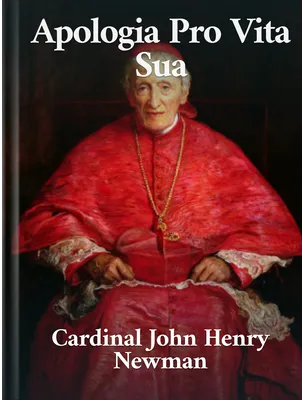
Apologia Pro Vita Sua (Latin: A defence of one's own life) is John Henry Newman's defence of his religious opinions, published in 1864 in response to Charles Kingsley of the Church of England after Newman quit his position as the Anglican vicar of St. Mary's, Oxford.
In the profound and introspective work "Apologia Pro Vita Sua," John Henry Newman takes readers on a deeply personal journey through his life and faith. This reflective narrative reveals the struggles and triumphs of a man at the crossroads of belief and doubt. As Newman navigates his spiritual evolution, he encounters pivotal moments that challenge his convictions and shape his understanding of truth. The central theme revolves around the quest for faith in a world often filled with skepticism and uncertainty. Through his eloquent prose, Newman invites us to witness his internal conflicts and the eventual resolution he finds in embracing the Catholic faith. With compelling characters, including fellow thinkers and theologians, the narrative unfolds as a heartfelt exploration of identity and purpose. This book is not merely an apology for his choices; it is a clarion call to all who seek to understand the complexities of belief and the nature of faith itself.
Full Name: John Henry Newman
Birthdate: February 21, 1801
Place of Birth: London, England
Date and Place of Death: August 11, 1890, in Edgbaston, Birmingham, England
Occupation: Theologian, Cardinal, Writer, and Poet
Notable Works: "Apologia Pro Vita Sua," "The Idea of a University," "The Grammar of Assent," and "The Dream of Gerontius."
Early Life: Newman was the eldest of six children in a middle-class family. He was educated at home and then attended Trinity College, Oxford, where he excelled in his studies and became a fellow.
Literary Career: Newman began his literary career as a leader of the Oxford Movement, which aimed to revive Catholic traditions in the Church of England. His writings influenced many and led to his conversion to Roman Catholicism in 1845. He was later made a cardinal by Pope Leo XIII.
Personal Life: Newman was known for his deep faith and intellectual rigor. He was a shy and private person, dedicating much of his life to study and his religious duties. He never married and focused his energy on his theological work and education.
John Henry Newman was an English theologian and author, known for his role in the Oxford Movement and later for becoming a cardinal in the Catholic Church.
Newman wrote the book as a defense of his faith and beliefs after he converted to Catholicism, addressing criticisms from his Anglican peers.
The book is a theological autobiography, combining elements of memoir and apologetics.
The main character is John Henry Newman himself, as he recounts his own spiritual journey and significant figures in his life.
The book details Newman's conversion to Catholicism and his reflections on faith, challenges, and the journey of belief, without revealing specific events.
Key themes include faith, doubt, the search for truth, and the importance of personal conscience.
Yes, Newman uses various symbols related to faith, light, and guidance to illustrate his spiritual journey.
The book received a positive response for its intellectual depth and personal honesty, becoming a significant work in religious literature.
While there are no major film adaptations, the book has influenced many discussions and writings on faith and spirituality.
The book has had a lasting impact on discussions of faith and reason, influencing both Catholic thought and wider conversations about belief.